作者: admin

  • Struggling Clippers release NBA great Paul

    Struggling Clippers release NBA great Paul

    The Los Angeles Clippers have made the dramatic decision to part ways with future Hall of Fame point guard Chris Paul as the franchise confronts one of its most challenging starts to a season. The move comes amid a devastating stretch where the team has dropped 14 of its last 16 games, prompting significant organizational changes.

    Lawrence Frank, President of Basketball Operations for the Clippers, confirmed the separation in a statement to ESPN, emphasizing that the decision was not a reflection of Paul’s performance. “Chris is a legendary Clipper who has had a historic career,” Frank stated. “I want to make one thing very clear: No one is blaming Chris for our under-performance. I accept responsibility for the record we have right now.”

    The 40-year-old Paul, currently in his 21st and final NBA season, took to Instagram to acknowledge the development with a succinct message: “just found out I’m being sent home.” ESPN sources revealed that communication between Paul and head coach Tyronn Lue had completely broken down in recent weeks, creating an untenable situation within the organization.

    Paul’s legacy with the Clippers spans two separate tenures—his initial six-season stretch from 2011-2017 that established him as one of the franchise’s most iconic players, and his recent return on a one-year contract signed this past July. Despite his individual brilliance throughout his career, Paul has never captured an NBA championship, reaching the Finals only once in 2021 with the Phoenix Suns before falling to the Milwaukee Bucks.

    The veteran guard leaves the game as one of the most statistically accomplished players in NBA history, ranking second all-time in both assists (12,552) and steals (2,728), trailing only legendary Utah Jazz guard John Stockton in both categories.

  • Royals host glittering state banquet for German president

    Royals host glittering state banquet for German president

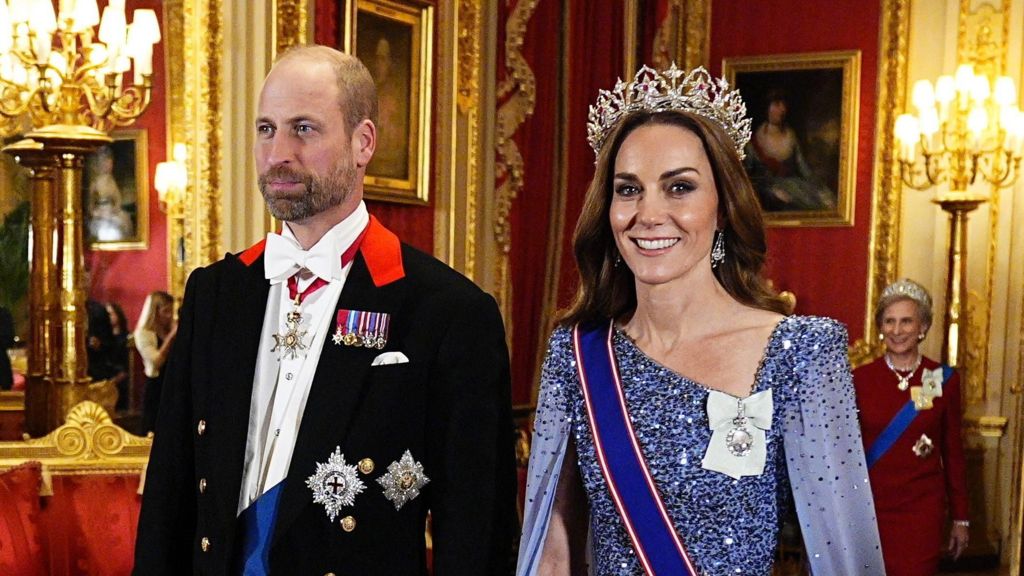
    Windsor Castle hosted a momentous state banquet on Wednesday evening as King Charles III welcomed German President Frank-Walter Steinmeier, marking the first German state visit to the UK in 27 years. The glittering event, adorned with seasonal decorations including a 20-foot Christmas tree illuminated by thousands of lights, brought together 152 distinguished guests from political, business, and cultural spheres.

    The royal family was prominently represented with Queen Camilla, the Prince and Princess of Wales, the Princess Royal, and the Duke and Duchess of Edinburgh in attendance. Catherine, Princess of Wales, made a notable sartorial statement wearing Queen Victoria’s diamond and ruby tiara, originally designed by her German-born husband Prince Albert.

    Among the celebrity guests were model Claudia Schiffer—seated beside Prime Minister Sir Keir Starmer—renowned film composer Hans Zimmer, and virtuoso violinist Anne-Sophie Mutter. The banquet menu featured a fusion of British and German culinary traditions, including tartlet of hot smoked trout with langoustines, Windsor partridge supreme, and Black Forest gateau-inspired cocktails.

    In his address delivered in both English and German, King Charles emphasized the critical need for Western allies to support Ukraine against Russian aggression, stating: “The United Kingdom and Germany together stand with Ukraine and bolster Europe against the threat of further Russian aggression.” President Steinmeier reciprocated this sentiment, affirming Germany’s unwavering support for Ukraine.

    The King also reflected on the profound historical connections between the two nations, acknowledging both cultural exchanges and the “most terrible consequences of conflict.” He spoke thoughtfully about the social and political transformations following the fall of the Berlin Wall, noting how change can be “unsettling and even frightening” and emphasizing the necessity of defending democratic values.

    Lighter moments included the King’s humorous reference to football rivalries: “One has to admit some element of truth in the famous description of football as a game where 11 people play 11 people and then, in the end, Germany win!” He also quipped about horse-drawn royal coaches being the “ultimate low-emissions vehicle.”

    The banquet culminated a day of ceremonial activities that included a military parade featuring 850 service personnel and 150 horses. Gift exchanges held symbolic significance, with German presents including an umbrella, Bach’s Christmas Oratorio, and traditional nutcrackers, while the King offered a horn-handled walking stick and rare literary editions.

    President Steinmeier later remarked on the improved UK-Germany relations following post-Brexit challenges, praising the recent bilateral treaty signed in July as instrumental in achieving closer cooperation. Meanwhile, First Lady Elke Budenbender visited Judith Kerr Primary School in London, honoring the German-born author of beloved children’s literature.

    The visit will include gestures of reconciliation, with plans for President Steinmeier to visit Coventry Cathedral ruins, bombed during World War II. Minor protests by anti-monarchy groups occurred but were managed peacefully by Thames Valley Police without arrests.

  • Food-delivery order led to arrest of Dubai-based BlueChip scam mastermind in India

    Food-delivery order led to arrest of Dubai-based BlueChip scam mastermind in India

    Indian authorities have apprehended Ravindra Nath Soni, the alleged architect behind one of the UAE’s most substantial investment fraud schemes, following an intensive 18-month international manhunt. The decisive breakthrough occurred in Dehradun, Uttarakhand, when police traced a food delivery order to his concealed location on November 30.

    Soni, owner of the collapsed BlueChip Group, faces multiple fraud allegations after his company abruptly ceased operations in March 2024, leaving hundreds of UAE investors facing collective losses estimated to exceed $100 million. The company had promised investors 36% annual returns through various investment verticals, including a cryptocurrency token launched with celebrity appearances.

    Kanpur Nagar Additional Deputy Commissioner of Police Anjali Vishwakarma confirmed the unusual apprehension method, stating: “He was caught through a food-delivery order. This is a big catch.” The arrest comes after a Delhi resident filed a formal complaint in January, alleging Soni had defrauded his family of Dh4 million with promises to double their investment within three years.

    Legal proceedings have commenced with Soni’s bail plea rejected on Wednesday as investigators work to trace the complex money trail. Authorities revealed that Soni had transferred $41.35 million to an unidentified cryptocurrency wallet shortly before BlueChip’s collapse.

    The case demonstrates transnational jurisdictional complexities. Dubai-based legal consultant Farhat Ali Khan explained that while multiple complaints have been filed in UAE courts, Indian law under Section 48 of the Bharatiya Nyaya Sanhita, 2023, enables prosecution in India for offenses committed abroad.

    For affected investors, the arrest brings mixed emotions. While relieved that Soni is in custody, many express skepticism about financial recovery. An Excel spreadsheet shared with investigators reveals approximately $17 million in losses from just 90 individuals, though victims estimate the actual total is significantly higher with investors spanning from Japan to Pakistan.

    Investors now face a protracted legal battle as authorities widen their investigation into what many describe as a sophisticated “double-your-money” scheme that utilized celebrity endorsements and business awards to gain credibility.

  • ‘Santa isn’t real’ signs spark grinch accusations and police calls in Canada

    ‘Santa isn’t real’ signs spark grinch accusations and police calls in Canada

    In an unusual holiday season incident, police in Brantford, Ontario, found themselves mediating a festive philosophical dispute after receiving multiple complaints about anti-Santa signage displayed along the city’s annual Santa Claus parade route. The controversial signs, prominently displayed on a residential window approximately 103 kilometers west of Toronto, declared “Santa is fake” and “Your parents are Santa” in bold black marker, triggering both outrage and amusement within the community.

    Law enforcement officials confirmed they had received “a few calls from upset residents” regarding the displays but clarified that the property owner had committed no illegal act. In an official statement, police emphasized that while being a ‘Grinch’ might be socially discouraged, it remains protected under Canada’s free speech laws—especially when expressed on private property. “We do encourage everyone to embrace the spirit of the season and help foster a positive, welcoming community,” a police spokesperson advised, while acknowledging constitutional protections for unpopular opinions.

    The incident sparked vigorous debate on social media platforms, with some residents labeling the display “absolutely disgusting” while others questioned the appropriateness of involving law enforcement in what they perceived as harmless expression. This year’s parade, which attracted approximately 30,000 attendees according to local media, proceeded without disruption despite the philosophical provocations.

    Historical context reveals this isn’t the first time Santa skepticism has encountered official resistance. In 2018, Texas police arrested a protester for criminal trespassing after he informed children outside a church that Santa wasn’t real. More dramatically, in 1979, Vietnam veteran Richard Dildy was arrested in Toronto for causing a disturbance while wearing a “Down with Santa!” sign at a busy intersection. Dildy defended his actions to the Toronto Star, stating: “All I was saying is that people have to stop lying to their children.”

    The Brantford case ultimately concluded without charges, serving as a contemporary reminder that holiday spirit, while culturally encouraged, cannot be legally mandated—even when it conflicts with cherished childhood myths.

  • The AI frenzy is driving a new global supply chain crisis

    The AI frenzy is driving a new global supply chain crisis

    A severe shortage of memory chips is triggering a worldwide supply chain crisis, pitting artificial intelligence giants against consumer electronics manufacturers in a fierce competition for limited components. This supply squeeze spans the entire memory spectrum—from basic flash chips utilized in USB drives and smartphones to sophisticated high-bandwidth memory (HBM) essential for powering AI chips in data centers.

    Market analytics from TrendForce indicate that prices in certain segments have more than doubled since February, creating a volatile trading environment. The ramifications are being felt globally: Japanese electronics retailers have imposed purchase limits on hard-disk drives, while Chinese smartphone manufacturers are issuing warnings about impending price increases.

    Technology behemoths including Microsoft, Google, and ByteDance are engaged in urgent negotiations with leading memory-chip producers Micron, Samsung Electronics, and SK Hynix to secure stable supplies, according to industry sources. The crisis has escalated to the point where average inventory levels for dynamic random-access memory (DRAM)—critical for computers and phones—plummeted to just two to four weeks in October, down significantly from 13-17 weeks in late 2024.

    The current shortage stems from a perfect storm of industry factors. The explosive growth of generative AI following ChatGPT’s 2022 debut prompted memory manufacturers to prioritize production of high-margin HBM chips for AI applications. Simultaneously, heightened competition from Chinese DRAM producers accelerated South Korean firms’ shift toward more advanced products. This production pivot coincided unexpectedly with robust replacement cycles for traditional data centers, PCs, and stronger-than-anticipated smartphone sales.

    SK Group Chairman Chey Tae-won highlighted the severity of the situation, stating: ‘We’re receiving requests from so many companies that we’re worried about how we’ll handle them. If we fail to supply them, they could face situations where they can’t do business at all.’

    The supply constraints are now manifesting in consumer markets. Realme India’s marketing chief Francis Wong described the memory cost increases as ‘unprecedented since the advent of smartphones,’ noting potential handset price hikes of 20-30% by June. In Tokyo’s Akihabara electronics district, stores are enforcing purchase limits to prevent hoarding, with prices for some memory products doubling within weeks.

    Industry analysts project the shortage may persist through late 2027, despite announced capacity expansions by major manufacturers. New production facilities typically require at least two years to become operational, creating an extended timeline for market rebalancing. The prolonged shortage threatens to slow AI-driven productivity gains, delay digital infrastructure projects worth hundreds of billions of dollars, and potentially contribute to broader inflationary pressures across global economies.

  • A 355-year-old Royal Charter that survived the blitz auctioned for $13m in Canada

    A 355-year-old Royal Charter that survived the blitz auctioned for $13m in Canada

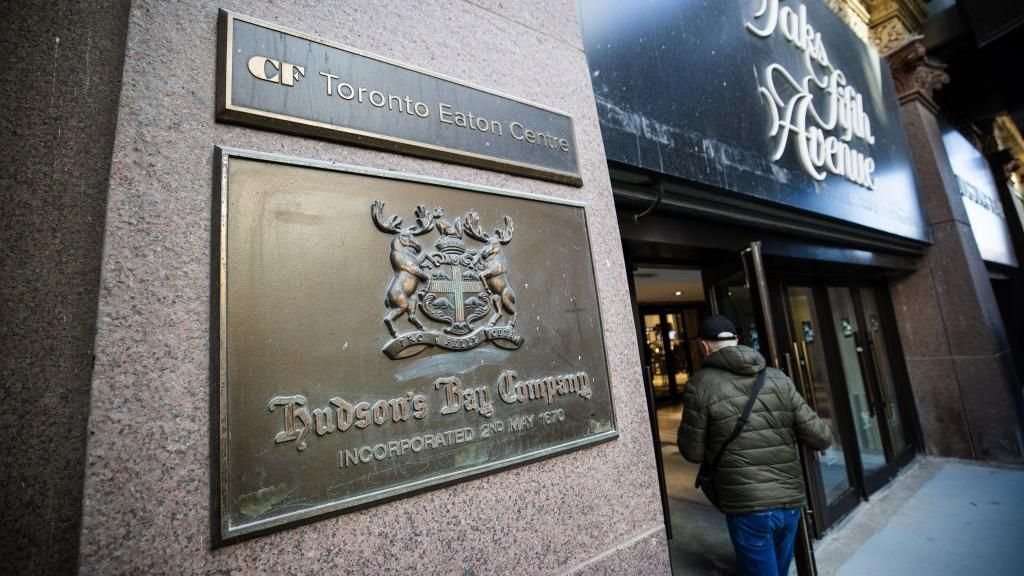
    In a landmark transaction preserving Canadian heritage, the 1670 Royal Charter of the Hudson’s Bay Company—one of Canada’s foundational documents—has been acquired for C$18 million (approximately $13 million USD) by a consortium of the nation’s wealthiest families. The 355-year-old charter, which granted the Hudson’s Bay Company extensive governmental powers over vast territories in present-day Canada, reached auction following the corporation’s bankruptcy filing earlier this year.

    The successful bid, submitted by entities controlled by the Weston family and David Thomson (chairman of Thomson Reuters), guarantees the historically significant document remains in Canada. Under the acquisition terms, the charter will enter shared custodianship among several prominent Canadian institutions: the Archives of Manitoba, the Manitoba Museum, the Canadian Museum of History, and the Royal Ontario Museum. Additionally, the agreement includes a C$5 million endowment dedicated to stewardship and public education initiatives related to the document, pending final court approval.

    Originally issued by King Charles II, the charter empowered the Hudson’s Bay Company to enact laws, establish colonies, and negotiate treaties within territories that now constitute modern Canada. According to Dr. Cody Groat, assistant professor of history and indigenous studies at Western University, this document enabled the company to ‘operate as both a corporation and as a government’ during colonial expansion. It also later provided the legal basis for the company’s 1869 sale of North American territories to Canada—a transaction conducted without Indigenous consent.

    The charter’s journey includes storage at Windsor Castle, relocation to company headquarters in London, wartime safekeeping in Hertfordshire during the Blitz, and eventual transfer to Toronto in the 1970s. While most company archives were donated to Manitoba in the 1990s, the charter remained a corporate asset until recent bankruptcy proceedings triggered concerns about its potential departure from public access. The successful bid emerged after sustained public pressure and competitive offers from wealthy families and corporations seeking to donate the artifact to public institutions.

    The Hudson’s Bay Company stated the charter will now be managed by institutions committed to ‘working in consultation with Indigenous communities so the Charter’s complex history can be acknowledged, interpreted and shared with all Canadians.’

  • Carmakers seek substitute for rare earths as supply chain woes mount

    Carmakers seek substitute for rare earths as supply chain woes mount

    Facing persistent supply chain disruptions and geopolitical tensions, major automakers across the United States and Europe are intensifying efforts to develop alternative technologies that reduce or eliminate dependence on rare-earth metals. These materials, particularly neodymium, dysprosium and terbium, are crucial components in numerous automotive parts ranging from electric vehicle motors to windshield wiper mechanisms and adjustable seating systems.

    China’s dominant position in rare-earth mining and processing—controlling approximately 80-90% of global supply—has created significant vulnerabilities for Western manufacturers. The situation escalated in 2025 when Beijing implemented export controls on these materials, widely interpreted as retaliation against Trump administration tariffs on Chinese goods. Although some restrictions were temporarily suspended through diplomatic agreements, industry executives remain concerned about future weaponization of these critical resources.

    The pandemic-era semiconductor shortage served as a wake-up call, highlighting the dangers of over-reliance on single-source suppliers. This realization has spurred two parallel strategies: diversifying sourcing outside China and developing alternative technologies that bypass rare-earth requirements entirely.

    General Motors exemplifies the diversification approach through its partnership with MP Materials, a domestic company mining rare earths in California and constructing a Texas-based refining facility. Meanwhile, BMW has pioneered technological innovation with rare-earth-free motors already deployed in models like the iX SUV. These electronically excited motors generate magnetic fields through electric currents rather than permanent magnets, though they historically faced challenges with weight, size and energy efficiency that BMW claims to have largely overcome.

    Research institutions including Northeastern University are exploring synthetic materials with magnetic properties found only in meteorites, while the Department of Energy offers grants up to $3 million for developing alternatives twice as powerful as existing rare-earth magnets—a target some experts consider unrealistic. Despite these efforts, most solutions remain years from commercialization, and current alternatives often come with cost or performance trade-offs.

    Industry analysts note that while temporary détente has eased immediate shortages, the structural vulnerability persists. ‘This isn’t a challenge you can overcome in a year,’ observed Gracelin Baskaran of the Center for Strategic and International Studies, capturing the long-term nature of this supply chain transformation.

  • India: Patanjali appeals court order to pay over Rs100,000 for selling sub-standard ghee

    India: Patanjali appeals court order to pay over Rs100,000 for selling sub-standard ghee

    Indian consumer goods giant Patanjali Ayurved has launched a legal appeal against a recent court ruling that found the company liable for selling substandard ghee products. The controversy centers around a 2020 case where food safety authorities purchased and tested Patanjali’s ghee, which allegedly failed to meet established safety parameters.

    The legal proceedings, initiated under India’s Food Safety and Standards Act, culminated in a November 2025 ruling that ordered Patanjali to pay ₹100,000 (approximately $1,200) in penalties, while two retailers faced additional fines of ₹40,000 each. The case originated when a food security officer conducted random testing of the product, with initial results indicating non-compliance with safety standards. A subsequent test at a central laboratory reportedly confirmed these findings.

    Patanjali has mounted a vigorous defense, asserting three primary grounds for appeal. The company contends that the testing laboratory lacked proper accreditation from the National Accreditation Board for Testing and Calibration Laboratories (NABL) specifically for cow ghee analysis. Furthermore, the organization claims the parameters used for testing were ‘illegally applied’ as they were not applicable at the time of product manufacture. The third argument presented suggests the sample was tested after its expiration date, potentially compromising the validity of results.

    In an official statement released on social media platform X, Patanjali characterized the court’s decision as ‘erroneous’ and ‘legally invalid.’ The company maintains that the identified variance in RM values—which measure volatile fatty acid levels—represents only a ‘nominal difference’ that does not impact product safety or consumability.

    The appeal will now proceed to India’s Food Safety Tribunal, where Patanjali expresses confidence in achieving a favorable outcome. This case emerges against a backdrop of increased regulatory scrutiny of consumer goods in India, particularly those marketed as natural or traditional products.

  • Watch: Newly released video shows Jeffrey Epstein’s private island home

    Watch: Newly released video shows Jeffrey Epstein’s private island home

    Previously unseen video documentation of Jeffrey Epstein’s secluded Caribbean estate has been made public through congressional action. The footage, originating from the U.S. Virgin Islands where the controversial property is situated, was obtained via official subpoena and released by Democratic lawmakers.

    The visual evidence provides unprecedented insight into the secluded complex that served as Epstein’s primary residence during the final years preceding his 2019 arrest. The property, located on Little St. James Island, has been central to numerous investigations into Epstein’s activities and his network of associates.

    This disclosure represents the latest development in the ongoing judicial and legislative examination of Epstein’s operations. The release mechanism—a congressional subpoena to Virgin Islands authorities—highlights the continued institutional interest in uncovering the full scope of activities connected to the convicted sex offender’s island property.

    The video materials add visual context to previous documentary and investigative reports about the compound, offering lawmakers and the public additional reference points for understanding the environment where alleged criminal activities occurred. This development comes amid continued legal proceedings involving Epstein’s associates and ongoing public interest in the case.

  • Unstoppable Kohli hits 53rd ODI ton in second game against South Africa

    Unstoppable Kohli hits 53rd ODI ton in second game against South Africa

    In a spectacular display of batting mastery, Virat Kohli delivered his second consecutive century during the second One-Day International against South Africa in Raipur on Wednesday. The legendary batsman, often hailed as ‘King Kohli’ for his extraordinary run-scoring capabilities, notched his 53rd ODI hundred with a commanding 102-run performance from just 93 deliveries.

    Kohli found a formidable partner in Ruturaj Gaikwad, who celebrated his maiden ODI century with an impressive 105 runs. The duo constructed a massive 195-run partnership for the third wicket, systematically dismantling South Africa’s bowling attack after India’s openers departed relatively early. Their collaborative effort formed the foundation of India’s imposing total of 358-5.

    The batting spectacle began with Kohli signaling his intent immediately, launching his innings with a spectacular six off pace bowler Lungi Ngidi. While Yashasvi Jaiswal provided a brisk start with 22 runs, it was the Kohli-Gaikwad partnership that truly dominated the proceedings. Both batsmen demonstrated remarkable fluency, consistently finding boundaries and rotating the strike with precision.

    The emotional highlight arrived when Gaikwad reached his century milestone, receiving an enthusiastic embrace from his celebrated partner. Though Gaikwad eventually departed, Kohli continued his relentless pursuit, eventually bringing up his 84th international century across all formats to thunderous applause from a capacity crowd of 60,000 spectators.

    Kohli’s dismissal to Ngidi, caught by Aiden Markram, prompted a standing ovation as the champion batsman exited the field. His innings featured seven boundaries and two sixes, maintaining a strike rate of over 109. Captain KL Rahul then provided the finishing flourish with an unbeaten 66, including an 18-run final over that pushed India’s total beyond the 350-mark.

    This performance extends Kohli’s record as the leading century-maker in ODI cricket, now four centuries ahead of retired Indian legend Sachin Tendulkar’s 49 hundreds. The 37-year-old batting maestro, who along with 38-year-old Rohit Sharma now focuses exclusively on the 50-over format after retiring from T20 and Test cricket, continues to redefine batting excellence.

    South Africa faces a challenging pursuit of 359 runs to keep the three-match series alive, having fallen 17 runs short while chasing 349 in the opening encounter.