作者: admin

  • Fifa investigates Congolese FA boss jailed alongside wife and son

    Fifa investigates Congolese FA boss jailed alongside wife and son

    FIFA has initiated formal disciplinary proceedings against three high-ranking officials from the Congo-Brazzaville Football Federation (Fecofoot) following their recent criminal convictions for financial misconduct. The individuals under investigation include Fecofoot President Jean-Guy Mayolas, General Secretary Wantete Badji, and Treasurer Raoul Kanda.

    This development comes after a Brazzaville criminal court sentenced Mayolas, along with his wife and son, to life imprisonment in absentia on March 10th for multiple offenses including embezzlement, money laundering, forgery, and use of forged documents. Badji and Kanda received five-year prison sentences in the same case.

    The court found that $1.3 million in FIFA development funds had been misappropriated, with the majority intended for critical projects including a national training center, women’s football development, and COVID-19 relief efforts. According to a declaration signed by all women’s club presidents in the country’s top flight, only a minimal percentage of these funds ever reached their intended destinations.

    FIFA’s ethics committee launched its investigation after receiving substantial documentation detailing financial misconduct. The charges include forgery, conflicts of interest, and offering and accepting improper gifts. This marks not the first violation for Mayolas and Badji, who previously received six-month bans from FIFA in 2015 for similar infractions related to gifts and benefits.

    The federation itself faced severe consequences earlier when FIFA imposed a suspension in February 2023 due to political interference after the Congolese government dismissed Mayolas. This suspension forced the national team to forfeit two crucial 2026 World Cup qualifiers against Zambia and Tanzania, significantly damaging Congo-Brazzaville’s qualifying campaign where they managed just one point from eight games. The ban was eventually lifted in May 2023 after Fecofoot met specific conditions, including regaining full control of its headquarters and facilities.

  • Judge told Maduro ‘plundered’ Venezuelan wealth in court battle over legal fees

    Judge told Maduro ‘plundered’ Venezuelan wealth in court battle over legal fees

    In a significant courtroom development, a US federal judge demonstrated considerable sympathy toward arguments presented by former Venezuelan leader Nicolás Maduro and his wife Cilia Flores regarding their right to utilize Venezuelan government funds for legal defense. The hearing, held Thursday before 92-year-old Judge Alvin Hellerstein, centered on whether US sanctions should prevent the accused couple from accessing state resources for their legal representation.

    Defense attorneys petitioned for dismissal of the narco-terrorism case entirely, asserting that the US government’s denial of fund access through sanctions violations constituted a fundamental breach of their clients’ rights. Prosecutors countered that Maduro had systematically ‘plundered’ Venezuela’s national wealth and should not be permitted to employ those same resources for his defense, citing national security and foreign policy concerns.

    Judge Hellerstein, while acknowledging the paramount importance of the right to defense, declined to dismiss the overall case based solely on the funding dispute. He did, however, indicate he would issue a subsequent ruling on the financial access question, recognizing the constitutional dimensions of the argument.

    The legal proceedings represent the second court appearance for Maduro and Flores since their dramatic capture by US forces during a nighttime raid on their Caracas compound on January 3. The couple faces extensive charges including narco-terrorism conspiracy, cocaine importation conspiracy, and weapons violations detailed in a comprehensive 25-page indictment dating back to 1999.

    The funding controversy stems from the Office of Foreign Assets Control initially granting then revoking a special license that would have permitted Venezuelan government payments for the defense team. Prosecutors maintain the defendants possess sufficient personal resources to retain private attorneys, while the defense argues sanctions have effectively frozen all accessible assets.

    Meanwhile, Venezuela has undergone significant political transformation since Maduro’s arrest, with former Vice President Delcy Rodríguez assuming power and the country reportedly resuming diplomatic relations with the United States. Outside the courthouse, pro- and anti-Maduro protesters clashed briefly, reflecting the deep divisions within Venezuelan society.

    The case continues without a set trial date as Maduro and Flores remain detained at Brooklyn’s Metropolitan Detention Center without having applied for bail.

  • ‘Mom’s missing’ – Savannah Guthrie recounts devastating aftermath of kidnapping

    ‘Mom’s missing’ – Savannah Guthrie recounts devastating aftermath of kidnapping

    In a deeply emotional interview on NBC’s TODAY show, renowned television anchor Savannah Guthrie has broken her silence regarding the disappearance of her 84-year-old mother, Nancy Guthrie, who vanished from her Tucson, Arizona residence on February 1st. Guthrie revealed harrowing details about the investigation, including two ransom notes delivered to media outlets and her personal struggle with the possibility that her celebrity status may have made her mother a target.

    The investigation, led by Pima County Sheriff Chris Nanos, has determined that Nancy Guthrie was likely ‘targeted’ with a specific motive, though authorities have declined to publicly disclose details while the investigation remains active. Critical evidence includes security footage capturing a masked individual near the home approximately one hour before the disappearance and the removal of the doorbell camera from Nancy’s front entrance.

    Guthrie described the devastating moment she learned of her mother’s disappearance: ‘My sister called me in a panic saying ‘Mom’s missing.’ I was in complete disbelief,’ she recounted during the interview with former co-host Hoda Kotb. Family members discovered Nancy’s home with doors propped open, though her personal belongings—including cellphone and purse—remained inside, eliminating theories of voluntary departure or medical emergency.

    The emotional toll on the Guthrie family has been profound. Savannah temporarily stepped away from her broadcasting duties, missing planned NBC Olympic coverage, while the family maintains a $1.1 million reward ($1 million from the family plus FBI’s $100,000) for information leading to Nancy’s whereabouts. Despite investigators suggesting Nancy may no longer be alive, Guthrie emphasized the family’s need for closure: ‘We cannot be at peace without knowing what happened.’

    Authorities continue to pursue leads while Guthrie makes a heartfelt plea for anyone with information to come forward, stressing that ‘it is never too late to do the right thing.’ The case remains one of Arizona’s most prominent missing person investigations, drawing national attention to the vulnerability of elderly relatives of public figures.

  • What to know as Africans welcome UN vote on slavery reparations but questions remain

    What to know as Africans welcome UN vote on slavery reparations but questions remain

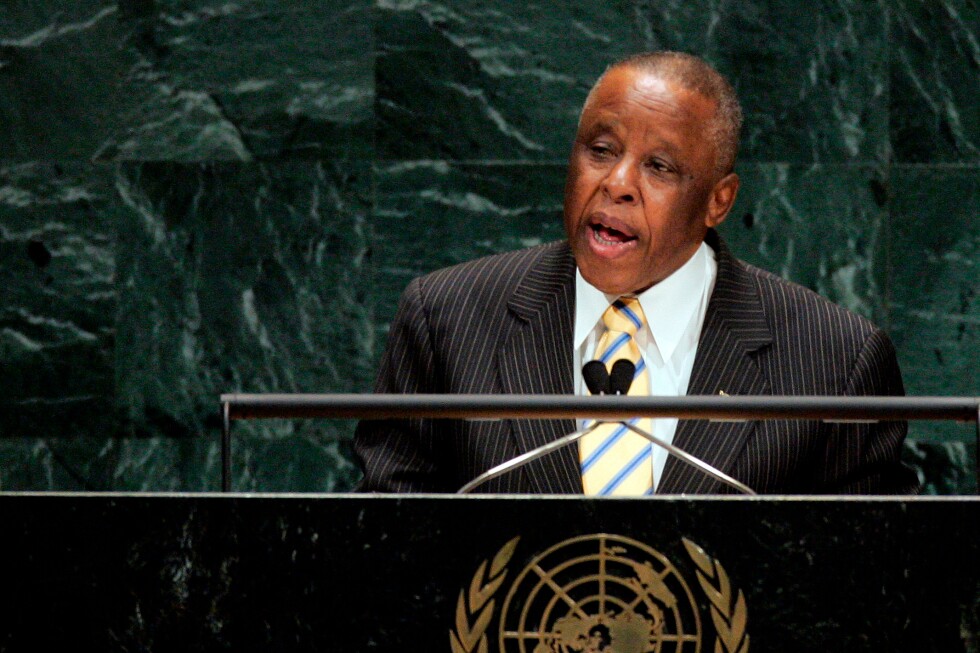
    In a landmark decision with profound historical implications, the United Nations General Assembly has formally designated the transatlantic trafficking of enslaved Africans as “the gravest crime against humanity.” The Wednesday resolution, which garnered overwhelming support with 123 member states voting in favor, has ignited both celebration across Africa and intense global debate regarding the practical implementation of reparations.

    The resolution, championed by Ghana, extends beyond symbolic recognition by urgently calling for “the prompt and unhindered restitution” of cultural artifacts—including artworks, monuments, and national archives—to their African countries of origin without financial charge. Ghana’s Foreign Affairs Minister Samuel Okudzeto Ablakwa characterized the declaration as a crucial advancement in “collective moral awareness” that deepens historical understanding without diminishing other tragedies.

    Despite its non-binding legal status, the resolution represents a significant reflection of evolving global consensus. The African Union immediately endorsed the decision as “an important step toward truth, justice and healing.” However, the voting pattern revealed substantial international divisions: Argentina, Israel, and the United States cast opposing votes, while 52 nations including the United Kingdom and all 27 European Union members abstained.

    The U.S. delegation, through Deputy Ambassador Dan Negrea, acknowledged the historical wrongs of slavery but rejected the notion of legal reparations for “historical wrongs that were not illegal under international law at the time they occurred.” France similarly expressed concerns that the resolution establishes “a hierarchy among crimes against humanity,” potentially creating problematic legal precedents.

    Across Africa and among diaspora communities, the resolution has been met with emotional approval. Erieka Bennett, founder of the Ghana-based Diaspora African Forum, described it as “an answer to the prayers of our kidnapped, oppressed and murdered ancestors” that will energize efforts toward African liberation. Nadege Anelka, a Martinique native who obtained Beninese citizenship through a lineage-based law, viewed the resolution as “fantastic news” that validates personal journeys of reconnection.

    The complex question of reparations implementation remains contentious. While the 2023 Global Reparation Summit in Ghana established a framework for financial compensation, practical modalities remain undefined. Research indicates limited public support for direct payments—a 2021 Pew survey found only 30% of American adults supported reparations for slavery descendants.

    Experts emphasize that reparations advocacy typically extends beyond monetary compensation. According to Professor Olivette Otele of SOAS University of London, reparations advocates “hardly ever” seek only financial restitution but rather comprehensive addressing of interconnected social, political and economic legacies. As analyst Beverly Ochieng notes, Western governments remain unlikely to establish dedicated compensation funds, instead pointing to existing development initiatives in formerly colonized nations.

  • On Azerbaijani President’s instructions, Ministry of Emergency Situations sends humanitarian aid to Iran

    On Azerbaijani President’s instructions, Ministry of Emergency Situations sends humanitarian aid to Iran

    In a significant demonstration of regional solidarity, the Republic of Azerbaijan has mobilized substantial humanitarian assistance for the people of Iran pursuant to direct instructions from President Ilham Aliyev. The comprehensive aid package, meticulously coordinated by Azerbaijan’s Ministry of Emergency Situations, comprises approximately 30 metric tons of essential supplies destined for neighboring Iran.

    The relief consignment includes critical food staples and medical provisions, with detailed allocations featuring 10 tons of flour, 6 tons of rice, 2.4 tons of sugar, over 4 tons of potable water, and approximately 600 kilograms of tea. Additionally, the shipment contains nearly 2 tons of vital pharmaceuticals and medical equipment to address healthcare needs.

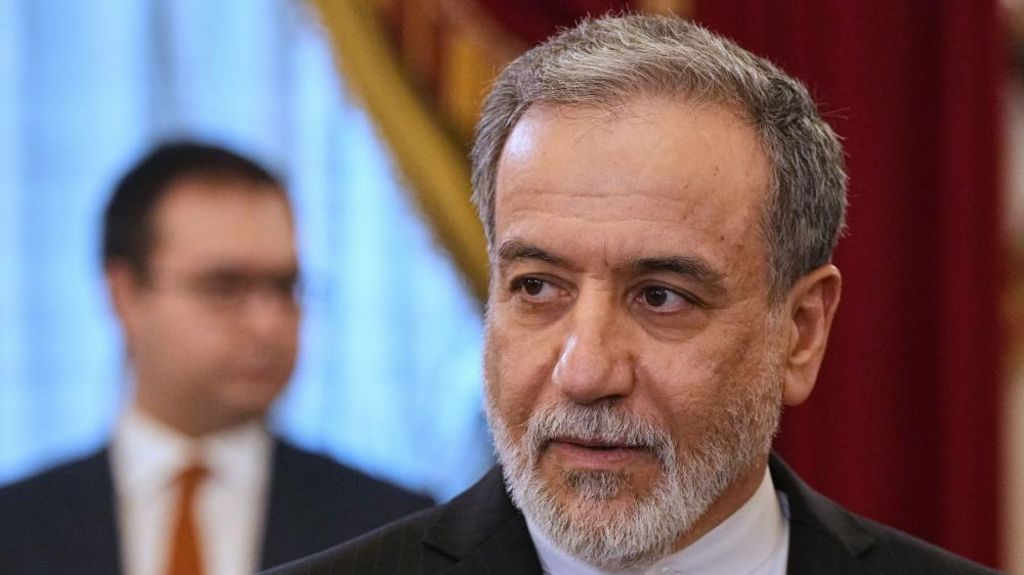
    Emil Hasanzade, Director of the Reserves Control Department at Azerbaijan’s State Reserves Agency, confirmed that the humanitarian convoy has already commenced its journey toward Iranian territory. The assistance initiative originated from a March 8 telephone discussion between President Aliyev and Iranian President Masoud Pezeshkian, during which the Azerbaijani leader pledged support for Iran’s current requirements.

    To ensure the seamless delivery of these critical supplies, authorized representatives from Azerbaijan’s Cabinet of Ministers—Niyazi Rahimov and Gurban Sadigov—are personally accompanying the aid convoy to its destination in the Iranian border city of Astara. This diplomatic gesture underscores the continuing cooperation between the two neighboring nations despite regional complexities.

  • West warned against blocking reforms to global economic institutions

    West warned against blocking reforms to global economic institutions

    At the Boao Forum for Asia 2026, prominent scholar Kishore Mahbubani issued a stark warning to Western nations regarding their resistance to reforming global economic institutions. The founding dean of the Lee Kuan Ywan Yew School of Public Policy at the National University of Singapore characterized Western obstruction as a “grave strategic error” that contradicts both global economic realities and the West’s own long-term interests.

    Mahbubani framed the current moment as a historical turning point, marking “the end of a 200-year cycle” of Western domination in world history and signaling Asia’s remarkable return to global prominence. He emphasized that this fundamental shift requires corresponding changes in global economic governance structures that extend beyond short-term political pressures.

    The academic highlighted striking statistical evidence demonstrating the disconnect between economic reality and institutional representation. While China’s economy has grown to match the entire European Union’s economic output—a dramatic reversal from 2000 when the EU’s GNP was six times larger—voting power within the International Monetary Fund remains heavily skewed. The EU maintains approximately 26-27% of IMF voting shares compared to China’s mere 6%.

    Mahbubani noted that despite this imbalance, China and other Global South nations have taken a constructive approach by seeking to reform existing institutions rather than dismantling them. He observed that the major frameworks of global governance—including the IMF, World Bank, and WTO—were originally conceived and established by Western powers based on Western conceptual foundations.

    The scholar made the case that accommodating greater representation for emerging economies actually serves Western interests by preserving the relevance and legitimacy of these institutions. He contrasted this with the more disruptive alternative where rising powers might choose to reject existing frameworks entirely and establish competing systems.

    Mahbubani concluded with an appeal for Western policymakers to recognize the strategic wisdom in embracing institutional evolution, suggesting that allowing greater Global South participation ultimately strengthens rather than weakens the international economic order.

  • China revises regulation on national agricultural census

    China revises regulation on national agricultural census

    The Chinese government has enacted comprehensive revisions to its national agricultural census regulations through a State Council decree signed by Premier Li Qiang. The updated framework, scheduled to take effect on May 1, 2026, introduces significant methodological and substantive changes to how China conducts its agricultural surveys.

    The revised regulation substantially expands the census scope beyond traditional farming metrics to incorporate rural industrial development and village construction aspects. This broader approach reflects China’s evolving rural economy and the government’s increased focus on holistic rural development. The new framework officially incorporates advanced data-collection methodologies including remote sensing technology, modernizing the census process.

    Enhanced data quality assurance measures form a critical component of the updated regulations. The legislation establishes a formal post-census spot-check verification system and imposes strict confidentiality obligations on all census personnel. Notably, the revised regulation imposes significantly tougher penalties for data falsification, with heightened fines and potential criminal prosecution for individuals found fabricating or manipulating statistical information.

    These regulatory changes coincide with preparations for China’s fourth national agricultural census, which aims to capture comprehensive data on agricultural development patterns, rural construction progress, farmer living standards, and outcomes of rural reform initiatives. The census will specifically examine agricultural production conditions, grain output statistics, new quality productive forces in agriculture, and rural residents’ living conditions.

  • Orban’s Hungarian government accused of mass voter intimidation ahead of election

    Orban’s Hungarian government accused of mass voter intimidation ahead of election

    A groundbreaking investigative documentary has revealed extensive allegations of systematic voter intimidation and manipulation tactics employed by Hungary’s ruling Fidesz party ahead of the critical April 12 parliamentary elections. The film, titled ‘The Price of the Vote,’ presents compelling evidence gathered during a six-month investigation across 14 Hungarian counties, suggesting coordinated efforts to influence electoral outcomes through questionable means.

    The investigation documents numerous claims from voters, local officials, and a serving police officer who alleges that substantial financial incentives—ranging from 50,000-60,000 forints (£110-£133) per vote—and even illicit drugs are being used to pressure citizens into supporting Fidesz. The scale of these operations potentially affects approximately 600,000 voters across 53 constituencies, representing nearly 10% of the anticipated voter turnout.

    Particularly vulnerable are Hungary’s rural communities and Roma minority populations, where local mayors allegedly exercise disproportionate control over daily necessities including employment, medical access, and even firewood distribution—all contingent on voting behavior. In one disturbing case, a Fidesz-affiliated mayor serving as district physician reportedly threatens to withhold prescriptions from patients who refuse to support the party.

    The film further reveals instances of political coercion extending beyond material incentives, including allegations that child protection services threatened to remove children from a former opposition candidate who intended to run against Fidesz’s preferred candidate. These practices have previously resulted in astonishing 80%-100% vote shares for Fidesz in certain villages.

    Government responses have been notably limited, with Public Administration Minister Tibor Navracsics offering only a general statement about allowing interior ministry procedures to address any wrongdoing. The allegations emerge as opinion polls show Fidesz trailing behind Peter Magyar’s center-right Tisza party after 16 consecutive years of governance under Prime Minister Viktor Orbán.

    The documentary also examines the broader geopolitical context, noting accusations from both government and opposition regarding foreign interference—with Fidesz alleging EU and Ukrainian meddling, while independent sources point to potential Russian support for Orbán’s administration. These developments occur alongside conflicting polling data, with independent surveys showing substantial leads for Tisza while government-funded polls indicate a narrower Fidesz advantage.

  • Chongqing tea farmers harvest spring tea in eco-friendly gardens

    Chongqing tea farmers harvest spring tea in eco-friendly gardens

    NANCHUAN DISTRICT, CHONGQING – Against the backdrop of lush, terraced hillsides, tea farmers in Changping village are engaged in the meticulous harvest of spring tea leaves, marking the beginning of the annual production season. This year’s harvest, however, represents more than just agricultural tradition—it signifies the successful implementation of an innovative eco-agritourism model that is revitalizing rural communities.

  • Brother and sister are charged after an explosive device was found outside a Florida Air Force base

    Brother and sister are charged after an explosive device was found outside a Florida Air Force base

    Federal authorities have unsealed indictments against two American citizens for their alleged roles in a security breach at Florida’s MacDill Air Force Base. Alen Zheng, 20, and his sister Ann Mary Zheng, 27, face substantial prison terms following an investigation into an explosive device discovered outside the strategic military installation earlier this month.

    The case unfolded rapidly after base personnel identified a suspicious package on March 16th. According to U.S. Attorney Gregory Kehoe, investigators determined that Alen Zheng had actually planted the device six days prior on March 10th, subsequently placing a 911 call to alert authorities about the bomb. Following the threat, both siblings immediately sold their Mercedes-Benz SUV and fled to China aboard an international flight.

    Forensic examination of the vehicle, despite thorough cleaning by the new owners, revealed critical evidence including residue from explosive materials. Simultaneously, search warrants executed at the Zheng family residence yielded additional components used in constructing explosive devices.

    Ann Mary Zheng was apprehended upon her voluntary return to the United States several days after their departure. She now faces charges of witness tampering and acting as an accessory after the fact, carrying a potential 30-year incarceration. Her brother remains at large in China, where authorities are coordinating with international partners to secure his extradition. Alen Zheng faces 40 years imprisonment for attempted damage to government property and unlawful manufacture and possession of an explosive device.

    Prosecutors emphasized that current evidence does not suggest involvement by the Chinese government or any foreign state actor. The investigation remains ongoing regarding potential motivations behind the alleged attack on MacDill Air Force Base, which houses the critical U.S. Central Command responsible for military operations across the Middle East, Central Asia, and South Asia.

    In a related development, another individual was separately charged this week with making threatening communications to the base, though investigators confirm no connection between the two cases.