作者: admin

  • US annual defence budget seeks to bolster Israeli defences, remove Syria sanctions

    US annual defence budget seeks to bolster Israeli defences, remove Syria sanctions

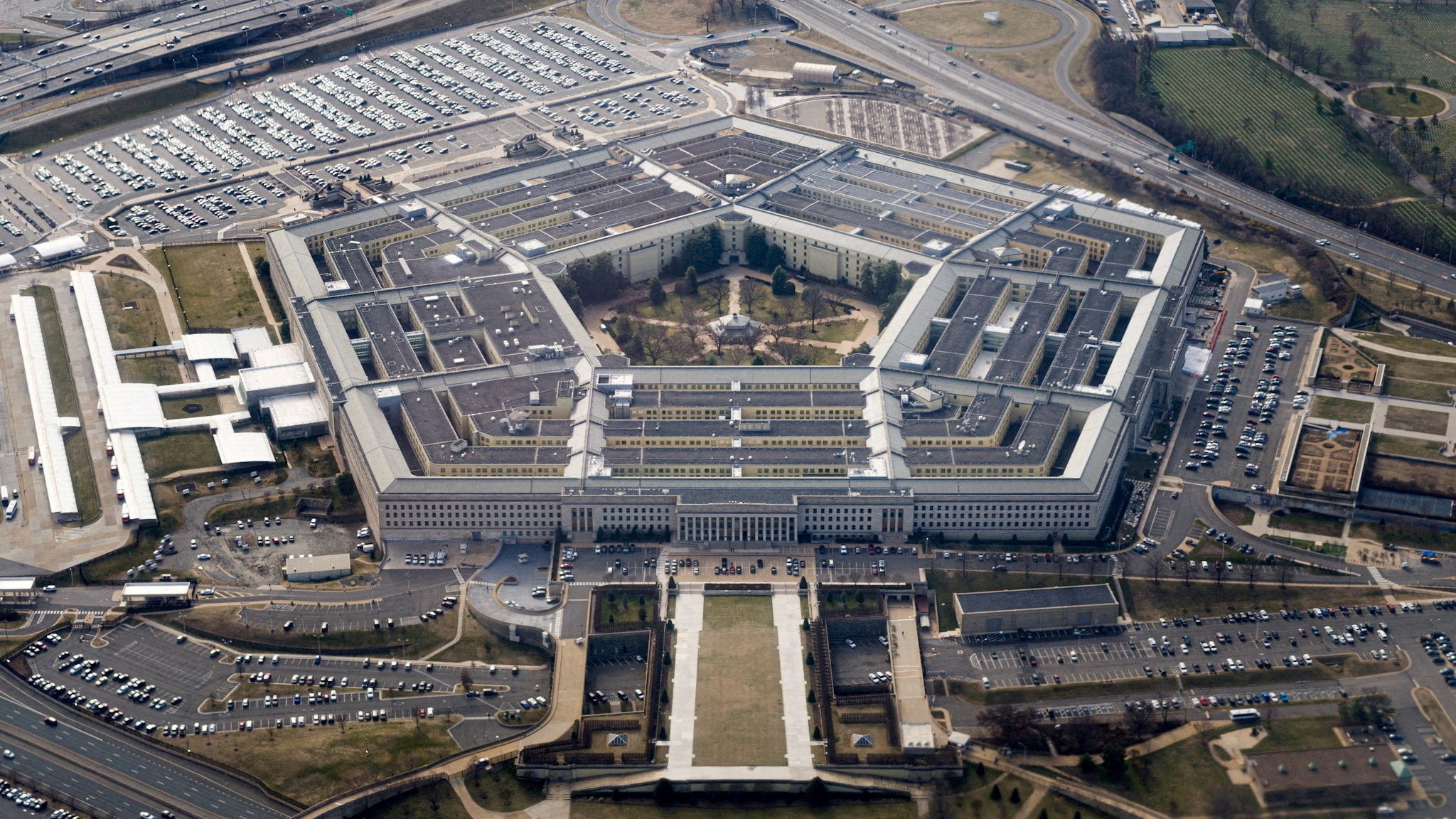
    The United States Congress is preparing for a decisive Wednesday vote on the National Defense Authorization Act (NDAA), the comprehensive annual legislation that sets the Pentagon’s budget and military policy for the upcoming fiscal year. This year’s bill, spanning over 3,000 pages, authorizes a historic discretionary spending level of $900.6 billion, marking a significant increase from the previous year’s $883.7 billion allocation. The funding encompasses a vast spectrum of defense priorities, including military operations, troop compensation, recruitment initiatives, technological innovation, and the modernization of the nation’s nuclear arsenal.

    A substantial portion of the NDAA is dedicated to security cooperation and policy in the Middle East and North Africa (MENA) region. The House Armed Services Committee has explicitly described the budget as providing “unprecedented levels of support for the security of Israel.” While the precise total for all Israel-related projects is not fully itemized, the bill mandates continued substantial funding, including $200 million for the Iron Dome, David’s Sling, and Arrow missile defense systems. An additional $80 million is allocated for the US-Israel Anti-Tunnel Cooperation Program, and $70 million is designated for countering drone attacks and other aerial threats. Furthermore, a new $35 million emerging-technology cooperative program will be established between the US, Israel, and other G7 allies to advance development in artificial intelligence, quantum computing, cybersecurity, robotics, and automation.

    The legislation also aims to bolster Israel’s defense industrial base, establishing a working group to deepen technological integration and consider including Israel in the exclusive US National Technology and Industrial Base (NTIB), a status currently held only by Canada, the UK, and Australia. In a significant policy directive, the bill prohibits the Department of Defense from participating in any international event where Israel is banned due to the Boycott, Divestment, and Sanctions (BDS) movement.

    Beyond Israel, the NDAA frames Iran as the “key driver of regional insecurity” and mandates intensified Pentagon monitoring and reporting to Congress on a range of threats. This includes details on Iran’s conventional weapons purchases from Russia, the status of its proxy forces like the Houthis and Hezbollah, its drone supply chain, and advancements in its ballistic missile and nuclear programs. The US intelligence community is specifically ordered to notify Congress if Iran enriches uranium beyond 60 percent or decides to produce a nuclear weapon.

    The bill extends US support for the Iraqi military through 2026 but attaches a critical condition: 75% of the funds will be withheld until the Pentagon certifies that the Iraqi government has taken credible, verifiable steps to disarm and demobilize Iran-aligned militia groups not integrated into the official security forces. An allocation of $212.5 million is specified for the Counter-ISIS Train and Equip Fund (CTEF) in Iraq, with continued funding assured for Peshmerga forces in the Kurdistan Region.

    A landmark provision within the NDAA is the repeal of the 2019 Caesar Act sanctions on Syria, which had devastating humanitarian consequences for the civilian population. The bill also requires the Pentagon to report on the status of ISIS detention camps, US force posture in Syria, and the feasibility of reopening the US embassy in Damascus.

    Conversely, the legislation has drawn criticism from refugee advocates for omitting funding for the Enduring Welcome Act, which was removed from the draft by House Republican leadership. Advocacy group #AfghanEvac condemned the move as an “abdication of responsibility” for Afghan allies awaiting relocation to the US.

    Finally, the NDAA repeals the 1991 and 2002 Authorizations for Use of Military Force (AUMFs) related to the Gulf War and Iraq invasion, which had been used to justify prolonged military operations. However, the 2001 AUMF underpinning the global war on terror remains in effect. The bill also explicitly prohibits the closure of the Guantanamo Bay detention facility, where 15 men remain held indefinitely without charge.

  • Trump touts upbeat message on economy as Americans feel the pinch

    Trump touts upbeat message on economy as Americans feel the pinch

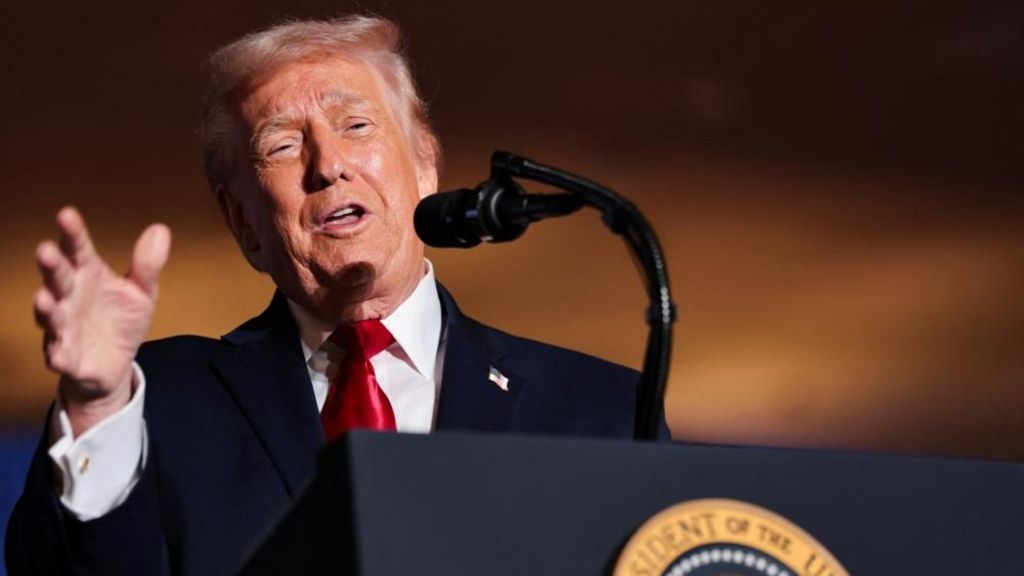
    President Donald Trump launched a campaign-style rally in Pennsylvania’s pivotal swing state, asserting that consumer prices are experiencing a “tremendous” decline despite persistent public concerns about affordability. Addressing supporters at a casino venue, the president declared having “no higher priority than making America affordable again” while dismissing cost-of-living anxieties as a Democratic “hoax.”

    The administration’s recent policy maneuvers include eliminating tariffs on numerous food products, promoting Trump-branded retirement accounts for children, and rolling back fuel efficiency standards as part of its economic messaging strategy. In a newly released Politico interview excerpt, Trump awarded the economy an “A plus-plus-plus-plus-plus” grade—a sentiment partially reflected in his recent three-point approval rating increase to 41% in Reuters/Ipsos polling.

    Nevertheless, economic data reveals a complex landscape: November recorded the lowest consumer confidence levels since spring, while inflation persists at 3%—above the Federal Reserve’s 2% target despite being significantly lower than the 9.1% peak during the Biden administration. Overall prices have surged 25% over five years, generating widespread frustration that outweighs wage growth for many Americans.

    Personal narratives underscore this economic tension. Alaina Hunt, a 37-year-old Oklahoma City designer, lost her job in April partly due to Trump’s steel and aluminum tariffs, and after 75 unsuccessful job applications, she now struggles with $25 weekly increases in grocery bills. Similarly, Beth Richardson from Kansas expressed shock at nearly $5 purchases of Mentos gum after losing her sales support job in late 2023.

    Despite these challenges, certain Trump supporters maintain allegiance. John Mohring, a Wisconsin construction worker, acknowledges persistent grocery inflation but continues supporting the president’s tariff and border policies. Illinois soybean farmer Brad Smith, though initially harmed by China’s purchase freeze during trade tensions, recognizes market recovery since October’s bilateral agreement and backs Trump’s “America First” economic vision.

    The Pennsylvania event initiates a series of rallies designed to bolster Republican prospects amid Democratic successes in recent off-cycle elections that capitalized on economic vulnerabilities.

  • Man who grabbed Ariana Grande kicked out of Lady Gaga concert

    Man who grabbed Ariana Grande kicked out of Lady Gaga concert

    An Australian man with a documented history of disrupting high-profile celebrity events has been forcibly removed from Lady Gaga’s concert in Brisbane, continuing a pattern of behavior that recently resulted in his imprisonment in Singapore. Johnson Wen, 26, was ejected from Suncorp Stadium on Tuesday evening prior to the commencement of the performance, despite not actively disrupting the show.

    The removal stems from Wen’s recent conviction in Singapore where he received a nine-day jail sentence for charging at pop star Ariana Grande during the Asian premiere of ‘Wicked: For Good’ last month. Despite his assurances to the Singaporean court that he would ‘not do it again,’ venue management identified Wen as a potential security threat based on his established pattern of public nuisance offenses.

    Social media footage captured the moment security personnel escorted Wen from the premises as audience reactions ranged from supportive cheers to disapproving boos. Stadium management confirmed to the Sydney Morning Herald that they had received advance intelligence regarding ‘a known serial offender’ potentially attempting to attend and disrupt the event, prompting preemptive action ‘in the interest of the artist’s safety.’

    Wen gained international notoriety following the Singapore incident, where Judge Christopher Goh characterized his actions as ‘attention-seeking’ and demonstrating disregard for public safety. The court subsequently imposed a ban preventing Wen from re-entering Singapore.

    His social media accounts document additional stage invasions during performances by major artists including Katy Perry and The Weeknd. The Grande incident provoked significant outrage among Singaporean fans who expressed concern about potentially ‘re-traumatizing’ the singer, who has publicly discussed experiencing PTSD following the deadly 2017 Manchester Arena bombing at her concert.

  • Canadian airline Air Transat and pilot union reach tentative agreement

    Canadian airline Air Transat and pilot union reach tentative agreement

    Canadian leisure carrier Air Transat has reached a pivotal tentative agreement with its pilot union, successfully avoiding an imminent strike that threatened to paralyze the airline’s operations. The breakthrough came after eleven months of contentious negotiations between the airline and the Air Transat ALPA Master Executive Council, representing over 750 pilots.

    The agreement follows a dramatic 99% strike authorization vote by union members on Sunday, which prompted Air Transat to begin preemptively scaling back flights in anticipation of a work stoppage scheduled to commence Wednesday. Captain Bradley Small, chair of the ALPA Master Executive Council, credited pilot solidarity for compelling management to engage in substantive negotiations.

    According to union statements, the new framework addresses critical concerns regarding compensation disparities, job security provisions, and scheduling flexibility that had fallen behind industry standards. The airline acknowledged the disruption caused by the negotiation uncertainty, extending apologies to customers affected by recent operational adjustments.

    “Our operations are returning to normal,” Air Transat confirmed in a Tuesday announcement, emphasizing their commitment to restoring service quality. The tentative agreement now proceeds to union membership for ratification in the coming days.

    This development marks the second major labor confrontation in Canada’s aviation sector this year, following an August strike by Air Canada flight attendants that required government mediation and resulted in widespread cancellations. The resolution underscores the ongoing tension between labor demands and operational sustainability in the post-pandemic aviation industry.

  • Cair to sue Florida Governor Ron DeSantis for labelling group ‘terrorist’

    Cair to sue Florida Governor Ron DeSantis for labelling group ‘terrorist’

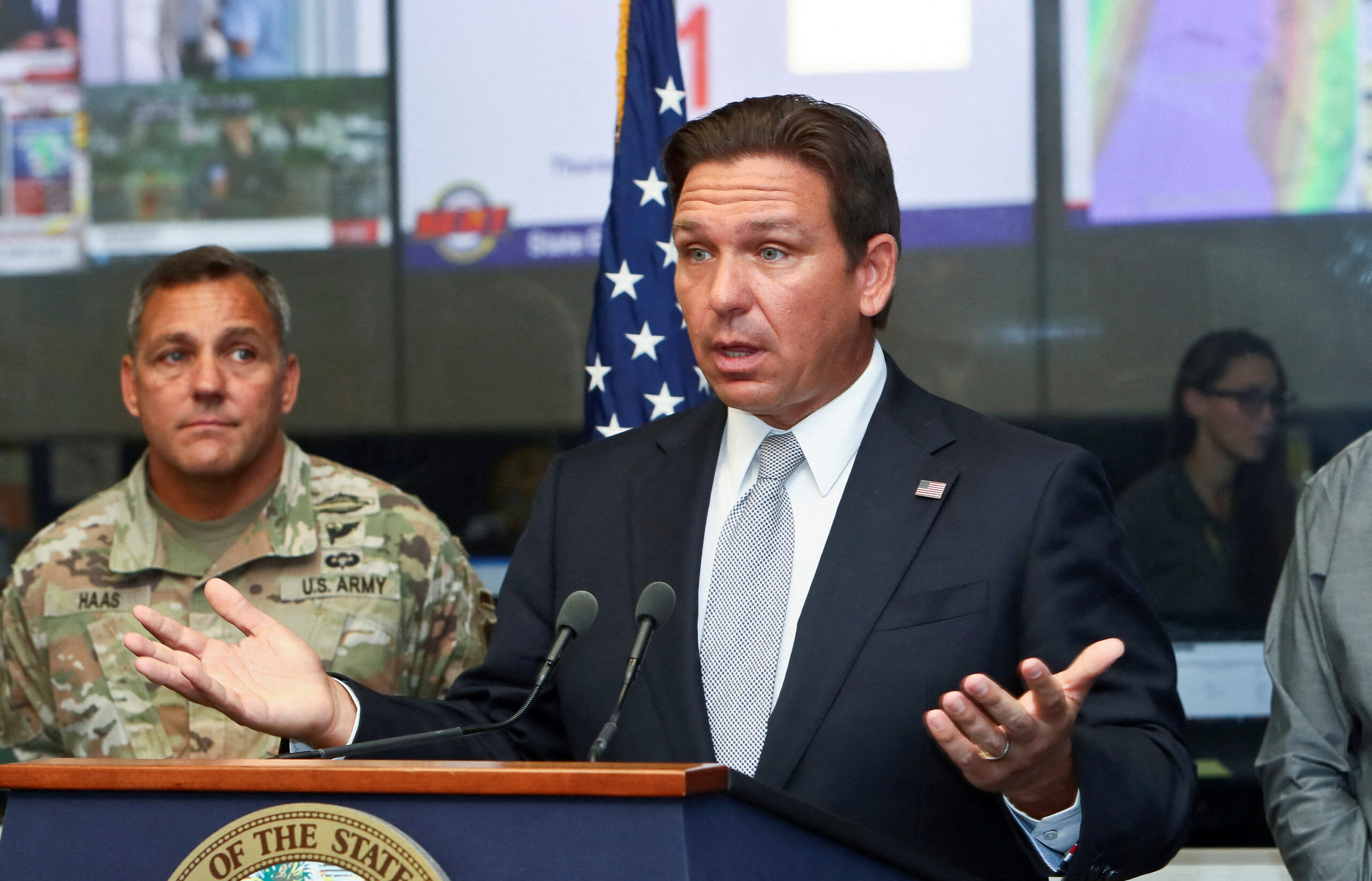
    Florida Governor Ron DeSantis has escalated the political confrontation with Muslim advocacy groups by issuing an executive order on Monday that formally classifies the Council on American-Islamic Relations (CAIR) and the Muslim Brotherhood as terrorist organizations. This controversial designation creates a legal framework for potential state-level prosecutions against individuals or entities alleged to be providing support to these groups.

    The move aligns Florida with Texas, where Governor Greg Abbott implemented similar measures last month. CAIR, a nationwide nonprofit organization dedicated to protecting civil liberties and advocating for American Muslims, immediately denounced the order as both defamatory and unconstitutional. The organization has announced its intention to file a lawsuit against Governor DeSantis in response.

    During a press conference, Hiba Rahim, CAIR Florida’s interim executive director, vehemently challenged the governor’s authority: “Your designation has no basis in law or fact. You do not have the constitutional authority to unilaterally declare any American or an American institution a foreign terrorist group.”

    Governor DeSantis welcomed the impending legal battle, stating that litigation would grant the state discovery rights to subpoena financial records. When pressed by reporters to provide evidence of terrorist ties, DeSantis referenced CAIR’s status as an unindicted co-conspirator in the Holy Land Foundation case—the largest terror financing trial in U.S. history.

    This 2004 case involved five Palestinian-American men convicted of funding terrorism, though civil liberties organizations have consistently argued that the prosecution represented disproportionate targeting of Muslim charities following the 9/11 attacks. A 2009 court ruling ultimately found that the rights of Muslim groups named in the case had been violated.

    CAIR maintains that the designation represents political retaliation for its Palestine advocacy, which constitutes protected speech under the First Amendment. The organization accused DeSantis of being an “Israel First politician” seeking to silence criticism of U.S. support for Israel’s military actions.

    The executive order also targets the Muslim Brotherhood, despite its decentralized structure without centralized leadership. This follows President Trump’s recent executive order exploring the designation of certain Muslim Brotherhood chapters as Foreign Terrorist Organizations, specifically mentioning chapters in Lebanon, Egypt, and Jordan.

    Right-wing think tanks and Trump loyalists, including Senator Ted Cruz, have long advocated for the Muslim Brotherhood’s designation. In response, the organization stated through official channels that Trump’s order lacked “any credible legal or security basis,” emphasizing that independent Muslim Brotherhood organizations in different countries are separate entities making independent decisions within their national legal frameworks.

  • Two teenagers went to seek gold. They were buried alive in a mine collapse

    Two teenagers went to seek gold. They were buried alive in a mine collapse

    A profound sense of grief permeates the village of Nyimbadu in Sierra Leone’s Eastern Province, where two teenage boys—16-year-old Mohamed Bangura and 17-year-old Yayah Jenneh—were laid to rest after perishing in a collapsed gold mine. The makeshift excavation pit they were digging crumbled upon them, cutting short their lives in a tragic incident that underscores a growing humanitarian crisis.

    This marks the third fatal mining accident in the region within four years, claiming at least five young lives. The phenomenon reflects a disturbing trend where increasing numbers of children are abandoning education to engage in perilous artisanal mining operations. As diamond reserves diminish throughout Eastern Province, informal gold mining has expanded dramatically, creating hazardous pits reaching depths of 4 meters (13 feet) with minimal structural support.

    Namina Jenneh, Yayah’s widowed mother, now faces the impossible task of providing for her five remaining children alone. Though she herself worked in the mines and introduced her son to the practice, she never anticipated his final journey to the fatal site. “He didn’t tell me he was going to that site—if I had known I would have stopped him,” she lamented, scrolling through photographs of her bright-eyed son on her damaged mobile phone.

    The economic desperation fueling this crisis is palpable. Most families in Nyimbadu survive through small-scale farming and petty trading, with few alternative income sources. Seventeen-year-old Komba Sesay, who dreams of becoming a lawyer, now spends his days sifting river sediment for gold to afford his high school examinations. His typical weekly earnings of $3.50 fall significantly below Sierra Leone’s minimum wage, yet rare discoveries yielding $35 keep hope alive amidst the danger.

    The educational system suffers doubly as teachers likewise abandon classrooms for mining sites, their government salaries proving insufficient compared to potential mining windfalls. Roosevelt Bundo, headteacher at Gbogboafeh Aladura Junior Secondary School, confirms this troubling exodus affects both students and educators.

    While Information Minister Chernor Bah emphasizes the government’s commitment to education—citing 8.9% of GDP allocated to educational initiatives including teacher support and school-feeding programs—implementation struggles against harsh economic realities. Charities and activists work to extract children from mines and reintegrate them into schools, but without viable economic alternatives, the gravitational pull of potential mining income remains overwhelming.

    As mining camps evolve into full-fledged towns, the human cost continues to mount. Local child protection activist Sahr Ansumana summarizes the desperate plea of communities: “We need help. Not prayers. Not promises. Help.”

  • Indian couple trolled over skin colour after wedding video goes viral

    Indian couple trolled over skin colour after wedding video goes viral

    An Indian couple’s celebration of marital bliss has transformed into a powerful social commentary on deep-rooted colorism after facing severe online trolling. Rishabh Rajput and Sonali Chouksey, who met in college zoology class in 2014 and married November 23rd, became unintended symbols of resistance against skin color discrimination when their wedding photos attracted vicious cyberbullying.

    The digital harassment began immediately after the Madhya Pradesh couple shared images from their traditional ceremony. Trolls predominantly targeted Rajput for his darker complexion while simultaneously accusing Chouksey of being a ‘gold-digger’ who married for financial security or governmental connections. Comments speculated about ‘compulsions’ behind their union and questioned the authenticity of their happiness.

    Rather than retreating from public view, the couple launched a courageous counter-narrative through multiple media interviews and social media posts. ‘People were making jokes and memes and it felt very wrong,’ Rajput told BBC Hindi from their Jabalpur home. ‘It was our moment we had waited for so many years—when I saw people’s reactions, I was really shocked.’

    The couple emphasized that their eleven-year relationship had never faced such color-based criticism before their wedding went viral. In an Instagram response, Rajput addressed trolls directly: ‘Sorry to disappoint you. I’m not a government employee, but I work hard for my family. Sonali fell in love with me when I had nothing—she has stood with me through every good and bad moment.’

    Their response has ignited broader discussions about India’s documented obsession with fair skin, which often carries tragic social consequences. Chouksey questioned the prevailing bias: ‘We live in India where people from different regions have different skin color. Fair skin doesn’t necessarily make someone a good person.’

    Rajput highlighted the demographic reality that ’70-80% of people in India have darker skin tones, but the Indian mentality is that fairer is better. It’s time to change that notion.’ The couple maintains that despite the hurtful comments affecting their families, their relationship remains strong. ‘When you look at us,’ Rajput challenges critics, ‘do we look even remotely unhappy to you? We don’t. Because we have what most people don’t have—I have her and she has me.’

  • How long Britain could really fight for if war broke out tomorrow

    How long Britain could really fight for if war broke out tomorrow

    As Russia’s full-scale invasion of Ukraine approaches its fifth anniversary, Western military analysts are raising urgent concerns about the United Kingdom’s preparedness for potential conflict with Moscow. Recent warnings from British military leadership emphasize that preparation for war remains the most reliable method of prevention, yet multiple assessments suggest the UK would struggle to sustain prolonged combat operations.

    Russian President Vladimir Putin’s December declaration that Russia stands ready for European conflict serves as a stark reminder that war between Russia and NATO nations, including the UK, represents a tangible threat rather than distant speculation. Modern warfare would likely commence not with conventional attacks but through hybrid tactics including cyber operations targeting critical infrastructure, communications blackouts, and disruption of financial systems and energy networks.

    Britain’s technology-dependent society relies extensively on subsea cables and pipelines for data transmission, financial transactions, and energy distribution. Intelligence indicates Russian spy vessels have extensively mapped these vulnerabilities for potential sabotage during hostilities. The Royal Navy has responded by investing in underwater drone technology with integrated sensors to monitor these critical assets.

    According to analysis from the Royal United Services Institute (Rusi), the UK lacks comprehensive plans for warfare extending beyond several weeks. Critical shortages exist in ammunition, artillery, vehicles, air defense systems, and medical capacity. Reserve regeneration pipelines operate slowly, and force design lacks the depth necessary to absorb losses and continue fighting effectively.

    The Ukraine conflict has demonstrated two crucial military lessons: the fundamental importance of drone technology across all combat levels, and the necessity of mass—both in personnel and military hardware. Russia maintains significant advantages in both categories, with monthly production reaching approximately 150 tanks, 550 infantry fighting vehicles, 120 Lancet drones, and over 50 artillery pieces. Russia’s defense spending approaches 7% of GDP, while the UK struggles to reach 2.5% by 2027.

    Personnel presents another critical challenge. The British Army’s paper strength of approximately 74,000 reduces to just 54,000 deployable soldiers when accounting for non-deployable personnel and global postings. This number falls below Russia’s average two-month casualty rate in Ukraine. While European nations like Germany, France, and Sweden are reinstating voluntary military service programs, the UK government rejected similar proposals for a ‘citizen army’ in 2024.

    Potential flashpoints include the Suwalki Gap between Poland and Lithuania, Baltic states with significant Russian-speaking minorities, and the Arctic archipelago of Svalbard. The UK maintains a battle group of approximately 900 personnel in Estonia, which would require rapid reinforcement to brigade strength in conflict scenarios.

    The wildcard remains U.S. commitment under President Donald Trump’s administration, though NATO’s Military Committee chairman maintains American dedication to alliance defense. Ultimately, experts conclude that while an isolated UK-Russia conflict remains improbable, Britain must address critical defense vulnerabilities through increased spending, industrial capacity expansion, and societal recognition that continued freedom requires substantial investment and preparation.

  • Japanese call for retraction by Takaichi

    Japanese call for retraction by Takaichi

    A coalition of prominent Japanese scholars, former government officials, and legal experts has publicly demanded Prime Minister Sanae Takaichi immediately retract her controversial statements regarding China’s Taiwan region. The group warns that her parliamentary comments not only violate foundational postwar agreements but also risk reviving militaristic tendencies in Japanese policy.

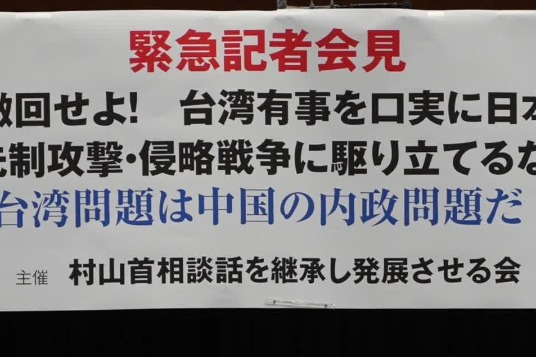
    The critics, speaking at a Monday news conference organized by the Association for Inheriting and Propagating the Murayama Statement, emphasized that Takaichi’s remarks represent a dramatic departure from Japan’s longstanding diplomatic position. They specifically cited violations of the 1972 China-Japan Joint Statement and postwar international agreements that have governed Tokyo-Beijing relations for decades.

    International relations scholar and former diplomat Kazuhiko Togo underscored that Taiwan-related commitments in the 1972 agreement resulted from rigorous bilateral negotiations, and China has consistently expected Japanese adherence to these terms.

    The Association, established in 2013 to promote reflection on Japan’s wartime aggression and colonial history, expressed particular concern through its secretary-general Takakage Fujita. He stated that Takaichi’s suggestions regarding potential Japanese military response to a ‘Taiwan contingency’ marked the first time a sitting prime minister has openly discussed wartime postures in parliament, fundamentally contradicting Japan’s postwar peace commitments.

    Political economist Kazuhiko Uekusa highlighted the administration’s contradictory stance, noting that Takaichi initially claimed her November 7 remarks didn’t represent official government policy before later asserting they aligned with Japan’s established diplomatic position.

    Opposition leaders have joined the criticism, with Social Democratic Party leader Mizuho Fukushima declaring the Prime Minister’s comments on ‘survival-threatening situations’ unconstitutional during a Sunday meeting in Fukushima. Fukushima demanded both retraction and resignation according to Mainichi Shimbun reports.

    Experts warn that Takaichi’s security agenda—including defense budget increases for ‘enemy base strike capabilities,’ arms export rule revisions, and proposed intelligence legislation—collectively pushes Japan toward dangerous confrontation and unchecked military expansion. Professor Emeritus Masakatsu Adachi cautioned that these moves effectively strengthen domestic information control while pushing the nation ‘toward war.’

  • Sudan’s Heglig: Why the oil field taken by the RSF matters

    Sudan’s Heglig: Why the oil field taken by the RSF matters

    In a significant escalation of Sudan’s ongoing civil conflict, paramilitary Rapid Support Forces (RSF) have captured the nation’s largest oil field at Heglig, consolidating control over resource-rich southern territories previously held by the Sudanese Armed Forces (SAF). This strategic victory grants the RSF command over critical infrastructure including approximately 75 wells, processing stations, and a vital segment of the 1,600km Greater Nile Oil Pipeline that exports crude to international markets via Port Sudan.

    The capture represents both military and economic transformation in the conflict. Militarily, it opens a corridor toward el-Obeid and potentially back to Khartoum, while economically it provides the RSF with substantial revenue streams through control of oil transfer nodes and refineries. Conflict analyst Emadeddin Badi notes this development enables the RSF to replicate the model of UAE-backed Libyan commander Khalifa Haftar, using oil infrastructure as bargaining leverage and military financing.

    International dimensions complicate the situation, with the United Arab Emirates facing persistent allegations of supplying the RSF despite official denials. The involvement of South Sudanese forces further illustrates the conflict’s regional complexity, as the landlocked nation depends heavily on the pipeline for its oil exports. South Sudanese soldiers were documented facilitating the RSF’s takeover after the SAF’s 90th infantry brigade withdrew following negotiations with local groups.

    The RSF’s advancement effectively bifurcates Sudan, with the army retaining northern, eastern and central regions while the RSF controls western and substantial southern territories. This division raises concerns about potential long-term partition, though analysts note key differences with Libya’s situation, particularly regarding coastal access and bureaucratic infrastructure.

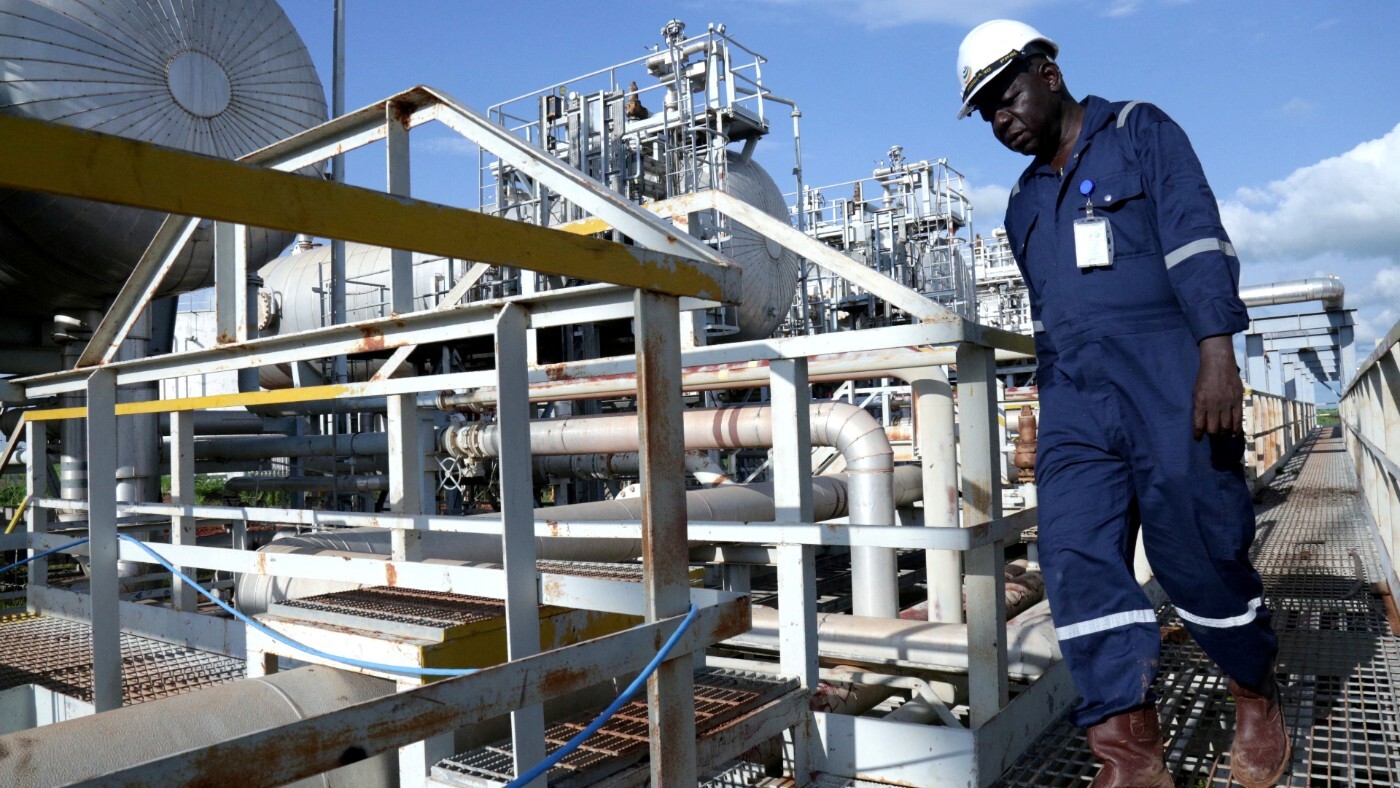
    Production at Heglig has been suspended following the takeover, with engineers evacuating to South Sudan. The facility previously processed approximately 130,000 barrels daily of South Sudanese crude alongside its own 40,000-barrel production, representing a crucial component of both nations’ economies that now falls under paramilitary control.