作者: admin

  • Eurovision winner Nemo to return trophy in protest of Israel

    Eurovision winner Nemo to return trophy in protest of Israel

    In an unprecedented move that strikes at the heart of Eurovision’s founding principles, 2024 champion Nemo has formally returned their trophy to contest organizers. The Swiss performer—who made history as the first non-binary artist to win the competition—declared the symbolic gesture reflects profound disagreement with the European Broadcasting Union’s (EBU) decision to maintain Israel’s participation amid ongoing military operations in Gaza.

    Nemo’s statement, disseminated via Instagram, articulated that Israel’s continued involvement creates a ‘clear conflict’ with Eurovision’s professed values of ‘unity, inclusion and dignity.’ The artist specifically referenced a September report from the UN’s Independent International Commission of Inquiry that characterized Israel’s actions as genocide, making the EBU’s position untenable in their view.

    This protest occurs against a backdrop of escalating tensions within the Eurovision community. Five nations—Iceland, Spain, Ireland, Slovenia, and the Netherlands—have already announced boycotts of the 2025 event in Vienna, which was intended to mark the contest’s 70th anniversary. The crisis represents the most significant organizational challenge in Eurovision history, further complicated by voting irregularities and allegations of governmental interference during the 2024 competition.

    While Israel’s government has celebrated its inclusion as a ‘victory over critics’ and an ‘appreciated gesture of solidarity,’ Nemo emphasized their action targets institutional decisions rather than individual artists. ‘When entire countries withdraw, it should be clear that something is deeply wrong,’ they stated, adding that the contest must not be used to ‘soften the image of a state accused of severe wrongdoing.’

    The EBU has implemented some procedural reforms following this year’s controversies, including enhanced mental health support for participants—a measure partly inspired by Nemo’s own experiences of isolation during the 2024 contest. Despite the ongoing turmoil, the broadcasting union maintains that a ‘large majority’ of members support Israel’s continued participation and that Eurovision 2026 will proceed as planned.

  • A Chinese official exposed his boss. Now in Texas, he’s hunted by Beijing – with help from US tech

    A Chinese official exposed his boss. Now in Texas, he’s hunted by Beijing – with help from US tech

    A former Chinese official’s harrowing escape from China’s pervasive surveillance apparatus reveals the extensive reach of Beijing’s global monitoring operations. Li Chuanliang, a retired vice mayor from Jixi, was recovering from cancer treatment on a South Korean resort island when he received an urgent warning: Chinese authorities had designated him a fugitive. What followed was an international chase spanning multiple continents, documented through exclusive interviews and evidence obtained by The Associated Press.

    The Chinese government employed sophisticated surveillance technology—much of it originally developed by U.S. tech firms—to track Li’s movements, monitor his communications, and pressure his associates. More than 40 individuals connected to Li, including his pregnant daughter, were identified and detained through methods that included facial recognition scans of taxi drivers. Three former associates died in custody during the investigation.

    China’s Operations “Fox Hunt” and “Sky Net” represent a systematic approach to targeting officials, dissidents, and alleged criminals beyond its borders. These initiatives have resulted in over 14,000 individuals being returned from more than 120 countries through various coercive measures, according to state media reports. While Beijing frames these operations as anti-corruption efforts, critics argue they primarily serve to suppress dissent and eliminate political opponents.

    The technological infrastructure enabling this global surveillance traces back to American companies including IBM, Oracle, and Microsoft. Internal documents reveal these firms provided software and systems to China’s Economic Crime Investigation Bureau, allowing authorities to mine texts, payments, travel records, and communications to map relationships and assets. Though these sales complied with U.S. sanctions, they have empowered China’s ability to monitor perceived enemies worldwide.

    Li maintains that the corruption charges totaling approximately $435 million are politically motivated retaliation for his criticism of local officials and the Communist Party. Legal documents and expert analyses reviewed by AP indicate irregularities in the prosecution’s case, including altered records, blocked evidence access, and coerced confessions.

    Despite obtaining temporary refuge in the United States, Li remains in legal limbo with his asylum application pending. His case exemplifies how China projects its power globally through digital surveillance, creating what experts describe as a profoundly effective chilling effect on dissent both within China and abroad.

  • MoD to unify all intelligence units under single command

    MoD to unify all intelligence units under single command

    In a sweeping strategic overhaul, the UK Ministry of Defence (MoD) is consolidating its disparate intelligence units into a single integrated organization—the Military Intelligence Services (MIS). This landmark reform responds to a more than 50% surge in hostile intelligence operations targeting British defence infrastructure over the past year.

    The MIS will unify intelligence personnel from the Royal Navy, British Army, Royal Air Force, UK Space Command, and Permanent Joint Headquarters. This consolidation aims to dramatically accelerate how critical information is collected, analyzed, and disseminated across military branches.

    Accompanying the MIS will be two supporting entities: a new Defence Counter-Intelligence Unit designed to centralize expertise in disrupting adversarial operations, and a Defence Intelligence Academy dedicated to advanced training in intelligence disciplines.

    The restructuring follows recommendations from June’s Strategic Defence Review and comes shortly after the Dawn Sturgess Inquiry revealed foreign intelligence services operating “far beyond traditional espionage norms.” In response, the UK government imposed comprehensive sanctions on Russia’s GRU military intelligence agency.

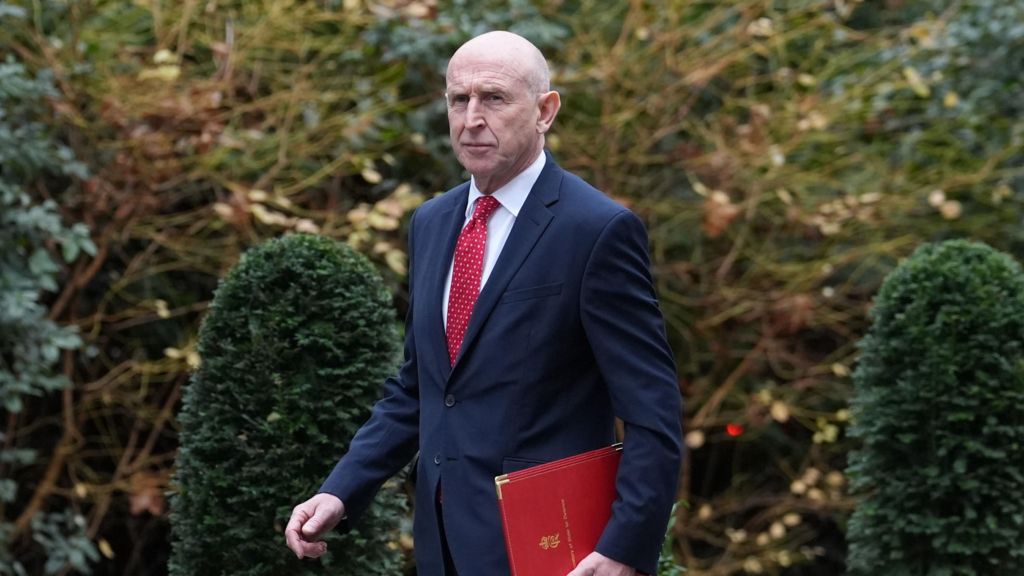
    Defence Secretary John Healey stated the reform positions Britain at the “leading edge of military innovation,” providing “sharper insights into what our adversaries might do next” to protect forces and critical infrastructure. His comments were echoed by Armed Forces Minister Alistair Carns, who warned that “the shadow of war is knocking on Europe’s door,” emphasizing that the continent now faces “wars of necessity” rather than choice.

    The announcement coincides with heightened geopolitical tensions. NATO Secretary General Mark Rutte recently cautioned that Russia could attack an allied nation within five years, urging preparedness for large-scale conflict. This warning follows Royal Navy reports of tracking Russian submarines in the English Channel—part of a 30% increase in Russian naval activity in UK waters over two years.

    Amid these developments, the UK remains committed to raising defence spending to 2.6% of GDP by 2027—the largest sustained increase since the Cold War’s conclusion.

  • British backpacker jailed for 4 years over deadly drunken e-scooter crash

    British backpacker jailed for 4 years over deadly drunken e-scooter crash

    A 25-year-old British national has been sentenced to four years imprisonment in Australia following a tragic e-scooter accident that resulted in the death of a Perth father. Alicia Kemp, from Redditch, Worcestershire, struck 51-year-old Thanh Phan from behind while operating an electric scooter at speeds between 20-25 km/h on a Perth sidewalk in May.

    Western Australia’s District Court heard that Kemp had been consuming alcohol throughout the afternoon preceding the incident, with forensic analysis revealing her blood alcohol concentration exceeded three times the legal limit. The collision caused Phan, a father of two children, to strike his head violently against the pavement. He succumbed to catastrophic brain injuries after two days of medical treatment.

    A companion riding as Kemp’s passenger on the e-scooter sustained significant injuries including a fractured skull and nasal bones, though these were not considered life-threatening. Kemp, who had entered Australia on a working holiday visa, entered a guilty plea to charges of dangerous driving causing death during proceedings at Perth Magistrates Court in August.

    Justice records indicate Kemp’s sentence has been backdated to June 1, with eligibility for parole consideration after serving two years of her custodial term. The court additionally imposed a two-year disqualification of her driving privileges. The case represents one of Australia’s first major sentencing outcomes involving fatal electric scooter operations under intoxication, highlighting evolving legal considerations regarding personal mobility devices and impairment laws.

  • A 6.9 magnitude earthquake causes small tsunami waves off northeastern Japan

    A 6.9 magnitude earthquake causes small tsunami waves off northeastern Japan

    TOKYO — Northeastern Japan experienced a significant seismic event on Friday when a 6.9 magnitude earthquake struck off the coast of Aomori prefecture. The tremor, which occurred at 11:44 a.m. local time at a depth of 20 kilometers (12.4 miles), prompted immediate tsunami warnings from the Japan Meteorological Agency. These advisories were lifted approximately two hours later after only minor wave activity was recorded.

    The quake generated small tsunami waves that reached coastal areas of Hokkaido and Aomori prefectures, but preliminary assessments indicated no substantial damage or injuries resulting from the event. This seismic activity follows a more powerful 7.5 magnitude earthquake that impacted the same region earlier in the week, which resulted in multiple injuries and temporary power disruptions.

    Seismologists note that both recent earthquakes occurred in proximity to the epicenter of the catastrophic 2011 magnitude 9.0 quake that devastated Japan’s northeastern coast, claiming nearly 20,000 lives and causing the Fukushima nuclear disaster. Japanese authorities have maintained heightened alert levels, warning residents of potential aftershocks and advising continued emergency preparedness measures.

    While officials confirmed a marginally increased risk of larger seismic events following Monday’s quake, they emphasized that current monitoring does not predict an imminent megaquake. The agency continues to urge coastal communities from Chiba prefecture to Hokkaido to remain vigilant and maintain disaster readiness protocols.

  • Trump signs order to block states from enforcing own AI rules

    Trump signs order to block states from enforcing own AI rules

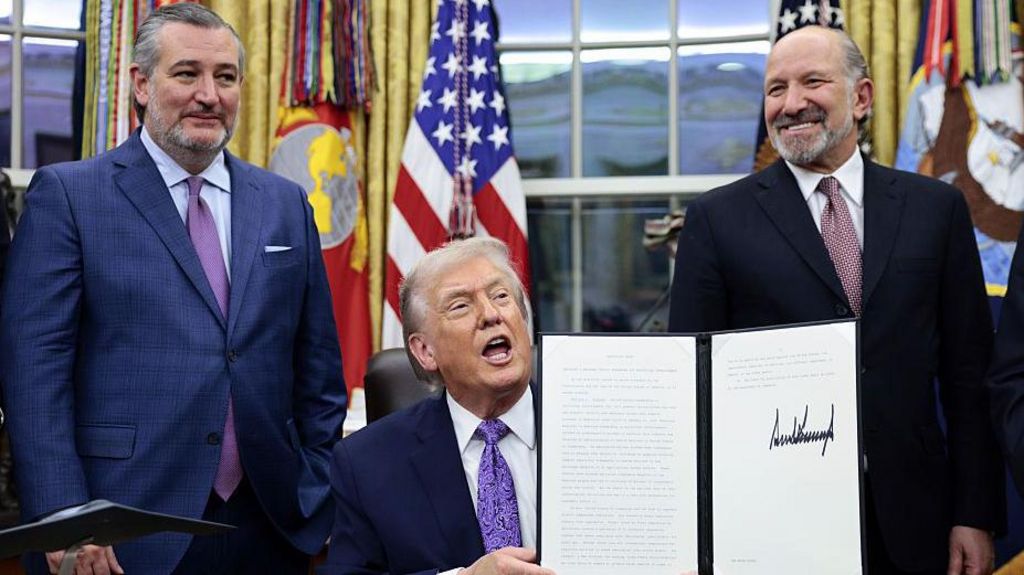
    In a significant move to centralize artificial intelligence governance, President Donald Trump has issued an executive order prohibiting individual states from implementing their own AI regulatory frameworks. The Oval Office signing ceremony on Thursday featured key administration officials who characterized the order as essential for maintaining America’s competitive edge in the global AI race.

    President Trump emphasized the need for unified national standards, stating, “We want to have one central source of approval” to prevent a patchwork of conflicting state regulations. White House AI adviser David Sacks clarified that the administration would target only the most “onerous” state rules while permitting regulations concerning children’s safety.

    The decision represents a major victory for technology behemoths including OpenAI, Google, Meta, and Anthropic, which have consistently advocated for federal preemption of state AI laws. Industry leaders contend that fragmented regulatory approaches could stifle innovation and impede the United States’ ability to compete with China’s substantial investments in artificial intelligence.

    However, the executive order has ignited immediate opposition from several states with established AI regulatory frameworks. California Governor Gavin Newsom, a frequent Trump critic, issued a scathing statement accusing the president of “ongoing grift in the White House” and attempting to “enrich himself and his associates” at the expense of public safety. California recently enacted comprehensive AI legislation requiring major developers to submit risk mitigation plans for their models.

    Beyond California, states including Colorado and New York have developed their own AI regulatory measures. Advocacy groups have joined the opposition, with Julie Scelfo of Mothers Against Media Addiction arguing that the order “undermines states’ basic rights to establish sufficient guardrails to protect their residents.” Critics maintain that state-level regulations are necessary absent meaningful federal standards for AI development and deployment.

  • ‘We will continue’: The Palestinian rights groups sanctioned by Trump

    ‘We will continue’: The Palestinian rights groups sanctioned by Trump

    In a powerful demonstration of resilience, leaders of Palestine’s foremost human rights organizations have declared their unwavering commitment to justice despite facing severe financial and operational constraints from recent US sanctions. Shawan Jabarin of Al-Haq and Raji Sourani of the Palestinian Centre for Human Rights delivered their assessments during the 24th Assembly of States Parties to the International Criminal Court in The Hague.

    The sanctions, implemented by the Trump administration in September, have effectively frozen bank accounts, severed international donor relationships, and left 45 employee families without regular income. Both directors characterized the measures as unprecedented attacks on humanitarian work, noting that the US government explicitly targeted their organizations for cooperating with ICC investigations into Israeli military actions.

    Despite immediate financial devastation—including closed bank accounts and suspended transfers from fearful international partners—both organizations continue submitting extensive documentation of alleged violations in Gaza and the West Bank to ICC prosecutors. The directors reported meeting with ICC officials who expressed determination to continue their investigations, though both advocates expressed frustration at the court’s slow progress in curtailing ongoing violence.

    The sanctions carry severe implications beyond financial strain, including potential criminal exposure for organizations that maintain relationships with the sanctioned groups. Nevertheless, both directors emphasized that their work represents an idea that cannot be suppressed by financial measures. They called for stronger international support, particularly urging European nations to activate the EU Blocking Statute to protect entities from extraterritorial application of US sanctions.

    Both organizations continue operating through alternative support networks while maintaining that their mission to defend victims remains unchanged despite the unprecedented challenges they face.

  • Make your own AI Mickey Mouse: Disney embraces new tech

    Make your own AI Mickey Mouse: Disney embraces new tech

    In a landmark industry shift, Walt Disney Company and OpenAI have unveiled a groundbreaking three-year licensing agreement that will empower users to generate artificial intelligence content featuring Disney’s iconic characters. The partnership, announced December 11, 2025, represents the most significant embrace of generative AI technology by a major entertainment corporation to date.

    The comprehensive deal licenses over 200 characters from Disney’s extensive portfolio, including Mickey Mouse, Marvel superheroes, Pixar animations, and Star Wars personalities. Through OpenAI’s Sora video generation platform and ChatGPT, fans will gain authorized access to create and share AI-generated short-form content featuring these beloved figures.

    Disney’s strategic move includes a substantial $1 billion equity investment in OpenAI, complemented by warrants for additional shares. The announcement triggered an immediate 2% surge in Disney’s stock value, reflecting market optimism about the partnership’s potential.

    Disney CEO Robert Iger characterized the collaboration as responding to “an important moment for our industry,” emphasizing the commitment to “thoughtfully and responsibly extend the reach of our storytelling.” OpenAI CEO Sam Altman praised Disney as “the global gold standard for storytelling,” highlighting the agreement as a model for responsible cooperation between AI developers and creative enterprises.

    The partnership establishes strict creative boundaries: generated content will be limited to 30-second videos, explicitly excluding actor likenesses and voices amid ongoing industry concerns about AI’s impact on creative professions. Iger reassured that the technology “honors and respects” creators through associated licensing fees rather than threatening their livelihoods.

    Beyond consumer content creation, Disney plans to integrate OpenAI’s technology into its Disney+ streaming platform and internal operations, making ChatGPT available to corporate staff. Both companies have committed to implementing age-appropriate controls and preventive measures against illegal or harmful content generation.

    The agreement emerges against a complex backdrop of industry tension. Disney simultaneously maintains legal action against Google, alleging unauthorized use of intellectual property to train AI models, demonstrating the company’s dual strategy of partnership and protection regarding emerging technologies.

  • ‘Deafening silence’: US journalist wounded by Israel says his government has done nothing

    ‘Deafening silence’: US journalist wounded by Israel says his government has done nothing

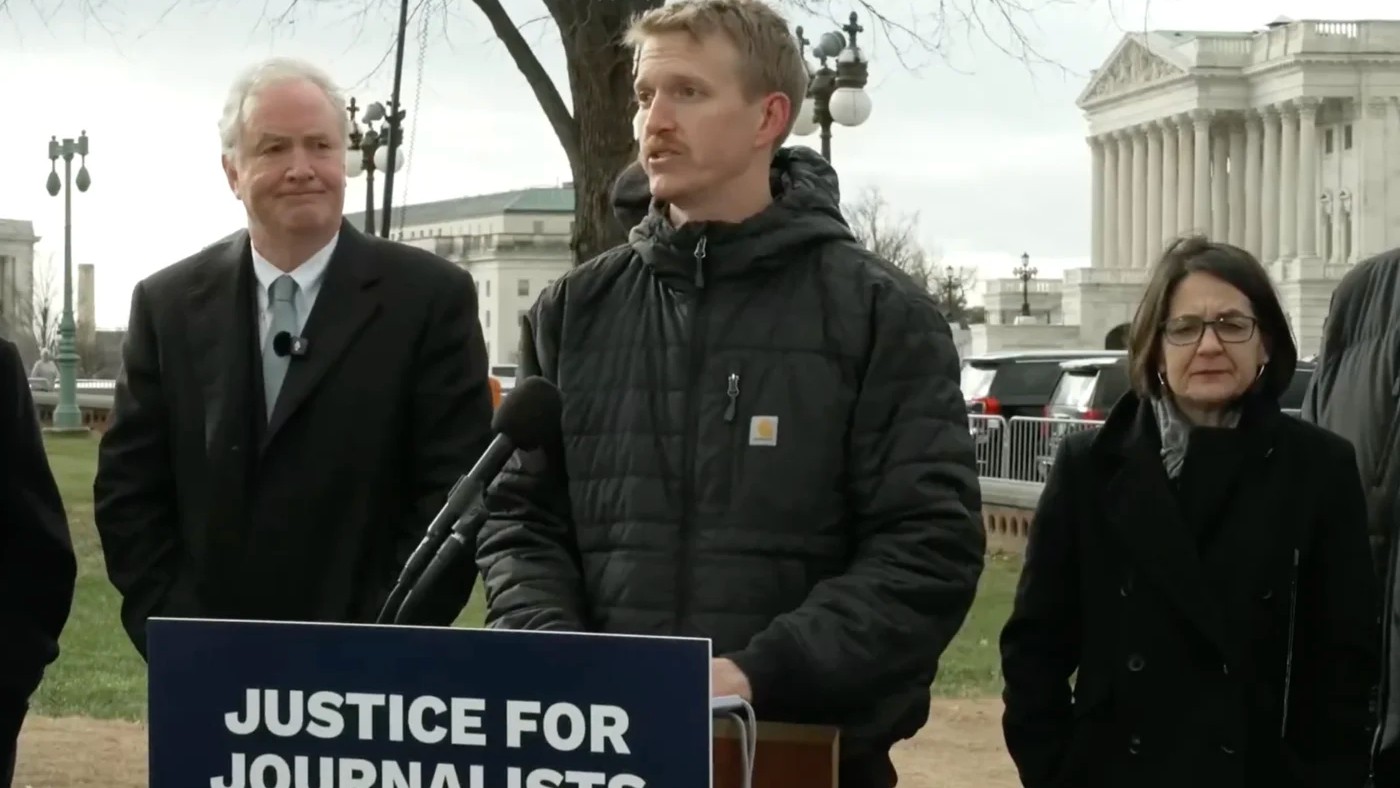
    A coalition of Democratic legislators has joined forces with leading human rights organizations to demand a full and independent investigation into the October 2023 attack on journalists near the Israel-Lebanon border. The incident, which resulted in the death of Reuters journalist Issam Abdallah and injured six others from Reuters, Al Jazeera, and AFP, represents what advocates call the first alleged targeting of media personnel following the October 7th hostilities.

    Eyewitness accounts and multiple independent investigations indicate that the group of clearly identifiable journalists had been stationary for over an hour before being struck by two separate projectiles originating from Israeli military positions. AFP journalist Dylan Collins, a U.S. citizen who sustained shrapnel wounds in the attack, described his frustrating two-year quest for accountability from both the Biden and Trump administrations, met with what he characterized as ‘deafening silence.’

    Senator Peter Welch of Vermont revealed that dozens of Congress members have repeatedly sought answers through official channels, sending multiple letters to the State Department that have gone unanswered. The lawmakers seek three specific disclosures: which Israeli military unit fired upon the journalists, whether Israel conducted any internal investigation, and if U.S. officials ever discussed the incident with their Israeli counterparts.

    The call for investigation follows a February 2024 United Nations inquiry that determined an Israeli tank fired two 120mm shells at the ‘clearly identifiable journalists’ in violation of international law. The UNIFIL report noted no cross-border hostilities occurred for over 40 minutes preceding the attack and recommended Israel conduct a full investigation and share its findings—actions that have not been taken.

    Separate investigations by Reuters, Human Rights Watch, and Amnesty International published in December 2024 reached similar conclusions, with Amnesty characterizing the strikes as ‘likely a direct attack on civilians that must be investigated as a war crime.’ Forensic analysis suggests the journalists were visible to Israeli surveillance systems, including nearby drones and observation towers, when targeted by precision munitions fired from approximately 1.5 kilometers away.

    The incident has taken on broader significance as more than 260 media professionals have been killed in Gaza since October 2023, raising concerns about the protection of journalists in conflict zones and the accountability mechanisms for investigating such incidents.

  • China’s new ‘condom tax’ draws skepticism and worries over health risks

    China’s new ‘condom tax’ draws skepticism and worries over health risks

    In a significant policy shift, China will eliminate its three-decade-long value-added tax exemption for contraceptive drugs and products effective January 1st. The move aligns with Beijing’s ongoing efforts to reverse declining birth rates by making contraception less financially accessible. Under the new regulations, products including condoms will be subject to the standard 13% VAT applied to most consumer goods.

    The policy change has generated substantial discussion across Chinese social media platforms, where users have expressed both skepticism and criticism. Many question the effectiveness of the approach, noting that the minimal tax increase pales in comparison to the substantial costs associated with raising children. The decision marks a dramatic reversal from China’s previous population control measures, which included forced abortions and severe penalties under the notorious one-child policy that remained in effect until 2015.

    Demographic experts express concerns about potential public health consequences. Dr. Qian Cai of the University of Virginia’s Demographics Research Group notes that “the tax’s impact on fertility rates will be very limited,” while warning that reduced contraceptive access could lead to increased unplanned pregnancies and sexually transmitted infections. Current data reveals concerning trends: China recorded approximately 9.5 million births in 2024, representing a significant decline from 14.7 million in 2019 despite favorable astrological conditions.

    The policy change disproportionately affects women, who bear primary responsibility for contraception in China. Current usage patterns show only 9% of couples relying on condoms, with 44.2% using intrauterine devices and 30.5% undergoing female sterilization. Many women view the policy as another governmental intrusion into bodily autonomy, with one teacher describing it as “a disciplinary tactic, a management of women’s bodies.”

    Public health experts warn the policy could exacerbate existing challenges, including China’s high abortion rates (9-10 million annually) and rising STI cases. Reported infections included over 100,000 gonorrhea cases and 670,000 syphilis cases in 2024, with HIV/AIDS infections reaching approximately 1.4 million.