作者: admin

  • Look: Design revealed for Dubai’s Palm Jebel Ali Friday Mosque

    Look: Design revealed for Dubai’s Palm Jebel Ali Friday Mosque

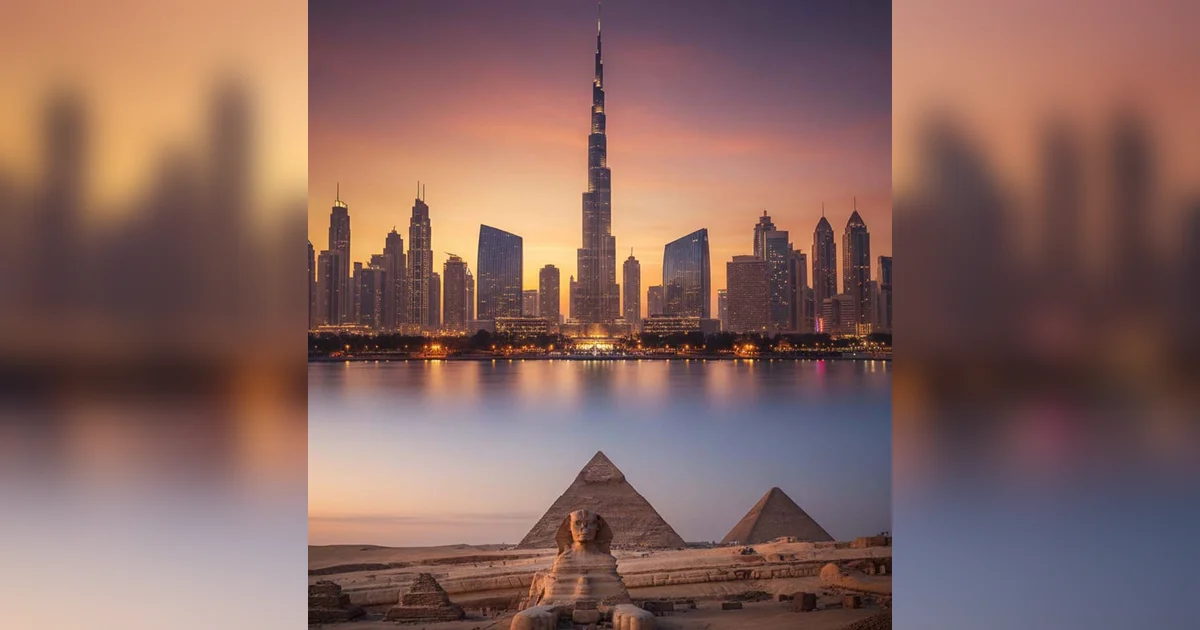
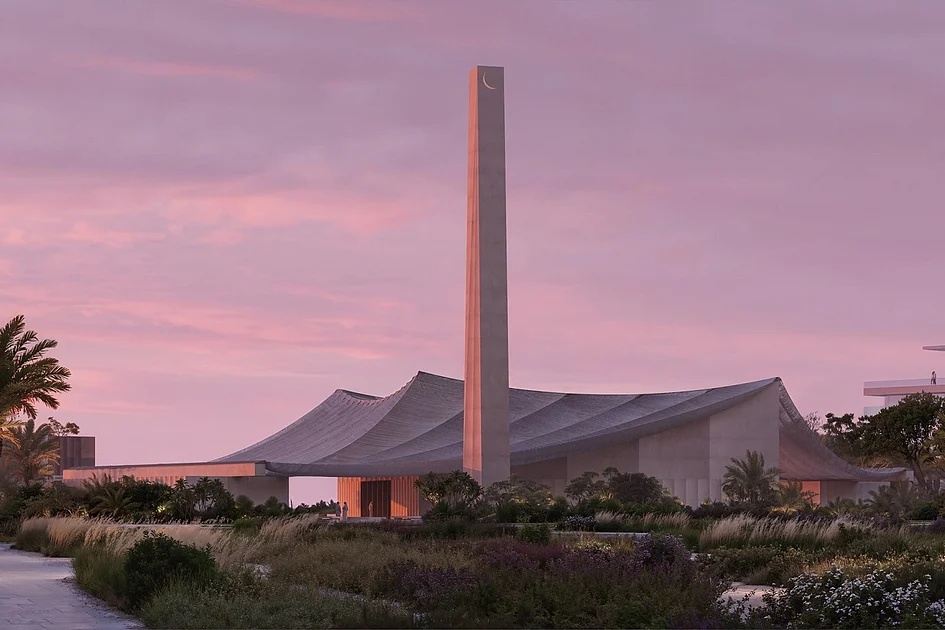
    Dubai’s skyline is poised to welcome another architectural marvel as developer Nakheel officially reveals the design for the Palm Jebel Ali Friday Mosque. Conceptualized by the renowned architecture firm Skidmore, Owings & Merrill (SOM), this spiritual sanctuary is strategically positioned along the central axis of the artificial archipelago, destined to become the cultural and spiritual nucleus of the entire development.

    The mosque’s design represents a sophisticated fusion of traditional Islamic architectural principles and contemporary innovation. Its most striking feature will be a 40-meter minaret, engineered to serve as a prominent visual landmark across Palm Jebel Ali. The structure incorporates geometric patterns deeply rooted in Islamic tradition while employing modern design elements that reflect Dubai’s forward-looking vision.

    A distinctive textile-inspired canopy extends from the main roof structure into the courtyard, providing functional shade while creating visual harmony with the surrounding environment. The comprehensive layout includes meticulously landscaped pedestrian pathways, clearly defined circulation routes, and dedicated ablution facilities designed for both practicality and aesthetic appeal.

    The interior design philosophy emphasizes spiritual tranquility through the masterful manipulation of natural light. Specially designed apertures filter sunlight into prayer spaces, creating softly illuminated interiors that foster an atmosphere of contemplation and serenity. This careful attention to lighting design aims to enhance the worship experience while maintaining thermal comfort.

    Khalid Al Malik, Chief Executive Officer of Dubai Holding Real Estate, emphasized the dual purpose of the project: “This mosque is conceived not merely as an architectural statement but as a functional sanctuary that will provide spiritual nourishment and peace for both residents and visitors to Palm Jebel Ali.”

    Chris Cooper, Partner at SOM, elaborated on the design inspiration: “Our approach reinterprets Emirati vernacular architecture for contemporary context. The design draws meaningful inspiration from Palm Jebel Ali’s coastal environment, utilizing geometry, light, and materiality to create a serene sanctuary that honors tradition while embracing the future.”

    With a capacity accommodating up to 1,000 worshippers, the mosque will serve the rapidly growing community of Palm Jebel Ali, which spans seven islands across 13.4 kilometers and features 16 fronds with over 90 kilometers of beachfront property.

  • China to cover all ‘out-of-pocket expenses’ for childbirth from 2026

    China to cover all ‘out-of-pocket expenses’ for childbirth from 2026

    In a sweeping policy shift addressing demographic challenges, China’s National Healthcare Security Administration has declared comprehensive coverage for all out-of-pocket childbirth expenses starting in 2026. The landmark initiative will provide nationwide reimbursement for policy-covered medical services encompassing prenatal examinations and delivery procedures, effectively eliminating personal financial burdens for expecting families.

    The announcement, detailed in an official administrative report released Saturday, represents Beijing’s most aggressive measure to date in countering persistent population decline. China recorded its first population decrease in decades during 2022, with subsequent years through 2024 maintaining this downward trajectory despite previous intervention attempts.

    Demographic analysts attribute the sustained reduction to multiple structural factors including decades of one-child policy enforcement (1980-2015), accelerated urbanization patterns, and contemporary economic pressures. Soaring childcare and education costs coupled with employment instability and broader economic deceleration have further discouraged family formation among younger generations.

    This healthcare expansion builds upon existing provincial initiatives already implemented in Jilin, Jiangsu, and Shandong provinces where near-total childbirth cost coverage has been tested. The national rollout coincides with broader governmental commitments announced last March to address both aging population concerns and youth challenges through childcare subsidies and tuition-free preschool education.

    Previous pronatalist measures included extended maternity leave provisions, financial incentives, tax benefits, and housing subsidies. However, these incremental steps failed to reverse the demographic trend significantly, prompting more comprehensive intervention through direct medical cost elimination.

    The policy implementation will unfold against a backdrop of concerning demographic projections. Experts anticipate continuing birth rate declines that threaten to shrink China’s workforce while simultaneously expanding elderly populations—a dual challenge that could strain already burdened local government finances nationwide.

  • How KUMON is strengthening learning in Abu Dhabi schools

    How KUMON is strengthening learning in Abu Dhabi schools

    ABU DHABI – What began as a pilot educational program in 1998 has evolved into one of Abu Dhabi’s most enduring academic partnerships, fundamentally transforming learning methodologies for over 30,000 students. The KUMON program, initially launched through collaboration with JODCO (now INPEX/JODCO) and currently supported by ADNOC, represents a pioneering three-party corporate social responsibility initiative that now reaches approximately 6,000 learners annually.

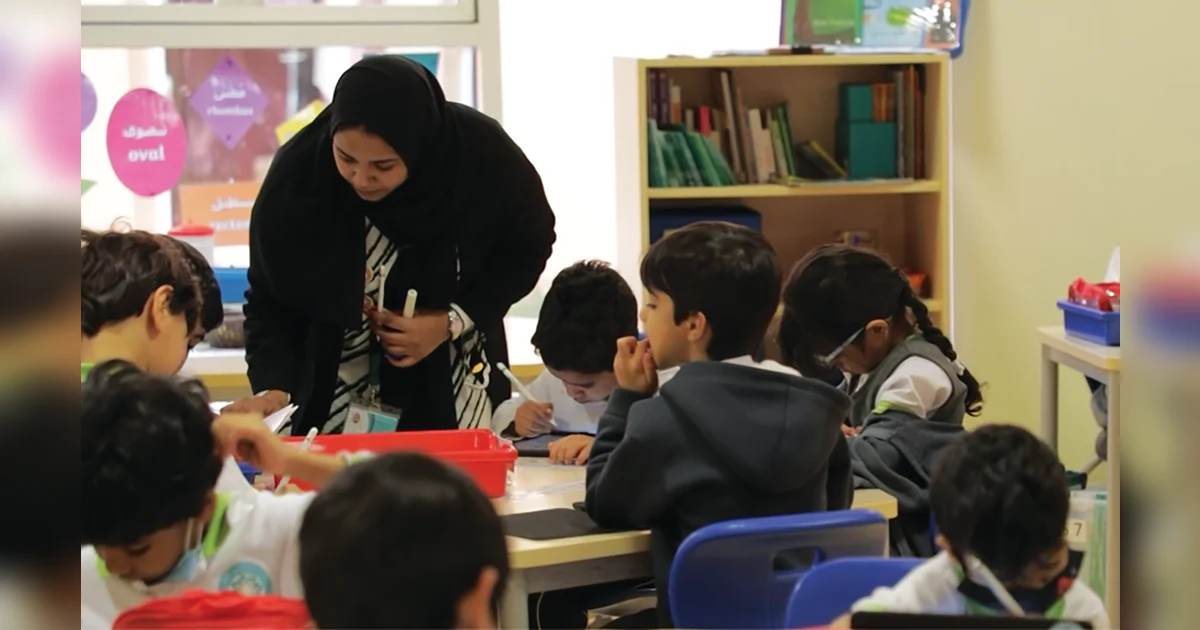
    The program’s digital transformation through KUMON Connect has revolutionized classroom dynamics. Students utilizing iPads and stylus pens receive instantaneous feedback on handwritten answers, creating immediate correction cycles that enhance comprehension within single class periods. Educators report remarkable improvements in student focus duration and mathematical confidence, with many pupils demonstrating enhanced mental calculation capabilities for multi-step problems.

    These qualitative observations are substantiated by quantitative data, with MAP Growth assessment scores surpassing District Norm benchmarks by eight points. The digital platform’s implementation, initially accelerated as a pandemic-response measure, has since become a global model, currently supporting approximately 300,000 students worldwide.

    Beyond technological innovation, the program’s success hinges on a meticulously coordinated human ecosystem. School administrators, homeroom teachers, classroom assistants, parents, and KUMON specialists maintain continuous collaboration through regular progress reviews. Detailed data analysis of learning volume, accuracy patterns, and concentration levels enables precise intervention strategies tailored to individual student needs.

    This educational framework aligns with global shifts toward self-directed learning methodologies. The program emphasizes autodidactic principles where students independently discover solutions and develop problem-solving capabilities—a critical skill set in an era increasingly shaped by artificial intelligence and digital tools.

    Future expansion plans involve deepening partnerships with ADNOC and INPEX/JODCO to extend these learning methodologies to additional schools across the emirate. The initiative ultimately aims to develop academically confident, independent learners capable of contributing to the UAE’s global standing in coming decades.

  • Iconic House announces regional expansion to Cairo under new “Iconic MENA” platform

    Iconic House announces regional expansion to Cairo under new “Iconic MENA” platform

    Dubai-based commercial and industrial property firm Iconic House has unveiled a strategic regional expansion into Cairo, marking its inaugural step in establishing an integrated Middle Eastern network. The expansion is structured under the newly launched “Iconic MENA” platform, designed to connect major commercial hubs across the region.

    The move represents a significant milestone in the company’s growth strategy, transitioning from its established presence in Dubai’s competitive property market to creating cross-border commercial corridors. Iconic House has built its reputation in the UAE by providing access to warehouses, industrial plots, labor accommodations, showrooms, and restaurant spaces, along with business acquisition services.

    Founder and CEO Moustafa Khater emphasized the strategic timing of the Egyptian expansion, noting that “Egypt is entering a significant phase of industrial and commercial growth. There is clear demand for structured processes, transparency, and higher service standards, and this is the environment we are prepared to operate within.”

    Operations in Cairo have already commenced, with initial focus on industrial zones, logistics corridors, commercial assets, and business acquisition advisory. The company will implement the same rigorous due-diligence procedures and client-service approach that established its success in the UAE.

    The Iconic MENA platform will consolidate services into a unified regional framework connecting Dubai and Cairo, featuring comprehensive property services, business-for-sale advisory, market entry support, and investor acquisition opportunities. This structure aims to strengthen connections between investors, operators, and businesses seeking cross-market expansion throughout the Middle East.

    Khater highlighted the complementary strengths of both markets: “Dubai taught us discipline. Cairo gives us scale and energy. Combining both creates a balanced platform that responds to market needs.”

    The expansion reflects the company’s commitment to responsible advisory practices and supporting sustainable development across commercial and industrial sectors. Future phases of the regional strategy will explore potential entry into Saudi Arabia and additional Gulf markets, further expanding the platform’s regional connectivity.

  • 10-year-old girl, holocaust survivor among victims of deadly Bondi Beach mass shooting

    10-year-old girl, holocaust survivor among victims of deadly Bondi Beach mass shooting

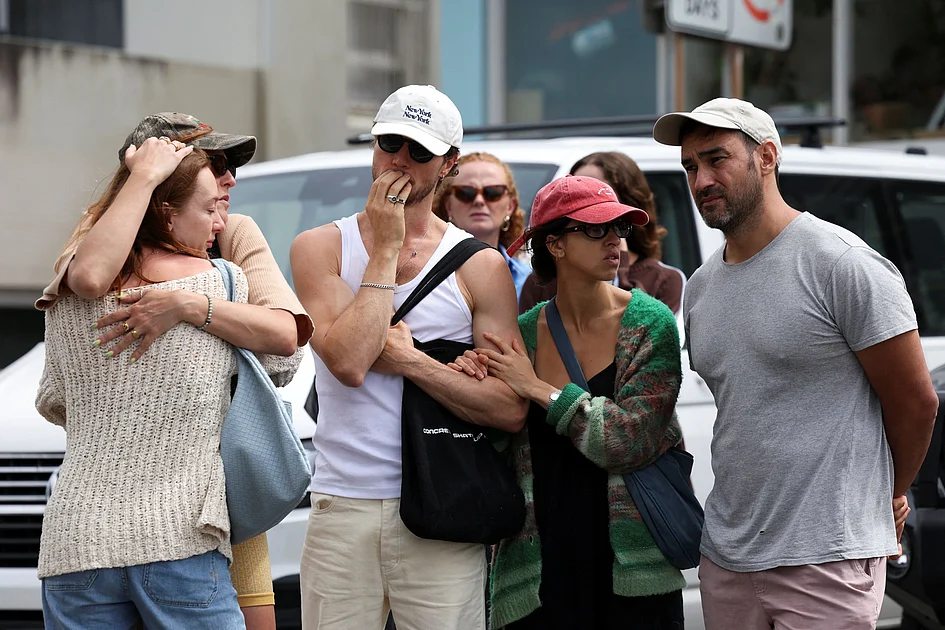
    A joyous Hanukkah celebration at Sydney’s iconic Bondi Beach turned into a scene of unimaginable tragedy Sunday evening when a father-and-son duo opened fire on the gathered crowd, killing 15 people and hospitalizing 42 others in what authorities are calling a deliberate act of anti-Semitic terrorism.

    Among the victims were individuals whose lives embodied both the tragic history and vibrant present of the Jewish community. Holocaust survivor Alex Kleytman, 87, originally from Ukraine, was killed while shielding his wife Larisa from the gunfire. In a cruel twist of fate, the man who survived one of history’s greatest atrocities fell victim to modern-day hatred on what should have been a night of celebration.

    The attack also claimed Rabbi Eli Schlanger, 41, a community leader who had helped organize the Hanukkah gathering. Alex Ryvchin of the Executive Council of Australian Jewry memorialized Schlanger as “the very best of us,” noting his daily mission was simply “doing good. Whatever good he could find, whatever kind deeds he could perform.”

    The international scope of the tragedy became evident as French President Emmanuel Macron confirmed the death of French citizen Dan Elkayam, a promising amateur footballer building a new life in Sydney. Sydney’s Rockdale Ilinden football club remembered Elkayam as an “extremely talented and popular figure amongst team mates.”

    The youngest victim, a 10-year-old girl, succumbed to her injuries at a children’s hospital, representing the most heartbreaking loss in an attack that spanned generations.

    Australian Prime Minister Anthony Albanese condemned the shooting as “an act of pure evil, an act of antisemitism, an act of terrorism on our shores.” As investigation continues into the motivations behind the attack, authorities have confirmed the plot was deliberately designed to sow terror among Australia’s Jewish population during one of their most significant religious observances.

  • Staff strike forces Louvre to close doors to visitors

    Staff strike forces Louvre to close doors to visitors

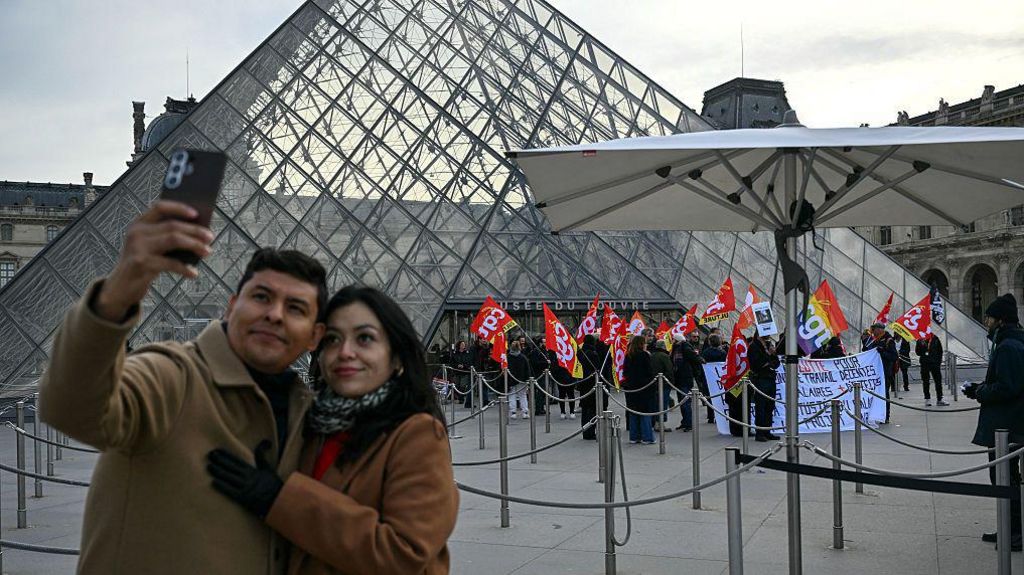
    Paris’ iconic Louvre Museum faced an unprecedented closure on Monday as hundreds of employees initiated strike action to protest worsening working conditions and inadequate compensation. The work stoppage, unanimously supported by approximately 400 staff members through their trade unions, transformed the world’s most visited museum into a scene of quiet protest rather than cultural exchange.

    Union representatives from CFDT, CGT, and Sud cited critical understaffing issues and insufficient resources as primary grievances. According to Christian Galani, CGT representative, the museum’s reception and security sector has suffered a devastating loss of 200 full-time equivalent positions over the past 15 years, despite visitor numbers increasing by 50% during the same period.

    The strike announcement comes amid mounting operational challenges at the historic institution. Recent security vulnerabilities were exposed when burglars successfully stole French crown jewels valued at €88 million approximately two months ago. Additionally, a water leakage incident last week resulted in damage to hundreds of valuable books within the museum’s collections.

    Thousands of international visitors expressed disappointment upon encountering closed doors. Minsoo Kim, a honeymooner from Seoul, shared his frustration: ‘The Louvre was the main reason for our Paris visit—we specifically wanted to see the Mona Lisa.’ London resident Natalia Brown acknowledged the workers’ plight while lamenting the unfortunate timing: ‘I understand why they’re doing it, but it’s just unfortunate for us.’

    Museum management declined immediate comment regarding the strike action. The Louvre, which recorded 8.7 million visitors in 2024, typically closes on Tuesdays for maintenance. Employees are scheduled to reconvene Wednesday morning to determine subsequent action plans.

  • Austrian court rules against extradition of Ukrainian businessman to US over alleged bribery

    Austrian court rules against extradition of Ukrainian businessman to US over alleged bribery

    VIENNA — In a decisive legal development, Austria’s Vienna High Regional Court has definitively rejected a United States extradition request for Ukrainian oligarch Dmytro Firtash, bringing closure to a nearly decade-long international judicial battle. The court’s ruling, announced on December 10th, represents the final chapter in a complex saga that began with Firtash’s 2014 arrest on Austrian soil.

    The American indictment alleged Firtash masterminded an international conspiracy involving multi-million euro bribe payments to secure titanium mining licenses in India—a mineral crucial for aerospace engineering and jet engine production. Despite these serious allegations, which Firtash has consistently denied, the Austrian judiciary determined the extradition request was legally “inadmissible due to immunity protections under international law.”

    Legal experts analyzing the verdict note the decision primarily hinged on procedural formalities rather than case merits. Professor Robert Kert of the Institute for Austrian and European Economic Criminal Law revealed prosecutors missed critical appeal deadlines, while Firtash successfully claimed diplomatic immunity based on his former role as Belarus’ representative to Vienna-based international institutions.

    “The judicial enthusiasm for securing Mr. Firtash’s extradition appears notably diminished,” Professor Kert observed in a recent telephone interview, suggesting waning prosecutorial urgency.

    The case’s international dimensions have been particularly complex. Six years prior, a Chicago federal judge affirmed U.S. jurisdiction because the alleged scheme potentially affected a Chicago-based company—aviation giant Boeing. While Boeing acknowledged preliminary business discussions with Firtash, the company emphasized no transactions were finalized and faces no allegations of misconduct.

    Firtash’s legal journey through Austrian courts has been remarkably turbulent. Initially released on €125 million ($131 million) bail in 2014, he successfully argued against extradition by claiming political motivation behind the indictment. This ruling was subsequently overturned in February 2017 when a higher court deemed the political persecution argument “insufficiently substantiated,” a decision Austria’s Supreme Court of Justice ultimately upheld in 2019 before this latest appellate rejection.

  • Kobe Luminarie: Japan’s festival of light and hope returns in 2026

    Kobe Luminarie: Japan’s festival of light and hope returns in 2026

    The iconic Kobe Luminarie light festival will illuminate Japan’s port city once again from January 30 to February 8, 2026, offering international visitors a profound cultural experience that transcends typical winter illuminations. This celebrated event transforms Kobe’s urban landscape into a breathtaking tapestry of Italian-designed light installations, creating a mesmerizing environment that honors the city’s historical resilience and enduring spirit.

    Originating as a memorial tribute to victims of the 1995 Great Hanshin-Awaji Earthquake, the festival has evolved into an annual symbol of solidarity and hope. The installation features tens of thousands of meticulously handcrafted lights arranged in elaborate arches, domes, and cathedral-inspired structures across Higashi Yuenchi Park, the Former Foreign Settlement, and Meriken Park. This creates an immersive walking experience that blends artistic brilliance with historical significance.

    Beyond the luminous displays, Kobe offers diverse winter attractions that complement the festival experience. Mount Rokko provides panoramic views of the city lights recognized among Japan’s top nightscapes, while Rokko Snow Park offers accessible winter activities for families. The historic Arima Onsen, one of Japan’s oldest hot spring towns, presents traditional ryokan inns and therapeutic mineral baths. The waterfront district features the innovative átoa Kobe theatrical aquarium and scenic harbor cruises, with a new superyacht marina and leisure district scheduled for completion by 2027.

    Kobe’s unique identity as Japan’s early international port is reflected in its multicultural landscape. The Kitano Ijinkan district preserves elegant Western-style residences from the late 19th century, while the historic Kobe Mosque (1935) stands as the country’s oldest Islamic place of worship. This cultural diversity extends to culinary offerings, with the city expanding Muslim-friendly dining options including halal-certified menus, ingredient transparency, and prayer facilities at Kobe Mosque.

    The combination of spectacular illumination artistry, historical significance, natural beauty, and multicultural hospitality positions Kobe as an exceptional winter destination for international travelers seeking experiences beyond Japan’s major metropolitan centers.

  • What Trump’s National Security Strategy means for Israel

    What Trump’s National Security Strategy means for Israel

    The Trump administration’s 2025 National Security Strategy marks a transformative recalibration of American engagement in the Middle East, creating both challenges and opportunities for Israel that extend far beyond the document’s limited direct references to the nation.

    While Israeli media has focused on the strategy’s mere six mentions of Israel, the substantial implications lie in its broader philosophical framework. The document explicitly prioritizes disengagement from “forever wars” while maintaining core security commitments—a delicate balancing act that signals reduced day-to-day regional involvement without abandoning fundamental alliances.

    This strategic reorientation presents Israel with a dual reality: continued American security guarantees coupled with expectations of greater self-sufficiency. The strategy rationalizes this reduced footprint by asserting that Iranian capabilities have been significantly degraded through both Israeli military actions since October 2023 and the controversial “Operation Midnight Hammer” in June 2025, though these claims remain unverified by independent sources.

    The administration’s approach embraces “transactional realism,” accepting regional governments as they exist without demanding democratic reforms while pursuing mutual interests. For Israel, this means expanded Abraham Accords remain a priority, with Saudi-Israeli normalization apparently high on the agenda. A proposed “Core 5” forum including the US, China, Russia, India, and Japan would initially focus on Middle East security and normalization efforts.

    However, this transactional approach also suggests American support may become more conditional, requiring Israel to demonstrate concrete benefits for US interests. The strategy emphasizes burden-sharing with allies, expecting wealthier nations to assume greater regional responsibility—likely translating to expectations of increased Israeli defense spending despite already substantial military expenditures.

    Perhaps most significantly, the strategy establishes a high threshold for American intervention, rooted in narrowly defined national interests rather than expansive commitments. This creates new constraints for Israeli military planning, as major operations against Hamas, Hezbollah, or Iran cannot assume automatic US support or protection from international consequences.

    The document’s harsh criticism of Europe—claiming the continent faces “civilizational erasure”—adds another layer of complexity, potentially affecting Israel’s relationships with European powers and EU positions on Palestinian issues.

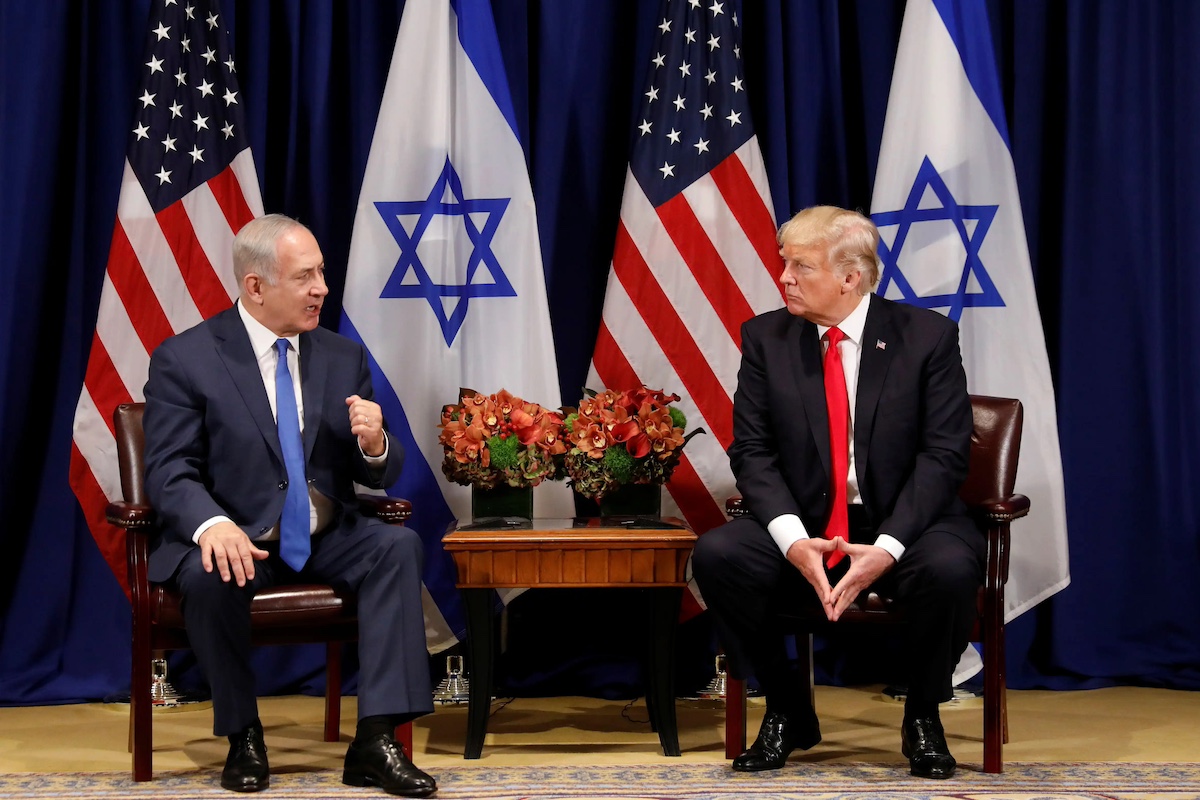
    Beneath the surface, personal dynamics between Trump and Netanyahu remain strained, with reported frustration over Netanyahu’s congratulation of Biden after the 2020 election and skepticism about Palestinian negotiations. This suggests Israeli influence in Washington may be less assured than in previous administrations.

    The strategy presents Israel with several imperatives: enhancing self-reliance, investing in regional partnerships, emphasizing technological and economic cooperation over aid models, and more effectively articulating how Israeli actions serve American interests. With 69% of Israeli weapons originating from the US, the nation faces limited options if American priorities diverge significantly.

    Ultimately, the 2025 strategy maintains Israeli security as a core American interest while fundamentally redefining engagement terms. The transition demands Israeli adaptation to an era of more conditional, transactional support explicitly tied to demonstrable US benefits, marking the end of unconditional commitment—if it ever truly existed.

  • Jiangsu county builds partnerships in Beijing to scale up innovations

    Jiangsu county builds partnerships in Beijing to scale up innovations

    In a strategic move to bridge regional innovation ecosystems, Kunshan—Jiangsu province’s premier county-level economy—established a high-quality development exchange platform in Beijing on December 14, 2025. The initiative aims to create synergistic partnerships with the capital’s concentration of state-owned enterprises, academic institutions, and research centers.

    The event signifies a deliberate effort to transform Beijing’s groundbreaking theoretical innovations (the ‘0 to 1’ philosophy) into industrial-scale applications within Kunshan’s manufacturing ecosystem. Party Secretary Chen Liyan outlined the county’s development roadmap, emphasizing cross-regional collaboration as critical for technological commercialization and industrial modernization.

    Tsinghua University Vice-President Bai Benfeng endorsed the partnership, noting Kunshan’s unique positioning in revitalizing traditional industries while strategically cultivating emerging sectors. “Kunshan’s economic environment provides exceptional opportunities for innovation and young talent development,” he stated, predicting the collaboration would yield substantial contributions to national high-quality development goals.

    Concrete outcomes included the inauguration of the Kunshan Talent Innovation (Beijing) Center and an OPC (one-person company) incubation base, complemented by new entrepreneurial policy frameworks. The event culminated in multiple signed agreements spanning industrial, academic, and financial sectors, establishing formal channels for ongoing knowledge transfer and resource sharing.