
The Sydney community stood in solemn solidarity on Thursday as family, friends, and countless mourners gathered to honor the life of Matilda, a vibrant 10-year-old girl whose life was tragically cut short during the devastating Bondi Junction attack last Sunday. The funeral service, imbued with profound sorrow and heartfelt tributes, became a powerful symbol of collective grief and resilience in the wake of the inexplicable violence that shook the nation. Attendees, many dressed in the young girl’s favorite color, shared poignant memories of her kindness and spirited personality, transforming the ceremony into a celebration of a life cherished, albeit far too brief. The overwhelming public response, including floral tributes and messages of support extending blocks from the service, underscores a city’s attempt to grapple with an unimaginable loss and the indiscriminate nature of the tragedy that claimed six lives. This gathering not only provided a space for communal mourning but also highlighted the deep scars left on the fabric of the local community, prompting a renewed dialogue on public safety and support for victims of violent crime.
作者: admin
-

Museum knows ‘little to nothing’ about new display
In an unprecedented move confronting Britain’s colonial history, Manchester Museum has launched a groundbreaking exhibition featuring thousands of African artifacts with largely unknown origins—many acquired through questionable means during the Empire’s peak. The institution has deliberately placed these culturally significant objects in its newly established Africa Hub to openly address the substantial gaps in its historical records.
The collection, comprising over 40,000 items from across Africa, reveals troubling acquisition methods including trade, anthropological collection, confiscation, and outright looting during colonial expansion. One particularly telling example is a carved figure depicting a horse with an ibis on its back, whose entire documented history consists only of its 1976 donation by a Mrs M A Bellhouse, with no information regarding its cultural context, place of origin, or traditional significance.
Curator Lucy Edematie describes this exhibition as fundamentally different from traditional museum displays, characterizing it as “the beginning” rather than the culmination of research. “It is a chance to do our thinking in public, with honesty and transparency, and to involve people in that process from the start,” Edematie explained, highlighting the institution’s commitment to ethical reconsideration of colonial collections.
The museum, part of the University of Manchester, acknowledges that this transparent approach may ultimately lead to repatriation decisions or collaborative partnerships with diaspora communities to develop culturally appropriate ways of preserving and celebrating heritage. In a significant co-curation effort, the Africa Hub features displays developed with Igbo Community Greater Manchester (ICM), representing one of West Africa’s largest ethnic groups.
ICM Vice-Chairwoman Sylvia Mgbeahurike emphasized the exhibition’s profound significance: “Some of these objects were given, some were stolen, some were taken forcefully out of conquest. Bringing them together shows inclusiveness, demonstrates strength in diversity, and reaffirms that we are one people regardless of color or origin.”
This bold institutional initiative represents a growing movement among museums to address colonial-era acquisitions honestly while developing new ethical frameworks for handling contested cultural property.
-

Liverpool rappers in Somalia during clan conflict
Two British drill musicians from Liverpool’s Toxteth area have become subjects of a potential police investigation following their apparent participation in armed activities within Somalia’s volatile clan conflicts. Abdifatah Gulaid, 31, and Noah Ihiekwe, 30, who perform under the stage names Still Brickin’ and Rayzer respectively, were documented in military attire alongside armed troops in northeastern Somalia earlier this year.
The BBC-obtained footage shows Gulaid delivering inflammatory statements to soldiers, declaring that ‘the time for talk is finished’ and promising to demonstrate their ‘mettle in battle.’ The rappers’ journey to conflict zones began under suspicious circumstances—they were among six men detained during a January drug raid in Phuket, Thailand, where authorities seized 6kg of cannabis and 39 tanks of nitrous oxide from their luxury villa. Though released without charges, the men subsequently traveled to Somalia’s Sanaag region.
This territory remains disputed between the self-declared Republic of Somaliland and the autonomous state of Puntland, with longstanding inter-clan tensions over resources and historical grievances. Gulaid maintains affiliation with the Warsangeli clan, currently engaged in hostilities against the rival Isaaq clan aligned with Somaliland.
An international consultant present at Badhan’s Laasqoray Hotel described witnessing the rappers transition from casual Western attire to combat gear while brandishing assault rifles. Their presence coincided with a significant escalation in regional violence, including armed confrontations that endangered civilian areas.
According to Dr. Idil Osman of the University of Leicester, diaspora communities often maintain strong connections to Somali clan politics, sometimes drawing them into overseas conflicts. While the UK government emphasizes that any citizen engaging in unlawful activities abroad faces investigation upon return, legal expert Clive Walker notes prosecution complexities unless involvement with proscribed organizations like Al-Shabaab is established. The individuals were last reported in Dubai, with their eventual return to Britain likely to prompt official inquiries.
-

Asian shares follow Wall Street lower as AI worries drag tech stocks lower
Asian financial markets experienced significant downward pressure on Thursday, extending a global trend of declines triggered by a substantial sell-off in artificial intelligence stocks across U.S. markets. The technology sector’s weakness produced the worst trading day for American markets in nearly four weeks, creating ripple effects across Asian exchanges.
Japan’s Nikkei 225 index dropped 1.2% to settle at 48,929.95, with technology companies leading the downward movement. Semiconductor equipment manufacturer Tokyo Electron witnessed a 3.5% decline, while Advantest, specializing in chip testing equipment, saw a more pronounced 4.1% decrease. The automotive sector also faced challenges, as Honda Motor Corporation’s shares fell 2.9% following reports of production suspensions at multiple facilities in Japan and China due to ongoing semiconductor shortages.
South Korea’s Kospi index experienced a more substantial contraction, declining 1.8% to 3,989.06. The sell-off particularly affected electronics manufacturers and automobile companies, with LG Electronics dropping 4.3% and Samsung Electronics decreasing 1.6%.
Chinese markets presented a mixed performance landscape. Hong Kong’s Hang Seng index retreated 0.4% to 25,357.64, while mainland China’s Shanghai Composite index demonstrated resilience with a modest 0.2% gain, closing at 3,876.40. Australia’s S&P/ASX 200 registered a minimal 0.1% decline, finishing at 8,575.50.
Market participants worldwide are closely monitoring two critical developments: the impending U.S. inflation data release and the Bank of Japan’s interest rate decision scheduled for Friday. Economists anticipate that Japan’s central bank will implement a 0.25 percentage point rate increase to address persistent price pressures, despite economic contraction during the July-September quarter.
The technology sector’s decline stems from growing investor concerns regarding excessive valuations among major tech corporations. Questions are emerging about whether substantial investments in artificial intelligence will generate sufficient profitability and productivity to justify current expenditure levels. Additional worries center on the alarming debt levels some companies are accumulating to finance their AI initiatives.
Wednesday’s trading session in the United States saw the S&P 500 decline 1.2% to 6,721.43, while the Dow Jones Industrial Average decreased 0.5% to 47,885.97. The technology-heavy Nasdaq Composite experienced the most significant drop, falling 1.8% to 22,693.32. Notable decliners included Broadcom (4.5% decrease), Oracle (5.4% drop), and CoreWeave (7.1% plunge). Nvidia, whose market influence has grown substantially due to its massive valuation, declined 3.8%, exerting considerable downward pressure on the S&P 500.
Energy companies emerged as notable exceptions to the broader market weakness, benefiting from President Donald Trump’s executive order blocking sanctioned oil tankers from entering Venezuela. This geopolitical development pushed benchmark U.S. crude prices upward by 1.2% to $55.94 per barrel, following a recent decline to multi-year lows. Early Thursday trading showed U.S. crude advancing by 43 cents to $56.24 per barrel, while Brent crude, the international standard, gained 40 cents to reach $60.08 per barrel.
The energy sector’s strength translated to share price gains for several major oil producers. ConocoPhillips increased 4.6%, Devon Energy rallied 5.3%, and Exxon Mobil climbed 2.4%. These gains occurred against a backdrop of generally declining oil prices throughout most of the year, driven by expectations of adequate global supply meeting demand.
In corporate developments, Netflix shares edged 0.2% higher after Warner Bros. Discovery’s board recommended shareholders accept the streaming company’s acquisition offer for its Warner Bros. business unit, rather than a competing hostile bid from Paramount Skydance for the entire corporation. Warner Bros. Discovery shares declined 2.4%, while Paramount Skydance dropped 5.4%.
Currency markets showed minimal movement in early Thursday trading, with the U.S. dollar strengthening slightly to 155.75 Japanese yen from 155.70 yen. The euro experienced a marginal decrease against the dollar, trading at $1.1740 compared to $1.1743.
-
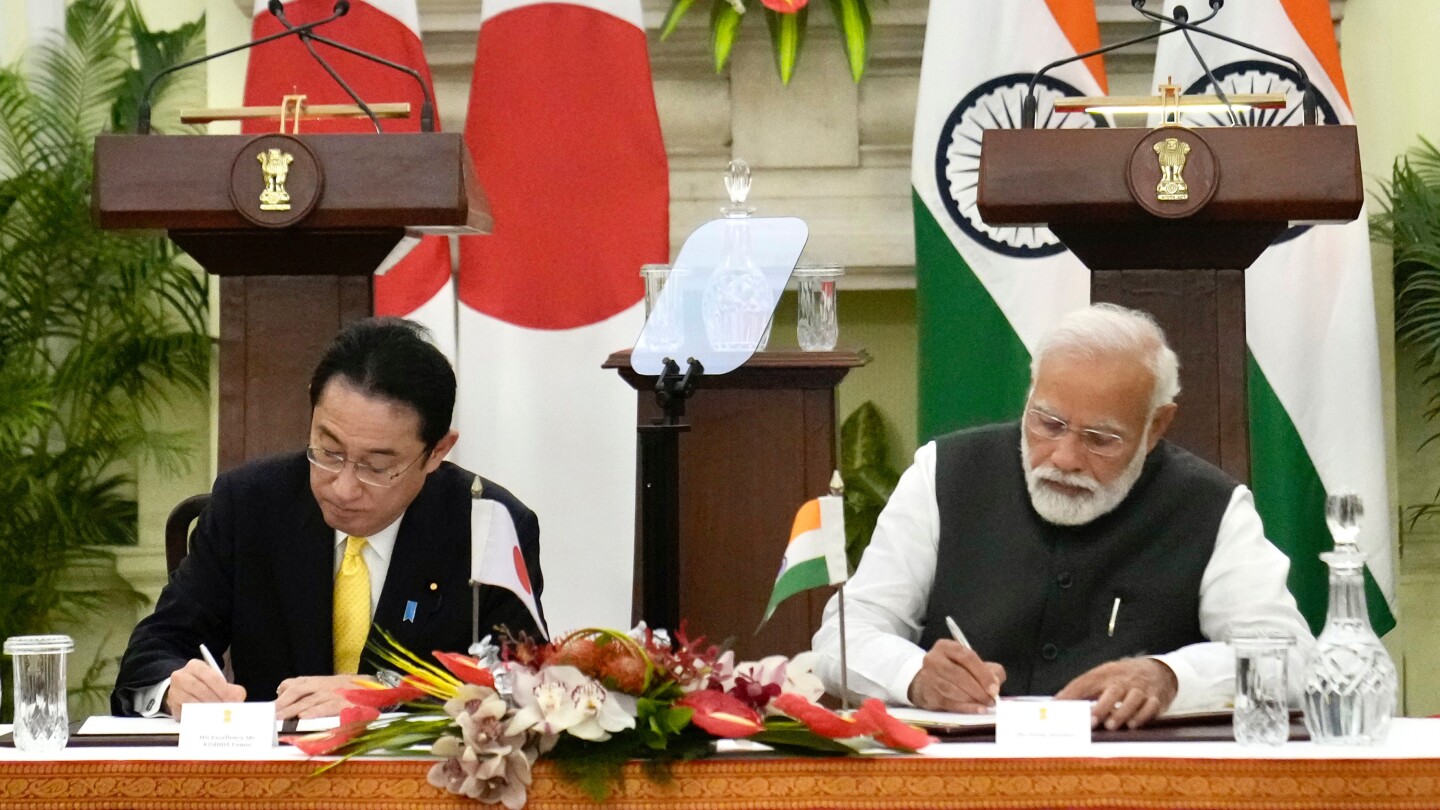
India accelerates free trade agreements to counter US tariffs and expand exports
In a strategic move to mitigate the impact of escalating U.S. import tariffs and navigate mounting global trade volatilities, India has intensified efforts to conclude multiple free trade agreements within coming months. This accelerated diplomatic push aims to diversify export markets and reinforce the nation’s position within international supply chains.
Government officials, speaking anonymously due to the sensitive nature of ongoing negotiations, revealed that New Delhi is in advanced discussions with the European Union, New Zealand, and Chile. The first tangible outcome of this renewed initiative will materialize this Thursday with the anticipated signing of a comprehensive FTA with Oman. Prime Minister Narendra Modi is scheduled to be present in Muscat for the ceremonial signing event.
The India-Oman pact specifically targets enhanced bilateral trade flows, with particular focus on boosting Indian exports across several key sectors including engineering goods, textiles, pharmaceuticals, and agricultural products. This agreement represents a critical component of India’s broader economic strategy seeking deeper global supply chain integration, sustained export growth, and substantial job creation.
Trade analyst Ajay Srivastava notes that India is strategically deploying FTAs as instruments to counterbalance the disruptive effects of steep and unpredictable U.S. tariffs, which reached 50% in August. These tariffs have particularly pressured Indian exporters in textiles, auto components, metals, and labor-intensive manufacturing sectors.
India’s existing trade architecture already encompasses 15 FTAs covering 26 nations plus six preferential agreements with another 26 countries. Current negotiations involve over 50 additional partners. Once finalized, this network will essentially connect India with virtually all major global economies except China.
Recent successes include comprehensive agreements with the UAE and Australia that have demonstrably boosted bilateral trade volumes. Additionally, May witnessed a hard-negotiated FTA with Britain that will significantly reduce tariffs on products ranging from Scotch whisky to Indian spices.
Despite this momentum, challenges persist as Indian negotiators must balance protecting domestic industries and small farmers against trading partners’ demands for greater market access. The anticipated trade agreement with the United States has encountered delays amid strained relations following India’s continued purchases of discounted Russian crude oil.
Recent diplomatic engagements, however, suggest improving relations. Prime Minister Modi recently endorsed former President Trump’s peace proposal for the Russia-Ukraine conflict, and the two leaders have conducted telephone discussions addressing mutual interests including trade. These developments were followed by last week’s visit of U.S. negotiators led by Deputy Trade Representative Rick Switzer to New Delhi.
Parallel negotiations continue with other partners: New Zealand’s Trade Minister Todd McClay recently met Indian counterpart Piyush Goyal to advance FTA discussions, while EU Commissioner Maros Sefcovic similarly engaged with Goyal to resolve outstanding issues in the India-EU trade negotiations.
-
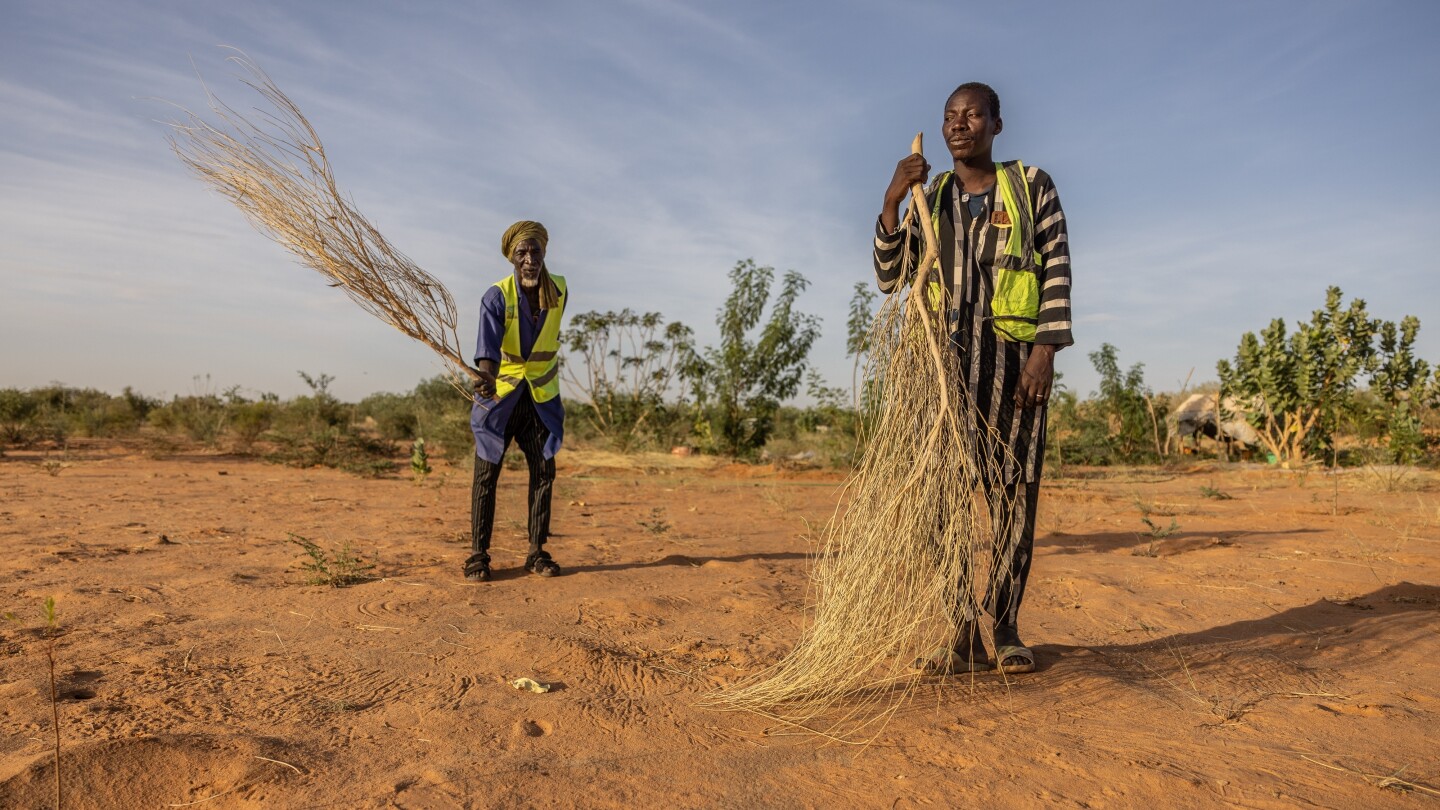
Refugee firefighters in Mauritania battle bushfires to give back to the community that took them in
In the harsh expanse of Mauritania’s desert landscape, a unique partnership has emerged between Malian refugees and their host community through the shared battle against destructive bushfires. At sunset in Mbera, synchronized movements of volunteer firefighters create a rhythmic cadence as they practice with acacia branches—a specialized technique perfected over years of combating desert blazes.
These 360 refugees, operating under UNHCR patronage with EU funding, have transformed environmental protection into a reciprocal gesture of gratitude toward the Mauritanian communities that sheltered them from Mali’s violence since 2012. The region houses approximately 300,000 Malian refugees, with half residing in formal camps and others integrated into local villages.
Hantam Ag Ahmedou, who arrived as a child refugee, explains the critical methodology: “Water proves futile against fires that ignite hundreds of kilometers from sources. Our branches smother flames effectively—this knowledge became our contribution.” The volunteer brigade responds urgently to alerts, deploying in coordinated teams with heat-resistant acacia branches to contain infernos that threaten both refugee settlements and local villages.
The environmental context heightens the urgency: Mauritania, with 90% Sahara coverage, faces accelerated desertification from climate change. Tayyar Sukru Cansizoglu of UNHCR notes that single fires now carry life-threatening consequences for all residents amid strained natural resources. Tensions over grazing areas and water access underscore the fragility of this coexistence.
Beyond firefighting, the initiative has expanded into ecological restoration with tree nurseries cultivating acacias, citrus, and mango trees to counteract vegetation loss. For veterans like 52-year-old Abderrahmane Maiga, this work represents necessary reciprocity: “After people welcomed us, standing to help them is only right.”
The refugees acknowledge the permanence of their situation—with returning to Mali increasingly implausible amid ongoing violence. Ag Ahmedou articulates their resolve: “We cannot abandon our home for Europe. We must resist. We must fight—for survival is our only option.”
-
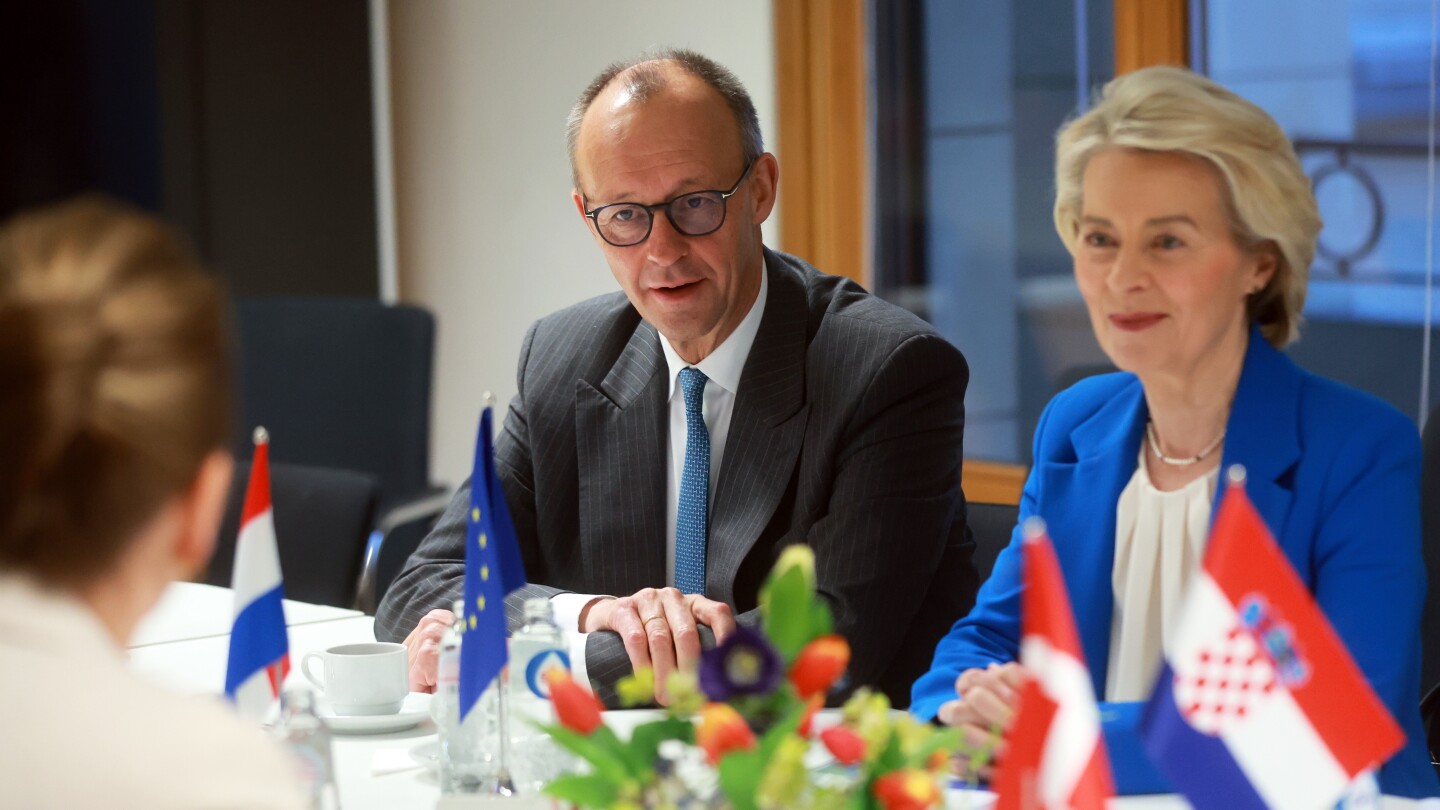
Belgium demands ironclad guarantees of protection as EU leaders weigh a massive loan for Ukraine
BRUSSELS — A critical European Union summit faced significant hurdles on Thursday as Belgium demanded unequivocal guarantees of protection against potential Russian retaliation before endorsing a monumental loan package for Ukraine. The high-stakes negotiations centered on a proposal to utilize billions in frozen Russian sovereign assets to underwrite Ukraine’s military and financial requirements for the coming two years.\n\nWith approximately €193 billion ($227 billion) in immobilized Russian central bank funds held predominantly within the Brussels-based Euroclear clearinghouse, Belgium finds itself on the front lines of economic and legal vulnerability. This position was underscored recently when Russia’s Central Bank initiated legal proceedings against Euroclear, intensifying pressure on Belgian authorities.\n\nBelgian political leader Bart De Wever articulated the nation’s position using a vivid metaphor: \”Give me a parachute and we’ll all jump together. If we have confidence in the parachute that shouldn’t be a problem.\” Belgium advocates for broader European burden-sharing, suggesting frozen Russian assets across multiple European jurisdictions should be pooled to mitigate risk. Additionally, Brussels seeks concrete commitments that Euroclear would receive necessary financial backing should it face further legal challenges from Moscow.\n\nThe proposed financial mechanism, termed the \”reparations loan,\” would channel approximately €90 billion ($106 billion) to Ukraine, with non-EU nations including the United Kingdom, Canada, and Norway potentially covering any funding shortfalls. While Russia’s legal claim to these assets would technically remain intact, the funds would remain inaccessible until Moscow concludes its military aggression and compensates for war damages.\n\nDespite European Commission assurances regarding protective safeguards for Belgium, De Wever maintained his reservations, stating, \”I have not yet seen a text that could satisfactorily address Belgium’s concerns.\” He simultaneously reaffirmed Belgium’s commitment as \”a faithful ally\” to Ukraine.\n\nThe urgency of the situation was emphasized by European Commission President Ursula von der Leyen, who declared, \”We have to find a solution today. We will not leave the European Council without a solution for the funding of Ukraine for the next two years.\” This sentiment was echoed by Polish Prime Minister Donald Tusk’s stark warning: \”Now we have a simple choice. Either money today or blood tomorrow.\”\n\nThe negotiations revealed deepening divisions within the bloc. While Germany’s Chancellor Friedrich Merz supported utilizing Russian assets, Hungary and Slovakia openly opposed the loan plan. Hungarian Prime Minister Viktor Orbán, maintaining his position as Vladimir Putin’s closest European ally, criticized the proposal as \”a dead end\” and \”a stupid one,\\” asserting that \”to give money means war.\”\n\nWith Bulgaria, Italy, and Malta also expressing reservations, EU envoys worked intensively to bridge differences among member states. The absence of a viable alternative funding mechanism added further complexity to the deliberations, as no majority support existed for international market borrowing options.
-
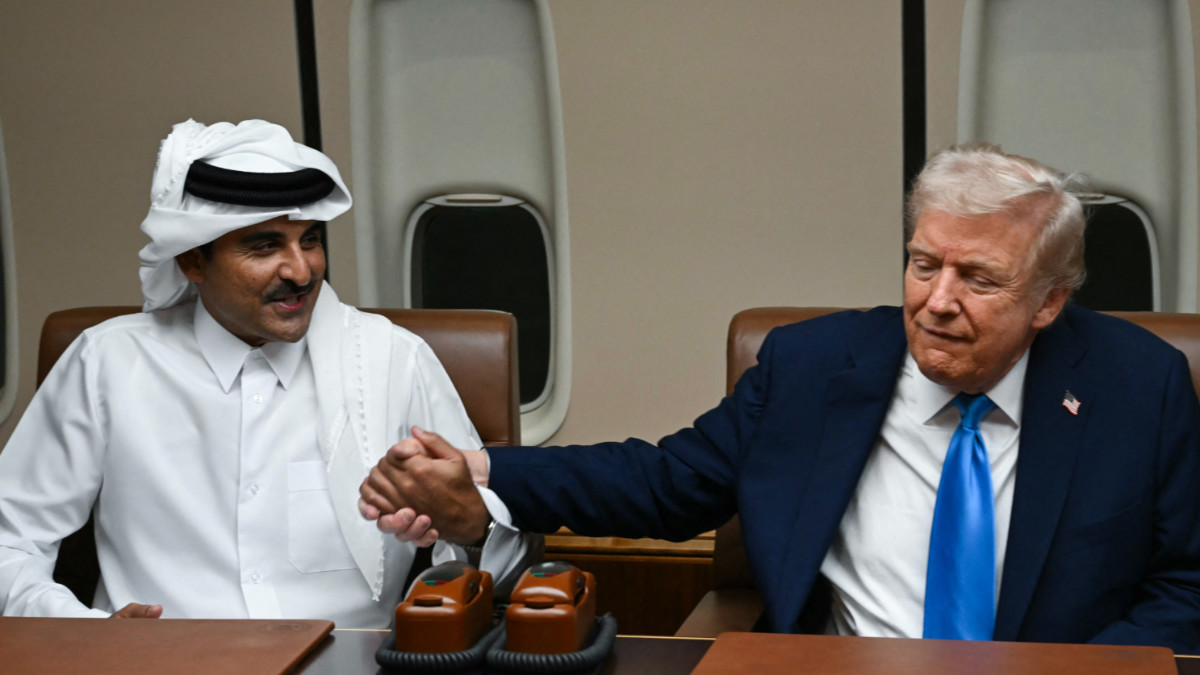
Qatar in talks with US about buying F-35 warplanes: Report
Qatar has initiated preliminary discussions with the United States regarding the potential acquisition of advanced F-35 fighter jets, according to a report from Israel’s Channel 12 news. This development revives Doha’s five-year-old aspiration to obtain America’s most sophisticated warplane, a move that has immediately raised concerns within Israeli security circles.
The Qatari initiative follows President Donald Trump’s November announcement indicating willingness to sell F-35s to Saudi Arabia that would be equivalent in capability to those operated by Israel. This potential expansion of F-35 operators in the region would place Qatar alongside both Saudi Arabia and Turkey in seeking to obtain the advanced aircraft, which currently remains exclusively operated by Israel in the Middle East.
Israeli Prime Minister Benjamin Netanyahu’s administration has historically opposed such sales to regional powers, having actively lobbied Washington against transferring the advanced fighter jets to both Turkey and Saudi Arabia. President Trump himself has publicly acknowledged these Israeli efforts while simultaneously suggesting both Saudi Arabia and Israel should receive ‘top of the line’ military equipment as equal partners.
The geopolitical landscape surrounding these potential sales varies significantly between regional players. Saudi Arabia appears to have stronger prospects for approval, particularly as the kingdom awaits finalization of a key defense agreement that U.S. officials indicate would streamline future arms transfers.
Turkey faces substantially greater obstacles, having been expelled from the F-35 co-production program in 2019 following its controversial acquisition of Russia’s S-400 air defense system. Congressional legislation currently prohibits Turkey from receiving the advanced fighters unless the U.S. President certifies that Ankara no longer possesses the Russian system. Recent reports suggest Turkey may be considering returning the S-400 to Russia as it seeks to reenter the F-35 program.
The regional tensions underlying these arms negotiations are particularly acute. Israeli-Turkish relations remain strained over conflicting positions regarding Syria and Palestinian issues, while Israel-Qatar relations recently deteriorated to historic lows following Israeli actions against Hamas negotiators in Doha.
In response to Qatar’s renewed F-35 pursuit, Israeli officials are reportedly formulating a substantial counter-request for additional advanced military hardware, including two new squadrons—one of F-35s and another of F-15I aircraft—plus advanced munitions and related systems to maintain Israel’s qualitative military edge in the region.
-
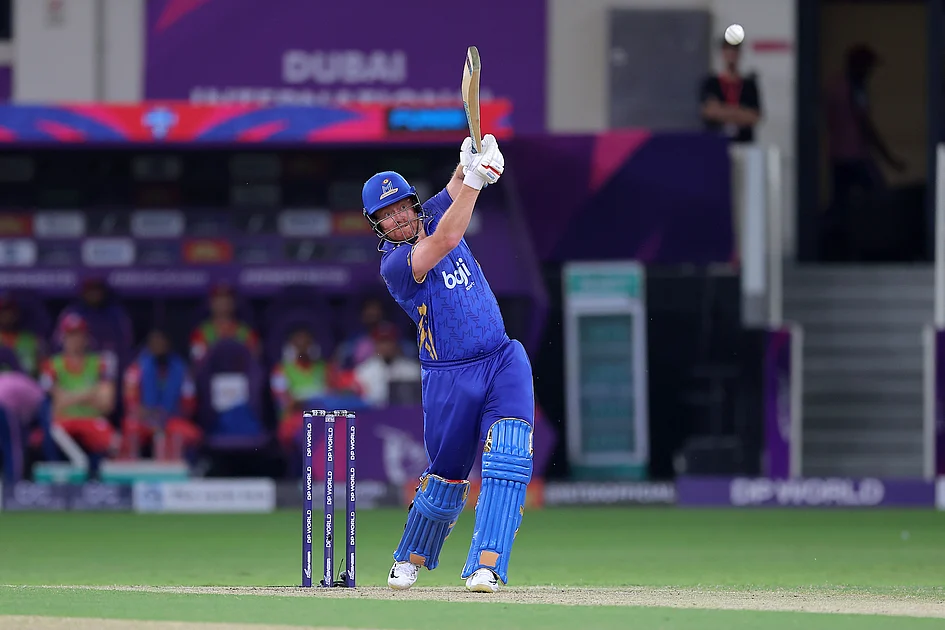
ILT20: MI Emirates stun Dubai Capitals in low-scoring thriller
In a stunning display of defensive cricket, MI Emirates clinched a nail-biting seven-run victory against Dubai Capitals in the DP World ILT20 Season 4 clash at Dubai International Stadium on Wednesday. Defending a modest total of 137/8, the Emirates orchestrated a remarkable turnaround that saw them leapfrog their opponents into third place on the tournament table.
The match pivoted dramatically when Rashid Khan’s crucial two-wicket intervention shattered the Capitals’ commanding position. Despite a strong foundation built by Jordan Cox (46 off 41) and Shayan Jahangir (34 off 27), who hammered 51 runs during the powerplay, the Capitals’ chase unraveled spectacularly in the final overs.
Earlier, Jonny Bairstow’s explosive 67 off 40 deliveries, featuring eight boundaries and three sixes, provided the cornerstone of MI Emirates’ innings. His 30-ball half-century seemed to set a competitive platform until Muhammad Jawadullah’s brilliant spell (2/7) and Mustafizur Rahman’s devastating 3/34 triggered a collapse that limited the Emirates to what appeared to be a below-par total.
The turning point arrived during the penultimate over when Naveen-ul-Haq dismissed both Cox and Mohammad Nabi within three deliveries, effectively sealing the Capitals’ fate. The final over witnessed three more wickets falling as the Capitals capitulated at 130 all out.
Post-match, Player of the Match Rashid Khan emphasized the team’s collective effort: ‘Today was a proper team effort and bowling performance. The way we fielded gave us the energy needed to defend this total.’
Dubai Capitals captain Dasun Shanaka reflected on missed opportunities: ‘We bowled exceptionally well, but crucial dropped catches and my own dismissal at a critical juncture ultimately cost us the game.’
-

Mourners grieve 10-year-old slain in Bondi mass shooting as Australia’s leader pledges new hate laws
SYDNEY — Australia’s collective grief found focus on Thursday as hundreds gathered to mourn 10-year-old Matilda, the youngest victim of Sunday’s antisemitic massacre at a Hanukkah celebration in Bondi Beach. The funeral service became a national moment of reflection following one of the country’s most devastating hate-fueled attacks that claimed 15 lives.
Matilda, whose family migrated from Ukraine seeking safety, was among those killed when attackers inspired by Islamic State ideology opened fire at the community gathering. Her beaming photographs have become symbolic of the tragedy, prompting nationwide examination of antisemitism and security failures.
Prime Minister Anthony Albanese simultaneously announced sweeping legislative reforms from Canberra, acknowledging collective responsibility for the protection of all citizens. “They did something that a parent is OK to do, take their child to a family event at Bondi beach,” remarked Rabbi Dovid Slavin during the service. “If it ended this way, it’s something for collective responsibility for every adult in this country.”
The proposed security overhaul includes broadening definitions of hate speech offenses, enhancing penalties for inciting violence, designating extremist groups, and empowering judges to consider hate as an aggravating factor in online harassment cases. Immigration authorities would gain expanded powers to deny or revoke visas for those promoting division.
Home Affairs Minister Tony Burke acknowledged systemic challenges: “For a generation, no government has been able to successfully take action against them because they have fallen just below the legal threshold.”
Meanwhile, investigation details emerged about the perpetrators—father and son Sajid and Naveed Akram. The older shooter legally amassed firearms despite his son’s prior investigation by security services in 2019. Philippine authorities confirmed the pair’s November visit to Davao city but found no evidence of attack training during their stay.
Naveed Akram faces 59 charges including murder and committing a terrorist act, while sixteen survivors remain hospitalized with two in critical condition.
The Jewish community continues mourning with multiple funerals, including for 87-year-old Holocaust survivor Alex Kleytman who died protecting his wife. As bumblebee balloons bobbed in tribute to Matilda’s family nickname, Rabbi Slavin captured the communal anxiety: “I and many others are thinking, this could have been my child.”