作者: admin

  • US drops plan to deport Chinese national who exposed Xinjiang abuses, rights activists say

    US drops plan to deport Chinese national who exposed Xinjiang abuses, rights activists say

    In a significant reversal, the U.S. Department of Homeland Security has abandoned its effort to deport Chinese national Guan Heng, whose clandestine documentation of human rights violations in China’s Xinjiang region had placed him at grave risk. The decision, confirmed by human rights advocates on Monday, follows mounting public pressure and congressional advocacy on behalf of the 38-year-old detainee.

    Human rights attorney Rayhan Asat, who provided legal assistance in the case, revealed that Guan’s legal representatives received official correspondence from DHS indicating the withdrawal of deportation proceedings to Uganda. Asat expressed confidence that Guan’s asylum application would now ‘proceed smoothly and favorably.’ Zhou Fengsuo, executive director of Human Rights in China, simultaneously verified the administration’s policy shift, stating simply: ‘We’re really happy.’

    The case centers on Guan’s courageous actions in 2020, when he covertly filmed detention facilities in Xinjiang where activists allege up to one million ethnic minorities, predominantly Uyghurs, have been incarcerated. Beijing consistently denies these allegations, maintaining the facilities constitute vocational training centers aimed at combating extremism while teaching employable skills.

    Understanding he couldn’t safely release the evidence from within China, Guan departed the mainland in 2021, traveling through Hong Kong to Ecuador—which then permitted visa-free entry for Chinese citizens. His journey continued to the Bahamas, where he procured a small inflatable vessel before undertaking a perilous 23-hour maritime crossing to Florida’s coastline. The footage was subsequently published on YouTube, providing visual documentation of the alleged abuses.

    Following his arrival, Guan sought asylum and established residence in a quiet New York community outside Albany until his detention by Immigration and Customs Enforcement (ICE) agents in August. His plight gained national attention after human rights organizations publicized his case, generating substantial congressional support. The Tom Lantos Human Rights Commission declared on social media that Guan ‘put himself at risk to document concentration camps in Xinjiang, part of the CCP’s genocide against Uyghurs,’ adding that he ‘should be given every opportunity to stay in a place of refuge.’

    Representative Raja Krishnamoorthi (D-Ill.), ranking member of the House Select Committee on the Chinese Communist Party, personally appealed to Homeland Security leadership, arguing the U.S. bears ‘a moral responsibility to stand up for victims of human rights abuses in Xinjiang’ and those who risk their safety to expose them. Guan’s legal team is currently negotiating his release on bond from the ICE detention facility as his asylum process continues. The Department of Homeland Security did not immediately respond to requests for commentary.

  • Judge rules Trump administration must allow court challenges for Venezuelan migrants sent to prison

    Judge rules Trump administration must allow court challenges for Venezuelan migrants sent to prison

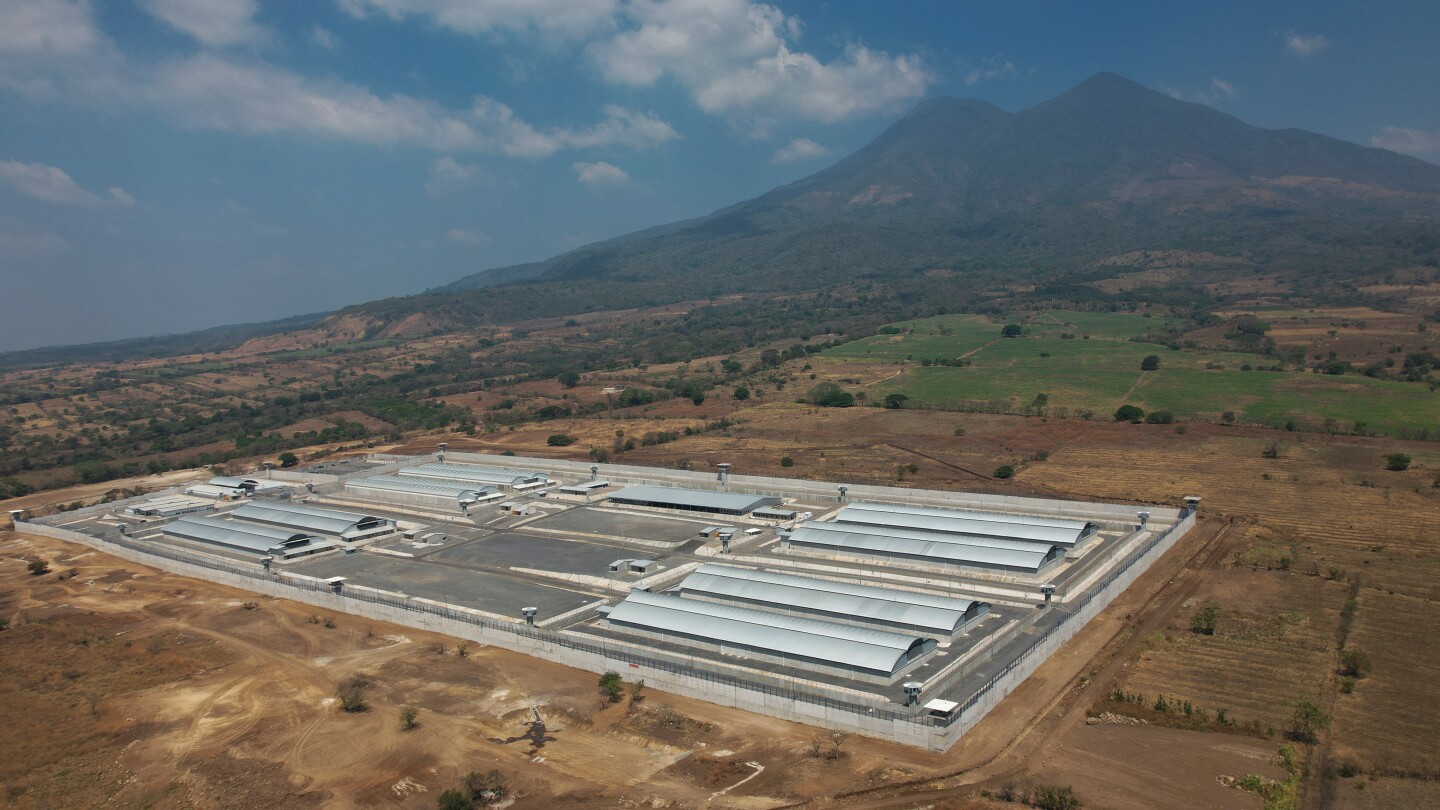
    In a significant judicial rebuke to the Trump administration’s immigration policies, U.S. District Judge James Boasberg has mandated that Venezuelan migrants abruptly flown to El Salvador’s notorious Terrorism Confinement Center (CECOT) must receive proper legal due process. The Monday ruling requires the administration to either provide court hearings or facilitate the return of these individuals to the United States within a two-week framework.

    The case originated in March when the administration invoked the 18th-century Alien Enemies Act to transport migrants accused of gang affiliations to CECOT, one of Latin America’s most severe maximum-security facilities. Despite Judge Boasberg’s initial verbal order to halt the transfers, two aircraft proceeded with the operation, prompting a contempt investigation that has since been suspended pending appellate review.

    More than 200 migrants were subsequently included in a prisoner exchange with Venezuela in July, though the ruling now establishes legal pathways for them to contest their classification as Tren de Aragua gang members. The American Civil Liberties Union, representing the migrants, hailed the decision as a critical check on executive overreach, emphasizing that the administration cannot bypass constitutional protections through extraordinary removal practices.

    The White House has maintained that it did not violate judicial orders, though officials declined immediate comment on the latest development. This case represents a continuing tension between federal judiciary authority and the administration’s aggressive immigration enforcement strategies.

  • Kurdish force shelling kills one person in Syria’s Aleppo city, state media says

    Kurdish force shelling kills one person in Syria’s Aleppo city, state media says

    A deadly exchange of fire rocked the northern Syrian city of Aleppo on Monday, December 22, 2025, resulting in civilian casualties and prompting a war of words between opposing factions. The incident underscores the fragile and volatile security situation in regions outside central government control.

    According to a report from Syria’s official state news agency, SANA, mortar and rocket shelling originating from the US-backed, Kurdish-led Syrian Democratic Forces (SDF) struck several neighborhoods within Aleppo. The agency stated that the bombardment resulted in one civilian fatality.

    In a separate communiqué, the SDF presented a contrasting narrative. While not directly acknowledging the state media’s casualty report, the force confirmed that a clash had occurred and reported that five civilians were wounded by the violence. Each side attributed the initiation of hostilities to the other, leaving the precise catalyst for the escalation unclear.

    The skirmishes are reported to have erupted in districts of Aleppo with significant Kurdish populations, areas that have historically been flashpoints amidst Syria’s complex geopolitical landscape. The SDF, which controls large territories in northeastern Syria, often finds itself in a precarious position, opposed by both the Damascus government and neighboring Turkey.

    This event highlights the ongoing tensions that persist despite a relative calmer period in the decade-long conflict, serving as a stark reminder that the Syrian civil war, though diminished in scale, continues to simmer with localized outbreaks of violence that threaten civilian lives.

  • AI-driven cybersecurity challenges demand a new level of resilience

    AI-driven cybersecurity challenges demand a new level of resilience

    A startling revelation that 94% of UAE organizations have experienced materially damaging cyberattacks underscores an urgent regional security crisis. This alarming statistic signals that compliance-focused approaches, while foundational, no longer suffice for ensuring business continuity in today’s threat landscape. Despite the UAE’s robust digital governance framework—including comprehensive Personal Data Protection Laws and AI ethics guidelines—cyber incidents continue to escalate with severe consequences including revenue loss, customer attrition, and operational paralysis.

    The core challenge stems from artificial intelligence innovation advancing at a pace that outstrips cyber readiness capabilities. As organizations rapidly adopt generative AI for automation, analytics, and customer experience enhancement, their attack surfaces expand exponentially. Traditional cybersecurity models, designed for predictable threats and structured data environments, prove inadequate against adaptive, fast-moving AI-enabled threats that exploit vulnerabilities across identity systems, ungoverned data repositories, and interconnected digital ecosystems.

    This evolving threat environment has elevated cyber resilience—moving beyond mere prevention to encompass rapid recovery, data integrity preservation, and trust maintenance—as the paramount priority for UAE businesses. True resilience integrates prevention, detection, response, and recovery into a seamless continuous capability, minimizing reliance on isolated tools while leveraging intelligent automation and fostering organizational preparedness.

    A critical misconception positions resilience as solely a technological challenge. In reality, it represents an organizational imperative requiring clear governance structures, defined responsibilities, and pre-tested response protocols. Effective resilience demands that critical systems across finance, supply chain, HR, and customer operations be supported by redundant, fully auditable data environments capable of restoration with minimal downtime. For the UAE’s digitally-driven economy spanning banking, logistics, healthcare, and government services, the ability to restore operations within minutes has emerged as a competitive differentiator.

    Artificial intelligence presents a dual-faced reality in this landscape: while AI-generated attacks employing deepfake phishing, automated credential stuffing, and AI-powered malware can overwhelm human response teams, AI also offers transformative defensive capabilities. These include automated anomaly detection, predictive risk modeling, data integrity validation, and accelerated recovery workflows—all contingent on responsible deployment with strong governance and transparency safeguards.

    The resilience gap proves particularly pronounced for SMEs, which typically lack dedicated cybersecurity teams or sophisticated tooling despite facing threat levels equivalent to large enterprises. Practical, achievable measures for smaller businesses include standardizing on secure cloud platforms, automating backups, implementing multi-factor authentication, and adopting Zero Trust access controls. Equally crucial is comprehensive staff training, given that human error remains a predominant breach cause.

    Industry analysis demonstrates that resilience increases significantly when businesses consolidate digital operations within unified, secure platforms rather than fragmented tool collections. Connected ecosystems enable consistent security policies, real-time monitoring, seamless data continuity, and accelerated recovery—providing SME access to enterprise-grade protection at accessible cost points.

    As the UAE accelerates its transformation toward an AI-driven digital economy, cyber resilience will ultimately determine which organizations thrive versus those that struggle. The most successful entities will treat resilience not as an IT function but as a strategic, organization-wide capability rooted in agility, transparency, and trust. In an era where disruption is inevitable, rapid recovery capability emerges as the defining characteristic of enduring businesses.

  • Warner Bros bidding war and red hot M&A market has dealmakers working through holidays

    Warner Bros bidding war and red hot M&A market has dealmakers working through holidays

    Wall Street investment bankers and legal advisers are sacrificing their seasonal holidays to capitalize on one of the most explosive merger and acquisition markets in recent history. With approximately $463.6 billion in deals announced this December alone—representing a 30% surge from the previous year—financial professionals from New York to London are working tirelessly to finalize transactions before the New Year.

    The remarkable activity spans multiple sectors and includes several high-profile corporate maneuvers. Paramount Global, advised by Latham & Watkins, remains engaged in a competitive $108.4 billion pursuit of Warner Bros Discovery, facing rival bids from both Skydance Media and Netflix. In parallel, a consortium led by Permira and Warburg Pincus recently secured an $8.4 billion acquisition of Clearwater Analytics Holdings, while IBM completed its $11 billion purchase of data infrastructure firm Confluent.

    Industry leaders attribute this surge to shifting corporate strategies and favorable market conditions. John Collins, Global Head of M&A at Morgan Stanley, noted, ‘We’ve observed a fundamental shift in boardroom mentality—from seeking reasons to decline deals to actively pursuing reasons to proceed.’ This sentiment is echoed by Gerry Cardinale, Founder of RedBird Capital, who confirmed ongoing negotiations through the holiday period to communicate offer merits to Warner Bros shareholders.

    Global M&A volume has reached $4.8 trillion year-to-date, positioning 2025 as the second-most active period on record after the 2021 peak. Despite geopolitical tensions and trade policy fluctuations, diminished antitrust scrutiny and aggressive corporate positioning have fueled an exceptionally robust dealmaking environment. Financial and legal teams anticipate sustained momentum into early 2026, with several major transactions already in preliminary stages.

  • Sri Lanka cyclone caused $4.1b in physical damage, World Bank reports

    Sri Lanka cyclone caused $4.1b in physical damage, World Bank reports

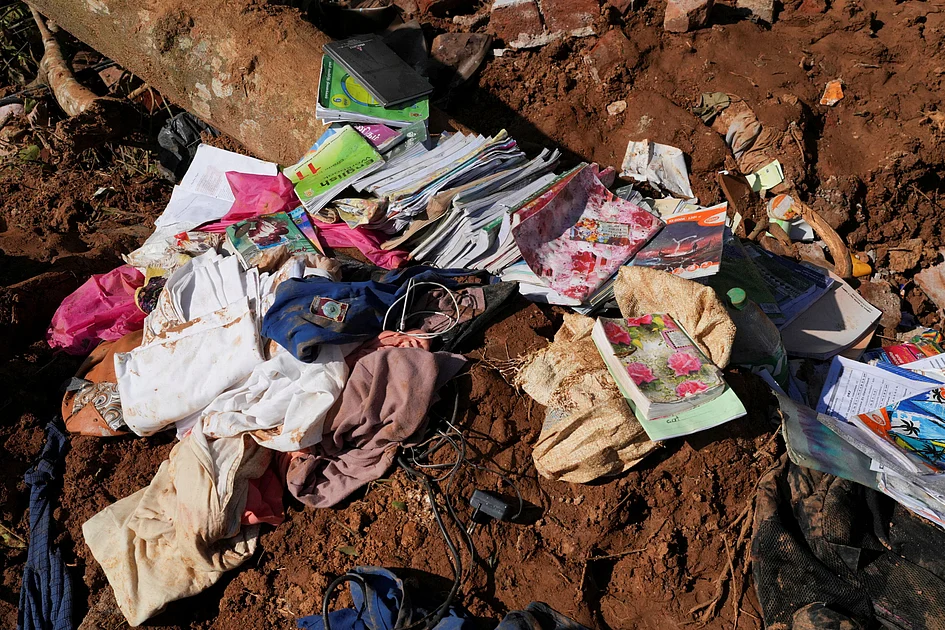
    A comprehensive assessment by the World Bank has revealed that Cyclone Ditwah inflicted approximately $4.1 billion in direct physical damage across Sri Lanka last month. The catastrophic weather event resulted in the tragic loss of over 640 lives and adversely affected more than 10% of the nation’s population through devastating floods and landslides.

    The damage estimate, equivalent to roughly 4% of Sri Lanka’s Gross Domestic Product (GDP), was detailed in the World Bank’s Global Rapid Post-Disaster Damage Estimation (GRADE) report released Monday. Critical infrastructure sustained the most significant portion of the devastation, with roads, bridges, railways, and water supply networks accounting for an estimated $1.735 billion in damages.

    Housing emerged as the second-most impacted sector with $985 million in destruction, representing 24% of the total damage. Educational institutions, healthcare facilities, and commercial enterprises located near major waterways suffered extensive damage valued at $562 million.

    The World Bank emphasized that these figures represent direct physical damage only and exclude broader economic losses related to income disruption, production declines, or comprehensive reconstruction expenses.

    The disaster struck as Sri Lanka was demonstrating signs of recovery from its severe 2022 economic crisis, which depleted foreign exchange reserves necessary for essential imports. Following a $2.9 billion International Monetary Fund (IMF) bailout approved in early 2023, the country had achieved economic stabilization prior to the cyclone.

    In response to the catastrophe, international financial institutions have mobilized support. The IMF has approved $206 million in emergency financing, while the World Bank has repurposed $120 million from an existing project to aid disaster recovery efforts.

  • Gold jumps over 2% to all-time peak; silver follows with record gain

    Gold jumps over 2% to all-time peak; silver follows with record gain

    Global financial markets witnessed an extraordinary surge in precious metals on Monday as gold and silver prices shattered previous records amid escalating geopolitical tensions and favorable economic conditions. Gold experienced a remarkable 2% surge, reaching an unprecedented peak of $4,428.92 per ounce during trading sessions, while silver simultaneously achieved its own historic milestone with a 2.7% gain to $69.44 per ounce.

    The dramatic price movement stems primarily from renewed geopolitical friction between the United States and Venezuela. President Donald Trump’s recent announcement of a comprehensive blockade targeting sanctioned oil tankers entering and exiting Venezuelan waters has significantly heightened market uncertainty. This aggressive stance, complemented by increased military mobilization and multiple strikes on vessels in the Pacific and Caribbean regions, has triggered substantial safe-haven investment flows into precious metals.

    Market analysts from Nemo.Money indicate that gold had been consolidating just beneath record levels in previous sessions, with the current breakthrough representing a classic momentum surge amplified by reduced holiday trading volumes. The firm’s analysts have now identified $5,000 per ounce as a plausible target for gold bulls in the coming year.

    Beyond geopolitical factors, the metals rally demonstrates profound fundamental strength. Gold has achieved an astonishing 68% annual appreciation—its most substantial yearly gain since 1979—driven by robust central bank acquisitions, sustained safe-haven demand, and declining global interest rates. Silver has outperformed even this spectacular benchmark with an extraordinary 138% year-to-date increase.

    Macquarie strategists attribute silver’s exceptional performance to persistent supply-demand imbalances and heightened import requirements during India’s festive season, though they project a more moderate average of $57 per ounce for 2026.

    The broader precious metals complex participated in the rally, with platinum jumping 5.3% to multi-year highs and palladium climbing 3.2% to approach three-year peaks. A marginally weaker U.S. dollar further supported the advance by enhancing the affordability of dollar-denominated assets for international investors.

  • Trump unveils plans for ‘Golden Fleet’ battleships named after himself

    Trump unveils plans for ‘Golden Fleet’ battleships named after himself

    In a significant military policy announcement, former President Donald Trump has revealed plans for a new class of heavily armed naval vessels to be named in his honor. The revelation came during a press conference at his Mar-a-Lago estate in Florida, where Trump was joined by key administration officials including Defense Secretary Pete Hegseth, Secretary of State Marco Rubio, and Navy Secretary John Phelan.

    The proposed ‘Trump Class’ battleships, designated as USS Defiant models, represent the centerpiece of a comprehensive naval expansion strategy dubbed the ‘Golden Fleet’ initiative. According to Trump, these vessels will incorporate hypersonic weapons systems and advanced lethal capabilities, positioning them as future flagships of the U.S. Naval fleet. Initial construction will commence with two vessels, with ambitions to eventually produce up to twenty-five ships in this class.

    This naval development occurs against the backdrop of growing concerns about American shipbuilding capacity relative to global competitors. Administration officials have repeatedly highlighted China’s dominant position in both naval production scale and commercial shipbuilding output, with Chinese shipyards capturing over sixty percent of global orders this year alone.

    The announcement follows recent Navy disclosures about additional vessel acquisitions based on the Coast Guard’s Legend-class National Security Cutter design. Chief of Naval Operations Daryl Caudle emphasized operational necessities driving these acquisitions, noting that current small combatant vessel inventory stands at merely one-third of required levels.

    The Trump administration’s naval strategy appears focused on domestic industrial revitalization alongside military enhancement. The president emphasized that construction would occur exclusively in American shipyards, potentially generating thousands of manufacturing jobs. This approach continues initiatives from Trump’s previous term, though similar previous efforts like the Constellation-class frigate program faced cancellation in 2024 due to budgetary overruns and scheduling delays.

    Geopolitical context adds urgency to these developments, with U.S. naval and air assets recently deployed to the Caribbean region amid escalating tensions with Venezuela. The administration has linked naval expansion to counter-narcotics operations, claiming successful interdiction of drug trafficking vessels since September operations commenced.

    Despite administrative enthusiasm, the proposed battleship program may encounter scrutiny regarding budgetary implications and strategic necessity, particularly given the Navy’s ongoing transition toward distributed maritime operations and unmanned vessel integration.

  • US regulator approves pill form of Wegovy weight-loss drug

    US regulator approves pill form of Wegovy weight-loss drug

    In a landmark decision for obesity treatment, the U.S. Food and Drug Administration has granted approval to pharmaceutical giant Novo Nordisk for a pill formulation of its widely-used weight-loss medication Wegovy. This development marks a significant advancement in the growing field of GLP-1 receptor agonists, which have revolutionized weight management therapies.

    The newly approved oral medication represents the first pill version of a GLP-1 drug specifically approved for weight loss, offering patients a convenient alternative to injectable formulations. According to Denmark-based Novo Nordisk, the once-daily tablet delivers comparable weight reduction results to its injectable counterpart while eliminating the need for regular injections.

    This approval builds upon the FDA’s earlier endorsement of Wegovy’s injectable form for weight management. The distinction is particularly noteworthy as other similar medications, including Ozempic which shares Wegovy’s active ingredient semaglutide, received initial approval primarily for Type 2 diabetes treatment despite demonstrating significant weight-loss benefits.

    The pharmaceutical innovation addresses a critical need in obesity treatment by potentially improving medication adherence through easier administration. With obesity affecting approximately 42% of American adults according to CDC data, this development could expand treatment accessibility for millions seeking effective weight management solutions.

    Medical experts anticipate that the oral formulation may reduce barriers to treatment initiation and persistence, potentially transforming the weight-loss medication landscape. The approval comes amid growing demand for effective pharmacological interventions against obesity, which remains a pressing public health concern nationwide.

  • Captain Pat Cummins out and spin bowler Murphy in for the 4th Ashes test against England

    Captain Pat Cummins out and spin bowler Murphy in for the 4th Ashes test against England

    MELBOURNE, Australia — Australia’s cricket selectors have announced significant changes to their squad for the pivotal fourth Ashes test against England, commencing Friday at the Melbourne Cricket Ground. The team will field a substantially altered bowling attack with rising spinner Todd Murphy replacing the injured Nathan Lyon and captain Pat Cummins opting for strategic rest.

    Murphy, who has been selected ahead of fellow spin contenders Matt Kuhnemann and Corey Rocchiccioli, is poised to make his Australian test debut on home soil during the prestigious Boxing Day match. The 15-player roster, unveiled Tuesday, reflects Australia’s calculated approach to squad management after securing the Ashes urn with three consecutive victories in the series.

    Cummins’ decision to sit out the Melbourne encounter follows medical advice regarding his recovery from a significant back injury sustained in June. The pace bowler confirmed his likely absence after Australia’s commanding 82-run triumph in Adelaide, prioritizing long-term fitness over immediate participation.

    In positive news for the hosts, former captain Steve Smith is anticipated to return to the lineup after missing the third test due to a vertigo episode. Smith will resume leadership duties during Cummins’ absence, providing experienced guidance to the restructured squad.

    The selection panel has also recalled fast bowler Jhye Richardson, who could potentially play his first test match in over four years following an extensive rehabilitation from multiple injuries. Richardson’s inclusion offers additional pace options alongside established bowlers Mitchell Starc and Scott Boland.

    Lyon’s hamstring strain, suffered during a boundary-saving dive on the final day of the Adelaide test, represents another setback for the veteran spinner who previously missed matches during the 2023 Ashes series in England with a calf injury. Murphy, who previously deputized for Lyon during that series and claimed six wickets at The Oval, now steps into the primary spin role.

    The fifth and final Ashes test is scheduled to begin January 3rd at the Sydney Cricket Ground, where Australia will look to extend their dominant position in the historic rivalry.