作者: admin

  • US denies visas to ex-EU commissioner and others over social media rules

    US denies visas to ex-EU commissioner and others over social media rules

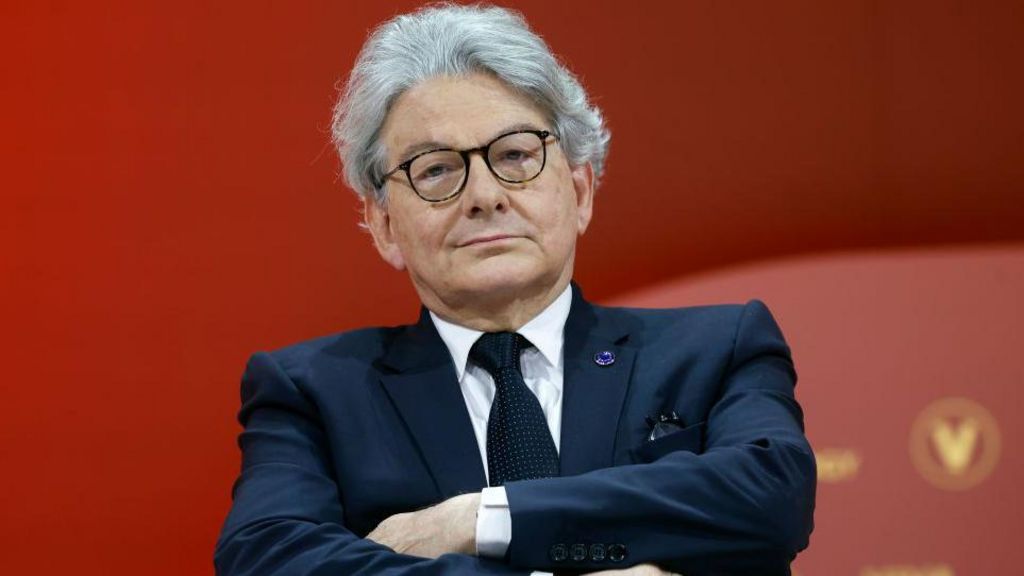
    The United States State Department has announced visa restrictions against five individuals, including former European Union commissioner Thierry Breton, accusing them of attempting to coerce American social media platforms into suppressing viewpoints they oppose. Secretary of State Marco Rubio characterized the targets as “radical activists and weaponized NGOs” advancing foreign censorship campaigns against American companies and speakers.

    Thierry Breton, previously the EU’s top technology regulator and architect of the Digital Services Act (DSA), denounced the move as a “witch hunt.” The DSA legislation, which mandates content moderation requirements for social media firms, has drawn criticism from U.S. conservatives who view it as targeting right-wing opinions—a claim Brussels denies.

    The announcement escalates ongoing tensions between U.S. tech platforms and European regulators. Breton has previously clashed with Elon Musk, owner of X (formerly Twitter), regarding compliance with EU regulations. Recently, the European Commission fined X €120 million for deceptive practices related to its verification system, prompting the platform to block Commission advertising.

    Other individuals targeted include Clare Melford of the Global Disinformation Index, accused of using U.S. taxpayer funds to suppress American speech, and Imran Ahmed of the Center for Countering Digital Hate, described as a “key collaborator” in government weaponization efforts. German organization HateAid representatives Anna-Lena von Hodenberg and Josephine Ballon were also sanctioned.

    Reactions from those targeted were uniformly critical, with statements characterizing the visa bans as “authoritarian attacks on free speech” and acts of government repression. The State Department maintained that the measures protect American sovereignty from extraterritorial overreach by foreign censors, aligning with the Trump administration’s America First foreign policy.

  • Australia to deport British man charged with displaying Nazi symbols

    Australia to deport British man charged with displaying Nazi symbols

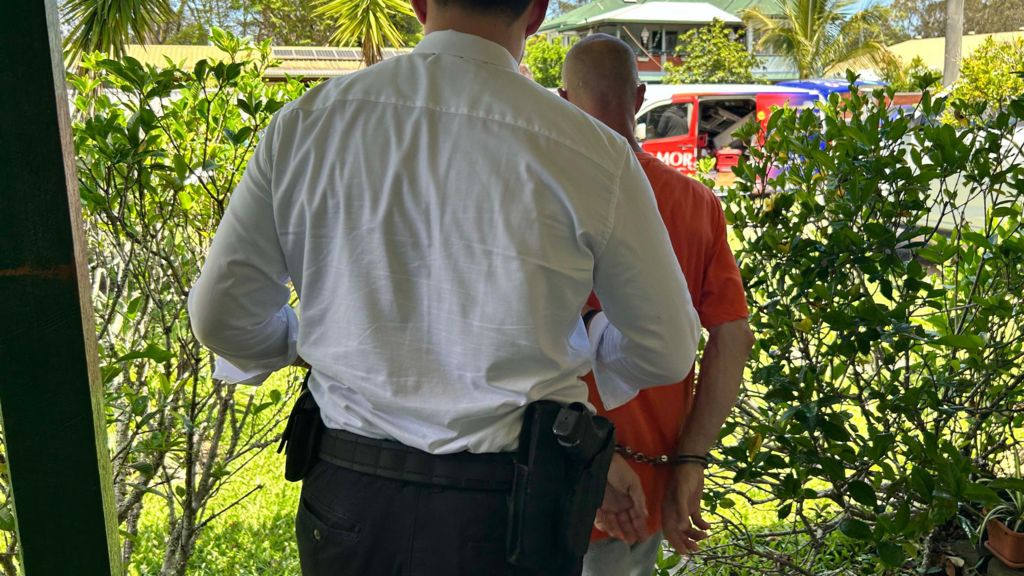
    Australian authorities have taken decisive action against a British national residing in Queensland, canceling his visa and initiating deportation proceedings following allegations of promoting Nazi ideology and inciting violence against Jewish communities. The 43-year-old man, whose identity remains protected under Australian law, was arrested earlier this month after federal police uncovered his social media activities involving the display of prohibited Nazi symbols and explicit calls for violence.

    The case emerged when the Australian Federal Police (AFP) launched an investigation in October after detecting offensive content on platform X (formerly Twitter). Despite the social media company blocking his initial account, the individual reportedly created a new profile with similar identification to continue disseminating hate material. During a late November raid on his Caboolture residence near Brisbane, authorities confiscated multiple weapons including knives, axes, and several swords adorned with swastika symbols.

    Home Affairs Minister Tony Burke delivered a strong statement regarding the case, emphasizing: ‘He came here to hate – he doesn’t get to stay.’ The minister further clarified Australia’s stance on visa holders during an ABC interview, stating, ‘If you come to Australia on a visa, you are here as a guest.’

    The accused currently remains in immigration detention in Brisbane while awaiting court proceedings scheduled for January. He faces three charges of displaying banned Nazi symbols and one count of using internet services to cause offense. Police authorities are evaluating whether to postpone deportation to ensure his appearance in court.

    This case represents the second high-profile visa cancellation under Australia’s strengthened hate crime legislation. Last month, authorities revoked the visa of South African national Matthew Gruter after his participation in a neo-Nazi rally outside the New South Wales parliament. Both individuals retain the right to appeal their visa cancellations and may either depart voluntarily or face forced deportation to their home countries.

    AFP Assistant Commissioner Stephen Nutt affirmed the government’s commitment to social cohesion, stating: ‘We want to ensure these symbols are not being used to fracture social cohesion. If we identify instances where this is happening, we will act swiftly to disrupt the behaviour, prosecute those involved and protect the dignity, safety and cohesion of our diverse community.’

    Australia recently implemented stricter hate crime laws introducing mandatory prison sentences for displaying hate symbols or performing Nazi salutes, reflecting increased governmental efforts to combat rising antisemitism and right-wing extremism.

  • Pakistani firm wins auction with $482 million bid for state airline PIA

    Pakistani firm wins auction with $482 million bid for state airline PIA

    In a landmark transaction for Pakistan’s privatization efforts, the Arif Habib investment consortium has prevailed in a competitive auction to acquire a controlling 75% stake in Pakistan International Airlines (PIA) with a bid of 135 billion rupees ($482 million). The high-stakes bidding process, broadcast live on state television on Tuesday, featured three domestic contenders vying for the national carrier.

    The transparent auction procedure saw the Arif Habib group outperform rival bids from a Lucky Cement-led consortium offering 134 billion rupees and private carrier Air Blue’s substantially lower 26.5 billion rupee proposal. The successful bidder retains an option to purchase the remaining 25% government stake within coming months.

    Prime Minister Shehbaz Sharif characterized the event as historically significant, emphasizing the government’s commitment to transparency in what represents Pakistan’s largest corporate transaction to date. The acquisition marks a critical turning point for the financially troubled airline, which reported a $437 million net loss on $854 million revenue in 2022 before being delisted from the stock exchange.

    This successful divestiture follows last year’s failed privatization attempt when a solitary $36 million bid fell dramatically short of the government’s $300 million valuation expectations. PIA’s operational challenges have included substantial financial losses, safety concerns that resulted in extended flight bans to Western destinations, and ongoing management issues that required repeated government bailouts.

    The transaction serves as a crucial test case for Pakistan’s broader commitment to privatizing dozens of state-owned enterprises across multiple sectors by 2029, a key condition of the nation’s $7 billion International Monetary Fund loan program. Founded in 1955 as a symbol of national prestige with designer uniforms by Pierre Cardin, PIA’s decline exemplifies the challenges facing many government-owned entities struggling with inefficiency and financial sustainability.

  • Have the American Pope and the American administration fallen out?

    Have the American Pope and the American administration fallen out?

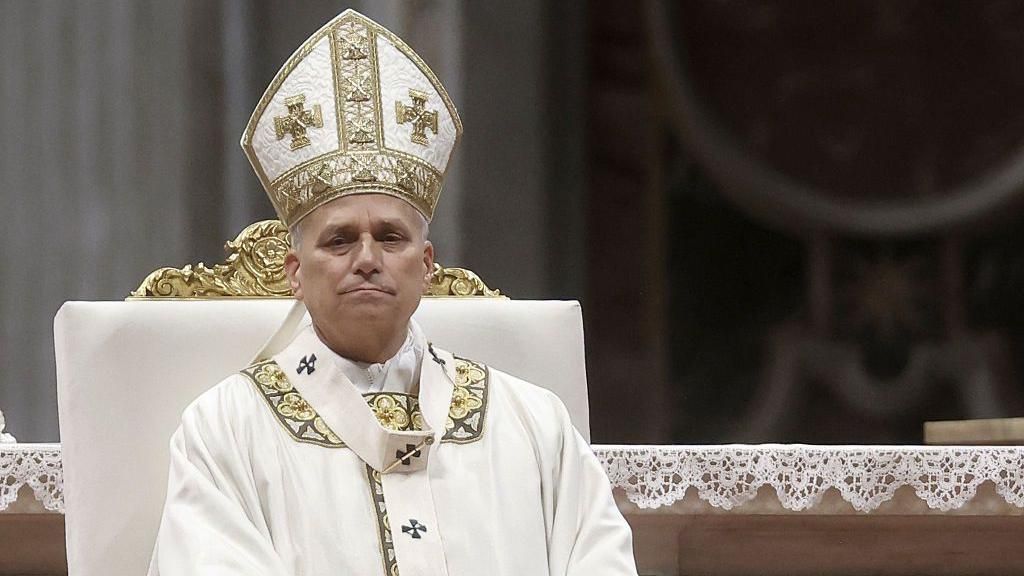
    A significant ideological schism has emerged between the Vatican and the Trump administration over immigration policy, creating unprecedented tension within America’s Catholic community. Pope Leo XIV, the American-born pontiff, has repeatedly criticized the administration’s mass deportation approach, calling for “deep reflection” on migrant treatment and invoking the Gospel of Matthew to emphasize Christian duty toward foreigners.

    The confrontation escalated in November when the United States Conference of Catholic Bishops (USCCB) issued a rare “Special Message”—their first such communiqué in twelve years—expressing profound disturbance at what they termed “a climate of fear and anxiety.” The bishops explicitly opposed “indiscriminate mass deportation” and condemned dehumanizing rhetoric, with the Pope endorsing their statement as “very important” and urging all Catholics to heed its message.

    This ecclesiastical stance has provoked strong reactions from conservative Catholics. Jesse Romero, a prominent Catholic podcaster and Trump supporter, argued that church leadership should focus on spiritual matters rather than governance, stating: “The Pope should tell us how to get to heaven. He has no authority over the government.”

    The political dimension is particularly complex given Catholicism’s substantial influence in American politics. With one in five Americans identifying as Catholic, and prominent figures like Vice President JD Vance and Secretary of State Marco Rubio representing the faith, the Church’s internal divisions mirror broader national debates. While nearly 60% of white Catholics approve of Trump’s immigration handling according to the Public Religion Research Institute, Hispanic Catholics—comprising 37% of the U.S. Catholic population—show significantly lower support at around 30%.

    David Gibson, director of Fordham University’s Center on Religion and Culture, observes that the administration calculates “there are enough American Catholics who support Donald Trump that it’s politically beneficial to pick a fight with the Pope.” This calculation manifests in direct rebuttals from administration officials, including White House Press Secretary Karoline Leavitt rejecting the Pope’s characterization of U.S. immigration policies as “inhuman.”

    At the grassroots level, the conflict takes tangible form. In Chicago, parishioner Jeanne Rattenbury participated in a 2,000-strong “People’s Mass” outside an ICE detention center, part of efforts by the Coalition for Spiritual and Public Leadership to provide religious ministry to detainees—a service they claim is being systematically blocked, leading to federal litigation.

    Bishop Joseph Tyson of Yakima, Washington, one of 216 bishops supporting the USCCB statement, emphasizes that current deportation practices are “not surgical” and disproportionately affect parish communities. With many priests themselves immigrants on temporary visas, the Church faces practical vulnerabilities alongside theological concerns. “Anybody can have their paperwork revoked,” Bishop Tyson notes, revealing that seminarians now carry immigration documents at all times due to enforcement anxieties.

    The ideological fault lines extend to symbolic protests, including a Boston-area church’s Christmas nativity scene replacing baby Jesus with a sign reading “ICE was here”—a display the Archdiocese ordered removed for being divisive, though the parish has thus far refused.

    This confrontation represents a fundamental clash of values between institutional Catholic teaching emphasizing immigrant dignity and political implementation of border enforcement, creating a profound identity crisis for American Catholics navigating competing loyalties to faith and political affiliation.

  • An alleged drug cartel and a murdered witness: South Africa’s police corruption probe

    An alleged drug cartel and a murdered witness: South Africa’s police corruption probe

    South Africa faces a profound institutional crisis as parallel investigations reveal alarming evidence of criminal cartels infiltrating the highest levels of law enforcement and government. The suspension of Police Minister Senzo Mchunu—a senior African National Congress (ANC) figure and presidential ally—marks a critical juncture in President Cyril Ramaphosa’s response to systemic corruption allegations within the police force.

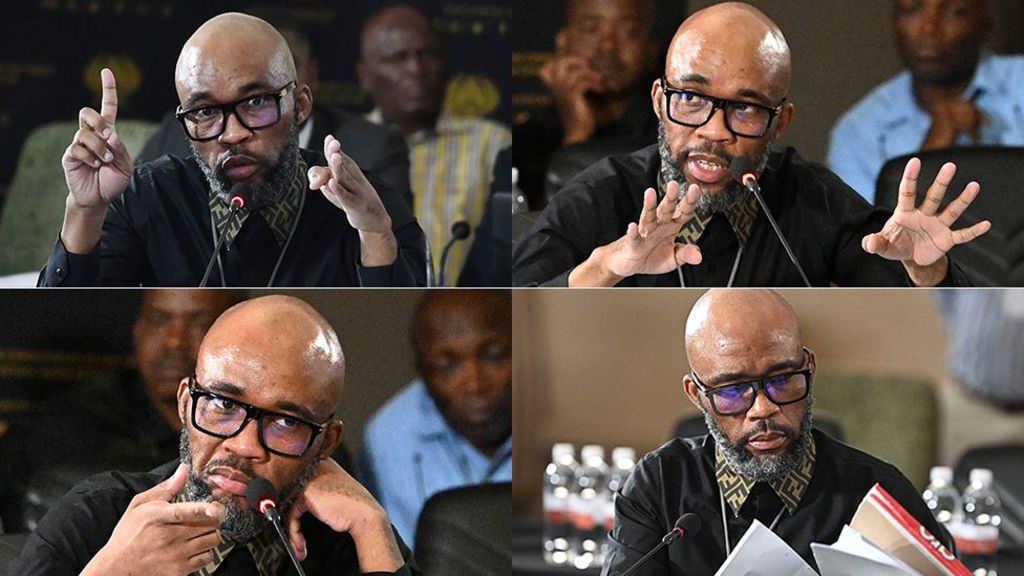
    The crisis emerged dramatically in July when KwaZulu-Natal police chief Lt-Gen Nhlanhla Mkhwanazi publicly alleged that organized crime groups had penetrated government structures. His testimony directly implicated Minister Mchunu, claiming he maintained ties to crime kingpins and had deliberately dismantled an elite unit investigating political murders. These assertions triggered two separate inquiries: the Madlanga Commission, headed by retired Constitutional Court judge Mbuyiseli Madlanga, and a parliamentary investigation in Cape Town.

    Testimony before these commissions has unveiled a sophisticated criminal network dubbed ‘the Big Five,’ allegedly operating a multinational narcotics empire while engaging in contract killings, cross-border hijackings, and kidnappings. Police crime intelligence commander Lt-Gen Dumisani Khumalo testified that this cartel had ‘penetrated the political sphere’ and could manipulate investigations, suppress evidence, and obstruct legal proceedings through connections within the criminal justice system.

    Central to the allegations is controversial businessman Vusimusi ‘Cat’ Matlala, currently facing 25 criminal charges including attempted murder. Witnesses allege Matlala provided financial support for Mchunu’s political ambitions, though both men deny any wrongdoing. Matlala’s testimony before parliament revealed astonishing details about relationships with current and former ministers, including claims that ex-Police Minister Bheki Cele demanded a 1 million rand ‘facilitation fee’ to prevent police harassment—allegations Cele denies while admitting to accepting ‘freebie’ stays at Matlala’s penthouse.

    The investigations turned deadly in early December when Marius van der Merwe, a witness who had implicated police officials in torture and extrajudicial killings, was murdered in full view of his family weeks after testifying. His killing highlights the extreme dangers facing whistleblowers in South Africa, where Human Rights Watch documents frequent retaliation against those exposing corruption.

    President Ramaphosa now holds an interim report from the Madlanga Commission, though his spokesperson Vincent Magwenya states it won’t be made public until finalized next year. The commission operates in three phases: allegation presentation, response from implicated officials, and witness recall for clarification. With both inquiries continuing into 2026, South Africans await answers about whether their government can effectively address what Gen Mkhwanazi described as ‘terrorism’—criminal elements seeking to control government not through ballots but through illicit means.

  • Premier League: Penalty king Jimenez strikes for Fulham to sink Forest

    Premier League: Penalty king Jimenez strikes for Fulham to sink Forest

    Fulham Football Club secured a crucial 1-0 victory against Nottingham Forest in Monday’s Premier League clash at Craven Cottage, significantly altering the relegation landscape. Mexican striker Raul Jimenez proved the difference-maker, converting a first-half penalty to maintain his impeccable record from the spot in England’s top flight.

    The match represented a classic six-pointer between teams positioned near the bottom of the table. Marco Silva’s Fulham entered the contest merely two points above their opponents, but Jimenez’s clinical finish in stoppage time of the opening half propelled them to a more comfortable position in the standings.

    Forest, despite arriving with momentum from six wins in their previous eight matches across all competitions—including a impressive 3-0 triumph over Tottenham—failed to replicate their recent form. Manager Sean Dyche lamented his team’s lack of cutting edge, noting their inability to convert opportunities into meaningful threats on goal.

    The game’s decisive moment arrived when Douglas Luiz fouled Fulham’s Kevin in the penalty area deep into first-half added time. Jimenez stepped up and calmly dispatched the spot-kick, marking his 11th successful penalty from 11 attempts in Premier League competition, sending goalkeeper John Victor the wrong way.

    Forest created several opportunities to equalize, particularly through Brazilian striker Igor Jesus who wasted two first-half chances and saw a second-half chip drift just over the crossbar. Additional efforts from Murillo and Morgan Gibbs-White tested Fulham’s defense but ultimately failed to beat goalkeeper Bernd Leno.

    The victory provides Fulham with consecutive league wins following their triumph over Burnley, despite missing several key players including Samuel Chukwueze, Alex Iwobi, and Calvin Bassey who are representing Nigeria at the Africa Cup of Nations.

  • ‘We are ghosts’: Britain’s migrant night shift workers

    ‘We are ghosts’: Britain’s migrant night shift workers

    Britain’s nocturnal economy, sustained by a workforce of nine million, has become increasingly dependent on migrant labor as UK-born night shift workers decline dramatically over the past decade. This invisible army powers the nation’s 24-hour society while facing health challenges, policy changes, and societal recognition issues.

    At a south London market, Leandro Cristovao from Angola describes night workers as “ghosts”—essential yet unseen. This phenomenon reflects a broader trend where migrants are twice as likely to work overnight compared to UK-born citizens, particularly dominating sectors like healthcare where they constitute over one-third of night staff.

    Research by University College Cork sociology professor Julius-Cezar Macarie reveals this workforce maintains Britain’s round-the-clock society despite being unfairly categorized as “low-skilled.” His “Nightwork Footprint” project highlights the systemic invisibility of these essential workers.

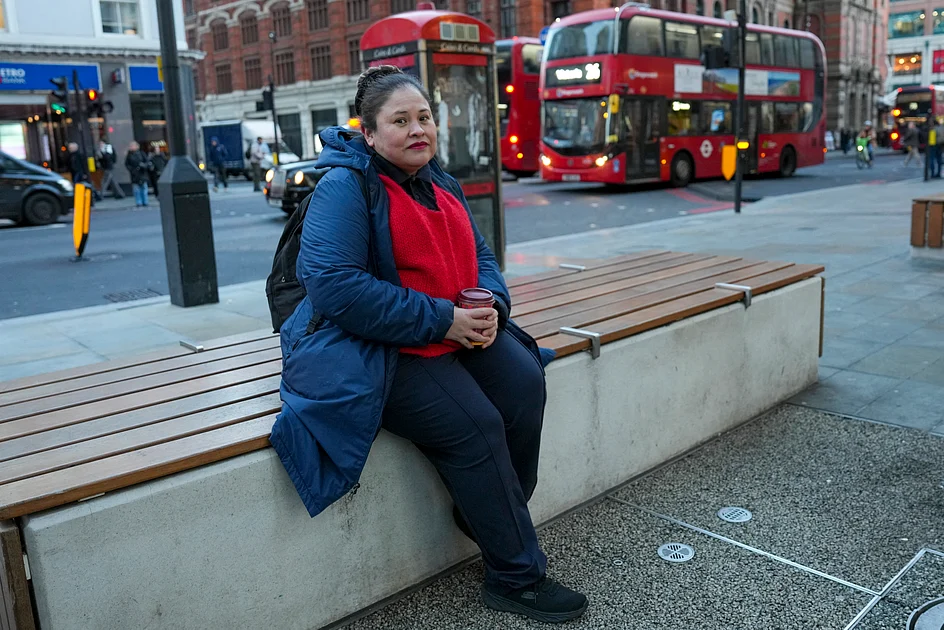
    The human stories behind the statistics reveal profound challenges. Roxana Panozo Alba, a 46-year-old Bolivian-born office cleaner in central London, works overnight to care for her children during daylight hours. “Working at night damages your health,” she explains. “You try to sleep but the slightest noise wakes you.”

    In healthcare, Omatule Ameh from Nigeria works overnight with children having learning disabilities, then cares for his own children during the day on just three hours of sleep. “It takes a gradual toll on you emotionally and mentally,” says the minimum-wage worker.

    Similarly, Judith Munyonga from Zimbabwe monitors spinal injury patients through 12-hour night shifts, using music to stay awake in darkness. Both caregivers express concern about recent policy changes eliminating care worker visas and family reunification provisions.

    The hospitality sector relies heavily on migrants like Sandeep, a 21-year-old Nepali computer science graduate working nights as a chef after failing to find technology employment. Facing visa expiration due to increased salary requirements, he questions: “They gave me hope… now what’s the point of telling me to go back?”

    Business owners acknowledge their dependence on migrant night workers. Martin Dykes of Nature’s Choice warns that without them, “restaurants wouldn’t survive” following post-Brexit labor shortages.

    Despite challenges, these workers demonstrate remarkable resilience. As Cristovao states defiantly while gesturing toward sleeping residential towers: “While they are sleeping, we are here.”

  • US Supreme Court  rejects Trump’s bid to deploy National Guard to Chicago

    US Supreme Court rejects Trump’s bid to deploy National Guard to Chicago

    In a significant legal setback for the Trump administration, the U.S. Supreme Court has denied the president’s authority to deploy National Guard troops to the Chicago metropolitan area without consent from state and local officials. The court’s unsigned order establishes that presidential power to federalize state-based National Guard units likely applies only under “exceptional” circumstances, marking a notable departure from the conservative-majority court’s typical alignment with administration positions.

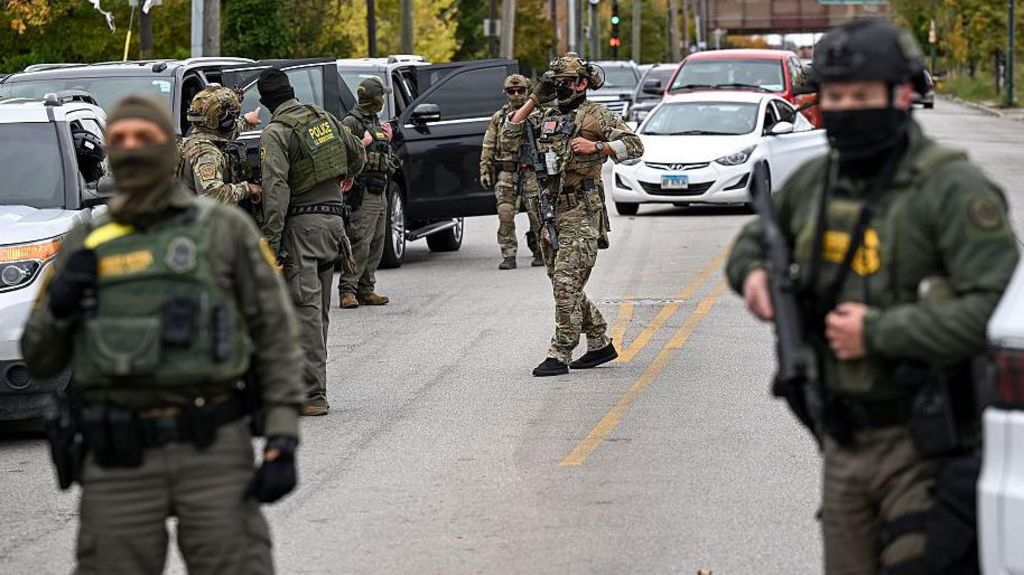
    The ruling originated from the administration’s efforts to suppress protests against federal immigration raids in several Democrat-led cities, including Chicago, New Orleans, Portland, and Washington DC. President Trump had asserted that military presence was necessary to quell violence, combat crime, and support deportation initiatives in these urban centers.

    Previous lower court decisions had already rejected the administration’s legal argument that Chicago-area protests constituted a “rebellion or danger of rebellion” against the United States. The administration appealed these rulings to the Supreme Court, maintaining that deployment decisions were not subject to judicial review.

    The justices ultimately upheld the lower court decisions through a 6-3 ruling, with conservative justices Clarence Thomas, Samuel Alito, and Neil Gorsuch dissenting. The majority opinion stated that “the Government has failed to identify a source of authority that would allow the military to execute the laws in Illinois” at this preliminary stage.

    This landmark decision maintains the status quo in one of America’s largest cities and represents the first Supreme Court ruling on the administration’s controversial practice of deploying troops to urban areas despite ongoing legal challenges. Illinois Governor JB Pritzker hailed the outcome as “a big win for Illinois and American democracy.”

    The ruling clarifies the constitutional boundaries between federal and state authority regarding military deployment within U.S. borders, potentially affecting future administration efforts to utilize National Guard troops for domestic law enforcement purposes.

  • Africa Cup of Nations: Salah, Foster take Egypt and South Africa to Group B summit

    Africa Cup of Nations: Salah, Foster take Egypt and South Africa to Group B summit

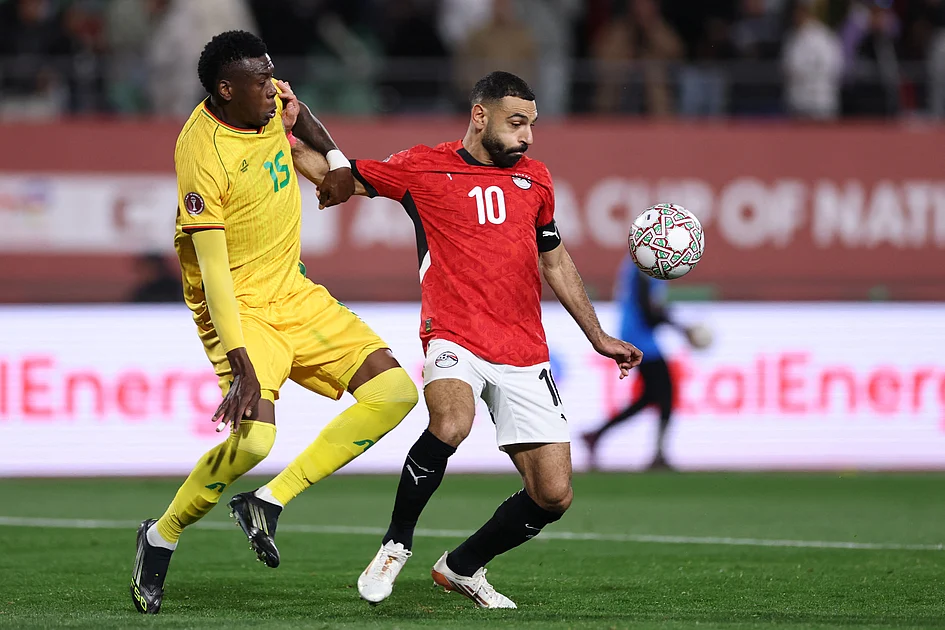
    The Africa Cup of Nations witnessed thrilling opening encounters in Group B as continental heavyweights Egypt and South Africa emerged victorious in hard-fought matches on Monday. In a dramatic conclusion in Agadir, Egypt’s Mohamed Salah delivered a decisive blow deep into stoppage time, securing a 2-1 comeback victory against a resilient Zimbabwe. The Pharaohs found themselves trailing after Prince Dube’s 20th-minute opener but equalized through Manchester City’s Omar Marmoush in the 63rd minute before Salah’s last-gasp heroics.

    Simultaneously in Marrakesh, South Africa ended their longstanding opening-match jinx with a 2-1 triumph over Angola. Burnley striker Lyle Foster became the match-winner with his 79th-minute strike, capitalizing on South Africa’s second-half dominance. The 2024 bronze medalists had taken an early lead through Oswin Appollis before Angola’s Show leveled the scoreline. The victory marked South Africa’s first opening match win since 2006, setting up a crucial top-of-the-table clash against Egypt on Friday.

    In Group A action, Mali experienced late disappointment as they conceded a stoppage-time equalizer to Zambia in Casablanca, settling for a 1-1 draw. Lassina Sinayoko’s 61st-minute opener was canceled out by Patson Daka’s dramatic header in added time. Mali coach Tom Saintfiet described the result as ‘very painful,’ particularly after El Bilal Toure had missed a first-half penalty. The result leaves hosts Morocco atop Group A with three points following their opening victory against Comoros.

  • What is ‘functional freeze’? Experts offer ways to break out of these feelings

    What is ‘functional freeze’? Experts offer ways to break out of these feelings

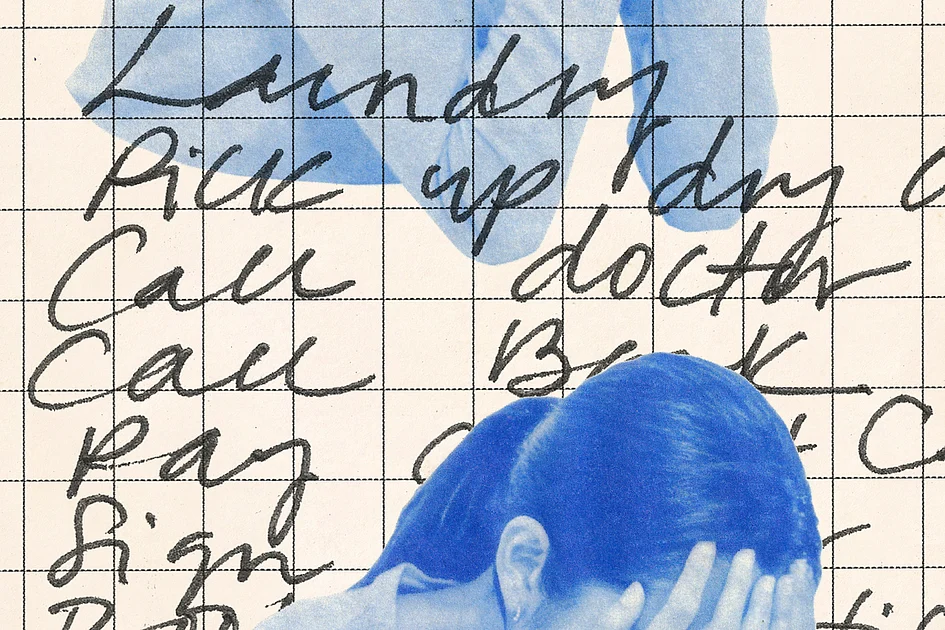
    A new term describing a pervasive state of emotional paralysis has gained significant traction across social media platforms. Known as ‘functional freeze,’ this concept captures the experience of individuals who maintain outward productivity while feeling internally numb, disconnected, and devoid of motivation. Despite lacking formal clinical recognition, the term has resonated deeply with millions, sparking widespread discussion about modern psychological stressors.

    The phenomenon typically emerges during periods of heightened pressure, such as holiday seasons, when individuals juggle increased social obligations, family complexities, and professional demands while combating seasonal illnesses. This perfect storm of stressors can create overwhelming mental exhaustion that manifests as emotional detachment despite maintained functionality.

    Clinical psychologists note that while ‘functional freeze’ isn’t an official diagnosis, its descriptive power provides valuable language for articulating experiences that might otherwise remain unexpressed. The condition shares characteristics with various established psychological states including seasonal affective disorder, depersonalization, and trauma responses. Social media content illustrating functional freeze often depicts individuals experiencing prolonged inertia—sitting motionless after showering, endless phone scrolling, or lying in bed for extended periods—despite maintaining essential responsibilities.

    Experts attribute this state to chronic stress exposure and constant information overload in the digital age. According to trauma specialist Dr. Janina Fisher, the term ‘gives people a language for describing what they’re experiencing that has a certain kind of dignity,’ moving beyond simplistic descriptions of lost motivation.

    Breaking free from functional freeze requires targeted strategies. Columbia University psychology professor George A. Bonanno recommends identifying specific stressors and addressing them systematically. For those experiencing emotional numbness, he suggests examining what specifically triggers the desire to disconnect. Dr. Fisher advocates for autonomic nervous system regulation through practices like meditation, yoga, tai chi, or running to restore physiological balance.

    For persistent symptoms, professional mental health consultation is advised to rule out diagnosable conditions. Ultimately, experts emphasize recognizing personal agency—the understanding that while functional freeze describes real experiences, it doesn’t define one’s capacity for adaptation and recovery.