作者: admin

  • US seizures of oil tankers condemned at Security Council

    US seizures of oil tankers condemned at Security Council

    The United Nations Security Council has become the arena for intense diplomatic confrontation following recent US naval operations in the Caribbean Sea. China’s deputy permanent representative to the UN, Sun Lei, delivered a stern condemnation of American military activities during a Security Council briefing on Tuesday, characterizing them as unlawful escalations that threaten regional stability.

    According to diplomatic accounts, the United States has intensified its military presence in waters adjacent to Venezuela under the declared objective of combating narcotics trafficking. This campaign has involved the sinking of over 28 vessels and the deaths of more than 100 crew members since early September, with Washington claiming these operations targeted drug smuggling operations.

    The controversy reached new heights with the interception and seizure of two Venezuelan oil tankers on December 10 and December 20, respectively. US Homeland Security Secretary Kristi Noem defended these actions, stating publicly that the United States would persist in disrupting the movement of sanctioned oil allegedly financing narco-terrorism networks in the region.

    Venezuela’s government has denounced these maritime interventions as ‘blatant theft and acts of international piracy,’ accusing US military personnel of hijacking private vessels and causing the enforced disappearance of crew members in international waters. Foreign Minister Yvan Gil contends that the underlying motivation involves coveting Venezuela’s substantial energy resources—the largest proven oil reserves globally, with exports averaging approximately 770,000 barrels daily last year.

    The situation has created significant uncertainty for international shipping, with numerous vessels carrying millions of barrels of oil reportedly anchored off Venezuela’s coast, hesitant to sail amid seizure risks. President Donald Trump has explicitly ordered a blockade against US-sanctioned oil tankers traveling to or from Venezuela and has not ruled out military escalation, stating he doesn’t ‘rule out’ regime change through force.

    China’s representative articulated broad principles against unilateralism, emphasizing opposition to any measures violating the UN Charter, infringing on national sovereignty, or employing force in international relations. Sun Lei called upon the United States to heed international concern, cease current operations, lift unilateral sanctions, and contribute constructively to regional peace and development.


  • Fujian town produces over 1 billion slippers annually

    Fujian town produces over 1 billion slippers annually

    The modest town of Neikeng in Jinjiang, Fujian Province, has emerged as an unlikely global footwear powerhouse, manufacturing an astonishing 1 billion pairs of slippers annually. This remarkable output means approximately one in every eight people worldwide could be wearing slippers originating from this Chinese manufacturing hub.

    The town’s extraordinary journey began over four decades ago during China’s reform and opening-up period, starting from humble family-operated workshops. Through strategic development and industrial consolidation, Neikeng has transformed into a world-class manufacturing cluster with a fully integrated ecosystem encompassing research and development, production, supply chain management, and international trade operations.

    Today, Neikeng’s industrial landscape comprises more than 620 specialized slipper manufacturers, including 81 large-scale enterprises and 28 companies each generating annual revenues exceeding 100 million yuan ($14.2 million). The combined annual output value of the town’s slipper industry chain has surpassed 3 billion yuan, demonstrating significant economic impact and industrial concentration.

    Local authorities have actively promoted digital transformation within the traditional industry, facilitating e-commerce platform integration to expand market reach. This strategic approach has enabled Neikeng’s manufacturers to maintain competitive advantage while adapting to evolving global market demands and consumer preferences.

    The town’s success story exemplifies China’s manufacturing capabilities in transforming traditional industries through technological innovation, cluster development, and market-oriented reforms, positioning itself as a critical node in global footwear supply chains.

  • Thousands of wild white swans arrive in Shanxi for wintering

    Thousands of wild white swans arrive in Shanxi for wintering

    The Yellow River wetlands in Pinglu county, Shanxi province, have transformed into a seasonal haven for an extraordinary natural spectacle as thousands of wild white swans complete their annual migration from Siberia. This massive avian gathering, occurring amidst dropping temperatures, marks one of China’s most significant wintering phenomena for these majestic birds.

    Strategically positioned at the provincial border between Shanxi and Henan, the Pinglu wetland ecosystem offers ideal winter conditions with its temperate microclimate and abundant nutritional resources. The area’s unique geographical attributes have established it as a crucial habitat for migratory swans seeking refuge from harsh northern winters.

    Local conservation authorities have implemented comprehensive measures to ensure the swans’ welfare during their extended stay. According to Wang Chao, a representative from the Pinglu County Forestry Bureau, the migration pattern typically begins in mid-to-late October, with populations remaining until March of the following year. “We’ve established substantial food reserves including Chinese cabbage and corn supplements,” Wang explained. “Additionally, we maintain continuous patrol operations with staff conducting 24-hour monitoring to protect these vulnerable migrants.”

    The swan population reaching approximately 10,000 annually reflects successful ecological preservation efforts in the region. Conservation initiatives have progressively enhanced the wetland environment, creating sustainable conditions that support this remarkable yearly migration. The growing numbers demonstrate how targeted environmental protection policies can positively impact wildlife preservation, offering a promising model for ecological balance between human activity and natural habitats.

  • Year-ender: China’s scientific achievements in 2025

    Year-ender: China’s scientific achievements in 2025

    China’s scientific landscape witnessed transformative breakthroughs throughout 2025, positioning the nation at the forefront of global technological advancement. The year’s achievements spanned multiple disciplines, demonstrating remarkable progress in both theoretical research and practical applications.

    In quantum technology, Chinese researchers achieved unprecedented computing stability, pushing the boundaries of qubit coherence and error correction. These developments have significant implications for cryptography, drug discovery, and complex system modeling. Parallel to these advances, China’s nuclear fusion program reached critical milestones, with experimental reactors sustaining plasma confinement for record durations, edging closer to viable commercial energy production.

    Space exploration efforts accelerated with multiple successful missions, including lunar sample-return operations and the deployment of next-generation orbital telescopes. The deep-sea exploration program simultaneously made groundbreaking discoveries, with manned submersibles documenting previously unknown marine ecosystems and geological formations at extreme depths.

    Interdisciplinary collaboration emerged as a defining characteristic of China’s 2025 scientific approach, with research institutions establishing unprecedented data-sharing protocols and international partnerships. The integration of artificial intelligence across research domains accelerated discovery timelines, particularly in materials science and biomedical engineering.

    These accomplishments reflect China’s strategic investment in research infrastructure and talent development, with particular emphasis on fostering young innovators and establishing world-class research facilities. The systematic approach to scientific advancement has created synergistic effects across industries, from renewable energy to telecommunications.

  • Will it snow in UAE? What expert says after rare snowfall in Saudi Arabia

    Will it snow in UAE? What expert says after rare snowfall in Saudi Arabia

    The recent occurrence of snowfall in Saudi Arabia has sparked widespread curiosity among UAE residents regarding the possibility of similar winter phenomena in their own country. Meteorologists confirm that while not impossible, snowfall requires exceptionally specific atmospheric conditions that rarely align in the region.

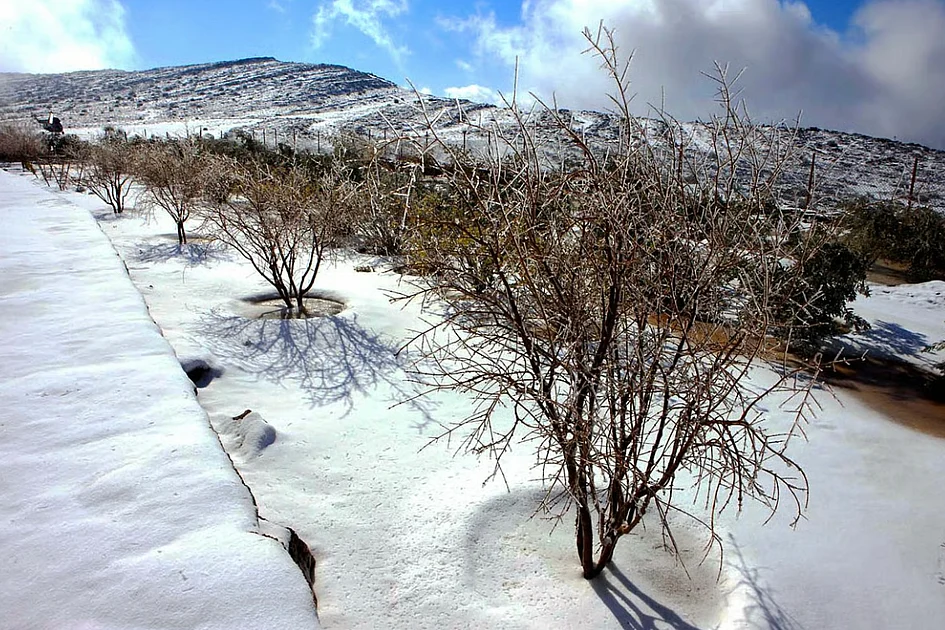
    According to meteorological reports, several areas in Saudi Arabia experienced unusual snowfall on December 18th following the arrival of a cold air mass. The Saudi Press Agency documented snow accumulation in Al Majmaah and Al Ghat governorates north of Riyadh, with higher elevation areas including Jabal Al Lawz in the northwest similarly affected. The National Centre of Meteorology attributed this event to dramatically dropping temperatures—some falling below zero degrees Celsius—combined with precipitation-bearing thunderclouds.

    Dr. Ahmed Habib from the UAE’s National Centre of Meteorology explained that snowfall demands particularly stringent conditions: “Snow formation necessitates very specific circumstances, primarily occurring in high elevation zones when atmospheric temperatures at upper levels decrease significantly. Within the UAE, such conditions remain uncommon, with hail representing the more typical winter precipitation.”

    Historical records indicate that the UAE has witnessed actual snowfall on rare occasions. The most notable event occurred on January 24, 2009, when Jebel Jais in Ras Al Khaimah experienced substantial snow accumulation following temperatures plunging to minus three degrees Celsius. Mountain peaks approximately 5,700 feet high were covered with snow extending over five kilometers, reaching depths up to 20 centimeters in certain areas. Another similar event was documented in December 2004, though with lesser intensity, and minor snowfall was again reported on Jebel Jais in 2020.

    Recent winter conditions have produced visually similar phenomena across the UAE. Icy rains have deposited hail across desert landscapes, creating snow-like blankets of white, while temperatures in Al Ain and Ras Al Khaimah have approached freezing points. These conditions have inspired ‘ice chasing’ trends where residents visit mountainous areas to observe frost formations.

    Meteorological authorities emphasize that current weather patterns predominantly generate rain, thunderstorms, and hail during winter months. While snowfall remains theoretically possible under precisely aligned conditions at high elevations, it continues to represent an exceptional meteorological occurrence rather than expected winter weather in the region.

  • Latest peace plan offers possible Ukrainian withdrawal from east, Zelensky says

    Latest peace plan offers possible Ukrainian withdrawal from east, Zelensky says

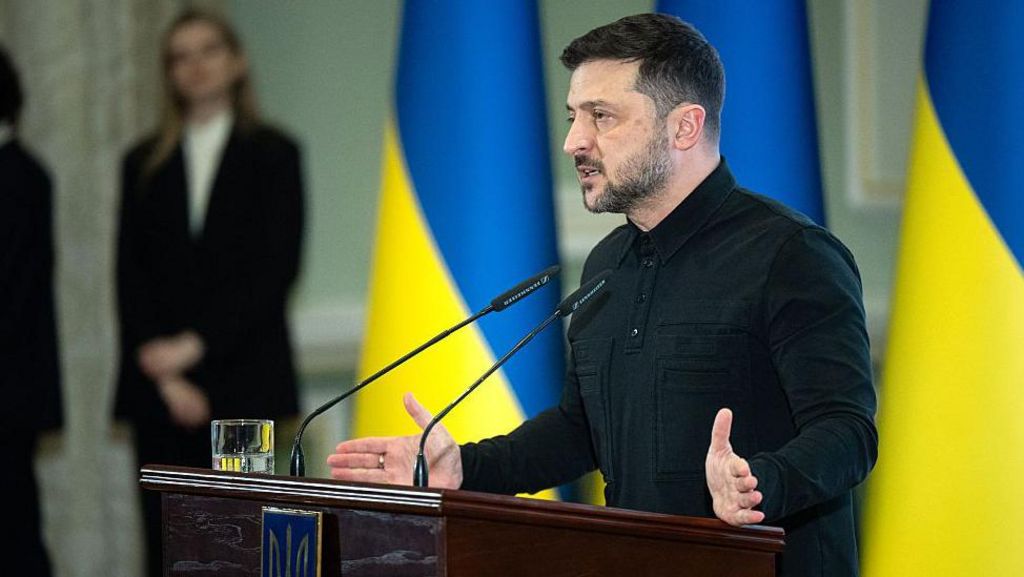
    Ukrainian President Volodymyr Zelensky has publicly detailed a revised 20-point peace proposal developed in coordination with American negotiators during weekend talks in Florida. This updated framework presents potential concessions regarding eastern Ukrainian territories while establishing robust international security assurances mirroring NATO membership protections.

    The diplomatic blueprint, characterized by Zelensky as “the principal architecture for conflict resolution,” incorporates coordinated military response guarantees from the United States, NATO members, and European nations should Russia launch future aggression against Ukraine. The proposal addresses Moscow’s territorial demands through potential establishment of special economic zones in contested eastern regions, though specific withdrawal parameters remain subject to high-level negotiations.

    Regarding the critically sensitive Donbas region, the plan contemplates creating demilitarized zones or free economic districts rather than outright Ukrainian military withdrawal. Zelensky emphasized that Russia must completely vacate four additional occupied regions—Dnipropetrovsk, Mykolaiv, Sumy, and Kharkiv—and establish a secured perimeter around the Russian-occupied Zaporizhzhia nuclear facility.

    This revised document supersedes an earlier 28-point draft negotiated by US envoy Steve Witkoff that faced criticism for disproportionately accommodating Kremlin interests. The current proposal significantly strengthens Ukraine’s defensive capabilities through security guarantees and plans to maintain an 800,000-strong military force. American intermediaries are expected to present the completed framework to Russian officials for formal response in coming days.

  • China deposits with UN its instrument of ratification of agreement on marine biological diversity

    China deposits with UN its instrument of ratification of agreement on marine biological diversity

    In a significant move for global ocean conservation, China has formally deposited its instrument of ratification for the United Nations Agreement on Marine Biological Diversity with UN Secretary-General Antonio Guterres. The deposition occurred on December 15, 2025, according to official documents published on the UN website this Tuesday.

    The groundbreaking international treaty, established under the United Nations Convention on the Law of the Sea, creates comprehensive legal frameworks for conserving and sustainably using marine biological diversity beyond national jurisdictions. The agreement specifically addresses critical areas including deep-sea genetic resources, establishment of marine protected areas, environmental impact assessments, and international capacity building initiatives.

    This diplomatic achievement culminates a extensive negotiation process that began in 2004, involving more than 190 nations. The agreement reached consensus adoption on June 19, 2023, and opened for signatures that September. To date, 144 countries and the European Union have signed the accord, with 80 nations and the EU having completed their ratification processes.

    China demonstrated its commitment to the agreement by signing on the first day it became available for signature. The country’s formal ratification was completed on October 28, 2025, when the 18th session of the Standing Committee of the 14th National People’s Congress approved the decision. China will officially become a contracting party when the agreement takes effect on January 17, 2026.

    UN Secretary-General Guterres has hailed the ratification milestone as a “historic achievement for the ocean and for multilateralism,” recognizing the agreement’s significance in establishing international legal norms for deep-sea and open-ocean activities that will profoundly influence the global maritime order.

  • Venezuela accuses US of ‘extortion’ over seizure of oil tankers

    Venezuela accuses US of ‘extortion’ over seizure of oil tankers

    In a dramatic emergency session of the UN Security Council, Venezuela launched scathing accusations against the United States, characterizing recent naval operations as the “greatest extortion” in its history. The diplomatic confrontation emerged from Washington’s seizure of two Venezuelan oil tankers earlier this month, with US authorities reportedly pursuing a third vessel.

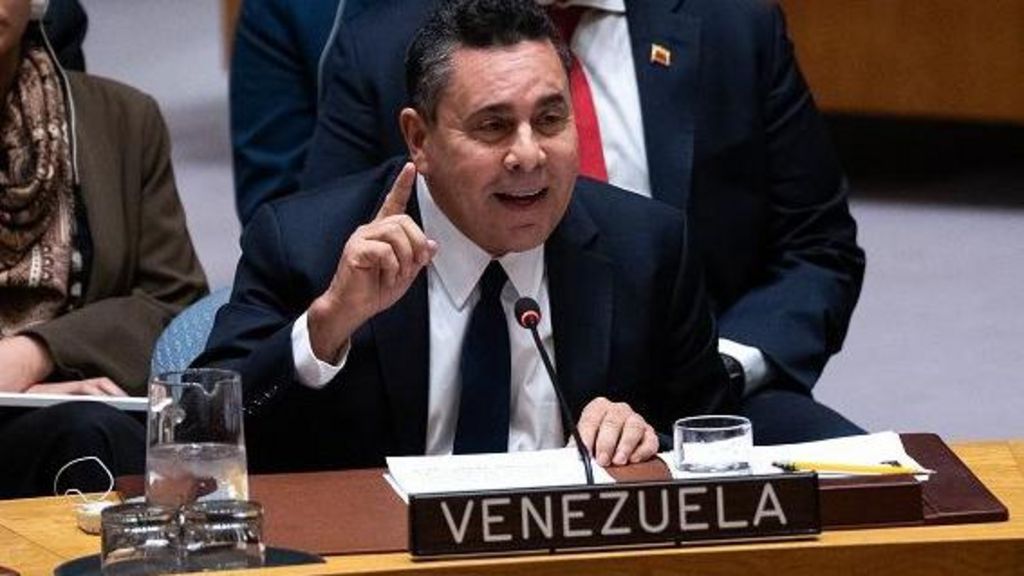
    Venezuelan Ambassador Samuel Moncada delivered an impassioned address, denouncing American actions as “worse than piracy” and accusing the US government of engaging in systematic “pillaging, looting and recolonisation” of his nation. Moncada challenged the legal basis of US jurisdiction in Caribbean waters and questioned the connection between Venezuela’s oil industry and American counter-narcotics operations.

    The Trump administration justified its military deployment—the largest to the region since the 1989 invasion of Panama—as necessary to combat drug trafficking. President Trump has explicitly accused Venezuelan leader Nicolás Maduro of overseeing a narcotics cartel and permitting criminal organizations to operate with impunity. The US naval blockade, initiated on December 16, targets all sanctioned oil tankers entering or leaving Venezuelan waters, with seized crude oil and vessels potentially being retained or sold by American authorities.

    US Ambassador Michael Waltz countered Venezuela’s claims by asserting that Washington does not recognize Maduro as Venezuela’s legitimate leader. Waltz maintained that Maduro’s ability to monetize national oil resources enables his “fraudulent claims to power and his narco-terrorist activities.”

    The geopolitical confrontation drew significant international responses, with Russia and China condemning American actions. Russian Ambassador Vassily Nebenzia warned that US operations against Venezuelan vessels established “a template for future acts of force against Latin American states,” while Chinese envoy Sun Lei urged Washington to “immediately halt relevant actions and avoid further escalation of tensions.”

    The military dimension includes the deployment of 15,000 US troops supported by aircraft carriers, guided-missile destroyers, and amphibious assault ships to the Caribbean region. American operations have targeted over 20 vessels in both Pacific and Caribbean waters in recent months, resulting in at least 100 casualties according to reports. Some international legal experts have raised concerns that these strikes may violate established laws governing armed conflict.

  • Research: Israel expanding military outposts to prolong presence in Gaza

    Research: Israel expanding military outposts to prolong presence in Gaza

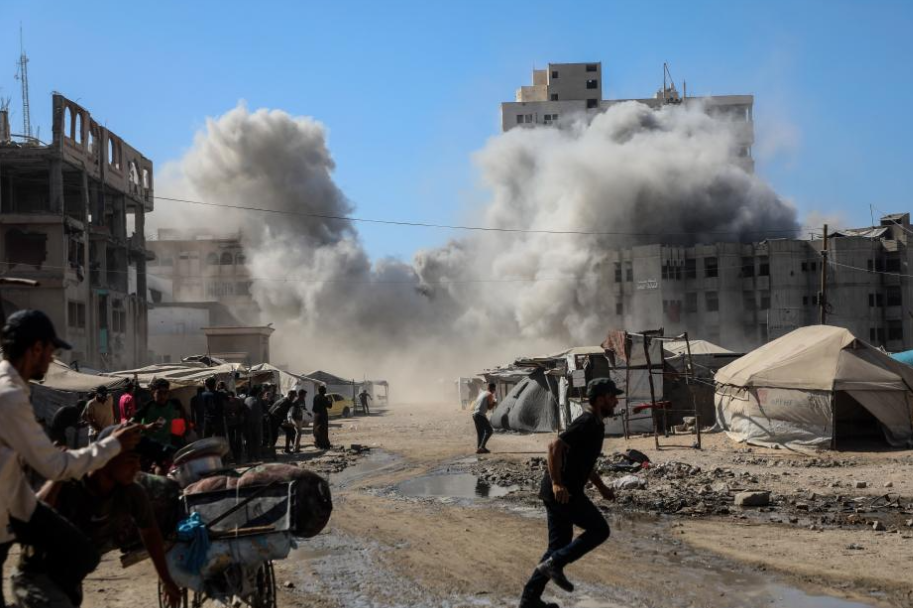
    A comprehensive investigation by London-based research agency Forensic Architecture has revealed Israel’s systematic military expansion within the Gaza Strip, suggesting preparations for a permanent territorial division. The research, documented by Drop Site News, indicates Israel has established at least 13 new military outposts while consolidating existing infrastructure and constructing extensive road networks throughout the enclave.

    The findings detail how Gaza has been effectively partitioned by a ‘yellow line’ since the October ceasefire took effect. Eastern areas beyond this demarcation have been designated as ‘combat zones’ under Israeli military control, where forces reportedly shoot anyone approaching. Western regions remain under Hamas’s de facto governance, creating a stark territorial division.

    Forensic Architecture’s analysis identified significant discrepancies between officially mapped boundaries and physical military placements. Researchers documented 27 yellow block markers positioned up to 940 meters beyond the officially indicated line, demonstrating gradual encroachment into Gazan territory. The report concludes this infrastructure expansion effectively institutionalizes ethnic cleansing across 53% of Gaza.

    Despite the ceasefire agreement, the research indicates continued targeting of civilian structures and homes. Palestinian news agency WAFA reported renewed aerial bombardments across Gaza this week, with attacks targeting eastern Gaza City and the Tuffah neighborhood. These developments align with B’Tselem’s recent report on forced displacement, which found no meaningful change in Israel’s conduct post-ceasefire.

    The military campaign has produced devastating infrastructure damage, with over 90% of homes destroyed, 70% of all structures compromised, and 81% of road networks rendered unusable. University of Malaya research fellow Belal Alakhras characterized Israel’s strategy as ‘calculated dominance masquerading as security,’ noting that military supremacy is being leveraged to entrench control rather than pursue genuine stability.

    Alakhras further argued that this approach exposes fundamental contradictions in the occupation while deepening international complicity. ‘What Israel is engineering is not stability, but institutionalized fragility that further undermines its own regional standing,’ he stated, describing the situation as ‘colonial logic’ that manages subjugation rather than pursuing safety.

  • Trademark Law being revised to protect IPs

    Trademark Law being revised to protect IPs

    Chinese legislators are undertaking comprehensive revisions to the nation’s Trademark Law, marking a significant advancement in intellectual property rights protection. The proposed amendments, currently under review by the Standing Committee of the National People’s Congress, address critical challenges in trademark governance while reinforcing China’s commitment to creating a robust legal framework for innovation-driven economic development.

    The draft legislation, comprising 84 substantive articles, specifically targets malicious trademark practices including trademark squatting, hoarding activities, and improper registrations. These measures represent China’s proactive response to emerging IP violations that have accompanied rapid economic expansion. Shen Changyu, Director of the China National Intellectual Property Administration, emphasized that while China leads globally with 49.78 million valid trademarks and 83.52 million registration applications as of December 2024, new regulatory challenges demand updated legal solutions.

    Key provisions establish stringent oversight mechanisms for trademark agencies, mandating strict confidentiality of client trade secrets and imposing substantial penalties for unethical practices. Agencies found obtaining business through fraudulent means, including forgery or defamation of competitors, face fines reaching ¥200,000 (approximately $28,418) in severe cases. The draft further empowers industry associations to develop self-regulatory standards and disciplinary protocols to elevate professional service quality.

    A fundamental shift introduced requires trademark applicants to demonstrate genuine usage intent, rejecting registrations that exceed normal business requirements. Individuals engaged in malicious registration practices may incur penalties up to ¥100,000, with clear criteria defining violations including appropriation of others’ prior rights, misuse of public resources, and mass registrations made in bad faith.

    Concurrently, the amendments streamline administrative procedures to enhance applicant convenience while maintaining rigorous examination standards. This balanced approach aims to foster legitimate trademark utilization while deterring abusive practices. The legislative process incorporated extensive public consultation through multiple channels, reflecting China’s methodical approach to legal modernization in intellectual property protection.