作者: admin

  • Pope’s Africa trip takes him to a source of growth for the church, and critical challenges

    Pope’s Africa trip takes him to a source of growth for the church, and critical challenges

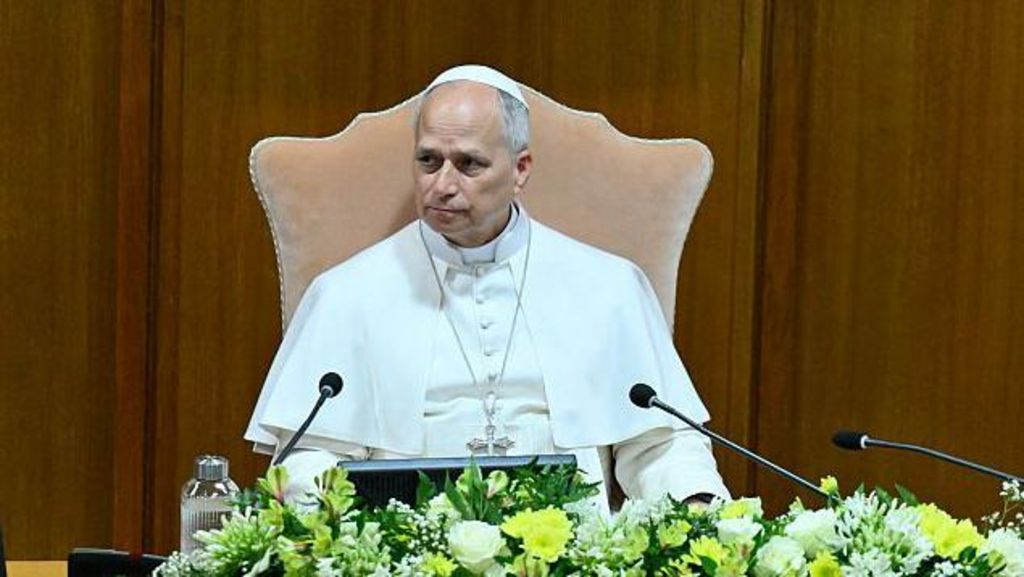
    VATICAN CITY – A landmark papal journey is set to kick off Monday, as Pope Leo XIV makes his first visit to Algeria, launching an 11-day, 11,000-mile trek across four African nations that underscores both the rapid growth of Catholicism on the continent and the complex challenges it and local communities face. The sweeping itinerary, which includes stops in Algeria, Angola, Cameroon and Equatorial Guinea, requires 18 separate flights and will see the 70-year-old pontiff deliver addresses and homilies in four languages: French, Spanish, Portuguese and English. The logistical scale of the journey has drawn comparisons to the extensive global travels of a young St. John Paul II. When Leo identified himself as “a son of St. Augustine” on the night of his election, many Algerians initially interpreted the comment as a reference to ancestral ties to the North African nation, where the 5th-century Christian leader lived and died. While the line actually referenced Leo’s commitment to Augustinian spirituality, the connection to one of Christianity’s most influential figures – who is widely recognized by Algeria’s Sunni Muslim majority – has already served as a warm opening for the pontiff’s visit. This tour marks a deliberate priority on Africa, a region that has become central to the global expansion of the Catholic Church, yet carries a unique set of social, political and theological challenges that Leo will directly address. Across the four nations, which span vastly different cultural and historical contexts, Leo’s agenda covers a broad spectrum of pressing issues. Key themes include the human and environmental costs of unregulated resource extraction – a critical concern in a region that supplies much of the world’s oil, yet where a large share of the population lives in deep poverty. He will also address systemic corruption in long-ruling authoritarian regimes, and peace-building in regions torn by sectarian and separatist conflict. In Cameroon, where Catholics make up 29% of the population, organizers expect massive turnout, with as many as 600,000 faithful set to attend one of Leo’s public Masses. The pontiff will also host a dedicated peace gathering in Bamenda, a northwestern city that has been ravaged by years of separatist violence. For local Catholic believers, the visit is a moment of profound spiritual significance. “To see His Holiness Pope Leo XIV arrive in Cameroon, for us who are Catholic Christians, it further strengthens our faith, it further strengthens our ties with our God,” said Simon Pierre Ngombo, a Cameroonian Catholic. “It is a perfect moment to touch each other’s hearts.” For Algeria, the visit offers a high-profile platform for Leo to advance his push for peaceful coexistence between Christians and Muslims, at a moment of heightened global religious tension tied to the U.S.-Israeli conflict in Iran. Notably, Vatican officials confirmed that no additional security measures have been added for the trip despite ongoing regional instability. Leo, who has already positioned himself as a moderate counterweight to U.S. President Donald Trump within American religious circles, will visit the Great Mosque of Algiers, where interfaith dialogue will be a core focus of discussion, according to Algiers Archbishop Cardinal Jean-Paul Vesco. Algeria carries a painful modern history: a brutal 1990s civil war, known locally as the “black decade,” killed an estimated 250,000 people during a government campaign against an Islamist insurgency. Just last year, the country took a major step toward addressing its colonial past, when parliament voted to formally label 130 years of French colonization a crime against the Algerian people, and called for restitution of property seized during colonial rule. “The visit acts as a bridge between the Christian and Muslim worlds, while reflecting the richness of the country’s history,” Vesco told Algeria’s official news agency APS. However, the trip has already seen one notable point of disagreement: Algerian authorities rejected a Vatican request for Leo to travel to Médéa, 30 miles south of Algiers, to pray at the site of the Tibhirine monastery, where seven French Trappist monks were abducted and killed by Islamist fighters in 1996, during the civil war. The monks were among 19 Catholic clergy and laypeople killed during the conflict, and were beatified as martyrs for the faith in 2018, in the first such ceremony ever held in a majority-Muslim nation. In a commentary supporting the government’s decision, state-run daily El Moudjahid noted that “Algeria has no intention of reopening a painful chapter of its history,” though Leo is still expected to acknowledge the monks’ sacrifice during his visit. Beyond interfaith dialogue, the tour shines a light on the dramatic transformation of the Catholic Church in Africa. Recent Vatican statistics show that the continent accounted for more than half of all new Catholic baptisms globally in 2023, adding 8.3 million new faithful to the church. What was once a region dependent on Western missionary work now exports thousands of priests and nuns to congregations around the world every year. Angola and Cameroon are consistently among the top African countries for new priestly vocations: as of December 2024, Angola counted 2,366 seminarians, while Cameroon had 2,218, ranking just behind leading vocation hubs Nigeria, the Democratic Republic of Congo and Tanzania. But this exponential growth has brought significant growing pains, as the church adapts to local cultural contexts while upholding core theological doctrines. Past popes have repeatedly reminded African clergy of the requirement to uphold celibacy vows, and a 2009 visit to Angola and Cameroon by Pope Benedict XVI was overshadowed by global backlash to his claim that condoms worsen the global AIDS crisis, a statement widely condemned by public health experts. Today, one of the most pressing challenges the Vatican faces in Africa is ethnic division within church leadership, particularly in the selection of bishops. According to the Rev. Fortunatus Nwachukwu, second-in-command at the Vatican’s missionary evangelization office, bishops assigned to multi-ethnic dioceses are frequently rejected by local clergy and faithful based on their ethnic origin. Nwachukwu terms this trend the “son of the soil syndrome,” noting that the Vatican emphasizes the identity of “son of the church” over ethnic affiliation. Another longstanding point of tension is the traditional practice of polygamy, which African bishops have repeatedly raised as a critical cultural issue for the church. In response, the Vatican released a full doctrinal document last year reaffirming the church’s commitment to monogamous marriage, and convened a special working group to study the issue. Catholic doctrine holds that marriage is a lifelong, monogamous union between one man and one woman, a position that clashes with longstanding cultural norms in many rural and nomadic African communities, where multiple wives and large families are often seen as an economic necessity for survival. Vatican spokesman Matteo Bruni confirmed that Leo will hold multiple meetings with clergy, bishops and lay faithful during the tour to reaffirm the church’s teaching on Catholic family life. Leo will also turn a spotlight on the harms of resource extraction and corruption in former European colonies that are now major global suppliers of oil, gold, diamonds and iron. While these industries have driven economic growth in recent decades, the benefits have largely accrued to a small elite, while local communities and the environment have suffered severe harm. This issue is particularly acute in Equatorial Guinea, where President Teodoro Obiang Nguema Mbasogo has held power since 1979, and he and his family face widespread international accusations of systemic corruption and authoritarian rule. This focus on environmental justice and economic equity aligns with the legacy of Pope Francis, who centered these themes in his landmark 2015 environmental encyclical *Laudato Si’* (Praised Be), a document Leo has openly endorsed and actively promoted. This Associated Press religion coverage is produced through a collaboration with The Conversation US, with funding from Lilly Endowment Inc. The AP retains sole responsibility for all content.

  • ‘Love triangle’: Man allegedly killed ex-lover’s husband before dumping body

    ‘Love triangle’: Man allegedly killed ex-lover’s husband before dumping body

    More than two decades after a 34-year-old man was found dead in a New South Wales river, his alleged killer has gone on trial in the NSW Supreme Court, with prosecutors laying out a dramatic case rooted in romantic jealousy, tangled forensic evidence, and a long-unresolved love triangle.

    Gofal Baziad, 54, a resident of western Sydney, has pleaded not guilty to a single charge of murder for the death of Jason Palmer, who disappeared in early February 2004 and whose body was recovered three weeks later from the Nepean River at Menangle. Opening the Crown’s case before a jury on Friday, lead prosecutor Brett Hatfield SC outlined the alleged motive: Baziad, who had been romantically involved with Palmer’s wife Renny during a separation between the couple, killed Palmer to rekindle his relationship with her after she chose to reconcile with her husband in late 2003.

    Court documents and prosecution arguments detail that at the time of Palmer’s death, he and his wife had an on-again, off-again marriage. The pair separated in 2002, during which time Renny Palmer began a relationship with Baziad, before reconciling in 2003. When Palmer asked his wife to make a final choice between the two men, she selected Palmer, a decision Baziad outwardly accepted, according to Hatfield.

    The prosecution alleges Baziad carried out the killing in the late hours of February 6, 2004, or early the next morning at Palmer’s rented unit on Barremma Road, Lakemba. According to the allegation, Baziad first struck Palmer over the head with a heavy glass object, before stabbing him multiple times in the back, hip, and chest. He then wrapped Palmer’s body in a blue-green sleeping bag, weighed it down with two large boulders secured with a thin yellow rope, and transported the corpse to the Nepean River to dump it, Hatfield told the court.

    Palmer was last seen leaving his wife’s Belfield home on February 6, and Renny Palmer reported him missing several days later after repeated failed attempts to contact him. Kayakers discovered his wrapped body in the Menangle section of the Nepean three weeks after his disappearance. Crucially, prosecutors say forensic evidence links Baziad directly to the killing. The yellow rope used to tie the boulders to Palmer’s body matches fragments of identical yellow rope recovered from a garden shed at Renny Palmer’s Belfield home – a shed that Baziad accessed the day before the killing, when he borrowed Palmer’s wife’s red Ford station wagon, claiming he needed to move items out of his own unit. The sleeping bag used to wrap the body also came from the same camping gear stored in that shed, the court heard.

    Forensic testing of the borrowed station wagon turned up another damning piece of evidence: trace blood stains on the rear passenger seat, footwell carpet, and the car’s boot. A DNA swab taken from the boot’s blood stain matched Jason Palmer’s genetic profile, Hatfield told the jury, leading the Crown to argue Baziad used the vehicle to transport Palmer’s body from his Lakemba unit to the river for disposal.

    Beyond physical evidence, the prosecution laid out a pattern of behavior it says supports the allegation against Baziad. Hatfield told the jury Baziad has a well-documented history of violent jealousy toward any man that became romantically involved with Renny Palmer. After the pair began a relationship following Palmer’s death – a relationship that lasted until 2018, during which the couple lived together in Indonesia before returning to Australia – Baziad attacked another man Renny Palmer was dating outside a Gold Coast hardware store in 2018, shortly after his own relationship with her ended. “The Crown case alleges that evidence supports that the accused had these two tendencies: firstly, to be jealous about Renny Palmer and any male that she might be romantically involved with,” Hatfield said. “And the second tendency is to act violently, when he believed Renny Palmer is romantically involved with a person other than himself.”

    Prosecutors also noted that Baziad left Australia for Singapore just six weeks after Palmer’s disappearance, on March 28, 2004, and did not return to the country until 2009. At the time of his departure, he told investigators he was leaving to close a business deal and would return to assist with the probe, but his departure still came immediately after Palmer’s killing. Notably, Renny Palmer faces no accusations of any wrongdoing in connection with Palmer’s death, and is scheduled to take the witness stand to give evidence next week, the court confirmed. Baziad himself was only arrested and charged with murder earlier this year, 20 years after the killing, closing a long-running cold case for NSW Police.

    In her opening address to the jury on Friday, Baziad’s defense barrister Madeleine Avenell SC pushed back against the Crown’s case, arguing that the evidence presented is too weak to secure a conviction beyond reasonable doubt. Avenell noted that there are substantial points of disagreement between the prosecution and the defense over both the admissibility of evidence and how it can be interpreted, and urged jurors to keep the burden of proof in mind throughout the trial. “My submission to you is going to be this – you won’t be able to be positively satisfied of the ultimate question that is put to you in this trial. Which is: has the prosecution proved beyond reasonable doubt that it was Mr Baziad who is the person responsible for Mr Palmer’s death?” Avenell told the court. “Ultimately, that is the thing you should have at the forefront of your mind.”

    The trial against Baziad is ongoing at the NSW Supreme Court.

  • High Court hears sentence appeal for teen who killed Queensland mum Emma Lovell

    High Court hears sentence appeal for teen who killed Queensland mum Emma Lovell

    A fight for justice for a murdered British woman has reached Australia’s highest court, as her grieving husband and the Queensland government push to reverse a controversial sentence reduction that has sparked public and legal debate.

    On Boxing Day 2022, Emma Lovell, a 40-something British expat, was fatally stabbed in the chest during a violent home invasion at her property in North Lakes, a suburb north of Brisbane. Her husband Lee, who was also attacked and injured in the break-in, has spent years fighting to ensure the perpetrator serves the full penalty handed down by the original sentencing judge.

    At the time of the attack, the killer was 17 years and 8 months old, too young to be tried as an adult under Queensland’s pre-existing laws. He pleaded guilty to charges of armed burglary and murder in 2024, and was handed a 14-year prison sentence. Under the state’s Youth Justice Act at the time, juvenile offenders are required to be released after serving 70% of their total sentence, a requirement that was upheld by the original sentencing judge Justice Tom Sullivan. Sullivan ruled the brutal killing qualified as a “particularly heinous” offense, rejecting arguments for special leniency despite the killer’s age, early guilty plea, difficult childhood, and claims of remorse.

    That ruling was overturned months later when the Queensland Court of Appeal accepted the defense’s argument that the original 14-year sentence was “manifestly excessive”, cutting the non-parole portion of the sentence from 70% to just 60%. That decision triggered an unprecedented push for appeal, with Queensland’s new Liberal National Party government joining Lee Lovell to challenge the ruling in an extraordinary hearing before the High Court of Australia in Canberra.

    Outside the courtroom on Friday, Lovell told reporters he aims not just to reverse the sentence cut, but to establish a lasting legal precedent for future cases. “I hope to get my wife’s killer’s sentence back to 70 per cent at least,” he said. Beyond that, he added, the case could set a precedent holding appeal judges accountable when they depart from original sentencing rulings. Lovell also criticized what he called the inherently one-sided nature of the current justice system: while the perpetrator was permitted to appeal his sentence, the victim’s family has no equivalent right to appeal a lenient ruling. He added he will continue his fight for as long as it takes to secure justice for Emma, leaving behind two young daughters who will grow up without their mother.

    Queensland Attorney-General Deb Frecklington, who appeared alongside Lovell at the High Court, noted the case is an extraordinary legal step. “This is a trip we wish we never had to do,” she said. “However, here we are today at the High Court of Australia to try to preserve some sort of justice that Lee and his family have been dished out up in Queensland.” Frecklington emphasized that the tragedy has resonated across the entire state, not just with Lovell’s grieving family. She added that it is extremely rare for the High Court to grant an Attorney-General leave to appeal a criminal sentencing decision. Pointing to policy change spurred by Lovell’s death, Frecklington noted that the newly elected Liberal National Party government introduced “adult crime, adult time” laws shortly after taking office, which would see the offender sentenced to life imprisonment if the crime were committed today.

    The High Court appeal hinges on technical legal questions about how lower courts can intervene in original sentencing rulings. Lawyers for the Queensland government argued the Court of Appeal overstepped its authority and misapplied key legal tests when it reduced the non-parole period. Gim Del Villar KC, the state’s lead counsel, told the court that the Court of Appeal’s finding that the original judge “ought” to have found special circumstances to justify a reduced sentence was inconsistent with existing legal standards that limit appellate interference in sentencing decisions. Del Villar noted that the core disagreement between the original ruling and the appeal court was just a 10% difference in the non-parole period, making the appellate court’s intervention even harder to justify.

    Counsel for the young killer rejected the state’s arguments, arguing the Court of Appeal acted well within its authorized bounds. Andrew Hoare KC acknowledged that the wording of the appellate court’s ruling was not perfect, but said the conclusion that the original sentence was unjust fell well within the powers intermediate appellate courts exercise on a regular basis. He added there was no clear legal error on the face of the appellate court’s ruling to justify the High Court overturning the decision. At the time of publication, the High Court has reserved its decision, with no timeline announced for a ruling.

  • NAB hikes fixed home loan rates for the second time in two weeks

    NAB hikes fixed home loan rates for the second time in two weeks

    In a sudden shift reshaping Australia’s competitive home lending market, National Australia Bank (NAB) — one of the country’s dominant big four banks — has rolled out its second fixed-rate home loan increase in just a fortnight, a move that has stripped it of its position as the cheapest provider of fixed home loans in the nation.

    The latest adjustment, announced this Friday, comes exactly 14 days after NAB’s previous rate hike. The new round of increases adds 0.30 percentage points to every fixed-term home loan product the bank offers. Following the repricing, NAB’s lowest available fixed rate now sits at 6.34% for a one-year term. For borrowers seeking longer-term rate security, the cost climbs even higher, with a two-year fixed rate product reaching 6.39%.

    This market shift has cleared a path for competitor Westpac to claim the title of the big four’s lowest fixed rate provider. Westpac currently offers a two-year fixed home loan with a rate of 6.14%, undercutting NAB’s new pricing by a notable margin.

    NAB’s decision to raise rates twice in such a short window is far from an isolated move, it is part of a broader market response to shifting monetary conditions in Australia. Lenders across the sector have been adjusting pricing after the Reserve Bank of Australia’s March cash rate decision, as well as widespread expectations of further rate increases on the horizon.

    All three of the other major banks — ANZ, Commonwealth Bank of Australia, and NAB itself — have already forecast an additional 0.25 percentage point rate hike when the RBA meets next month. Forecasts are not uniform across the industry, however: Bendigo Bank Chief Economist David Robertson predicts the RBA will hold rates steady in May, but expects a third rate increase for 2026 to come in August. Robertson attributes this projected trajectory to ongoing geopolitical instability in the Middle East, which he says is creating a domino effect that keeps global and domestic inflation pressures elevated.

  • Taiwan opposition leader meets Xi Jinping in Beijing

    Taiwan opposition leader meets Xi Jinping in Beijing

    In a landmark meeting that marks the first high-level engagement between China’s ruling Communist Party and Taiwan’s main opposition Kuomintang in a decade, Chinese President Xi Jinping hosted Kuomintang chair Cheng Li-wun in Beijing’s Great Hall of the People on Friday, with both leaders centering their dialogue on a shared commitment to cross-strait peace. This meeting breaks a long period of limited formal interaction between Beijing and major Taiwanese opposition figures, and it comes at a time of heightened regional tensions over the Taiwan Strait status quo.

    Cheng Li-wun’s visit is the first by a sitting Kuomintang leader to mainland China since 2016. That same year, Beijing cut off all high-level official communications with Taiwan after Democratic Progressive Party candidate Tsai Ing-wen took the Taiwanese presidency, a move driven by Tsai’s refusal to publicly acknowledge the 1992 Consensus, the one-China principle that forms the baseline of cross-strait dialogue for Beijing. Cheng has framed her current trip as a mission for peace, but the ruling DPP in Taiwan has already lashed out at the visit, accusing Cheng of bowing to Beijing’s demands to undermine Taiwan’s sovereign status.

    Beijing has long maintained that Taiwan is an inalienable part of Chinese territory, and has repeatedly declined to rule out the use of military force to bring the self-governing island under its control if formal independence is declared. Speaking during the meeting, President Xi emphasized that the historic gathering of leaders from the two parties was intended to protect peace and stability across the Taiwan Strait, advance the peaceful development of cross-strait ties, and build a prosperous shared future for generations on both sides of the strait. He added that Beijing remains open to strengthening exchanges and dialogue with all major Taiwanese parties, including the Kuomintang, as long as both sides uphold the shared political foundation of opposing Taiwan independence. Xi also reiterated that people on both sides of the Taiwan Strait are ethnic Chinese who all share a common desire for lasting peace.

    In her response, Cheng echoed Xi’s remarks, noting that the rejuvenation of the Chinese nation is a common goal shared by people across both sides of the strait, and that stable cross-strait relations would represent a positive contribution to global peace and human progress. Political analysts note that while the Kuomintang has a long history of maintaining friendly, open ties with Beijing, Cheng’s willingness to pursue this high-profile meeting marks a departure from the more cautious approach taken by recent KMT leaders, who have sought to balance cross-strait engagement with domestic political pressure to protect Taiwan’s autonomous status.

    Beijing has refused to enter into any formal official dialogue with current Taiwanese President Lai Ching-te, who took office earlier this year, labeling Lai a committed separatist. Lai has repeatedly stated that he will maintain the current cross-strait status quo, but Chinese authorities and state-run media have launched relentless verbal attacks against him, referring to him as a troublemaker and a warmonger who risks dragging the region into conflict. Public opinion data from recent surveys in Taiwan shows that while a majority of Taiwanese residents identify as citizens of a sovereign nation, a large plurality still favors maintaining the current status quo—avoiding both immediate formal unification with China and a formal declaration of full independence that would trigger a strong response from Beijing.

  • Billie Jean King Cup qualifiers 2026: Great Britain teenager Mika Stojsavljevic has pulled off a huge upset

    Billie Jean King Cup qualifiers 2026: Great Britain teenager Mika Stojsavljevic has pulled off a huge upset

    The opening day of the 2024 Billie Jean King Cup qualifiers delivered one of the tournament’s earliest upsets, as 17-year-old British wildcard Mika Stojsavljevic defeated world No. 56 Australian rising star Talia Gibson in straight sets on Friday. The final scoreline of 7-6(0), 7-5 marked a career-defining victory for the teenager, who entered the matchup ranked 219 places below her opponent at world No. 275.

    Gibson, who turned heads at the 2024 Australian Open after advancing to the second round of the main draw, entered the match as the clear favorite. The 21-year-old Australian showed flashes of the dynamic talent that has pushed her up the global rankings in the last 12 months, but a consistent string of unforced errors ultimately derailed her campaign. From the opening game, Gibson struggled to find consistent control of her groundstrokes, giving away cheap points that shifted momentum to her young opponent early.

    The first set unfolded with an early exchange of breaks, as both players tested each other’s serve consistency before holding for the rest of the set to force a tiebreaker. It was here that Stojsavljevic demonstrated poise far beyond her 17 years, racing out to a 4-0 lead that Gibson never recovered from. The young Brit’s towering, powerful serve proved to be the decisive edge of the match: she landed four aces to Gibson’s single one, and closed out the opening set with a blistering ace down the T to seal the tiebreaker 7-0.

    Stojsavljevic carried that momentum into the second set, immediately putting pressure on Gibson’s first service game by jumping out to a 0-40 advantage. Though Gibson fought back to hold serve and keep the set level, she could not resolve her unforced error issue or break through Stojsavljevic’s dominant service game. A critical unforced mistake from Gibson at 2-1 allowed Stojsavljevic to claim the decisive break, putting her up 3-1 in the set.

    Speaking to broadcast commentators after the upset, former world No. 4 Jelena Dokic highlighted the mental dynamic of the match, noting that Gibson was still adjusting to the pressure of competing as a tournament favorite, while Stojsavljevic had nothing to lose and could play without restraint. Gibson mounted a late comeback push, and held five break points to take the lead in a tense marathon service game at 5-5. Even as fatigue began to show in the young Brit’s movement, she relied on her powerful serve to escape danger and hold serve, before closing out the match to claim the straight-set victory.

    The upset win gives Great Britain an early advantage in their Billie Jean King Cup qualifying tie against Australia, setting the stage for the remaining singles and doubles matches to determine which nation advances to the next stage of the team competition.

  • How the Artemis crew will splash down on Earth

    How the Artemis crew will splash down on Earth

    NASA’s groundbreaking Artemis lunar mission is approaching its final milestone, as the four-person crew prepares to wrap up their 10-day journey around the Moon and make their dramatic return to Earth via splashdown on April 10. This mission marks a critical step in humanity’s renewed push for deep space exploration, building on decades of lunar research and laying the groundwork for future crewed landings on the lunar surface. Unlike the Apollo missions of the 20th century, this flight tests updated life support systems, navigation technology, and reentry protocols that will be essential for the upcoming Artemis III landing, which aims to place the first woman and person of color on the Moon. The splashdown process itself is a carefully choreographed operation: after the crew module separates from the service module, it will enter Earth’s atmosphere at hypersonic speeds, with heat shields absorbing the extreme temperatures generated by atmospheric friction. Parachutes will then deploy in sequential stages to slow the capsule down to a safe landing speed, before it touches down in a pre-determined open ocean area. NASA recovery teams, working alongside the U.S. Coast Guard and other partner organizations, have completed months of training to rapidly locate the capsule, extract the crew, and transport them to waiting facilities for medical checks and debriefing. Every step of this return operation is being closely watched by space agencies and aerospace teams around the world, as success here will clear the way for the next phase of the Artemis program, which ultimately aims to establish a sustainable lunar outpost and prepare for future human missions to Mars.

  • What’s in a name? It’s succession, legacy and celebration in Japan’s Kabuki theater

    What’s in a name? It’s succession, legacy and celebration in Japan’s Kabuki theater

    In the heart of Tokyo, a centuries-old cultural ritual is unfolding that reaffirms the enduring legacy of Japan’s iconic traditional theatrical art, Kabuki. For generations, passing down revered stage names through family lines has stood as the cornerstone of Kabuki tradition, celebrated every few years at major theaters and special ceremonies across the country. This year, the iconic title of Kikugoro transfers to its eighth holder, 48-year-old Kazuyasu Terajima, who inherits the honor from his 83-year-old father, the seventh Kikugoro — continuing an unbroken line of succession that stretches back multiple generations.

    For Terajima, accepting the legendary name means far more than adopting a new stage title. “Taking on the name is about taking on the spirit and responsibility that’s created and passed down over generations by those who came before us,” he told reporters recently. “The job of the Kabuki actor is to carry on and develop in the present what we have inherited from our predecessors, and make sure it gets passed on to those who come after us.” This is not an unfamiliar practice for Kabuki: just two years ago, in 2022, the field saw another major succession when the 13th holder of the other iconic Kabuki family name, Danjuro, formally took on his title.

    Dating all the way back to the 1600s, Kabuki remains a vibrant, widely beloved art form in modern Japan, and recent cultural milestones underscore its ongoing popularity. The hit domestic film *Kokuho*, which earned an Oscar nomination this year for best makeup and hairstyling, became the highest-grossing live-action domestic film in Japanese cinema history — a clear sign that the centuries-old theater still resonates deeply with contemporary audiences.

    What makes Kabuki unique is its distinct, stylized performance language that sets it apart from realistic Western theatrical traditions. All roles, including female parts, are played by male actors: those who specialize in women’s roles are called onnagata, while artists like the Kikugoro line perform both male and female roles. The art form blends sweeping dramatic narratives, live music, dance, and song, with stories ranging from tales of wronged samurai seeking vengeance to tragic romances and supernatural tales of maidens who transform into serpents. Actors wear elaborate, vibrant costumes and striking stylized makeup, and deliberately reject realism to emphasize emotional and thematic core. Key dramatic moments are punctuated by striking poses called mie, emphasized by the rhythmic clack of wooden claves that freeze the performance to highlight courage, fear, or other intense emotions. Lines are often delivered in a melodic, poetic cadence, while live music serves as an integral narrative tool: thundering large drums evoke stormy weather, soft drumbeats mimic falling snow, and tinkling bells can conjure the image of floating butterflies. Performances utilize dynamic revolving sets — for example, cherry blossom trees that shower audiences with pink paper petals — and even incorporate acrobatic elements, such as wire-work for supernatural character dance sequences. One of the form’s most celebrated theatrical tricks is on-stage costume and character transformation, where stagehands called kurogo, cloaked in unobtrusive black robes, help actors shift from a human character to a demon right in front of the audience’s eyes.

    Surprisingly, Kabuki shares striking thematic parallels with William Shakespeare’s Elizabethan theater, despite developing completely independently. One of Kabuki’s most famous tragic works, *The Love Suicides at Sonezaki*, tells the story of young lovers who choose death together over a life apart — often described as the Kabuki equivalent of *Romeo and Juliet*. The parallel is entirely coincidental: the play’s writer, Chikamatsu Monzaemon, created the work for Japan’s Bunraku puppet theater in the 18th century during Japan’s isolationist Tokugawa period, and never had access to Shakespeare’s works, which were written decades earlier.

    Like all Kikugoro titleholders before him, Terajima was born into this legacy and trained from childhood to carry the art form forward. Far from resenting the predetermined path, he speaks of it only with gratitude and dedication. “I totally adored and admired my predecessors,” he shared during an appearance at the Foreign Correspondents’ Club in Tokyo last month. “First of all, I am filled with gratitude to our predecessors who created great works that continue to be loved by generations that came after. So I am grateful to be born into the family of such ancestors.”

    The chain of succession already extends to the next generation: Terajima’s 12-year-old son Kazufumi will one day inherit the previous family title Kikunosuke, a name passed to the younger generation of the Kikugoro line. Like his father, Kazufumi has already begun his training, which requires intense physical and mental discipline: daily morning running, strict dietary rules, and early bedtimes. Though he shares interests with other children his age — including video games and Japanese rock band Mrs. Green Apple — he has already developed a calm, disciplined bearing far beyond his years. “It’s not only hard physically. It’s also pretty hard mentally, and I sometimes took it out on my parents,” he admitted with a smile. The multi-year shumei (name succession) ceremony, which launched last year with a series of performances across Japan, will continue through 2024.

    Renowned American Kabuki scholar James R. Brandon describes the art form as centered on a strict cultural code: “a theater in which the art of acting is central, and in which playwright and actor cooperate to achieve the unique style of performance found only in Kabuki.” Central to this tradition is kata, the established “correct way” of performing each role and scene that serves as a model for all future generations of actors.

    While some cultural observers have raised concerns about Kabuki’s long-term survival in an era of modern digital entertainment, Terajima says he remains confident in the art form’s enduring relevance, arguing that its core traditions do not need radical change. “By using kata, what we want to truly communicate the most in the tradition of Kabuki is human compassion, that spirit of caring for others,” he explained. For the eighth Kikugoro, that timeless message ensures that Kabuki will continue to thrive for generations to come.

  • ‘Heart is bloody breaking’: Qld MP reveals veterans have handed in medals after Ben Roberts-Smith arrest

    ‘Heart is bloody breaking’: Qld MP reveals veterans have handed in medals after Ben Roberts-Smith arrest

    The recent high-profile arrest of Ben Roberts-Smith, Australia’s most decorated current veteran accused of multiple war crimes, has sparked an extraordinary wave of disillusionment among former Australian service members, with dozens of veterans handing back their service medals in protest against what they describe as government betrayal and systemic failure of the nation’s support for military personnel.

    Queensland Liberal National Party MP Phillip Thompson, a veteran who served in East Timor and Afghanistan and was injured by an improvised explosive device during his deployment, has publicly opened up about the gut-wrenching moment he received a collection of returned medals from at least two separate veterans. In a raw, emotional social media post shared with his constituents, Thompson said his “heart is bloody breaking into a thousand pieces” over the gesture, which lays bare the deep-seated anger and hurt roiling Australia’s veteran community in the wake of Roberts-Smith’s arrest.

    Last week, Australian federal police formally charged Roberts-Smith with five counts of murder for alleged war crimes committed during his deployment to Afghanistan. The charges include one count of joint commission of murder and three counts of aiding, abetting, counselling or procuring murder. The arrest comes nearly four years after major Australian outlets first published the war crime allegations, and capped off a failed 2021 defamation lawsuit Roberts-Smith brought against The Age, The Sydney Morning Herald and The Canberra Times over their reporting.

    What makes the return of medals so striking is what the gesture represents for the veteran community. Thompson stressed that the medals handed to him are far more than decorative metal and ribbon. “They are years of service, sacrifice, mateship & moments most will never fully understand,” Thompson wrote. “They represent those who answered the call, who carried the weight of this country on their shoulders & who lived with the consequences long after the uniform came off. These are not political talking points. This is human. This is real. This is the hurt being carried by people who gave everything & are now left wondering where they stand in the country they served.”

    A handwritten note accompanying one set of medals, shared publicly by Thompson on his social media channels, laid bare the depth of the veterans’ broken trust. The note author, who is a second-generation veteran, wrote that they had lost “any trust I had in my government” and added, “I feel my service and my father’s service was for nothing.” Thompson noted that the pain woven into these notes has shaken him, saying the accounts highlight a widespread collapse of confidence and a pervasive “sense of betrayal” across the veteran community.

    This wave of medal returns is not isolated to Thompson. Another Queensland MP, Bob Katter, also received a request from a serving member to return his own set of medals to Canberra, according to a separate social media post. The short, blunt letter read: “Bob, give my medals back to Canberra. I no longer want them after seeing the way they treat veterans.” The returned medals sent to Katter included five distinct honors: an Australian Active Service Medal, the Defence Force Service Medal, the International Force East Timor Medal, the National Medal and an Australian Defence Medal. It remains unclear whether the letter was signed by the sender.

    As Roberts-Smith prepares to face court over the war crime charges, the protest gesture from veterans has drawn national attention to the unresolved grievances that continue to divide the Australian public and the veteran community over how military service, wartime accountability, and veteran welfare are addressed by the federal government.

  • Britain celebrates late Queen Elizabeth II as a style icon to mark her centenary

    Britain celebrates late Queen Elizabeth II as a style icon to mark her centenary

    LONDON — Long before her decades-long reign as Britain’s sovereign, Queen Elizabeth II understood a core truth of constitutional monarchy: for the public to trust their monarch, they first needed to see her. Even when Britain’s notoriously unpredictable rainy weather threatened to block public view, she broke new ground by adopting a clear plastic raincoat, rather than hiding behind a thick dark umbrella that would have kept her obscured from crowds. That iconic raincoat now takes its place among nearly 300 garments and fashion artifacts opening to the public Friday at Buckingham Palace’s King’s Gallery, in the most complete exhibition of Queen Elizabeth II’s sartorial choices ever assembled. Tied to the upcoming centenary of her birth, the show traces her life from childhood to her decades on the throne, while unpacking her lasting impact on British fashion and public diplomacy.\n\nCurator Caroline de Guitaut, who organized the exhibition, notes that the late monarch had a sharp, intentional sense of what looked and felt appropriate for her role. “She absolutely knew how she wanted to appear,” de Guitaut explains.\n\nAs one of the most photographed public figures in modern history, many of the queen’s pieces are instantly recognizable to audiences around the world — but seeing her signature tweed suits, ball gowns, and patterned headscarves displayed on museum mannequins still offers a new, striking perspective for visitors. Among the collection are truly one-of-a-kind pieces with fascinating backstories, including two matching dresses crafted for the 2012 London Olympic Games opening ceremony. When the 86-year-old queen filmed her iconic skit alongside Daniel Craig’s James Bond, appearing to parachute into the Olympic stadium, a stunt double wore one version of the design — complete with matching bloomers and a large back zipper to fit a parachute harness. Moments after the stunt, the queen herself appeared in the stadium stands in an identical second dress, both created by her long-time personal dressmaker Angela Kelly. Now, the two garments are displayed side-by-side for exhibition guests.\n\nDrawn from a personal collection of more than 4,000 items once owned by the queen, the exhibition explores how the late monarch turned fashion into one of her most effective tools for public engagement and diplomacy, as she grew from a young princess into Britain’s longest-serving ruler. A perfect example of this intentional sartorial diplomacy is the green and white Norman Hartnell ball gown she wore to a 1961 state banquet during an official visit to Pakistan: she chose the design specifically to match the host nation’s colors, extending a gesture of respect before she ever spoke a word.\n\n“The queen had an intimate understanding of how fashion could lend itself to diplomacy, a trait which, while its origins certainly lay in earlier reigns, the queen developed into nothing short of an art form,” de Guitaut says. “Color or embellishment communicated messages of respect to her host nation before she had even uttered a word in her speech.”\n\nLater in her reign, she intentionally chose bright, eye-catching hues for large public gatherings, making it easy for crowds to spot her, fulfilling her core belief that the monarch had to be seen to connect with the public. The exhibition also devotes space to the queen’s off-duty wardrobe, showcasing the tweed suits she wore while staying at Balmoral Castle, the royal family’s Scottish summer retreat, alongside riding gear, hiking clothing, and outdoor apparel. Pieces range from a thick wool coat designed by Kelly to designs by iconic British brands Burberry and Hardy Amies.\n\nMany of the exhibition’s most meaningful pieces are tied to the defining milestones of the queen’s 96 years of life, stretching from a christening robe first commissioned by Queen Victoria for the baptism of King Edward VII, to the gowns she wore for her 1947 wedding and 1953 coronation. Curators have also included original design sketches and handwritten notes that reveal how closely involved the queen was in every step of creating her wardrobe.\n\nNaomi Pike, commissioning editor for Elle UK, notes that the exhibition finally gives the queen long-overdue recognition as a bona fide fashion icon, a title that was often granted to other high-profile royals during her lifetime — from her younger sister Princess Margaret to her daughter-in-law Princess Diana — while she was overlooked. “I think we’re very quick in this day and age to afford people icon status. … It’s thrown around so easily,” Pike says. “But I think in the case of the queen, she was an icon and so much of that comes down to having a very strong sense of personal style.”\n\nBeyond the iconic formal gowns that draw the largest crowds, the exhibition holds thoughtful small surprises, including a well-worn children’s fairy costume made from a tutu with cloth fairy wings. The piece is a favorite of Cecilia Oliver, a textile conservator at the King’s Gallery who spent months preparing the collection for display, who calls it “the cutest thing in the world.” “I think what I love most about it is that it was bought for Elizabeth as a child, and to think of her as this tiny little girl that then grew up into this magnificent woman with all this weight of responsibility on her shoulders, it just feels very, sort of sentimental,” Oliver says.\n\nOliver spoke of the unique privilege of working so closely with the collection, which gave her an intimate connection to a figure known to billions but understood by very few. “As a conservator, I have a really intimate knowledge of these pieces. I’ve been able to touch them. I’ve been able to smell them. I’ve been able to understand them,” she says. “And through that, I felt really close to her.”\n\nQueen Elizabeth II: Her Life in Style will run at the King’s Gallery, Buckingham Palace, through October 18.