作者: admin

  • UN Security Council members urge deescalation of tensions in Venezuela

    UN Security Council members urge deescalation of tensions in Venezuela

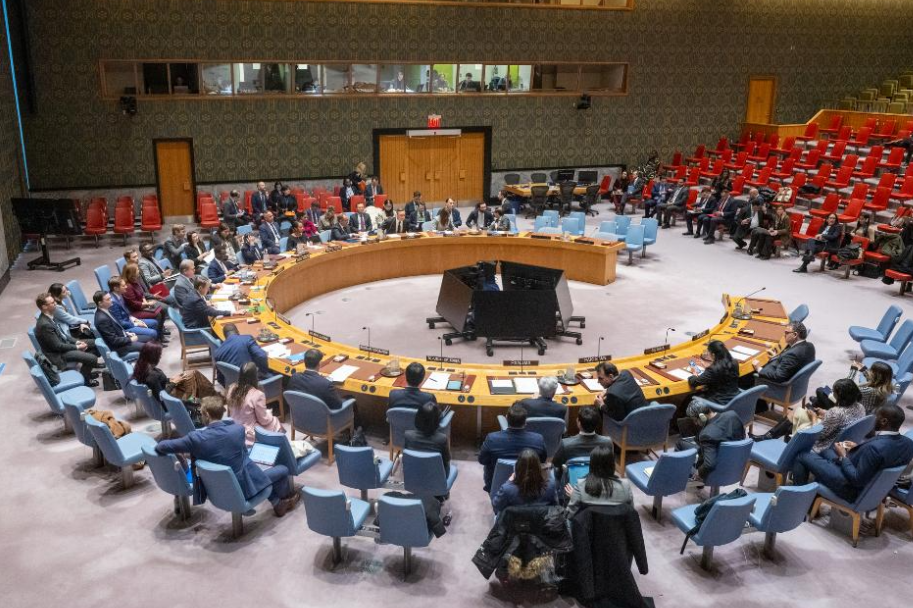
    The United Nations Security Council convened an emergency session on Tuesday addressing the rapidly deteriorating situation in Venezuela, with the overwhelming majority of member states urging restraint and adherence to international law. The meeting, requested by Venezuela itself, revealed deep international divisions over U.S. military actions in the region.

    Venezuelan Permanent Representative Samuel Moncada Acosta delivered a forceful condemnation of American foreign policy, characterizing recent U.S. actions as an extension of historical hemispheric dominance. “The ambition is continental,” Acosta asserted, referencing what he described as a modern enactment of the Monroe Doctrine exacerbated by what he termed the “Trump Corollary” in U.S. national security strategy.

    The diplomatic confrontation intensified as Russian UN Ambassador Vassily Nebenzia denounced American seizure of Venezuelan oil tankers and the imposition of a naval blockade as violations of multiple international legal frameworks. “The illegal U.S. blockade of Venezuela’s coastline is a genuine act of aggression,” Nebenzia stated, warning that Washington’s actions signal a broader pattern of intervention against sovereign nations pursuing independent policies.

    China’s Deputy Permanent Representative Sun Lei joined the criticism, calling for immediate cessation of U.S. campaigns against Venezuela. Sun emphasized that Venezuela’s rights as a sovereign state to develop international cooperation and defend its legitimate interests should receive international respect and support. “China opposes all acts of unilateralism and bullying,” Sun declared, positioning China as a defender of multilateral principles and national sovereignty.

    The emergency session concluded with widespread calls for de-escalation, though no formal resolution was immediately proposed. The meeting highlighted growing international concern that the Venezuela situation could trigger broader regional instability and challenge fundamental principles of international law.

  • Ban on mercury thermometers to take effect soon

    Ban on mercury thermometers to take effect soon

    China will enforce a comprehensive prohibition on mercury-containing thermometers and blood pressure monitoring devices effective January 1, 2026, marking a significant milestone in the nation’s environmental and public health protection efforts. The ban implements a 2017 interagency directive designed to fulfill China’s commitments under the Minamata Convention on Mercury, an international treaty ratified to safeguard human health and ecosystems from mercury’s detrimental effects.

    For generations, mercury thermometers have been ubiquitous in Chinese households due to their cost-effectiveness, operational simplicity, and reliable performance across diverse environmental conditions. However, each device contains approximately one gram of mercury—a potent neurotoxin classified by the World Health Organization among the top ten chemicals of major public health concern. The fragile glass construction of these instruments creates substantial spill risks, with evaporated mercury vapor posing severe threats to neurological, digestive, and immune systems through inhalation or dermal exposure.

    Health authorities emphasize that proper spill management can mitigate immediate dangers. Recommended protocols include immediate ventilation of affected areas, careful collection of mercury beads using stiff paper or cardboard, and proper disposal at designated hazardous waste facilities. Crucially, vacuum cleaners or brooms should never be employed as they disperse toxic particles and amplify exposure risks.

    Medical experts affirm that advanced alternatives offer safer and equally effective solutions. Dr. Li Tongzeng of Beijing Youan Hospital’s infectious disease department confirms that infrared forehead thermometers and tympanic (ear) thermometers provide accurate readings when used according to manufacturer guidelines. For traditional measurement preferences, mercury-free devices utilizing gallium-indium-tin alloys deliver precise temperature assessment without toxic hazards.

    This regulatory shift represents China’s proactive approach to transforming environmental challenges into public health opportunities, aligning global treaty obligations with domestic health protection initiatives while promoting technological innovation in medical devices.

  • Beijing role in Africa’s green shift draws praise

    Beijing role in Africa’s green shift draws praise

    Two comprehensive studies released by the Africa-China Centre for Policy and Advisory in collaboration with the African Climate Foundation reveal China’s increasingly significant role in advancing sustainable development across Africa. The research, focusing specifically on Ghana and Ethiopia, demonstrates how Chinese partnerships have evolved beyond traditional infrastructure projects to become crucial enablers of green industrialization.

    Through the Forum on China-Africa Cooperation (FOCAC), China has established innovative financing mechanisms that African nations find more adaptable than Western alternatives. These arrangements include concessional loans, grants, and technical assistance packages specifically designed to make renewable energy projects more financially accessible. The $60 billion commitment China made to African investments has already supported notable initiatives such as Ghana’s Hydro-Solar Hybrid plant and numerous industrial zone upgrades promoting eco-friendly manufacturing.

    In Ethiopia, Chinese engagement has been particularly transformative, with $850 million invested in green energy between 2011-2024—making China the nation’s second-largest renewable energy donor after the World Bank Group. Chinese enterprises have contributed to over 2,000 projects valued at approximately $5 billion, generating nearly 600,000 employment opportunities while developing critical infrastructure including railways, telecommunications networks, and power generation facilities.

    The reports acknowledge certain challenges, noting that Ghana’s manufacturing sector receives only a limited portion of green financing and that domestic financial institutions have been slow to adopt climate-conscious lending practices. Ethiopia requires better alignment between FOCAC initiatives and its specific green industrial priorities.

    Despite these hurdles, researchers emphasize the substantial opportunities emerging from Sino-African cooperation. Paul Frimpong, Executive Director of the Africa-China Centre, highlighted the growing urgency among African nations to shape their climate agendas through international partnerships. Sahele T. Fekede of the African Climate Foundation pointed to the potential for African institutions to enhance regulatory frameworks and build technical capacity through collaboration with Chinese partners.

    The assessment concludes that China’s flexible financing models and technological expertise are helping bridge critical funding gaps in Africa’s green transition, which could potentially create 1.2 million new jobs in Ghana alone by 2030 while reducing industrial emissions by 35 percent.

  • China’s 3 deep-sea manned submersibles have made over 1,700 dives to date

    China’s 3 deep-sea manned submersibles have made over 1,700 dives to date

    China’s fleet of three advanced manned submersibles has achieved a remarkable milestone by completing 1,746 deep-ocean dives, according to the Institute of Deep-sea Science and Engineering at the Chinese Academy of Sciences. The announcement made Wednesday in Sanya, Hainan Province, highlights the growing capabilities of China’s deep-sea exploration program.

    The three vessels—Fendouzhe (Striver), Shenhai Yongshi (Deep Sea Warrior), and Jiaolong—are projected to complete 314 dives during 2025 alone, demonstrating accelerated activity in underwater research. Each submersible has contributed unique achievements to marine science this year.

    Fendouzhe made history by conducting China’s inaugural manned scientific expedition beneath the ice-covered regions of the Arctic Ocean. The same vessel also facilitated an international collaborative mission to New Zealand’s Puysegur Trench, located off the southwestern coast of South Island, marking significant progress in global oceanographic cooperation.

    Meanwhile, Shenhai Yongshi has pioneered archaeological exploration in the deep sea, completing 18 dives along the northwest continental slope of the South China Sea. The submersible operated in coordination with unmanned underwater vehicles, leading to groundbreaking discoveries in deep-sea archaeology that reshape our understanding of maritime history.

    The cumulative achievements of these deep-sea vehicles represent China’s growing sophistication in underwater technology and oceanographic research, contributing valuable data to the global scientific community while pushing the boundaries of deep-sea exploration capabilities.

  • Emerging technologies a potential game-changer for elderly, says expert

    Emerging technologies a potential game-changer for elderly, says expert

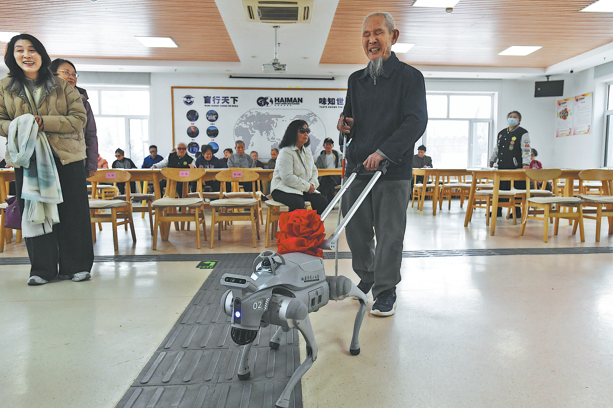
    China’s rapidly aging population presents both a demographic challenge and a catalyst for technological innovation, according to Guo Zhe, director of the China Science and Technology Museum. With over 220 million citizens aged 65 and above—representing 15.6% of the population—the nation faces unique pressures to develop age-friendly technologies that can transform elderly care.

    Artificial intelligence stands at the forefront of this transformation, introducing profound changes across economic sectors and daily life. Guo emphasizes that current technological development must prioritize elderly needs rather than simply upgrading existing facilities. The very design of architecture, furniture, and equipment requires systematic reimagining to accommodate demographic realities.

    The technological revolution extends beyond practical assistance to emotional companionship. Humanoid robots are evolving beyond physical mimicry to provide genuine emotional support and basic communication capabilities. Through deep learning, machines may eventually develop basic consciousness, fundamentally altering how society addresses loneliness among the elderly.

    Biotechnological advancements are simultaneously redefining biological aging itself. breakthroughs in genetic technology, gene sequencing, and synthetic biology could extend human life spans to 120 years, potentially resetting the threshold of ‘elderly’ to 80 years. Medical advancements against cancer and chronic diseases promise improved health and happiness for aging populations.

    Emerging technologies like brain-computer interfaces demonstrate particular promise, enhancing muscle nerve functions and helping paralyzed individuals regain limb control. As smart technologies proliferate in homes, new roles such as ‘family data managers’ will become crucial for managing health data and facilitating remote healthcare.

    Guo describes this period as ‘the compressed era,’ where changes that once took centuries now occur within years or months. This acceleration brings both uncertainty and urgency, requiring collective effort to create inclusive environments that leverage technology for all age groups. By embracing these changes, China can transform its aging challenge into opportunities for growth and innovation.

  • Nation seeks to elevate its higher education system

    Nation seeks to elevate its higher education system

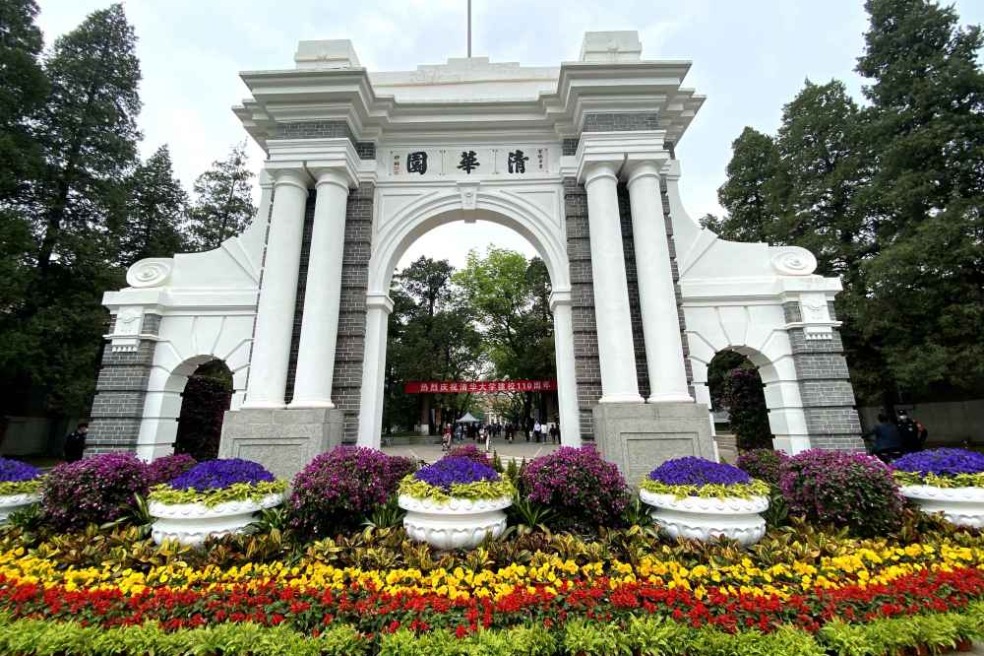
    China is embarking on a significant expansion of its flagship higher education initiative to enhance the global competitiveness of its university system. The State Council has proposed broadening the scope of the “double first-class” program, a national strategy designed to cultivate elite universities and academic disciplines, according to a report submitted to the National People’s Congress Standing Committee.

    Initially launched in 2015, the ambitious program targets developing world-class universities and first-class disciplines by mid-century. The current phase (2022-2027) includes 147 designated institutions that have become crucial to China’s academic ecosystem, training over 50% of the nation’s master’s students and nearly 80% of doctoral candidates.

    These universities have demonstrated remarkable achievements, producing groundbreaking research across multiple fields and emerging as primary drivers of scientific innovation. The central government has demonstrated substantial commitment to the initiative, allocating 181 billion yuan ($25.7 billion) from 2021-2025, which has leveraged an additional 110 billion yuan in local funding.

    Concurrently, regional authorities have supported over 400 local high-level universities and more than 1,300 specialized academic disciplines, creating a multi-tiered approach to educational excellence.

    The forward-looking strategy emphasizes not only expansion but also quality enhancement. Plans include increasing enrollment in high-quality undergraduate programs, scaling up postgraduate training, and raising the proportion of doctoral students. A key component involves establishing a demographic-responsive funding mechanism that adapts to changing population trends.

    China’s investment in higher education has been substantial, with 3.78 trillion yuan allocated from 2021-2024. This support has enabled the development of the world’s largest higher education system, achieving a gross enrollment ratio of 60.8% in 2024—a 6.4 percentage point increase from 2020. The educated population with university-level credentials now exceeds 240 million.

    The reforms will further encourage institutions to develop distinctive strengths, fostering a diversified talent ecosystem that meets China’s evolving economic and social needs.

  • Turning nation’s aging challenge into opportunity

    Turning nation’s aging challenge into opportunity

    China is poised to transform its demographic challenge into a strategic economic advantage through its forthcoming 15th Five-Year Plan (2026-2030), marking a fundamental shift in how the nation addresses population aging. Rather than treating elderly citizens merely as recipients of social welfare, the new framework positions them as active contributors to economic growth through three key mechanisms: long-term care insurance expansion, private pension system modernization, and targeted development of the silver economy.

    Current statistics reveal the scale of this demographic transformation: China now counts 310 million citizens aged 60 or above, representing 22% of the total population. Within this group, 220 million have reached 65 years or older. The nation’s life expectancy has climbed to 79 years during the 14th Five-Year Plan period (2021-2025), reflecting a 1.07-year increase from 2020 and standing five years above the global average.

    The Communist Party of China’s recently published recommendations outline specific measures to operationalize this strategic pivot. These include enhancing the national pooling mechanism for basic pension insurance and developing a multi-tiered, multi-pillar retirement security system designed to progressively elevate citizens’ post-retirement income levels.

    Critical infrastructure adaptations form another cornerstone of the strategy. The plan mandates comprehensive upgrades to public facilities, ensuring they become both barrier-free and elderly-friendly. Simultaneously, it promotes wider implementation of long-term care insurance programs across Chinese provinces.

    Workforce policy reforms represent equally significant components. The government will implement gradual retirement age adjustments while relaxing age restrictions for employment and social insurance participation. These measures aim to better utilize senior workers’ capabilities and stimulate silver economy growth.

    Recent economic analysis quantifies the opportunity: China’s silver economy currently generates approximately 7 trillion yuan ($996.1 billion), accounting for 6% of national GDP. Projections indicate this could expand to 30 trillion yuan by 2035, potentially representing 10% of China’s total economic output.

    Experts emphasize that continued enrichment of elderly services, coupled with strengthened insurance systems and enhanced workplace protections for older employees, will be essential throughout the next five-year implementation period to fully realize this demographic-economic strategy.

  • Son of former Bangladesh prime minister returns after 17 years in exile with a chance to lead

    Son of former Bangladesh prime minister returns after 17 years in exile with a chance to lead

    DHAKA, Bangladesh — In a politically charged homecoming, Tarique Rahman, the acting chairman of Bangladesh Nationalist Party (BNP), returned to Dhaka on Thursday after 17 years of self-imposed exile in London. His arrival marks a significant development in Bangladesh’s volatile political landscape ahead of February’s pivotal elections.

    Rahman, son of former Prime Minister Khaleda Zia, arrived at Hazrat Shahjalal International Airport under tight security alongside his wife and daughter. The homecoming transformed into a massive political demonstration as supporters flooded a 2-kilometer radius between the airport and reception venue, with party leaders claiming millions had gathered to welcome the returning leader.

    The 56-year-old politician originally left Bangladesh in 2008 for medical treatment after enduring torture during the military-backed caretaker government (2006-2008). His return follows acquittals on all criminal charges by the current interim government headed by Nobel laureate Muhammad Yunus, including allegations of involvement in a 2004 grenade attack on a political rally of current exiled leader Sheikh Hasina.

    Rahman’s return occurs against the backdrop of profound political transformation. Bangladesh remains governed by an interim administration that assumed power following the 2024 uprising that ended Hasina’s 15-year rule. The Yunus government faces mounting criticism from international human rights organizations and domestic liberals who accuse it of eroding democratic institutions and permitting rising Islamist influence.

    Following his reception, Rahman plans to visit his critically ill mother, former Prime Minister Khaleda Zia, who led the country from 2001-2006. The political dynasty began when Zia, a former housewife, entered politics after her husband President Ziaur Rahman’s assassination in 1981.

    Despite his prolonged absence, Rahman maintained firm control over BNP through digital participation in meetings and rallies, facing no significant internal challenges to his leadership. His return sets the stage for a dramatic political confrontation as Bangladesh approaches what many consider its most consequential election in decades.

  • Front-runner to be Bangladesh PM returns after 17 years in exile

    Front-runner to be Bangladesh PM returns after 17 years in exile

    In a dramatic political homecoming, Tarique Rahman—the exiled leader poised to become Bangladesh’s next prime minister—has returned to his homeland after 17 years in London. The 60-year-old scion of the influential Zia political dynasty arrived to massive crowds of supporters in Dhaka, marking a seismic shift in the nation’s political landscape ahead of watershed general elections.

    Rahman’s return follows the spectacular downfall of former Prime Minister Sheikh Hasina, whose government was ousted last year amid allegations of severe human rights violations. While Hasina’s Awami League party dominated Bangladeshi politics for nearly two decades, Rahman’s Bangladesh Nationalist Party (BNP) now stands as the frontrunner to secure power in the upcoming polls.

    The political transition carries profound historical significance. During Hasina’s tenure, Rahman faced multiple criminal investigations that he characterized as politically motivated persecution. All charges against him were dropped following the regime change, clearing his path to leadership. Meanwhile, Hasina herself now lives in exile in India after being tried in absentia and receiving a death sentence for her government’s lethal crackdown on student-led protests—a period that UN investigators say claimed up to 1,400 lives.

    With the Awami League likely barred from participation, the upcoming elections represent what many observers consider the most consequential democratic exercise in Bangladesh’s modern history. Rahman’s return from exile symbolizes not just a personal homecoming but potentially the dawn of a new political era for the South Asian nation.

  • Somalis vote in the first one-person, one-vote local election in decades

    Somalis vote in the first one-person, one-vote local election in decades

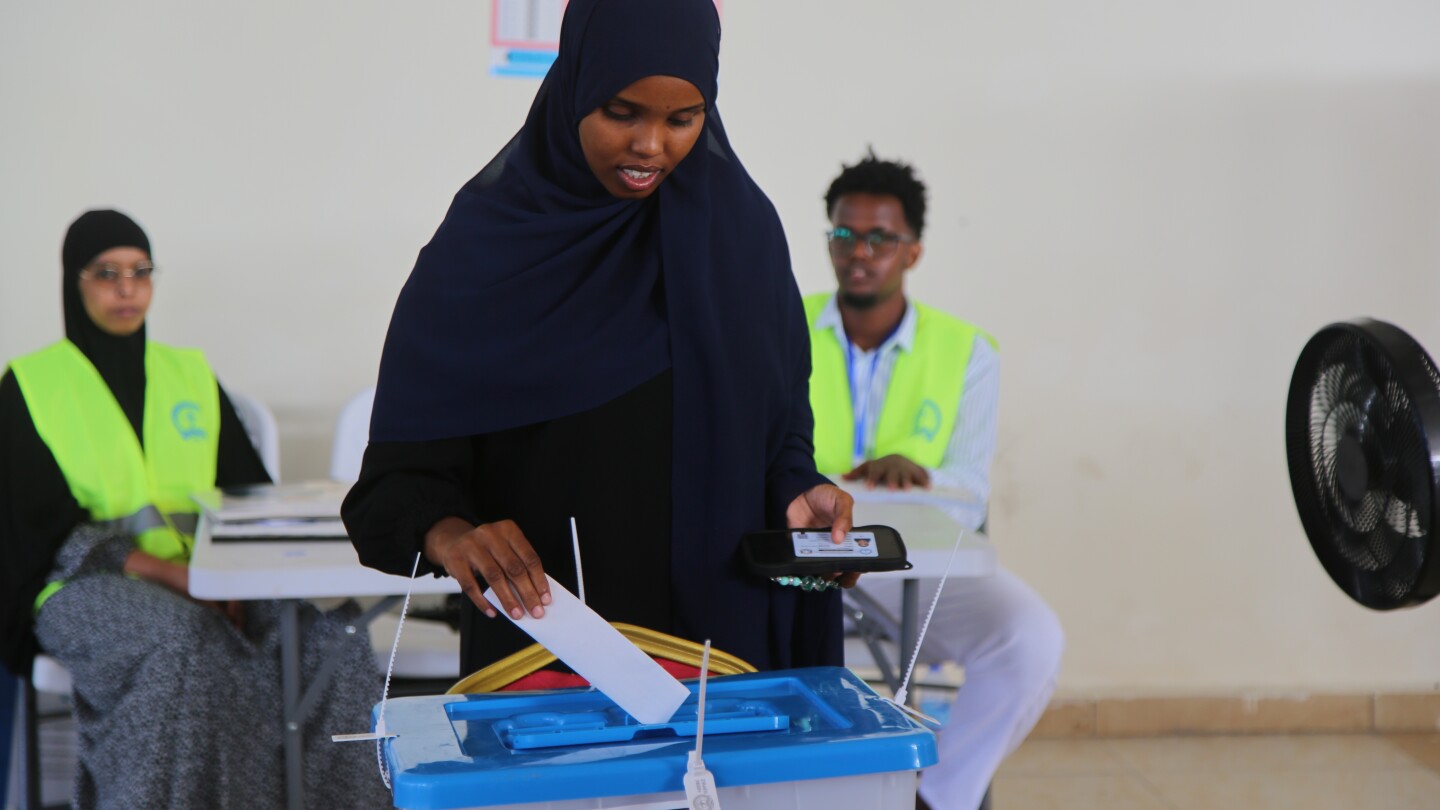
    MOGADISHU, Somalia – The Somali capital witnessed a historic democratic exercise Thursday as residents participated in the nation’s first universal suffrage local elections since 1969. This groundbreaking electoral process represents a radical departure from Somalia’s traditional clan-based power-sharing system that has dominated political life for decades.

    Organized by the federal government across Mogadishu’s 16 districts, the council elections have sparked intense political division. Opposition parties have unanimously rejected the process, labeling it as fundamentally flawed and politically biased. The voting marks the inaugural major electoral undertaking administered by Somalia’s National Independent Electoral and Boundaries Commission, featuring participation from approximately 20 political parties.

    Despite its significance, the election does not determine Mogadishu’s mayoral leadership, which remains an appointed position due to unresolved constitutional status of the capital. This ambiguity reflects broader political fractures between President Hassan Sheikh Mohamud and regional leaders from Jubaland and Puntland regarding constitutional reforms.

    Security measures were significantly enhanced throughout the capital to safeguard the electoral process against potential attacks from al-Shabab militants, who have consistently threatened Somalia’s political stability. Electoral authorities reported over 900,000 registered voters across 523 polling stations in the central region.

    Political analyst Mohamed Husein Gaas, director of the Raad Peace Research Institute, noted that Mogadishu has demonstrated the technical feasibility of local elections despite challenges. He emphasized that the federal government’s initiative empowers citizens, enhances governmental accountability, and progresses toward a more inclusive state structure.

    The elections, previously postponed three times in 2024, have faced vehement opposition criticism alleging that the government seeks to consolidate power and potentially extend presidential term limits—claims that authorities strongly deny. Meanwhile, first-time voter Farhiyo Mohamed expressed exhilaration at participating in an unprecedented democratic experience she had never witnessed in her lifetime.