作者: admin

  • Year-ender: Moving moments of 2025

    Year-ender: Moving moments of 2025

    As 2025 draws to a close, a retrospective examination reveals a year remarkably characterized by profound human connections and selfless acts that transcended geographical and cultural boundaries. Across China and beyond, ordinary individuals demonstrated extraordinary compassion through both subtle gestures of kindness and courageous interventions that captured global attention.

    This year’s most memorable incidents collectively painted a mosaic of human resilience, ranging from spontaneous community responses to natural disasters to organized volunteer efforts supporting vulnerable populations. These narratives not only provided emotional solace during challenging times but also reinforced fundamental social values through practical action rather than mere rhetoric.

    Documented instances included grassroots initiatives addressing educational disparities, environmental conservation efforts driven by local communities, and cross-generational solidarity movements that bridged traditional divides. The cumulative impact of these developments suggests a growing societal recognition that meaningful change often originates from individual actions rather than institutional directives alone.

    Visual documentation through various media platforms has preserved these ephemeral moments, creating an archival record that future generations may study as evidence of 2025’s distinctive social fabric. This compilation serves not as comprehensive chronology but as representative sampling of how contemporary challenges were met with innovative empathy and collective determination.

  • Ten photos from across China: Dec 19 – 25

    Ten photos from across China: Dec 19 – 25

    China Daily Information Co (CDIC) maintains strict copyright protection over all content published on its platform. This comprehensive protection extends to textual materials, photographs, multimedia information, and all other forms of content accessible through the website. The company explicitly prohibits any republication or utilization of its content without obtaining prior written authorization.

    The website provides technical recommendations for optimal viewing experience, suggesting browsers with 1024*768 resolution or higher. Additionally, the platform displays its official publishing license details (0108263) and registration number (130349) in compliance with regulatory requirements.

    For user convenience, the site features multiple navigational sections including information about China Daily, advertising opportunities, contact channels, and employment sections specifically catering to expatriates seeking job opportunities. The platform also encourages visitors to follow their social media channels for ongoing updates and engagement.

  • Afghanistan’s historic Ariana Cinema torn down to make way for shopping center

    Afghanistan’s historic Ariana Cinema torn down to make way for shopping center

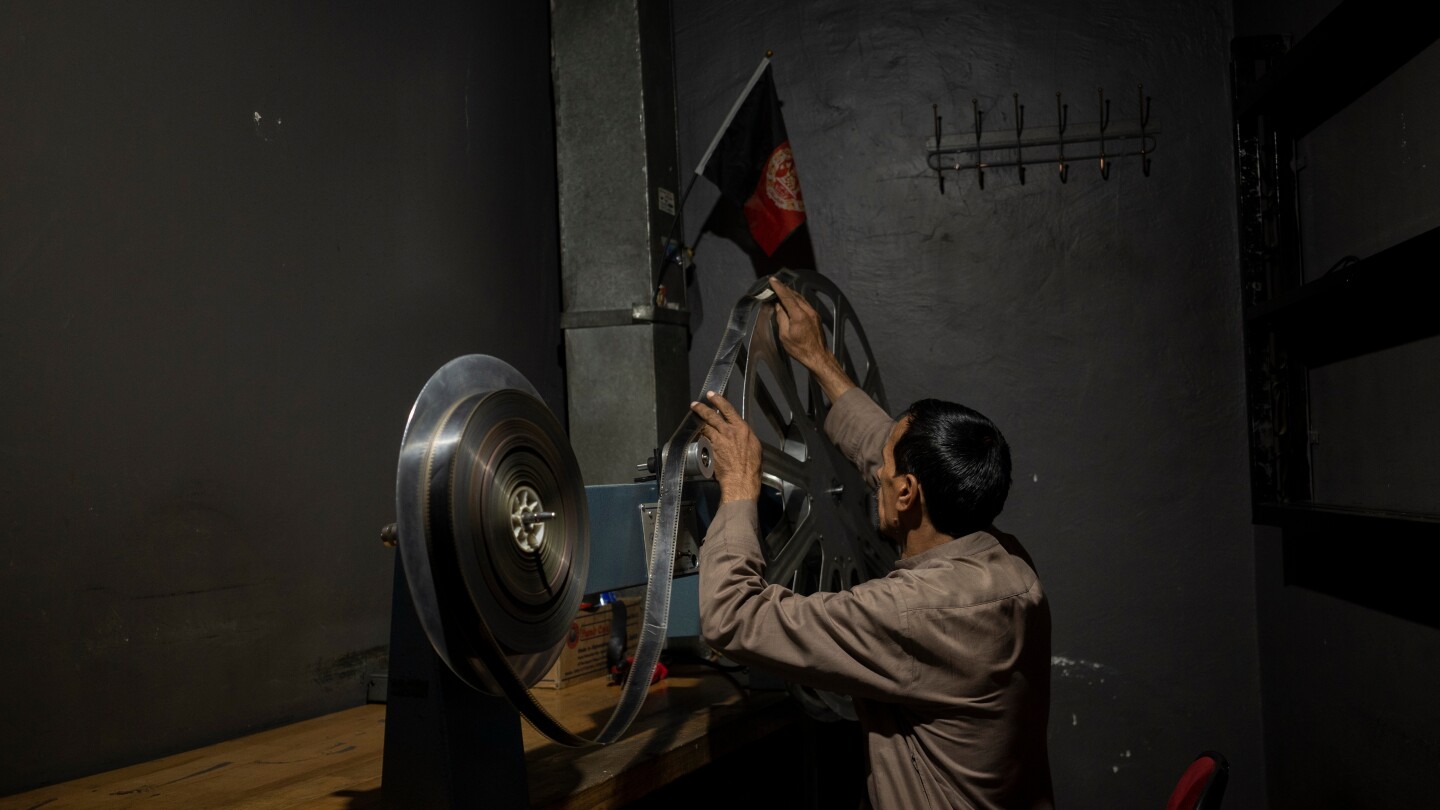
    KABUL, Afghanistan — The iconic Ariana Cinema, a cultural landmark that withstood decades of revolution and warfare in Afghanistan’s capital, has been completely demolished by municipal crews, marking the end of an era for Afghan cinema enthusiasts. The demolition began on December 16 and within one week, the historic structure was reduced to rubble.

    Established in 1963 during Afghanistan’s liberalizing monarchy, the cinema represented modernization efforts with its sleek architecture and became a cherished entertainment venue featuring Bollywood films and American action movies. Despite surviving Soviet invasion, civil war, and previous Taliban rule, the cinema couldn’t withstand the current administration’s urban development plans.

    The Taliban government, which seized power in 2021 following the withdrawal of U.S. and NATO forces, has implemented strict interpretations of Islamic law that prohibit most forms of entertainment. Earlier this year, the regime formally dissolved the Afghan Film Administration and ordered all cinemas to cease operations.

    Kabul municipal authorities justified the demolition by citing commercial development priorities. Niamatullah Barakzai, municipal spokesman, stated: ‘The area represents prime commercial real estate with significant market potential. Our objective is to generate substantial municipal revenue through strategic development of city-owned properties.’

    For Afghan artists and cinema enthusiasts, the destruction represents more than architectural loss. Amir Shah Talash, an Afghan film director and actor now residing in France, described the demolition as ‘devastatingly painful news.’ Talash, whose childhood visits to the Ariana inspired his cinematic career, noted: ‘They’re not merely destroying bricks and cement but eradicating the resilience of Afghan cinema lovers who persisted through immense security challenges and hardships.’

    The cinema had previously been destroyed during civil conflicts and was rebuilt in 2004 with French assistance following the Taliban’s initial ouster. It had recently served as a cultural hub where Kabul residents sought respite from daily struggles through film. ‘It provided mental and emotional relief during difficult times,’ Talash recalled. ‘This demolition signifies regression in our cultural development.’

    The loss resonates internationally among South Asian cinema enthusiasts. Pakistani film lover Sohaib Romi recounted traveling to Kabul in 1974 to watch Indian films during periods of cultural prohibition in Pakistan. ‘My most cherished memories now lie buried beneath the Ariana’s rubble,’ Romi lamented.

    Despite the physical destruction, Talash maintains hope for Afghan artistic expression: ‘While buildings may collapse, authentic art persists within people’s hearts and minds. The future appears challenging but not entirely hopeless.’

  • Amid a battery boom, graphite mining gets a fresh look in the US

    Amid a battery boom, graphite mining gets a fresh look in the US

    GOUVERNEUR, N.Y. — After seven decades of dormancy, America’s graphite mining industry is experiencing a remarkable resurgence driven by geopolitical tensions and soaring demand for battery materials. This strategic shift comes as trade uncertainties with China prompt federal officials to prioritize domestic production of critical minerals essential for high-tech and defense applications.

    Titan Mining Corp. has initiated limited operations at a northern New York deposit located 25 miles from the Canadian border, targeting commercial graphite production by 2028. Company executives believe current geopolitical dynamics favor domestic sourcing for military vehicle lubricants, industrial heat-resistant coatings, and lithium-ion battery components for grid storage systems.

    CEO Rita Adiani emphasized the strategic imperative: “We possess the capability to supply a substantial percentage of U.S. graphite requirements, particularly given China’s increasingly unreliable supply chain status.”

    The revival occurs against a backdrop of heightened trade tensions during the Trump administration, though some pressures eased following the October meeting between President Trump and China’s Xi Jinping at a regional economic summit in South Korea.

    New York’s mining region boasts a rich industrial heritage, historically producing graphite for iconic products like Ticonderoga pencils. Titan’s operational advantage stems from discovering graphite deposits at their existing zinc mine site, allowing immediate limited extraction under current permits while pursuing full-scale mining authorization.

    Graphite’s classification as a critical mineral stems from its exceptional electrical conductivity and thermal resistance properties. The Department of Energy and Interior recognize its strategic importance, listing it among 60 crucial minerals alongside rare earth elements. Global demand is projected to skyrocket over the next decade, encompassing both natural mined graphite and purer synthetic alternatives for lithium-ion battery anodes.

    Federal support mechanisms include tax credits under the 2022 Inflation Reduction Act and streamlined permitting processes. The Export-Import Bank is considering $120 million in construction financing alongside a $5.5 million feasibility study grant for Titan’s project, which received fast-tracked federal approval this fall.

    Currently, no U.S. mines regularly produce commercial graphite, but five active projects—in New York, Alabama, Montana, and Alaska—aim to change this. Graphite One’s Alaska operation reportedly sits atop the nation’s largest known flake graphite deposit.

    Anthony Huston, Graphite One’s CEO, captured the industry sentiment: “With one of Earth’s largest graphite deposits domestically available, Chinese dependence becomes unnecessary.” Titan anticipates producing 40,000 metric tonnes annually, potentially covering half of America’s natural graphite requirements, with indications suggesting complete output absorption by the market.

  • From red donkeys to vibrant art: Fernando Dávila’s colorful journey as a colorblind painter

    From red donkeys to vibrant art: Fernando Dávila’s colorful journey as a colorblind painter

    DORAL, Fla. (AP) — Colombian-born artist Fernando Dávila’s artistic journey began with an early setback—failing a childhood drawing class in Colombia for painting donkeys red. This unconventional color choice stemmed from a biological reality: Dávila is colorblind. Now at 72, the internationally acclaimed painter creates vibrant works exhibited across three continents, transforming his visual limitation into artistic triumph.

    From his Miami studio, Dávila reflects: “I possess the world’s most wonderful occupation—painting each morning. Blending colors and sharing joy with the world constitutes my true passion.” His artistic practice initially confined itself to monochromatic works until age thirty due to his congenital condition that impairs differentiation between red and green hues, along with confusing pink, violet, turquoise, and yellow-green shades.

    A transformative development occurred in the mid-1980s when a New York ophthalmologist designed specialized glasses featuring one transparent lens and one red-tinted lens. This optical innovation enables Dávila to distinguish contrasting shades that typically blur together, expanding his color perception from 40% without aids to nearly two-thirds of the color spectrum.

    Dávila metaphorically describes his experience as “having a chocolate box while only sampling portions.” He expresses profound yearning to experience full chromatic richness: “When someone mentions a vividly pink flower, I passionately desire to perceive it—this longing emanates from my heart. I sense color’s vibration.”

    The genetic condition spans his family lineage, affecting his grandfather (monochromatic vision), mother, three aunts, and two brothers—notable given colorblindness’s lower prevalence among females. Despite these visual constraints, Dávila’s distinguished career spanning Colombia, New York, and Florida earned him the Colombian Congress’s “Order of Democracy” in 1999 for artistic contributions.

    The established artist has published two hardcover books and numerous exhibition catalogues, with his works appearing at premier auction houses Christie’s and Sotheby’s. His paintings frequently feature romantic human embraces and landscapes, often employing blue as foundational hue. “Color remains life’s essential element,” Dávila concludes, “particularly for myself.”

  • US launches deadly strikes against Islamic State in Nigeria, says Trump

    US launches deadly strikes against Islamic State in Nigeria, says Trump

    In a significant international security development, the United States has conducted coordinated military strikes against Islamic State (IS) positions in northwestern Nigeria’s Sokoto state. President Donald Trump announced the operation via Truth Social, characterizing it as a ‘powerful and deadly strike’ against what he termed ‘terrorist scum’ allegedly targeting Christian communities.

    The operation represents the culmination of strategic preparations initiated in November when President Trump directed military planning for counterterrorism actions in Nigeria. The U.S. Africa Command (Africom) confirmed the strikes were executed in coordination with Nigerian authorities, with Defense Secretary Pete Hegseth expressing gratitude for ‘Nigerian government support & cooperation’ in a social media post that concluded with ‘Merry Christmas!’

    Nigerian Foreign Minister Yusuf Maitama Tuggar provided crucial context to the BBC, clarifying this was a ‘joint operation’ targeting ‘terrorists’ without religious specificity. He emphasized the action ‘has nothing to do with a particular religion’ and indicated potential future operations would depend on ‘decisions to be taken by the leadership of the two countries.’

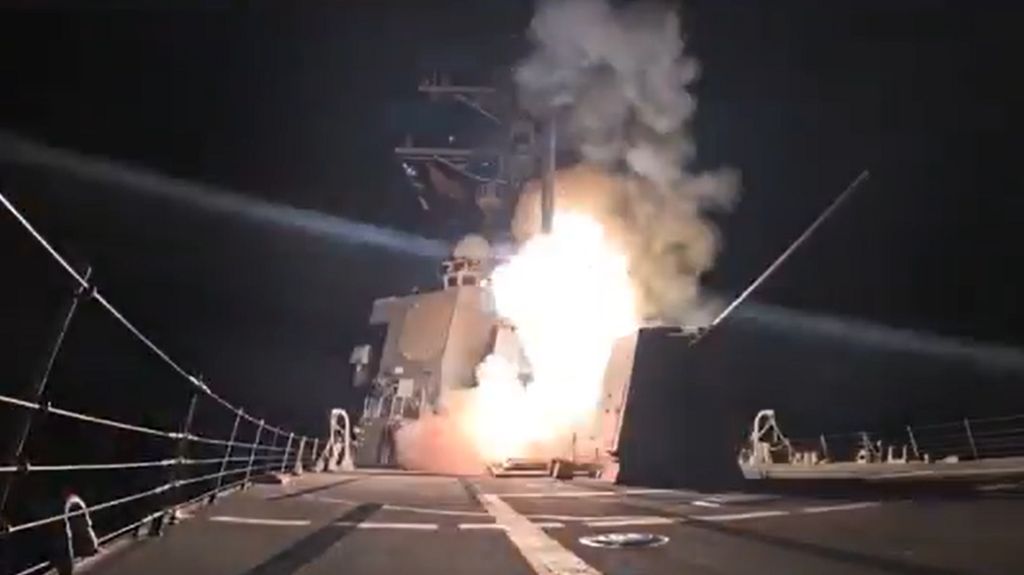
    The U.S. Department of Defense subsequently released an unclassified video showing a missile launch from a military vessel, providing visual documentation of the operation. Nigeria’s foreign ministry issued an official statement acknowledging ‘structured security co-operation with international partners’ that resulted in ‘precision hits on terrorist targets in Nigeria by air strikes in the North West.’

    This military action follows Trump’s controversial designation of Nigeria as a ‘Country of Particular Concern’ based on alleged threats to Christian populations, though monitoring groups including Acled report no evidence supporting claims of disproportionate targeting of Christians. Research indicates most victims of jihadist violence in Nigeria’s prolonged conflict have actually been Muslims.

    President Bola Tinubu’s administration has maintained that security challenges affect all Nigerians ‘across faiths and regions,’ with adviser Daniel Bwala stressing Nigeria’s sovereignty while welcoming international cooperation against insurgent groups that have killed people ‘from all faiths, or none.’

    The Nigeria operation coincides with recent U.S. military actions against IS in Syria, where Central Command reported ‘massive strikes’ involving fighter jets, attack helicopters, and artillery against more than 70 targets in central Syria with Jordanian participation.

  • Myanmar will hold its first general election in 5 years as criticism of the military rule mounts

    Myanmar will hold its first general election in 5 years as criticism of the military rule mounts

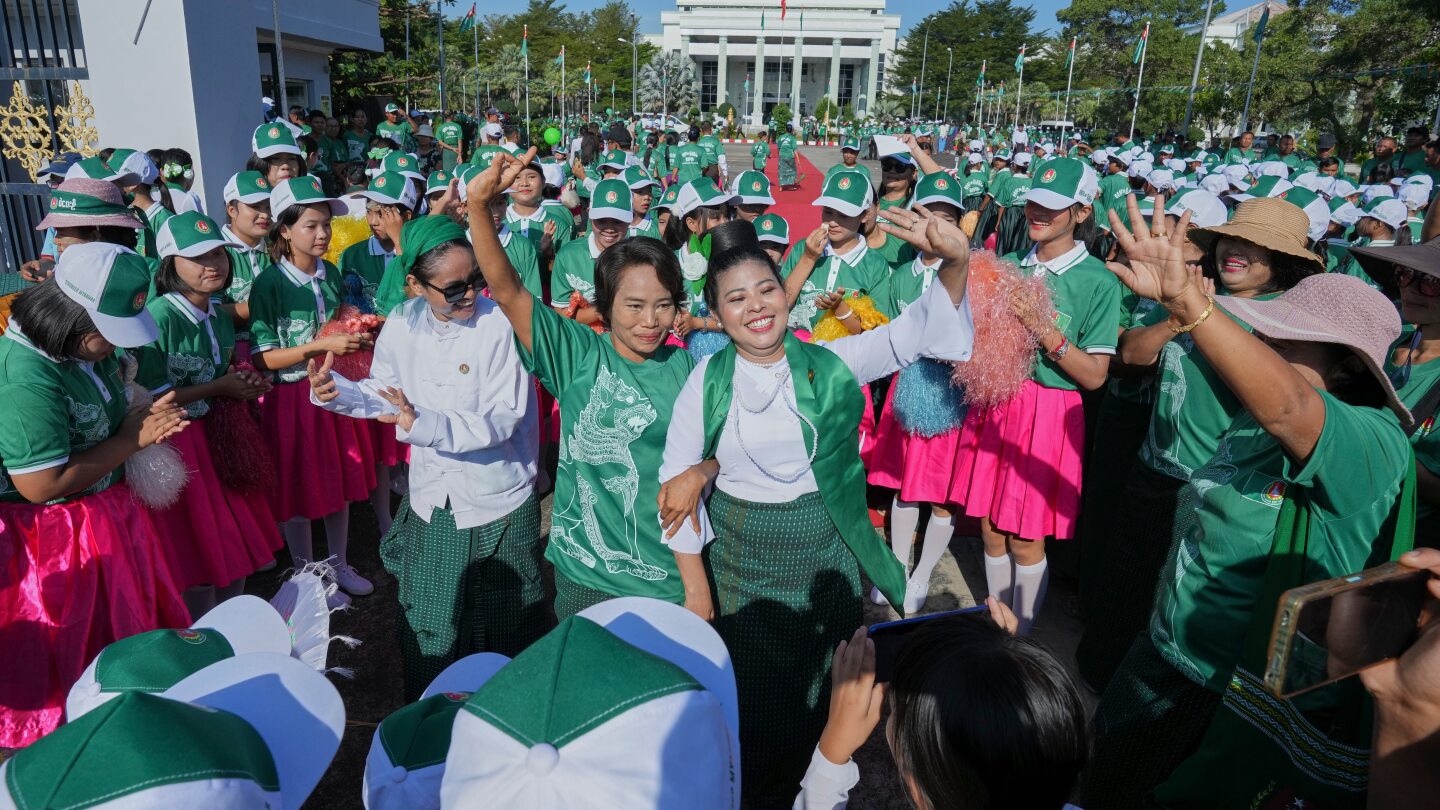
    BANGKOK — Myanmar’s military junta proceeds with phased parliamentary elections beginning Sunday, marking the country’s first electoral exercise since the 2021 coup d’état. The voting process, structured across three distinct phases through January 25, faces widespread international condemnation and domestic opposition as analysts characterize it as a calculated maneuver to cement military dominance under a civilian facade.

    The electoral framework systematically excludes major opposition forces, including Aung San Suu Kyi’s dissolved National League for Democracy (NLD), which secured a landslide victory in the 2020 polls. With Suu Kyi serving a 27-year prison sentence on politically motivated charges and her party outlawed, the military-backed Union Solidarity and Development Party (USDP) stands positioned to dominate the proceedings.

    Independent monitoring organizations and human rights advocates uniformly dismiss the electoral process as neither free nor fair. Richard Horsey, Myanmar analyst at the International Crisis Group, stated unequivocally to AP: “These elections are not credible at all. They do not include any of the political parties that performed strongly in previous elections.”

    The military administration has implemented severe restrictions through recently enacted legislation that criminalizes criticism of the electoral process, resulting in over 200 individuals facing charges for leafleting or online activism in recent months. Voting will not occur in 65 townships due to ongoing armed conflict between military forces and ethnic resistance groups.

    International response remains divided, with Western nations maintaining sanctions while regional neighbors including China, India and Thailand may use the elections to justify continued engagement. The United Nations Human Rights Office reports “intensified violence, repression, and intimidation” ahead of the polls, noting that civilians face threats from both military authorities and armed opposition groups regarding participation.

    The humanitarian situation continues deteriorating, with independent monitors documenting over 7,600 civilian deaths and more than 22,000 political detainees since the coup. The conflict has created 3.6 million internally displaced persons, representing one of Southeast Asia’s most severe humanitarian crises.

    Analysts anticipate increased post-election violence as opposition forces seek to demonstrate the military’s lack of popular legitimacy, suggesting the polls will ultimately exacerbate rather than resolve Myanmar’s political crisis.

  • All hail the Panama Canal, a frontline in the US-China trade war

    All hail the Panama Canal, a frontline in the US-China trade war

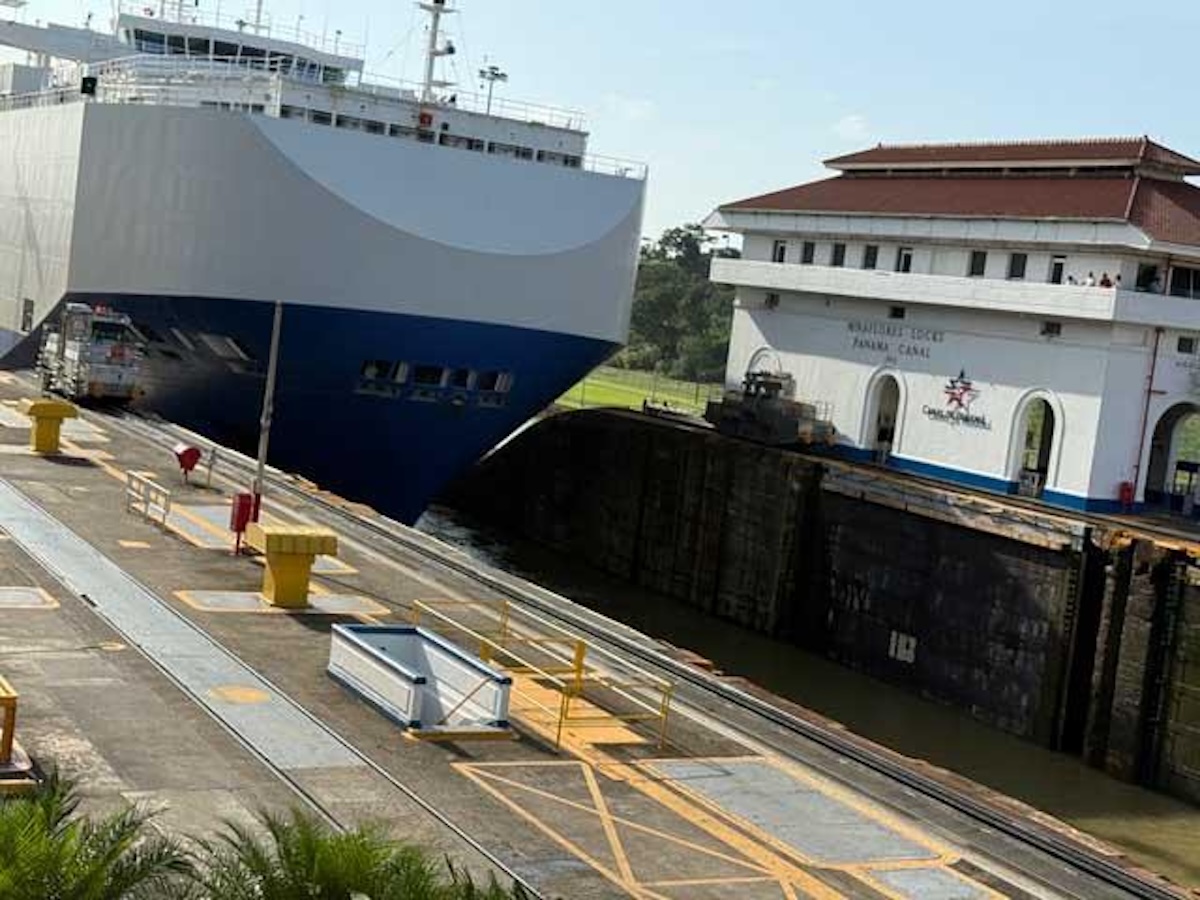
    For American farmers and retailers, the Panama Canal operates like atmospheric oxygen—largely unnoticed until suddenly absent. This reality struck hard in 2023 when severe drought conditions dramatically lowered water levels, creating unprecedented disruptions for global shipping. Vessels carrying critical agricultural exports from the United States found passage impossible, forcing costly reroutes and depressing farm-gate prices. Approximately 25-30% of U.S. grain exports typically traverse this vital waterway, yet during the drought period, virtually none could pass.

    The recent return of rainfall has restored normal operations, once again rendering the canal’s monumental importance invisible to daily commerce. This oversight extends beyond economic functionality to historical significance—the canal represents one of humanity’s most extraordinary engineering achievements, constructed through what can only be described as herculean effort.

    The French initially attempted construction for two decades, suffering catastrophic losses of approximately 20,000 lives before abandoning the project. The United States subsequently undertook the endeavor between 1904-1914, completing it ahead of schedule and under budget despite staggering challenges: 232 million cubic yards of excavation, construction of gravity-operated lock systems that lift ships 85 feet above sea level, and creation of the world’s largest earthen dam at that time.

    Critical to American success was Dr. William Gorgas’s eradication of yellow fever and control of malaria, alongside the organizational genius of Major General George Washington Goethals. The project cost $352 million (approximately $10.8 billion today) and claimed 5,600 lives, predominantly Caribbean workers—a tragic but dramatically improved safety record compared to the French effort.

    The canal’s history intertwines with nation-building—the U.S. facilitated Panama’s independence from Colombia when negotiations stalled—and continues to generate geopolitical tension. Recent controversies have emerged regarding ownership of port facilities at both canal termini, currently held by a Hong Kong-based company. Former President Trump’s comments about ‘taking the canal back’ and China’s demand for 51% ownership in bidding companies highlight how this engineering marvel remains strategically relevant in contemporary superpower relations.

    While businesses may take the canal’s operations for granted, its historical significance and ongoing geopolitical importance ensure it remains firmly in the consciousness of world powers. The original lock systems, still operational today, stand as testament to one of history’s most ambitious and successful infrastructure projects.

  • As Bethlehem lights up again, Palestinian-American Christians reflect on Christmas

    As Bethlehem lights up again, Palestinian-American Christians reflect on Christmas

    In the occupied West Bank city of Bethlehem, the traditional birthplace of Jesus Christ, Palestinian Christians are experiencing a Christmas season marked by fragile relief and profound contradictions. Following the implementation of a US-brokered ceasefire in Gaza on October 10th, 2025, the city has reactivated its Christmas illuminations and restored some public celebrations after previous years of solemn observances.

    The temporary truce has provided Palestinians with limited respite from continuous aerial bombardments and the crippling blockade that restricted essential supplies. However, this reprieve remains tenuous—according to Gaza’s Government Media Office, Israeli forces have committed nearly 1,000 violations since the ceasefire began.

    Reverend Munther Isaac of Bethlehem’s Evangelical Lutheran Christmas Church, who two years ago proclaimed that “Christ is under the rubble” alongside a nativity scene depicting Jesus swaddled in a Palestinian keffiyeh amid debris, now observes families continuing to emigrate due to deteriorating conditions. “We say goodbye to another family every other week or so,” Isaac noted, highlighting how persistent settler attacks and occupation policies undermine dignified existence in their homeland.

    The symbolic dimension of this Christmas has drawn international attention. The U.S. Embassy in Jerusalem recently shared a video featuring Ambassador Mike Huckabee—a known Christian Zionist who has previously denied Palestinian existence—walking through Bethlehem’s streets while promising American support for worship rights. This gesture appears deeply ironic to many Palestinian Christians, given that 3% of Gaza’s Christian community has been killed in Israeli attacks since October 2023.

    Palestinian-American Christians across the United States have articulated their complex perspectives on this paradoxical season. Lydia el-Sayegh of Atlanta reflects that Christmas represents “hope coming in darkness,” drawing parallels between Jesus’ family as refugees and contemporary Palestinian experiences. Philip Farah from Virginia expresses alienation from mainstream churches that avoid controversy, while Tariq Habash in Washington DC describes Christmas as arriving “heavy with contradiction”—celebrating Christ’s birth while children remain trapped under siege.

    In practical terms, the occupation continues to intrude upon religious observance. Khalil Jahshan reports that family in Gaza still hear gunfire and drones during celebrations, while Israeli police disrupted Christmas parades in Nazareth and Haifa—where Santa Claus was reportedly arrested. Daniel Bannoura, a theologian in Indiana, notes that despite surface-level normalcy with decorations, land confiscation and settlement expansion around Beit Sahour create underlying despair.

    The consensus among Palestinian Christians suggests that while the ceasefire has brought physical breathing room, it has failed to address fundamental injustices or create meaningful conditions for peace, leaving the community navigating a complex landscape of measured hope amid ongoing oppression.

  • Japan’s Cabinet OKs record defense budget that aims to deter China

    Japan’s Cabinet OKs record defense budget that aims to deter China

    The Japanese Cabinet has greenlit an unprecedented defense expenditure plan surpassing 9 trillion yen ($58 billion) for fiscal year 2026, representing a 9.4% increase from the previous year. This strategic allocation marks the fourth installment of Japan’s accelerated five-year military expansion initiative, which aims to double annual defense spending to reach 2% of GDP by March—two years ahead of the original schedule.

    The budget enhancement occurs against a backdrop of escalating regional tensions, particularly with China. Prime Minister Sanae Takaichi’s November remarks regarding potential Japanese military involvement in Taiwan scenarios have intensified diplomatic friction. Recent incidents, including Chinese aircraft carrier drills near Japanese territories and radar locking incidents, have further heightened security concerns.

    A significant portion of the budget—over 970 billion yen ($6.2 billion)—is designated for enhancing Japan’s ‘standoff’ missile capabilities. This includes 177 billion yen ($1.13 billion) for acquiring upgraded Type-12 surface-to-ship missiles with an extended range of approximately 1,000 kilometers. Deployment in Kumamoto prefecture will commence by March, accelerating regional missile defense preparations.

    Addressing demographic challenges and military staffing shortages, Japan will invest 100 billion yen ($640 million) in the SHIELD initiative—a comprehensive unmanned defense system utilizing aerial, surface, and underwater drones for coastal surveillance. Initial deployments will rely on imported technology from nations like Turkey or Israel.

    The budget also supports international defense collaboration, allocating 160 billion yen ($1 billion) for joint development of next-generation fighter jets with Britain and Italy, alongside AI-operated companion drones. Australia’s selection of Mitsubishi Heavy Industries for frigate upgrades further strengthens Japan’s defense industry exports.

    Funding mechanisms include corporate and tobacco tax increases, with income tax hikes planned from 2027. While Japan is poised to become the world’s third-largest defense spender, long-term fiscal sustainability for maintaining this elevated spending level remains uncertain.