作者: admin

  • Aussies delaying retirement by years as cost of living ruins retirement plans

    Aussies delaying retirement by years as cost of living ruins retirement plans

    Years of relentless cost-of-living increases have upended decades of retirement planning for Australian workers, pushing the expected retirement age four years higher and driving the projected superannuation savings needed for a comfortable post-work life across the $1 million threshold for the first time, new industry research shows.

    In Colonial First State’s (CFS) 2024 Retirement Report, researchers found that while Australian workers still hold an ideal retirement age of 62, shifting financial realities have forced most to adjust their expectations: the average worker now anticipates they will need to remain in the workforce until age 66. The report, based on a broad survey of working Australians, paints a clear picture of widespread anxiety over retirement security amid persistent inflation.

    More than half of all respondents reported worry that they will not accumulate enough savings to fund a comfortable retirement, with half specifically citing fears of unplanned out-of-pocket health or aged care expenses. A further 37% shared concerns that they will outlive their superannuation savings entirely. Against this backdrop, the average amount workers now say they need in super for a comfortable retirement has jumped by $183,000 year-over-year, pushing the total target above $1 million for the first time since CFS began tracking the metric.

    Marissa Powe, CFS executive director for retirement and growth, framed the shift as a direct response to sustained cost increases that have eroded household savings and projected retirement balances. “Australians are understanding that cost-of-living continues to increase, there’s the cost of aged care and healthcare,” Powe told NewsWire. “They are just taking that all in knowing their retirement savings and super will need to go further than it ever has before.”

    The new research comes as official inflation data shows mixed signals for Australia’s economy. The Australian Bureau of Statistics recently reported that annual headline inflation eased to 4.2% in April, down from 4.6% in March, thanks to temporary federal government measures including a halving of the fuel excise and GST rebates that have softened near-term price pressures. However, core trimmed mean inflation — the metric closely monitored by the Reserve Bank of Australia that strips out volatile price shifts — rose to 3.4% for the 12 months to April, indicating underlying inflationary pressures remain entrenched in the economy.

    The CFS report also highlighted a major gap in retirement preparedness tied to access to professional financial advice. More than 75% of workers who have engaged a financial adviser reported feeling prepared for retirement, compared to fewer than 50% of workers who have never accessed professional advice. CFS Superannuation chief executive Kelly Power argued that expanding access to affordable advice is critical to closing this preparedness gap. “Planning for retirement is complex, but the path forward becomes much clearer with the right support in place,” Power said. “That’s why improving access to financial advice is critical. We strongly believe that reducing barriers to advice, like cost, will help more Australians get the support they need to plan and retire with confidence.”

    There is no consensus among industry bodies on how much super Australians actually need to retire comfortably, with estimates varying based on factors including home ownership, access to the age pension, and individual spending habits. The Association of Superannuation Funds of Australia (ASFA) confirms that persistent cost pressures have made a comfortable retirement harder to achieve for all cohorts. ASFA estimates that a single 67-year-old homeowner now needs a $630,000 lump sum to retire comfortably, while a retired couple needs a minimum of $730,000, up from $690,000 previously. Even for Australians seeking a more modest retirement, required lump sums have risen to $110,000 for singles and $120,000 for couples, up from $100,000 for both groups. All ASFA estimates assume the retiree owns their home outright, a key caveat that excludes a growing share of younger Australian workers.

    By contrast, Super Consumers Australia (SCA) notes that survey data from current retirees shows most end up spending less than expert industry estimates suggest. SCA calculates that a typical single retiree only needs $322,000 in super to support $44,000 in annual post-work spending, while a couple needs a combined $432,000 to fund $64,000 in annual retirement expenses.

    The report also confirmed that retirement anxiety disproportionately impacts women, with the gender gap in preparedness showing little sign of closing despite years of awareness efforts. Nearly two-thirds of women (62%) reported worry about having insufficient retirement savings, compared to just 48% of men. Women are also more likely to fear unexpected health and aged care costs (41% versus 34% of men) and to worry about outliving their super savings. While both genders have seen modest gains in self-reported preparedness over the past three years of CFS surveys — with women’s preparedness rising from 29% to 43% and men’s from 44% to 59% — the gap between the two groups has remained largely unchanged.

  • Spain’s Lamine Yamal says he was scared of missing the World Cup after he injured his hamstring

    Spain’s Lamine Yamal says he was scared of missing the World Cup after he injured his hamstring

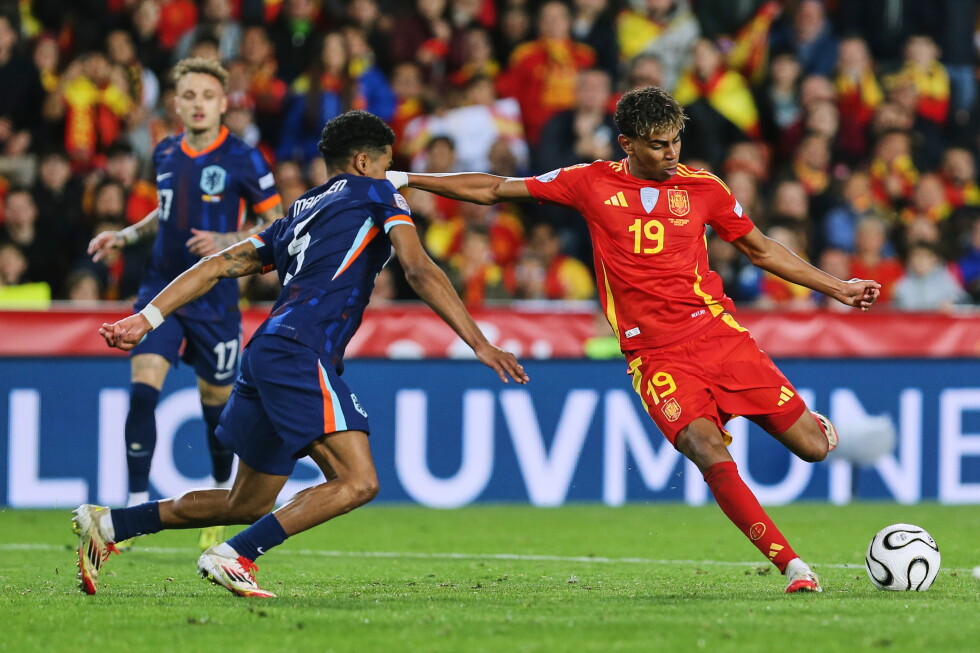
    Rising Spanish football prodigy Lamine Yamal has opened up about the terrifying weeks he spent fearing his dream of featuring at the 2026 FIFA World Cup would be shattered by a sudden hamstring injury, revealing he clung to hope through prayer as he worked to beat his recovery timeline. The 18-year-old Barcelona forward, who is widely tipped to be one of the breakout stars of this summer’s tournament in North America, suffered the damaging strain to his left hamstring during a La Liga fixture against Celta Vigo on April 22, just moments after converting a first-half penalty for his club.

    In a candid interview published by the Royal Spanish Football Federation on Sunday, Yamal admitted the injury was the most serious setback he has faced in his young career, and that uncertainty about his recovery left him deeply anxious in the immediate aftermath. “I never had a hamstring injury like that but I knew that it wasn’t going to be a short recovery time,” Yamal said. “I was afraid that it was something serious or that it could relapse and that I would miss the World Cup.”

    Witnesses to the incident confirmed the moment the teen’s joy at scoring turned to concern: he immediately gestured to the Barcelona bench signalling pain before collapsing to the ground as teammates rushed in to celebrate, clutching the back of his left leg in clear discomfort. Yamal recalled that even in that moment, his first thought was of the upcoming World Cup, saying, “I was praying inside for it not to be serious, for it to be a cramp or something like that, because I knew the World Cup was very close.”

    Fortunately for the young star and Spanish football fans, his recovery has proceeded according to plan, and national team head coach Luis de la Fuente gave supporters a positive update last week when he named Yamal to Spain’s final 2026 World Cup squad. De la Fuente confirmed the forward is on track to be fit for selection for either La Roja’s opening group stage match or their second outing of the tournament.

    Spain will kick off their 2026 World Cup campaign against debutants Cape Verde on June 15 in Atlanta, before facing Saudi Arabia on June 21 at the same venue, and wrapping up group play against Uruguay on June 26 in Guadalajara, Mexico. As the reigning European champions, Spain enter the tournament with high hopes of claiming their second World Cup title, their first coming in South Africa back in 2010. Yamal, who is expected to be a key attacking leader for the side, says the entire squad has been eagerly anticipating the tournament since their European Championship triumph.

    “The moment has finally arrived,” Yamal said. “I think that ever since the European Championship ended, we’ve all been thinking about this day, and we are all very excited. We will enter the tournament as the European champions, and we are going to give it everything we have.”

    Spain officially kicked off their pre-World Cup preparations in Madrid on Saturday, with roughly 2,000 passionate supporters turning out to watch the squad’s first public training session on Sunday, eager to catch a glimpse of the team ahead of their North American departure.

  • War or peace? Colombians choose destiny in high-stakes vote

    War or peace? Colombians choose destiny in high-stakes vote

    On Sunday, millions of Colombian voters flocked to polling stations across the country to cast ballots in what is widely described as one of the most consequential presidential elections in the nation’s modern history. The contest boils down to a stark, defining choice: continue the outgoing government’s left-wing push for negotiated dialogue with armed drug-trafficking guerrilla groups, or swing sharply to the right to launch an all-out military crackdown on insurgent and criminal organizations.

    Pre-election opinion surveys place left-wing senator Ivan Cepeda, the hand-picked successor of outgoing President Gustavo Petro — Colombia’s first progressive head of state — in the lead, buoyed by modest economic gains delivered during Petro’s term. But Cepeda faces stiff competition from two hard-right challengers: wealthy lawyer Abelardo de la Espriella and conservative senator Paloma Valencia, who have centered their campaigns on widespread voter anger over rising insecurity.

    As no candidate is projected to win an outright majority in Sunday’s first round, a run-off election between the two top-performing candidates is scheduled for June 21. The entire race has become a de facto referendum on Petro’s flagship “total peace” initiative, an effort to convince holdout guerrilla groups that rejected a landmark 2016 peace agreement to disarm that ultimately failed to curb violence.

    “Even though Petro is not on the ballot this cycle, the entire campaign revolves around him,” explained Yann Basset, a political science professor at Bogota’s University of Rosario. “He remains at the center of every policy debate and every attack from rival candidates.”

    Petro’s four-year term was marked by persistent unrest: car bombings, drone attacks on civilian and government targets, and the assassination of a sitting presidential candidate. Independent security analysts widely note that guerrilla groups used the window of peace talks to strengthen their territorial positions and expand their illegal operations, which include cocaine trafficking, unregulated mining, and widespread extortion of local businesses.

    Whoever claims the presidency will inherit a fragmented security landscape dominated by a patchwork of competing criminal and insurgent groups, all fueled by Colombia’s position as the world’s top producer of cocaine. For Cepeda, the son of a communist leader assassinated by right-wing paramilitaries and one of the architects of the 2016 FARC peace deal, the path forward is to double down on dialogue. He has pledged to continue the “total peace” framework and expand social safety net programs to address the deep inequality that has long fueled insurgency in the country.

    “Today, power is in our hands, the hands of the people,” said Jose Cruz, a 60-year-old former left-wing militant and Cepeda supporter. “We will not accept the return of oligarchic and bourgeois rule.”

    Cepeda’s economic progressive platform has gotten a boost from recent gains under Petro: unemployment has fallen over the past four years, and the government has implemented significant increases to the national minimum wage, improvements that have resonated with low-income and working-class voters.

    But for right-wing candidates, continued dialogue with armed groups is a non-starter. They have weaponized widespread voter anxiety over rising violence to oust the left from power. Polling indicates Cepeda is most likely to face de la Espriella — a self-described admirer of former U.S. President Donald Trump who has nicknamed himself “The Tiger” — in the June run-off. De la Espriella has promised a full-spectrum military offensive against armed groups across air, land, and sea, echoing the tough-on-crime rhetoric that has fueled a recent wave of right-wing electoral victories across Latin America.

    “What De la Espriella wants is to put this country back in order,” said Wilmer Bolivar, a 47-year-old former soldier and de la Espriella supporter.

    Valencia, a conservative senator and close ally of influential former president Alvaro Uribe, endorses the same militarized approach to security. “We are going to put an end to ‘total peace’ in order to impose total security,” she declared during a recent campaign stop.

    While widespread bloodshed on election day is not expected, with even criminal groups traditionally declaring unilateral ceasefires to allow voting to proceed peacefully, the wave of attacks in recent months has left many voters deeply anxious. The National Electoral Council has deployed 408,000 law enforcement officers across the country to secure polling places. Voting will run for eight hours, concluding at 4:00 pm local time (2100 GMT), with preliminary results expected by 6:00 pm (2300 GMT).

    Colombia currently records its highest levels of violence in a decade, a crisis almost entirely driven by revenue from the multibillion-dollar cocaine trade. The 2023 assassination of right-wing candidate Miguel Uribe, which was blamed on a leftist guerrilla group, stoked widespread fears of a return to the full-scale civil conflict that devastated the country for decades. In April 2025, a bombing on a highway in southwestern Cauca region killed 21 civilians, making it the deadliest attack on non-combatants in decades; the responsible group later called the attack a tactical error.

    For many ordinary Colombians, the top priority for the next president is simple: end the cycle of violence that has upended daily life across much of the country. “The next president needs to give us some peace of mind, some actual peace, because the way things are right now, we’re all very anxious,” said Maria Eugenia Motato, a 57-year-old housewife in Suarez, Cauca. “There’s just far too much conflict.”

  • 780 arrested, deadly road accident in riotous PSG victory celebrations across France

    780 arrested, deadly road accident in riotous PSG victory celebrations across France

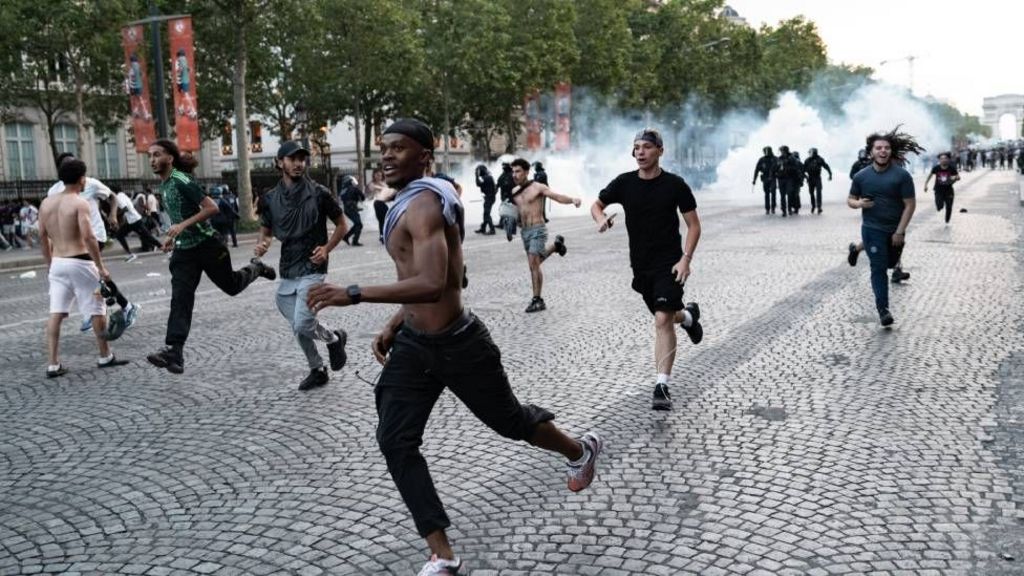
    What was meant to be a night of national celebration for Paris Saint-Germain’s historic UEFA Champions League final win over Arsenal quickly descended into chaos across France Saturday, leaving one young fan dead, dozens injured, and hundreds in police custody after widespread violent unrest. French interior officials confirmed Sunday that the total number of arrests nationwide reached 780, a 32% jump from the number of detentions recorded during PSG’s 2023 Champions League victory celebrations, when rioting also broke out. Anticipating potential unrest after last year’s disorder, French authorities deployed 22,000 law enforcement officers across the country ahead of Saturday night’s final, held in Budapest, Hungary. Even with the large security presence, unrest flared in 71 different municipalities, with small groups of rioters engaging in theft, looting and violent clashes with police. Interior Minister Laurent Nunez told reporters Sunday that rioters specifically targeted law enforcement with commercial fireworks, leaving 57 officers injured. In total, 219 people across the country were hurt during the unrest, eight of them with life-threatening injuries. One of the most tragic incidents unfolded on a Paris ring road exit ramp, where a young man in his 20s riding a motocross bike crashed head-on into concrete security barriers and was killed. Separately, authorities confirmed another young person was seriously wounded in a knife-linked robbery that broke out amid the chaotic street crowds in Paris. The most severe disorder unfolded on Paris’ iconic Champs-Élysées, where 20,000 fans converged to celebrate immediately after the final whistle. The city hall for Paris’ 8th arrondissement, the district that hosts the famous avenue, released a scathing statement Sunday describing the area as having transformed from a celebration space into an urban guerrilla warfare zone overnight. The district mayor called for a strict policy of zero gatherings on the Champs-Élysées for future victory events, arguing it is the only way to prevent repeat violence after repeated disorder following major PSG wins. That call was rejected by Interior Minister Nunez, who argued a full ban of gatherings on the avenue would require reallocating nearly half of the planned security resources for Sunday’s scheduled victory events. Sunday’s official celebration is scheduled to bring an estimated 100,000 fans to the Champs-de-Mars, the public greenspace at the foot of the Eiffel Tower, for an open-air parade featuring the PSG playing squad. After the public event, the team is scheduled to meet with President Emmanuel Macron at the Elysee Palace. To prepare for the official event, authorities have deployed an additional 6,000 police officers and gendarmes. Nunez has promised a robust, zero-tolerance law enforcement response to any new unrest, and warned that anyone found blocking traffic or intruding on the Paris ring road will face immediate fines.

  • Nigerian retired general abducted with his wife in the north-west

    Nigerian retired general abducted with his wife in the north-west

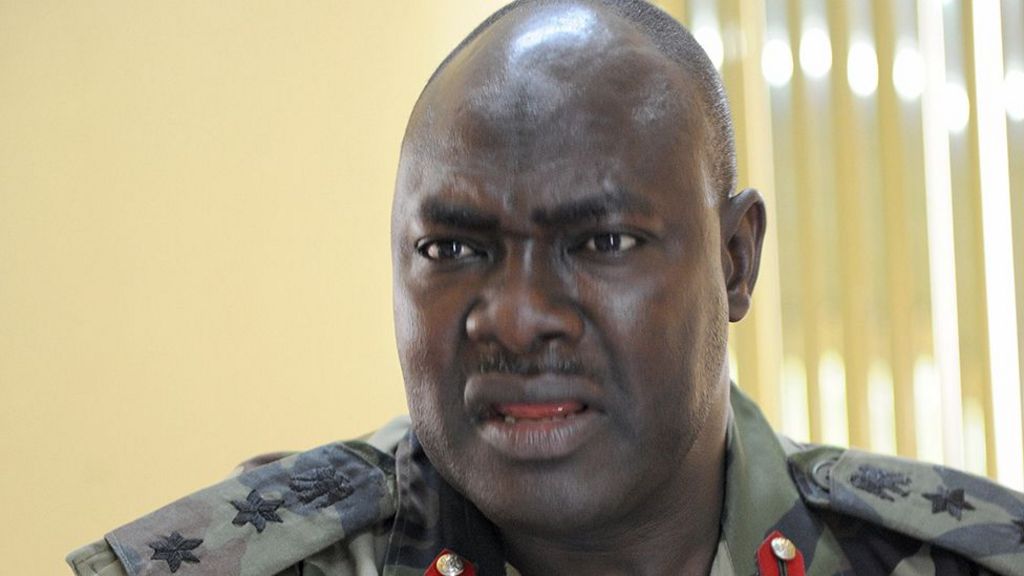
    Nigeria’s military has officially confirmed that a retired senior army commander and his spouse have been taken hostage by armed assailants in the country’s restive northwest region.

    Retired Major General Rabe Abubakar, who served as the Nigerian Army’s high-profile public spokesperson between 2015 and 2017, was pulled from his vehicle during an abduction that took place Saturday while he was traveling through Katsina State. Local media reports indicate the former senior officer was en route to a wedding celebration in the state capital when gunmen intercepted his car. His driver was struck by gunfire during the attack but managed to escape, while Abubakar and his wife were forcibly taken into a nearby heavily forested area, where criminal groups often hide after carrying out raids.

    Current Nigerian Army spokesperson Major General Michael Onoja told the BBC that active search and rescue operations are currently ongoing to free the kidnapped couple and apprehend their captors. As of Sunday, no armed faction has claimed responsibility for the abduction, and military officials stated they are waiting for the perpetrators to reach out to Abubakar’s family, a common step in kidnappings for ransom in the region.

    This latest high-profile kidnapping underscores the persistent, intractable security crisis that has plagued northwestern Nigeria for years. In this region, loosely organized criminal gangs locally referred to as “bandits” regularly carry out mass abductions for large ransom payments, steal cattle from rural herders, and launch coordinated attacks on isolated farming communities. The security challenge is compounded by the presence of small factions of militant jihadists that have also established operating bases in the area; last December 25, the United States carried out an airstrike targeting an alleged militant training camp in neighboring Sokoto State.

    Katsina has consistently ranked among the Nigerian states hardest hit by this wave of violence. Just one day before Abubakar’s abduction, the state suffered another deadly mass attack: armed men raided Kiliya village, located in Dutsinma Local Government Area, killing no fewer than 16 residents. That attack unfolded shortly after Friday communal prayers, as local residents had gathered to mark the Eid al-Adha religious holiday. Security agencies across northern Nigeria had issued formal warnings of potential attack plots during the holiday celebrations, leading several state governments to implement restrictions on large public gatherings and boost patrols in high-risk areas. Nigerian police have not yet released any official comment on the reported village massacre.

    Neighboring Zamfara State, which shares borders with both Katsina and Sokoto, has endured years of the same pattern of brutal violence. Some local communities in Zamfara have attempted to broker informal peace agreements with armed gangs in recent years, but nearly all of these efforts have failed to deliver long-term stability to the region.

    Nigeria’s federal government has ramped up counter-insurgency and anti-crime operations in the northwest in an attempt to curb the epidemic of kidnapping. Policy measures have also been introduced to discourage families from paying ransom to kidnappers, which officials argue fuels the cycle of abductions by giving criminals incentive to carry out more attacks. Despite these interventions, however, large-scale attacks and abductions of both high-profile figures and ordinary civilians have continued unabated across the region.

  • Laos cave survivors help with plan to find last two missing men

    Laos cave survivors help with plan to find last two missing men

    More than a week after seven local villagers became trapped in a flooded cave system in central Laos’ Xaysomboun province, international rescue teams have ramped up operations to locate the final two missing men, with critical intel from survivors now guiding new search plans.

    The seven villagers entered the narrow mountain cave tunnels on May 20 to hunt for gold, but an unexpected flash flood cut off their exit route, leaving them stranded deep underground. As of Sunday, five of the seven men have been pulled out to safety: the first survivor was rescued by official teams on Friday, while four more managed to escape on their own on Saturday after water levels inside the cave dropped enough to open a temporary path.

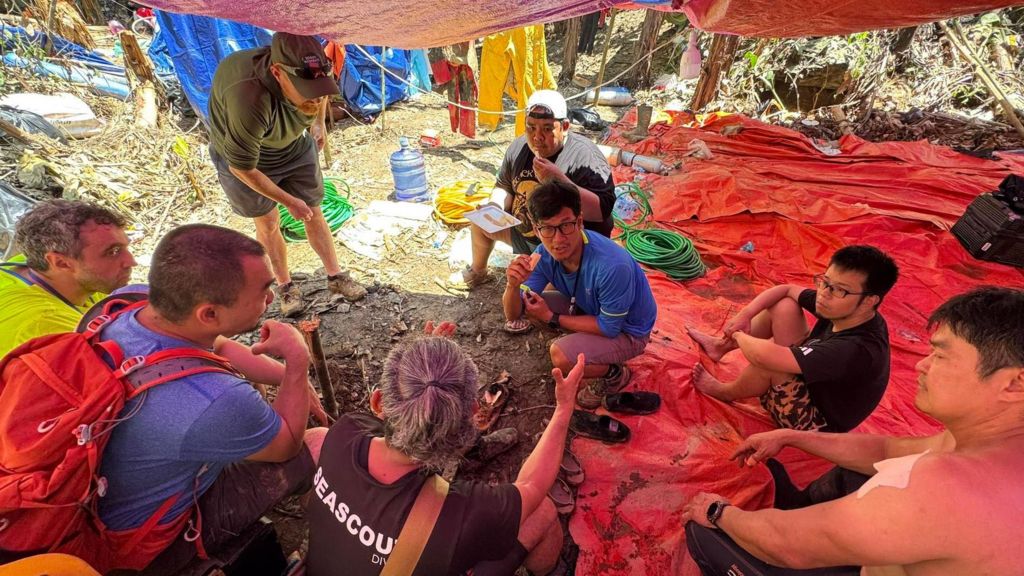
    Rescuers told AFP on Sunday that several of the recently freed survivors are already contributing to the search from their hospital beds, sharing detailed descriptions of the cave’s deeper, uncharted sections to help teams navigate the complex system. The cave extends deep under the mountain, with some passageways measuring only 50 centimeters wide, so the first-hand information from survivors is being described as “substantial” and has already been integrated into a newly revised search strategy, according to a local Laotian rescue organization. A fresh push to locate the remaining two trapped men was scheduled to launch Sunday.

    An unverified video shared on social media captured the moment the four Saturday escapees emerged from the cave mouth, drawing loud cheers from waiting rescuers and onlookers. While the exact cause of the water level drop remained unclear, Japanese rescue diver Yoshitaka Isaji told the Associated Press that teams have been working to drain flood water out of the cave system. However, the drainage pump that was in use over the weekend broke down, leaving the primary rescue passage used on Saturday currently impassable. Crews are working nonstop to repair the broken pump, after an earlier attempt to pump out flood water earlier in the week also ended in failure.

    The cross-border rescue effort has drawn specialized cave diving teams from multiple countries, including Thailand, Indonesia, France and Australia, all of whom have joined local crews to support the search for the two remaining missing villagers.

  • PSG is targeting a Champions League threepeat. So how do you make the best better?

    PSG is targeting a Champions League threepeat. So how do you make the best better?

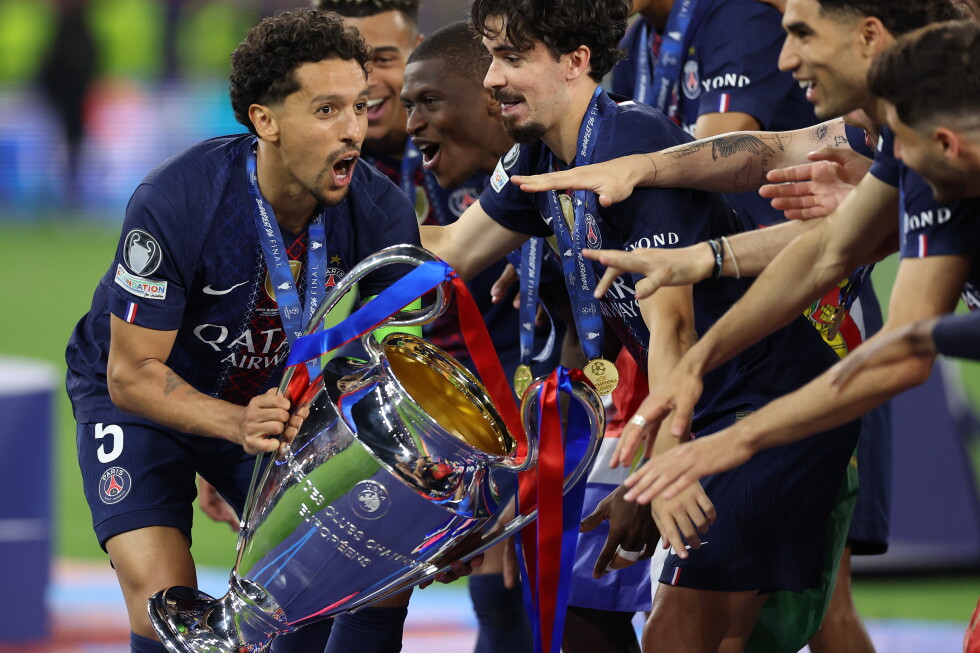
    After securing back-to-back UEFA Champions League titles with a tense 4-3 penalty shootout victory over Arsenal in the final, Paris Saint-Germain has its sights fixed on an unprecedented modern threepeat, cementing its status as the most dominant force in contemporary European club football.\n\nConstructed with the deep financial backing of Qatar Sports Investments and masterminded by Spanish perfectionist manager Luis Enrique, the current PSG iteration looks positioned to redefine long-term dominance in Europe’s most prestigious club competition, a feat only Real Madrid has achieved in the 21st century. The club’s president Nasser Al-Khelaifi confirmed plans for further transfer market activity mid-celebration on the Puskas Arena pitch, sending a clear warning to competing sides across the continent that PSG has no intention of loosening its grip on the trophy.\n\nThis current PSG squad marks a strategic evolution from the club’s earlier ‘Galactico era’, when it lured global superstars including Zlatan Ibrahimović, Neymar, Kylian Mbappé and Lionel Messi to Paris. Today, the club focuses its significant resources on identifying and signing elite young talent, building a core that blends immediate success with long-term sustainability. The starting XI that faced Arsenal boasts an average age of just 25.8 years, with 10 of those players retaining their spots from the 2023 Champions League-winning starting line-up.\n\nLuis Enrique has already demonstrated his ruthless commitment to improvement: last season, he dropped veteran starter Gianluigi Donnarumma in favor of promoting promising young back-up Matvey Safonov, a call that has paid dividends for the side. He has also publicly lamented that standout young midfielder Warren Zaire-Emery was unable to start the 2024 final, hinting at a more prominent role for the 20-year-old next season that could shake up the established central midfield trio of Fabian Ruiz, João Neves and Vitinha, the final’s Man of the Match. While the club may seek a long-term replacement for 32-year-old captain Marquinhos, even a below-peak PSG outclassed Arsenal, leaving Gunners manager Mikel Arteta full of praise for the champions’ quality.\n\nEven when Arsenal’s suffocating defense neutralized PSG’s usually lethal attacking trio of Ousmane Dembélé, Khvicha Kvaratskhelia and Désiré Doué, the French champions found a path back from an early Kai Havertz goal. Persistent high pressure forced Arsenal defender Cristhian Mosquera into a reckless box challenge, conceding a penalty that Dembélé converted to force extra time and ultimately penalties. The only clear gap in the squad, observers note, is a more reliable back-up attacking option than Goncalo Ramos, with young winger Bradley Barcola still showing inconsistency in high-stakes moments.\n\nLuis Enrique emphasized that he has no plans for a massive squad overhaul, saying: “We are going to follow the same line. We do not need a lot of players because it is very difficult to find the right players to play in our team. We already have a great squad and we need some players to change some different positions. But we are the champions of Europe the last two years.”\n\nThe Spanish manager’s tactical approach, which blends the possession-based philosophy that defined Spain’s greatest teams with aggressive, high-intensity pressing and risk-taking individual attacking flair, has created a uniquely dominant system that many argue outperforms even Pep Guardiola’s double-winning Barcelona side of the 2000s. PSG’s shift to signing young emerging talent has made it a leader in scouting elite youth prospects, even as the club still pays premium prices to secure its top targets. 20-year-old Doué is already a two-time Champions League winner, while João Neves is 21 and Nuno Mendes is 23, giving the side a young core that is hungry for more silverware. “We are really hungry. We are a young team, and we know we are really ambitious. So next season we have to go again,” Doué said.\n\nThe biggest open question surrounding PSG’s threepeat push is whether the young squad can sustain the physical demands of Luis Enrique’s high-intensity system and a crowded fixture list over multiple seasons. Last year, PSG reached every possible final on its calendar, pushing for a quadruple before running out of energy in the expanded Club World Cup final. The 2024 Champions League final marked PSG’s 56th game of the season, following a 65-game campaign the previous year, and while the French Ligue 1 is less competitive than other top European leagues, the fixture load has already taken a visible toll: Ballon d’Or winner Dembélé has not hit the same heights as last season, and Fabian Ruiz’s injury-disrupted campaign created the opening for Zaire-Emery’s breakthrough, explaining Luis Enrique’s interest in adding depth to the squad.\n\nUnlike other young dominant sides of the past — such as Ajax’s famed academy graduates or Monaco’s 2016 Mbappé-led squad — PSG faces no risk of having its core poached by wealthier suitors. Backed by Qatari ownership since 2011, the club can resist any approach from elite European giants including Real Madrid, Barcelona and Manchester City, a unique advantage that gives it the potential to match or even surpass Real Madrid’s historic three consecutive Champions League titles won between 2016 and 2018. Vitinha, who has emerged as the team’s midfield linchpin, put it plainly: “Today we can say we are the best in the world, the best in Europe and we take a lot of pleasure being here to play in this incredible group.”\n\nPerhaps the biggest priority for PSG’s leadership in the coming transfer window is not signing a new player, but retaining the manager who has already delivered more European success than any of his predecessors. Luis Enrique has now joined the elite ranks of managers including Bob Paisley, Zinedine Zidane and Pep Guardiola to win three European Cups, becoming the first manager to lead PSG to the very summit of European football. Al-Khelaifi made clear just how highly the club rates his manager: “I want to thank all the managers, ex-managers who trained Paris Saint-Germain, but he’s very, very special as a coach, as a human being, as a person. He’s fantastic. He’s the best coach in the world.” Whether PSG can achieve its historic threepeat will likely depend on keeping the Spanish manager in the Paris dugout for years to come.

  • WHO chief hails 5 Ebola recoveries as a new treatment center opens in eastern Congo

    WHO chief hails 5 Ebola recoveries as a new treatment center opens in eastern Congo

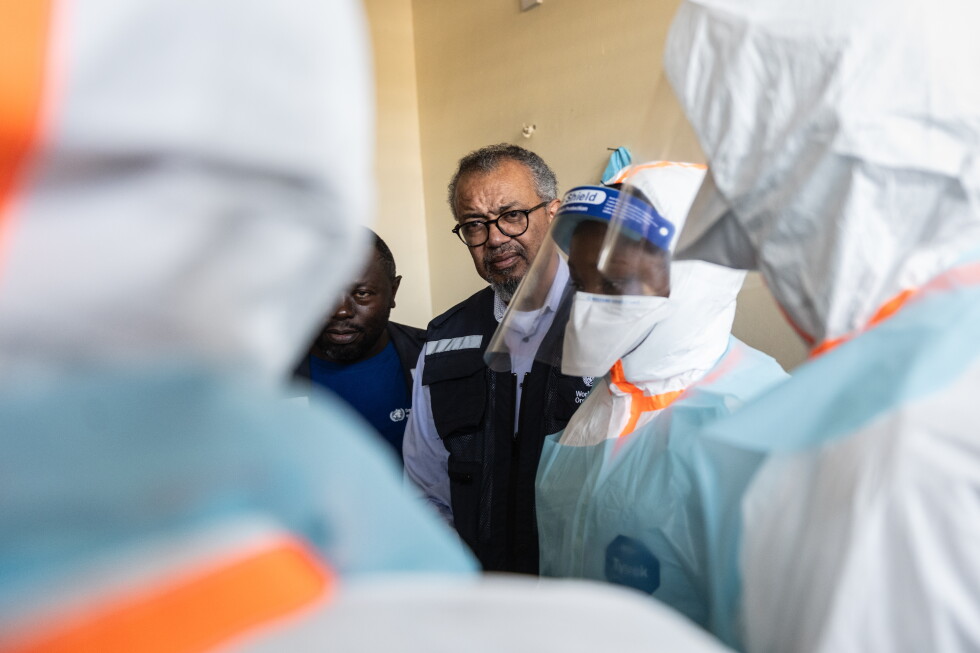
    BUNIA, Democratic Republic of Congo – On a Sunday visit to this Ituri provincial capital at the center of an ongoing rare Ebola outbreak, World Health Organization Director-General Tedros Adhanom Ghebreyesus announced a small, hopeful milestone: five patients have successfully recovered from infection with the Bundibugyo virus, a rare strain of Ebola with no approved vaccine or specific treatment.

    Tedros made the announcement during the official inauguration of a new Ebola treatment facility in Bunia, noting that four of the recovered patients would be discharged on the day of his announcement, with a fifth having been released two days prior. The first confirmed recovery of a Bundibugyo patient in this current outbreak was documented by WHO just two days earlier, a breakthrough that health officials are emphasizing to counter widespread public fear around the often-fatal virus.

    “Of course, we’re still working on developing targeted vaccines and treatments, but that doesn’t mean that people cannot recover from Ebola,” Tedros told attendees at the opening event. He stressed that early care seeking is critical to survival, urging community members to access medical support immediately after developing symptoms. “If you come to health facilities when you have symptoms, you can get the support and recover, so the key is to come forward as early as possible and to get the necessary support,” he added.

    As of the latest official counts, the outbreak has recorded 906 suspected cases and 223 suspected deaths across the Democratic Republic of Congo. The outbreak has already spilled over into neighboring Uganda, where the Ugandan Ministry of Health confirmed nine cases and one death as of last Friday.

    Despite the opening of new treatment infrastructure and the arrival of additional international aid, the virus is still spreading faster than public health responders can contain it, medical aid organization Doctors Without Borders (MSF) warned in a statement Saturday. The group called for urgent expansion of diagnostic testing, faster deployment of trained outbreak response personnel, and guaranteed consistent access for medical supply shipments into affected regions.

    Response efforts face two major layers of security and community barriers. First, long-running local conflict over access to health measures: local residents have expressed intense anger over mandatory Ebola body management protocols, which conflict with traditional local burial customs. This public frustration has boiled over into at least three separate attacks on local health centers, putting response teams at severe risk. Second, widespread armed conflict across eastern Congo has further disrupted operations. In Ituri, the Islamic State-aligned Allied Democratic Forces rebel group carries out regular attacks, while to the south in the North Kivu and South Kivu provinces – where the outbreak has also been detected – the Rwanda-backed M23 rebel militia controls major urban centers including Goma and Bukavu. Two cases have already been recorded in areas under M23 control.

    To overcome these barriers, Tedros emphasized that sustained community engagement is non-negotiable for a successful response. “We can stop this Ebola and anyone who has it can also recover. But the rule … is this thing is everybody’s business and every citizen should be involved,” he said.

    Local health leaders echoed the call for collective action while leaning into the recent recovery news to reinforce public hope. “The final message we would like to share with the Ituri community is that there is hope,” said Pierre Akilimali, Incident Manager at Congo’s National Institute of Public Health, during the treatment center’s inauguration. “With the symptomatic treatment that we are currently providing, we are seeing patients recover.”

    Davin Ambitapio, a senior doctor at the new Bunia facility, added that the outbreak is far from insurmountable with coordinated support. “We truly have hope. The virus here is not as complicated as those we have dealt with in the past, and with the support of all our partners, we believe we will be able to bring this outbreak under control as quickly as possible,” he said.

    Reporting for this story was contributed by Banchereau from Dakar, Senegal.

  • Hundreds arrested and dozens of police injured after Champions League riots in France

    Hundreds arrested and dozens of police injured after Champions League riots in France

    Paris Saint-Germain’s historic penalty shootout win over Arsenal in the 2026 Champions League final was overshadowed by widespread violent unrest across France overnight Saturday, leaving one person dead, 219 fans and civilians injured, and 57 police officers hurt in chaotic clashes that forced authorities to deploy thousands of additional security personnel for Sunday’s planned victory parade.

    French Interior Minister Laurent Nuñez confirmed that eight of the 219 injured people remain in serious condition following the violence, which erupted within minutes of the final whistle as thousands of fans flooded central Paris’ iconic Champs-Élysées boulevard. Authorities reported that 780 people have been taken into custody in connection with the unrest, with more than 450 still held in detention as of Sunday morning.

    Tragedy struck on Paris’ peripheral ring road, where a person was killed during an incident after rioters attempted to block the route. Video footage from the capital captured widespread disorder: fans lit flares and fireworks in city streets, set electric bicycles ablaze, and smashed the glass storefront of at least one retail shop. As crowds became unruly, police were forced to deploy tear gas to disperse violent groups, while public transit services including buses, regional trains, and rail lines were severely disrupted across the capital.

    The violent turn of post-match celebrations echoed identical unrest that followed PSG’s Champions League victory in 2025, which also resulted in fatalities. For this year’s match, French authorities had already pre-deployed thousands of officers to prevent a repeat of last year’s chaos, but violence still broke out across the city. In response to the overnight unrest, an additional 6,000 police officers have been mobilized to secure Sunday’s scheduled victory parade, which will pass through the Champ de Mars at the foot of the Eiffel Tower before a formal reception hosted by French President Emmanuel Macron for the team.

    In a public address on Sunday, Nuñez emphasized that security forces would maintain a hardline stance against rioters. “We are a great country that upholds public order. We allow freedom of assembly, but we do not tolerate excessive violence and disorder,” he said. The minister drew a clear distinction between peaceful celebrating fans and agitators: “The vast majority of people who came out to cheer on their team did so peacefully, and their celebrations went without incident. But there are other individuals — not PSG supporters, many of whom did not even watch the match — who come only to cause trouble and disrupt public order. We are here to stop them, and our response is very firm.”

    The unrest drew swift political criticism from opposition figures, including far-right leader Marine Le Pen, who took to social platform X to denounce the violence. “Only in France does a football club’s victory spark riots,” Le Pen wrote. “Only in France does everyone feel compelled to lock themselves in their homes on the evening of a victory to avoid being confronted with violence.”

    As of Sunday morning, the city remains on high alert ahead of the official victory procession, with authorities urging fans to remain peaceful and respect public order rules during the celebration.

  • Scotland’s former leader rejects blame for estranged husband’s embezzlement of party funds

    Scotland’s former leader rejects blame for estranged husband’s embezzlement of party funds

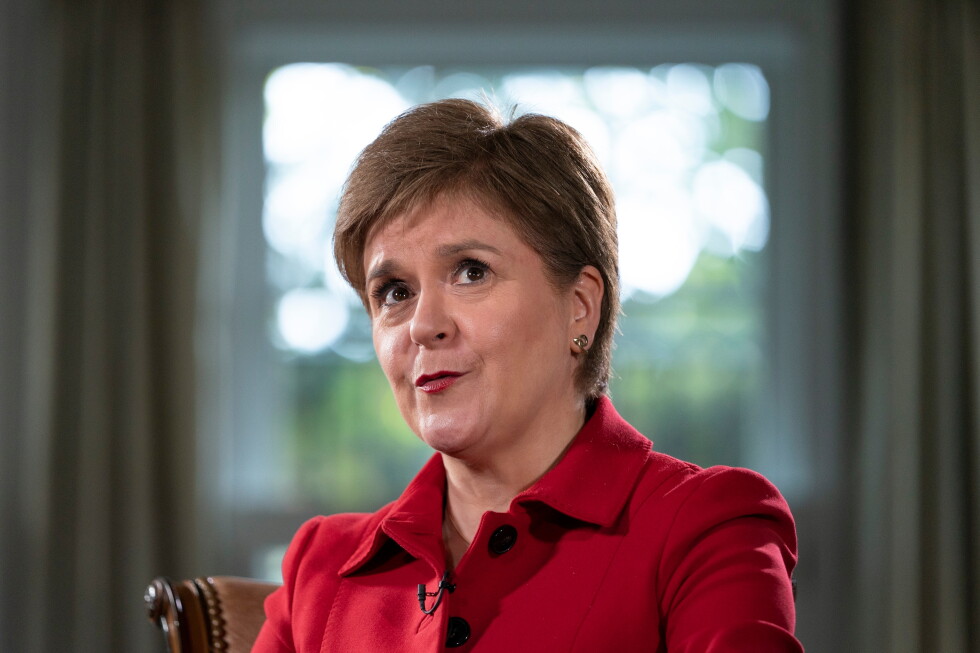
    LONDON – In a fiery public address amid growing political pressure, Scotland’s former First Minister Nicola Sturgeon has firmly rejected any responsibility for the embezzlement of hundreds of thousands of Scottish National Party (SNP) funds by her estranged husband Peter Murrell, insisting she will not apologize for crimes she says she had no part in. Murrell, who served as the SNP’s long-serving chief executive, entered a guilty plea last week to charges of stealing more than £400,000 (equivalent to roughly $540,000) from the pro-independence party during his tenure. Prosecutors confirmed the stolen funds were used to fund a luxury personal lifestyle far beyond Murrell’s official compensation. Speaking in an interview with the BBC on Sunday, Sturgeon said she felt deeply betrayed by Murrell’s actions, and again denied any prior knowledge of the ongoing financial fraud that has rocked the nearly 20-year ruling party of Scotland’s devolved government. “I am not responsible for the crimes that my former husband committed,” Sturgeon stated emphatically. “I’m not going to apologize for somebody else’s crimes.” Sturgeon’s interview was a direct response to widespread public and political skepticism that she remained unaware of Murrell’s illicit activities, with critics across the UK political spectrum challenging her long-held claims of ignorance. This high-profile embezzlement case has amplified long-simmering public concerns about political accountability across the United Kingdom, coming on the heels of a string of parliamentary and party scandals that have steadily eroded public trust in governmental institutions at every level. Beyond questions of knowledge, critics have repeatedly challenged Sturgeon’s decision to retain Murrell as SNP chief executive after she took over the party leadership in 2014. In a rare concession, Sturgeon acknowledged that the choice to keep him in the senior role was an error, saying “Of course, with hindsight, I wish that I could go back and take a different decision.” Murrell’s guilty plea brings the first major legal conclusion to a five-year police probe into the SNP’s internal finances. The party, which has led Scotland’s semi-autonomous devolved government for nearly two decades, has centered its political agenda on campaigning for full Scottish independence from the United Kingdom. The SNP was already roiled by internal crisis in 2023, as public reports of unaccounted finances and plummeting party membership numbers split the party’s leadership. Sturgeon, who led Scotland’s devolved government for eight years, announced an abrupt resignation as First Minister in February 2023, a move that left political observers confused. At the time, she said her decision to step down came from a personal conviction that it was the “right time to go,” with no outward signs of the impending scandal that would soon emerge. Just one month after Sturgeon’s resignation, Murrell stepped down from his 20-year post as SNP chief executive, taking blame for intentionally misleading journalists about the severity of the party’s membership decline. Police took Murrell into custody at the couple’s shared Glasgow residence in April 2023. Sturgeon herself was arrested in connection with the investigation in June 2023, but police later cleared her of any wrongdoing related to the embezzlement scheme.