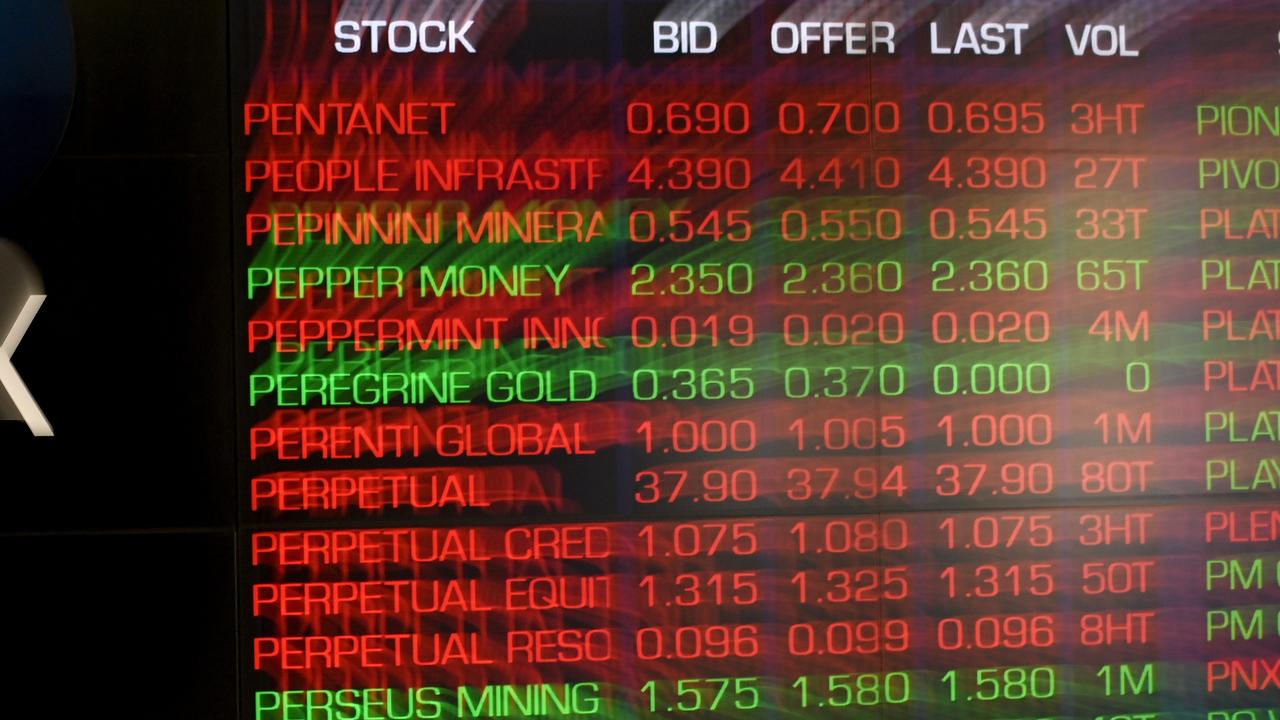
Australia’s financial markets experienced a severe downturn, shedding over $100 billion in value during the past week as escalating Middle East tensions sparked fears of global economic stagnation. The benchmark ASX 200 index closed Friday’s session down 1.0 percent, equivalent to 89.30 points, while the broader All Ordinaries index declined 0.87 percent to 9,085.10 points.
The market weakness reversed February’s robust 3.7 percent rally, dragging quarterly performance into negative territory with a 4.1 percent decline. The sell-off was predominantly driven by concerns that prolonged conflict in the Middle East could trigger stagflation—a dangerous combination of stagnant economic growth and rising inflation.
Commodity markets witnessed dramatic movements, with Brent crude oil recording its most significant weekly surge since 2022, climbing 16 percent to approximately $120 AUD per barrel. This surge followed supply disruptions stemming from Middle Eastern hostilities, though prices moderated slightly after statements from U.S. officials regarding potential supply stabilization measures.
Sector performance revealed stark contrasts: technology stocks emerged as the sole bright spot, rallying 4.57 percent overall. Wisetech Global led the surge with a remarkable 10.83 percent gain, while Xero and Technology One advanced 4.46 percent and 3.92 percent respectively. Conversely, materials and mining sectors faced substantial pressure as BHP declined 4.24 percent, Rio Tinto fell 3.59 percent, and Fortescue dropped 0.72 percent amid weakening commodity prices.
Financial institutions mirrored the bearish sentiment, with all four major banks closing lower. The Commonwealth Bank dipped 0.11 percent, NAB declined 1.08 percent, Westpac dropped 0.89 percent, and ANZ decreased 0.34 percent.
AMP economist My Bui highlighted the dual threat posed by elevated oil prices: “Higher commodity prices raise household energy costs and manufacturing input costs while reducing discretionary consumption. Simultaneously, increased geopolitical uncertainty causes households and businesses to delay major purchases and investment plans.”
Despite the volatility, Morningstar market strategist Lochlan Halloway characterized market reactions as “rational” given the unprecedented nature of the geopolitical situation, noting that “markets are pricing a broad spectrum of risk, ranging from a brief disruption to, in the extreme case, an oil shock with no modern precedent.”
Individual company movements included Magellan Financial’s 9.27 percent surge following news of billionaire Frank Lowy’s family acquiring a 5.1 percent stake, while Deep Yellow plummeted 11.79 percent due to significant half-year losses. Defence contractor DroneShield gained 10 percent amid heightened demand for counter-drone technology in conflict zones.