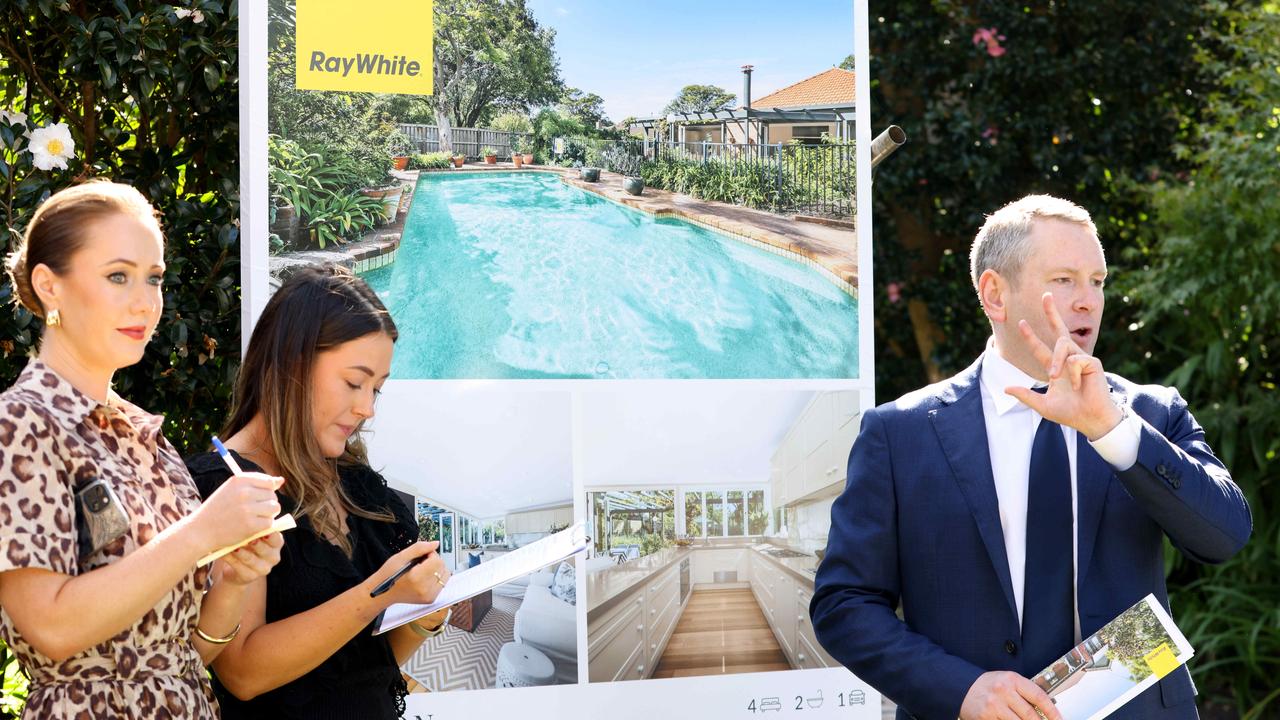
Australia’s blistering property market is exhibiting definitive signs of deceleration in response to consecutive interest rate hikes by the Reserve Bank of Australia (RBA). However, this cooling trend delivers a paradoxical outcome for aspiring homeowners, failing to translate into improved affordability or accessibility for those attempting to enter the market.
The official cash rate now stands at a substantial 4.10 percent, its highest point since April 2025, following aggressive back-to-back increases in February and March. Financial markets are bracing for additional monetary tightening, potentially as soon as May, which would entirely erase the interest rate relief experienced throughout 2025.
Independent economist Eliza Owen provides a sobering analysis, indicating that while price declines are materializing, they are concentrated in the premium segment of the market. ‘Typically, the higher end demonstrates greater sensitivity to interest rate fluctuations because, in dollar terms, borrowing capacity experiences a more significant reduction,’ Ms. Owen explained. She further noted that government incentives, such as the 5 percent deposit scheme, are ironically sustaining demand at the lower end, creating intensified competition among first-home buyers and counteracting the downward price pressure from rate rises.
Compounding the issue are external economic shocks, including oil price volatility stemming from geopolitical tensions involving the US, Israel, and Iran. Ms. Owen forecasts a ‘mild decline’ in the markets of Sydney and Melbourne, with other cities and regional areas continuing to see price growth, albeit at a reduced pace. A critical factor limiting a major correction is supply constraint; as market conditions deteriorate, potential sellers and developers withdraw, opting to hold properties and shelve new projects rather than sell into a weakening market.
Supporting this view, recent data from Proptrack reveals a landmark milestone: the combined capital city median house price surpassed $1 million for the first time in February. Hobart led monthly growth with a 1.0 percent increase, followed by Brisbane and Adelaide at 0.7 percent each. Brisbane’s annual surge of $153,500 brought its median to $1,046,000, while Adelaide’s rose $118,600 to $929,000. Regional markets have notably outperformed capitals, climbing 0.6 percent in February and 10.5 percent year-on-year.
Despite these daunting figures, not all hope is lost for new entrants. Metricon CEO Brad Duggan emphasized that housing remains a long-term decision, and delaying a purchase could be counterproductive if supply constraints persist. Data from his firm indicates that 40 percent of current customers are first-home buyers who are adapting their strategies—often compromising on location or design—rather than abandoning their ownership ambitions entirely, demonstrating resilience in the face of stretched affordability.