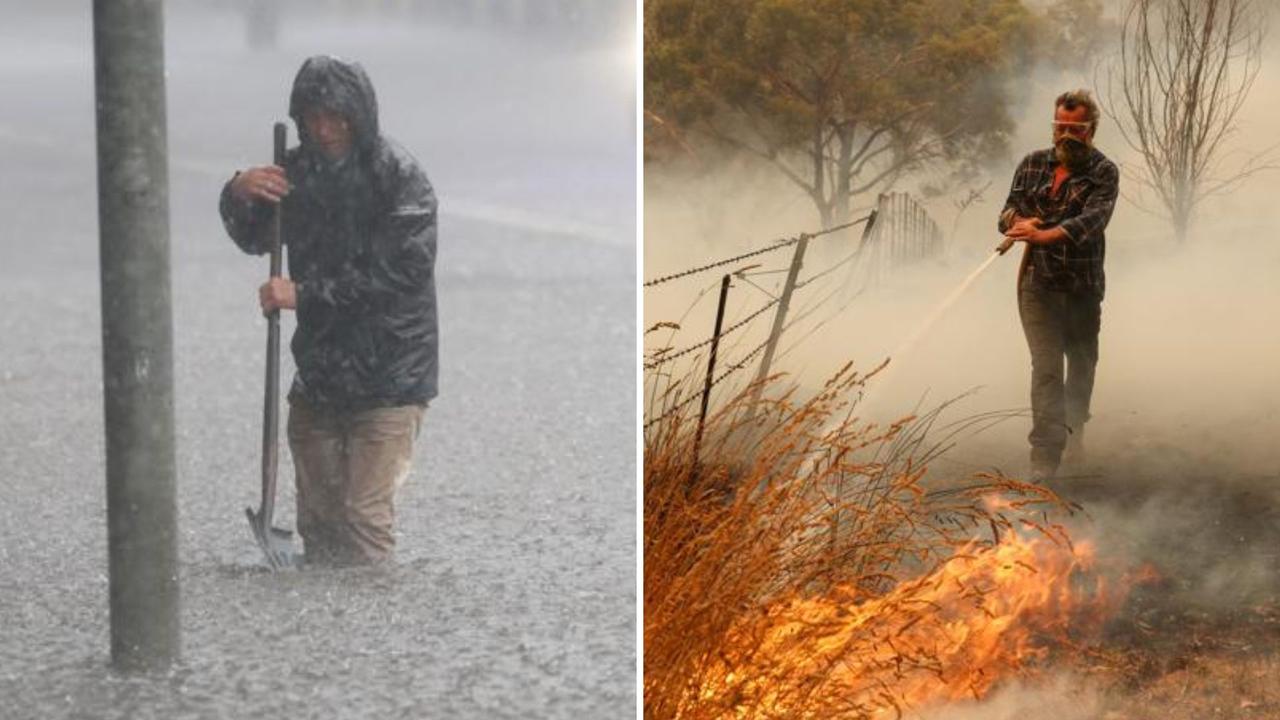
A new analysis from the Climate Council reveals Australia has endured a summer of severe climate ‘whiplash,’ where identical geographical areas suffered through catastrophic bushfires only to be deluged by record-breaking floods mere weeks later. This rapid oscillation between opposing weather extremes is emerging as a dangerous hallmark of the nation’s altered climate patterns.
Dr. Andrew Watkins, a meteorologist with the Council, emphasized that climate change is now the dominant force steering Australia’s temperatures. He pointed to the paradoxical fact that 2025, a year bookended by a cooling La Niña weather pattern, still ranked as Australia’s fourth-hottest year on record and the globe’s third-hottest. ‘That tells us the baseline has shifted,’ Dr. Watkins stated.
This elevated thermal baseline accelerates evaporation, supercharging the atmosphere with moisture. The result is a devastating cycle: extreme heat desiccates the landscape, priming it for intense fires, which is then followed by storms capable of unleashing unprecedented rainfall. This precise sequence was observed in western Queensland, where some towns received their entire annual average rainfall within the first five weeks of 2026. Subsequently, a tropical low in February triggered flood watches across nearly half the continent, isolating inland communities that had been sweltering under 45°C heat just a month prior.
The report, released Tuesday, quantifies the escalating financial toll, noting insurance companies paid out an average of $4.5 billion annually from 2019 to 2024—more than double the yearly average for the preceding three decades.
Specific instances of whiplash were stark. In Victoria, January’s fire storms ignited over 200 bushfires, with towns like Walpeup and Hopetoun setting a new statewide record of 48.9°C. Astonishingly, residents along the Wye River who evacuated under catastrophic fire warnings were, a week later, witnessing floodwaters washing cars out to sea. New South Wales witnessed its own records, with Tibooburra receiving 273mm of rain in February—ten times its monthly average—after enduring a record six consecutive days of 45°C heat in January.
NSW Fire Commissioner Greg Mullins, who also serves on the Climate Council, warned that the frequency of extreme disasters is accelerating. ‘We used to think of catastrophic fire conditions as once-in-a-generation events. Now they’re arriving every decade,’ he said. This new reality is stretching emergency services to their limits, as evidenced by Victorian firefighters combating 200 fires in a single day—a event that ultimately resulted in the loss of 451 homes. Commissioner Mullins directly linked the ballooning insurance costs and community devastation to fossil fuel pollution, urging governments to accelerate the transition to clean energy to curb these accelerating extremes.