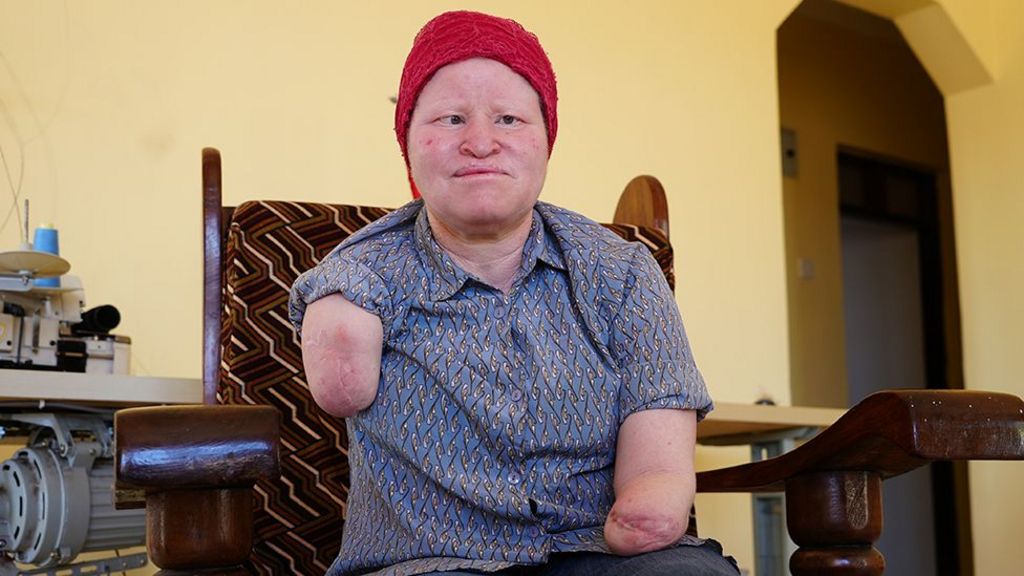
For 42-year-old Mariam Staford, election season in Tanzania is not a time of hope but of terror. While many Tanzanians engage in the festive rallies and campaign songs, Mariam and others with albinism face a grim reality: heightened risks of violence driven by deeply rooted superstitions. Albinism, a rare genetic condition affecting approximately 30,000 Tanzanians, reduces melanin production, resulting in lighter skin, hair, and eye color. Tragically, this condition has made them targets of brutal attacks fueled by the false belief that their body parts bring wealth, luck, or political success. Mariam’s story is a harrowing testament to this violence. In 2008, during a local election period, armed men attacked her in her home, severing both her arms. She survived, but her unborn child did not. The trauma of that night still haunts her. ‘Even now, I sometimes dream of that night,’ she says. ‘When I wake up, I touch my arms and remember they are not there.’ Mariam’s experience is not isolated. Since 2008, there have been 211 documented attacks on people with albinism in Tanzania, including 79 killings and 100 mutilations. These attacks often spike during election seasons, as political aspirants seek supernatural advantages. Despite government efforts to curb the violence, including awareness campaigns and stricter laws, the problem persists. In June this year, another attack was reported in Simuyu, though the victim escaped unharmed. President Samia Suluhu Hassan has condemned these ‘harmful traditional beliefs,’ but rural areas remain vulnerable. Activists and survivors like Mariam argue that more needs to be done to protect the albinism community. While progress has been made in some areas, the murder of two-year-old Asimwe Novath last year serves as a grim reminder of the ongoing threat. As Tanzania prepares for its upcoming elections, Mariam and others with albinism live in fear, choosing to stay home rather than participate in the democratic process.