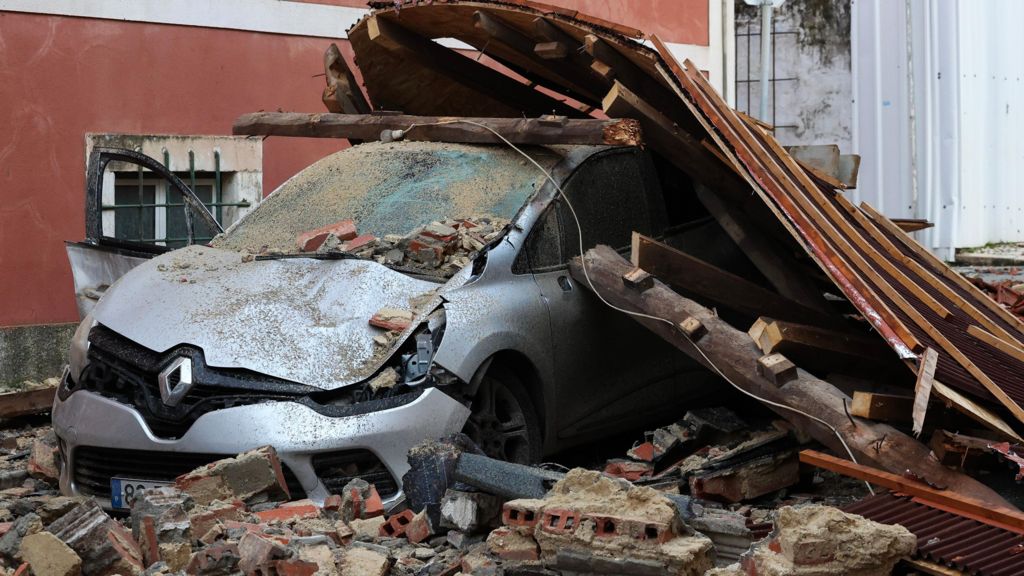
A catastrophic weather system identified as Storm Kristin has inflicted severe damage across central and northern Portugal, resulting in at least five confirmed fatalities. The Portuguese government has characterized this event as an “extreme climactic occurrence,” which precipitated extensive flooding, destructive landslides, and significant structural collapses.
Emergency response teams reported over 3,000 weather-related incidents nationwide, with wind velocities reaching unprecedented speeds of 178 km/h at the Monte Real air base in Leiria—believed to be the storm’s primary entry point to mainland Portugal. The tempest caused a university roof collapse in Figueira da Foz that damaged multiple vehicles and overturned a Ferris wheel, while falling trees and debris claimed several lives across affected regions.
Critical infrastructure suffered substantial impairment, with Portugal’s primary north-south transportation corridor blocked by debris and more than 850,000 households experiencing power outages. Maritime authorities issued red alerts for ten coastal zones anticipating waves exceeding 14 meters in height.
Prime Minister Luis Montenegro extended official condolences to victims’ families while announcing comprehensive damage assessment initiatives. Meanwhile, Leiria Mayor Goncalo Lopes appealed for national emergency designation, describing the devastation as comparable to explosive detonations within urban centers.
The storm system subsequently advanced into eastern Spain, generating comparable disruptions including school closures, transportation interruptions, and approximately 2,000 emergency incidents reported in Andalusia alone. Spanish meteorological services issued hurricane-force wind warnings with red alerts activated in southeastern Almeria province.