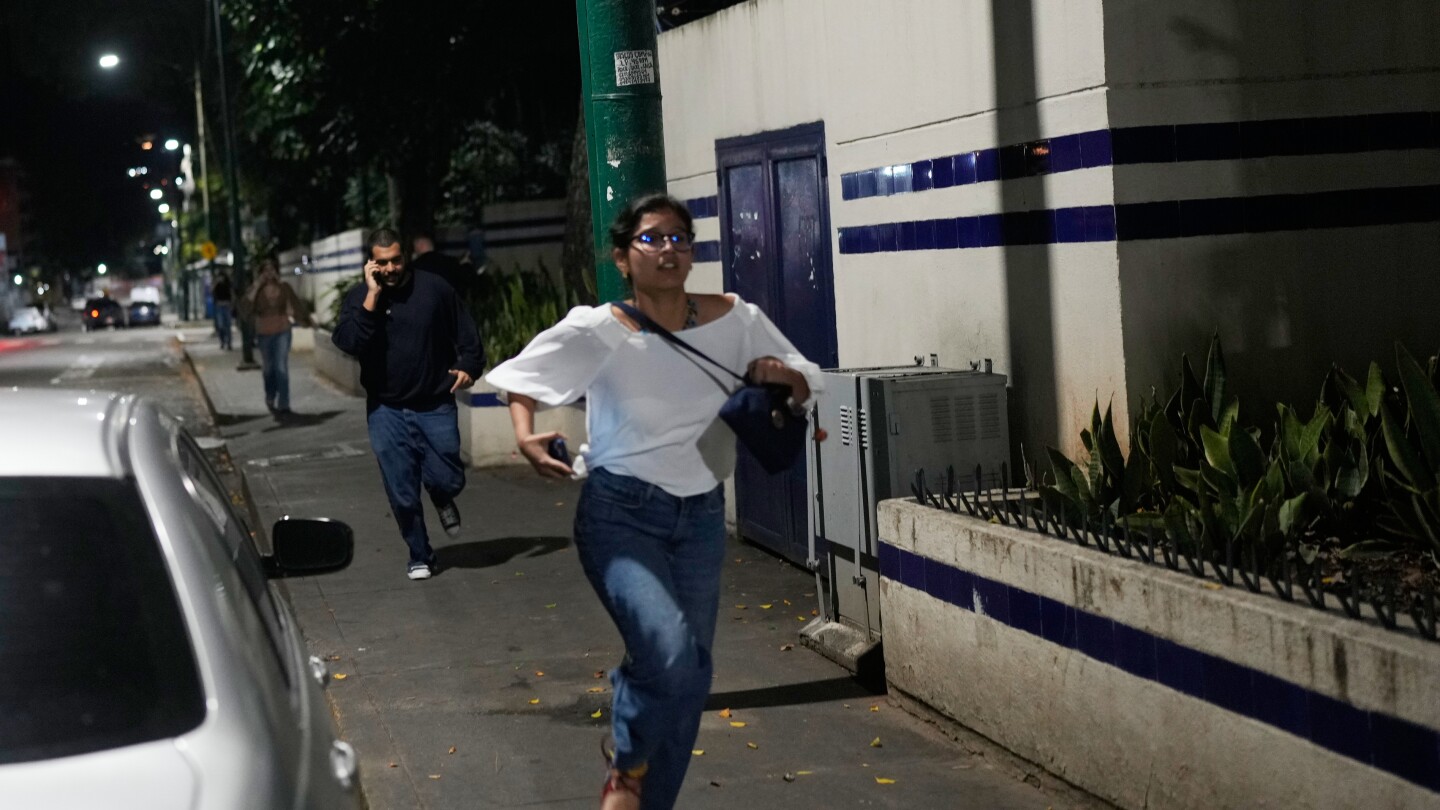
CARACAS, Venezuela — The pre-dawn hours of Saturday were shattered by a series of at least seven powerful explosions and the ominous sound of low-flying aircraft over Venezuela’s capital, sending panicked residents into the streets despite the early morning darkness. The mysterious incidents occurred approximately at 2:00 a.m. local time, with the origin and nature of the detonations remaining officially unconfirmed as multiple governments maintained silence.
The unsettling events unfolded against a backdrop of dramatically escalating tensions between Venezuela and the United States, which has been conducting an extensive military campaign targeting alleged drug-smuggling operations in the region. According to the Trump administration, American forces have executed 35 separate boat strikes since early September, resulting in at least 115 casualties.
Eyewitness accounts described a scene of chaos and terror. ‘The entire ground shook violently. This is absolutely horrifying. We heard consecutive explosions and aircraft in the distance,’ recounted Carmen Hidalgo, a 21-year-old office worker whose voice trembled as she spoke. She was returning from a birthday party with two relatives when the explosions occurred.
Remarkably, Venezuelan state television continued regular programming without interruption, airing cultural content about national music and art rather than addressing the explosions. This broadcasting decision raised questions about the government’s response to the incidents.
The geopolitical context adds layers of complexity to the situation. Just one day prior to the explosions, the Venezuelan government had expressed openness to negotiating an anti-drug trafficking agreement with the United States. However, President Nicolás Maduro simultaneously accused the U.S. of attempting to force regime change in Venezuela to gain access to the country’s substantial oil reserves through a prolonged pressure campaign that began with a massive military deployment to the Caribbean Sea in August.
The relationship between the nations has further deteriorated following a recent CIA drone strike on Venezuelan soil targeting areas believed to be used by drug cartels—the first known direct U.S. operation on Venezuelan territory. Maduro himself faces narco-terrorism charges in the United States.
Adding to the economic pressure, the U.S. has implemented sanctions against four Venezuelan oil companies and seized multiple sanctioned oil tankers near Venezuela’s coast, alongside establishing a naval blockade that effectively constricts the country’s economy.
The American military presence in the region represents the largest in generations, highlighted by the November deployment of the nation’s most advanced aircraft carrier with thousands of additional troops. President Trump has characterized the boat strikes as a necessary escalation in what he describes as an ‘armed conflict’ with drug cartels responsible for funneling narcotics into the United States.
International attention came from an unexpected source as Iranian state television reported on the Caracas explosions, showcasing images of the Venezuelan capital. The coverage underscored the strategic alliance between Iran and Venezuela, bonded significantly by their shared adversarial relationship with the United States.