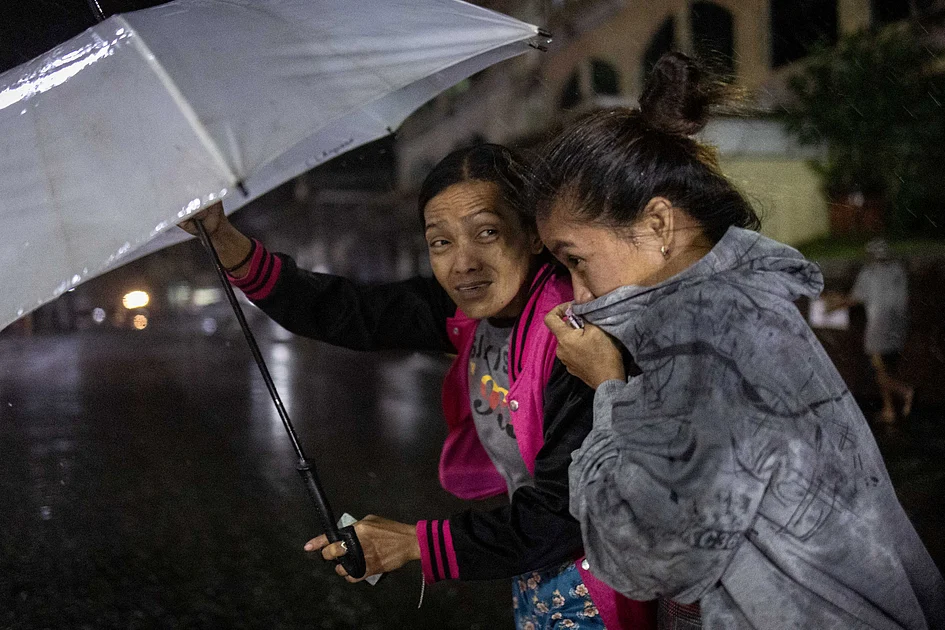
Super Typhoon Fung-wong has unleashed devastation across the Philippines, claiming at least two lives and prompting the evacuation of over a million residents from vulnerable areas. The typhoon, with sustained winds of 185 kph (115 mph) and gusts reaching 230 kph (140 mph), is expected to make landfall in Aurora province as early as Sunday night. Authorities have issued the highest storm warnings for Luzon, the country’s most populous island, while Metro Manila and surrounding provinces remain under level 3 alerts. The storm has already caused widespread power outages in the Bicol region and forced the closure of several airports, including Bicol International Airport and Sangley in Metro Manila. Tragically, one person drowned in Catanduanes, and a woman was found dead under the debris of a collapsed home in Catbalogan City. Fung-wong, locally named Uwan, is the 21st storm to hit the Philippines this year, exacerbating the strain on disaster response efforts still recovering from Typhoon Kalmaegi, which claimed 224 lives in the Philippines and five in Vietnam. The typhoon is projected to move northwest by Monday, maintaining its intensity before weakening as it approaches the Taiwan Strait on Wednesday. Defense Secretary Gilberto Teodoro has urged residents to comply with evacuation orders, emphasizing the dangers of non-compliance. The military has redirected 2,000 troops to focus on humanitarian aid and disaster response. In Isabela, northern Luzon, families have sought refuge in evacuation centers, with many expressing fear of the storm’s destructive potential. Christopher Sanchez, a 50-year-old evacuee, shared his concerns, recalling past storms that brought floodwaters above human height. Authorities remain hopeful that proactive measures will minimize casualties.