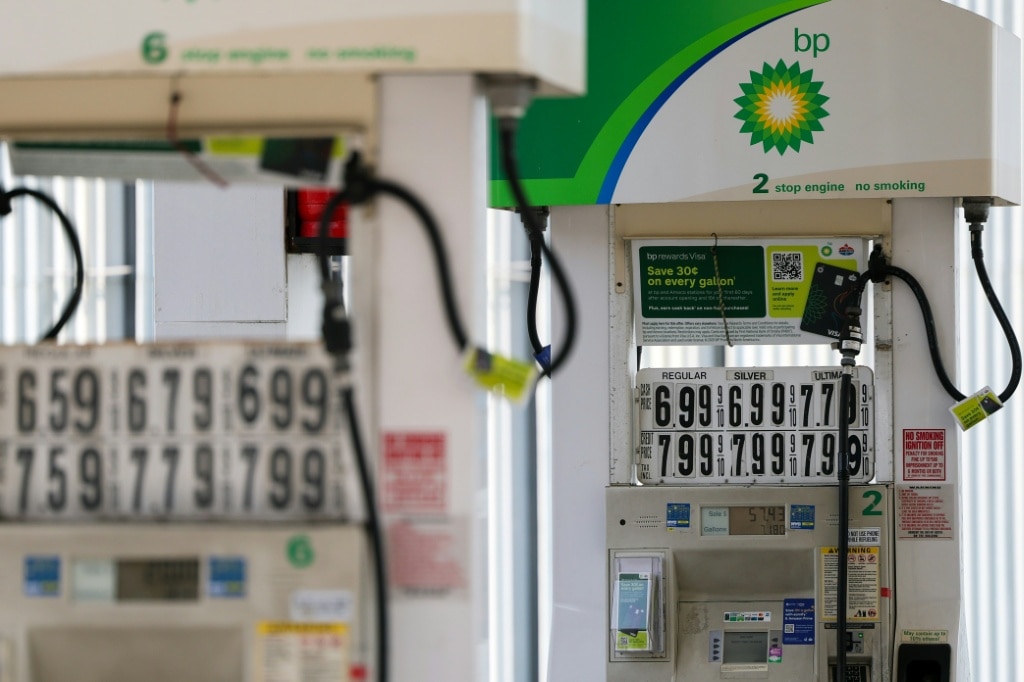
Across U.S. gas stations from the Washington suburbs to New Jersey, American drivers are grappling with the immediate, painful domestic fallout of the ongoing conflict with Iran, as skyrocketing fuel costs squeeze already strained household budgets and send ripples of uncertainty through the broader national economy.
On Tuesday, industry data from the American Automobile Association (AAA) confirmed that the national average price for a gallon of regular unleaded gasoline breached the widely watched $4.00 threshold. The figure marks a staggering 35% jump in fuel costs since the outbreak of hostilities following U.S.-Israeli strikes on Iran, leaving everyday consumers reeling from the sudden spike.
At the Liberty gas station located along a busy commercial corridor in Falls Church, Virginia — just steps from an Anglican church, a local auto repair shop, and a dental practice — prices already start at $3.79 per gallon for customers paying with cash, with premium rates adding an extra surcharge for debit and credit card users. A short distance down the same road, some stations are charging as much as $4.25 per gallon.
Eighty-three-year-old Jeanne Williams, a retired civil servant in active cancer treatment who drove 100 miles from Richmond, Virginia to visit her older sister, voiced shock at the prices displayed on the station’s LED billboard. “That is horrible,” she said, describing her reaction to the new rates. “I’m not angry. I’m just bewildered, confused, unhappy, because we didn’t ask for this war.” Though Williams calls her pension “fairly decent”, persistent U.S. inflation and rising fuel costs have forced her to draw down personal savings to cover basic expenses. “Luckily, I have no children, I don’t have a spouse, so it’s just me — and whatever I have, I share to help my sister,” she explained.
While U.S. inflation has cooled from its 9.1% pandemic-era peak, core prices have remained stubbornly elevated, and economists warn the world’s largest economy has yet to achieve sustained price stability. Years of above-trend price growth have already eroded household purchasing power across the country, and the sudden fuel surge threatens to deepen that financial pressure.
Eliza Winger, a U.S. economist at Bloomberg, noted that higher pump prices extend far beyond immediate pain at the station: they drag down overall consumer spending, creating cascading risks for economic growth. “We estimate that a 10% increase in oil prices reduces real consumer spending by approximately 0.2 percent,” Winger explained. Since the outbreak of the Iran conflict, U.S. fuel prices have risen more than three times that 10% threshold, pointing to a potentially significant hit to consumer activity in coming months. Fresh consumer confidence data released Tuesday underscored this unease, showing that U.S. inflation expectations surged in March to levels not seen in seven months.
Twenty-six-year-old Luis Ramos, a New York City resident who spoke to AFP at a New Jersey gas station, said the new price hikes come on top of already unsustainable cost of living increases. “It’s ridiculous, honestly. Seeing these gas prices skyrocket, it’s incredible. The cost of living is already skyrocketing,” he said.
For David Lee, a 39-year-old anesthesiologist who fills up his tank twice a week near Washington, every stop now costs roughly $10 more than it did just weeks ago. Though his income allows him to absorb the extra cost, he says many of his friends have already changed their behavior to cut costs. “I’ve seen a lot of my friends complaining about it that they’re not gonna drive as much as they used to,” he noted.
Seventy-seven-year-old Joseph Crouch, a Vietnam War veteran who uses a cane, is among those who have scaled back driving to manage expenses. “It’s ridiculous. The prices are so high. I don’t think government is knowing what it is doing,” he said. Echoing a sentiment shared by many consumers interviewed, he argued, “We are paying the price of the war. They are trying to say it’s something else, but it’s definitely a war.” Seventy-eight-year-old Fred Koester echoed that frustration, calling the conflict a “stupid war” that was “totally unnecessary.”
Not all perspectives aligned on public frustration, however. Kristen, a 36-year-old teacher who declined to share her last name, acknowledged that higher fuel prices cause real hardship, but argued it is “selfish” for Americans to only protest the conflict once it begins impacting their personal finances. “We should have cared long before it affects our pocket,” she said.