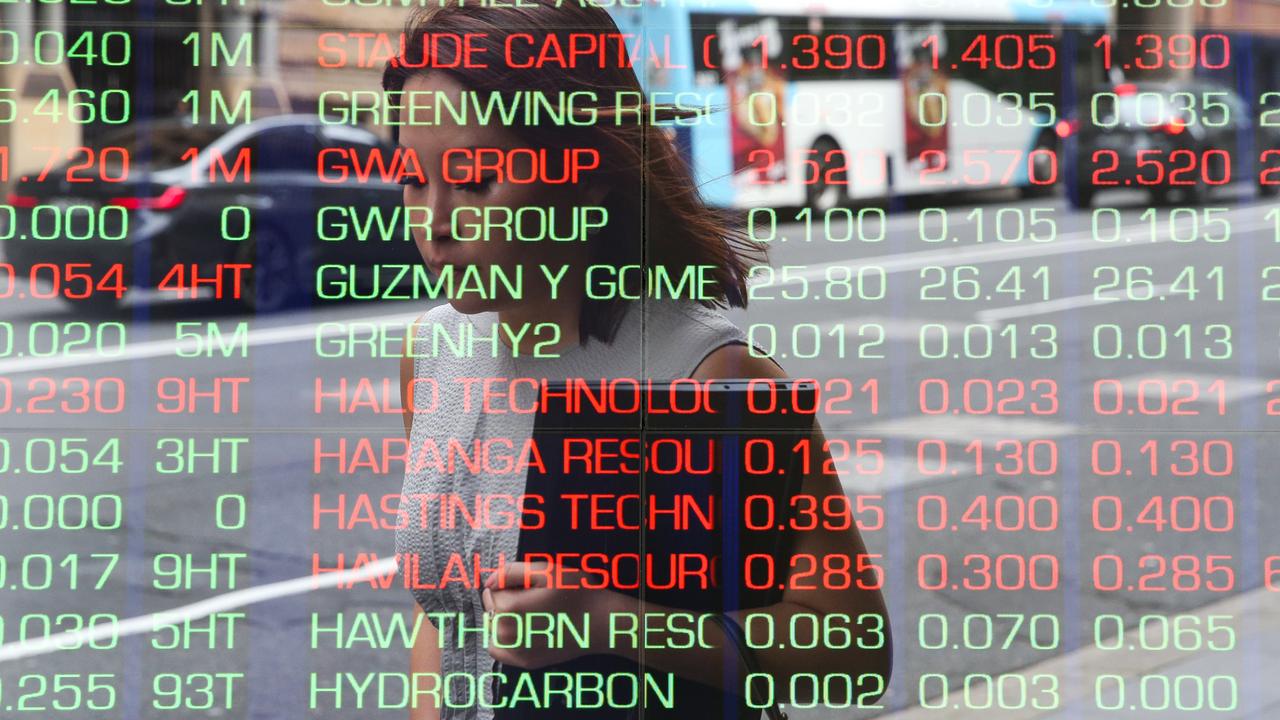
Australia’s financial markets recorded a third consecutive day of declines as escalating trade disputes between the United States and Europe continued to dampen investor sentiment. The benchmark ASX 200 index fell 0.37 percent to close at 8782.90 points, while the broader All Ordinaries index dropped 0.33 percent to settle at 9108.6.
The market downturn mirrored substantial losses on Wall Street, triggered by renewed geopolitical tensions surrounding U.S. trade policies toward Greenland. Market analysts attributed the sustained decline to growing concerns about potential disruptions to global trade frameworks and supply chains.
Amid the market volatility, gold continued its remarkable ascent, climbing 0.02 percent to reach $4,857 per ounce and positioning itself for a potential breakthrough of the $5,000 psychological barrier. The precious metal’s persistent strength reflects its status as a traditional safe-haven asset during periods of economic uncertainty.
Sector performance revealed a mixed landscape, with eight of eleven industry categories finishing in negative territory. Information technology and consumer discretionary sectors experienced the most significant declines, dropping 2.5 percent and 2.14 percent respectively. Conversely, materials sector stocks continued their strong performance with a 2.5 percent gain, while utilities and energy sectors also closed positively.
Individual stock movements highlighted the day’s volatility. Emerald Resources NL led gainers with a 13.2 percent surge to $7.96, followed closely by Paladin Energy’s 13.1 percent rise to $13.17. Westgold Resources also posted substantial gains, climbing 9.6 percent to $7.53. Conversely, Droneshield shares plummeted 8.86 percent to $4.32, marking the session’s sharpest decline.
Australia’s banking sector faced broad pressure, with all four major banks closing lower. ANZ and Commonwealth Bank both fell more than 2 percent, while NAB declined 1.62 percent and Westpac dropped 1.24 percent. Mining giant BHP bucked the trend, advancing 1.46 percent to $48.48.
The Australian dollar showed resilience amid the equity market turbulence, trading at 67.52 U.S. cents with analysts suggesting potential movement toward 69 cents if current trends persist.
Market participants now await key developments including former President Trump’s scheduled address at Davos and an emergency EU summit in Brussels, both of which could provide clarity on the direction of international trade relations.