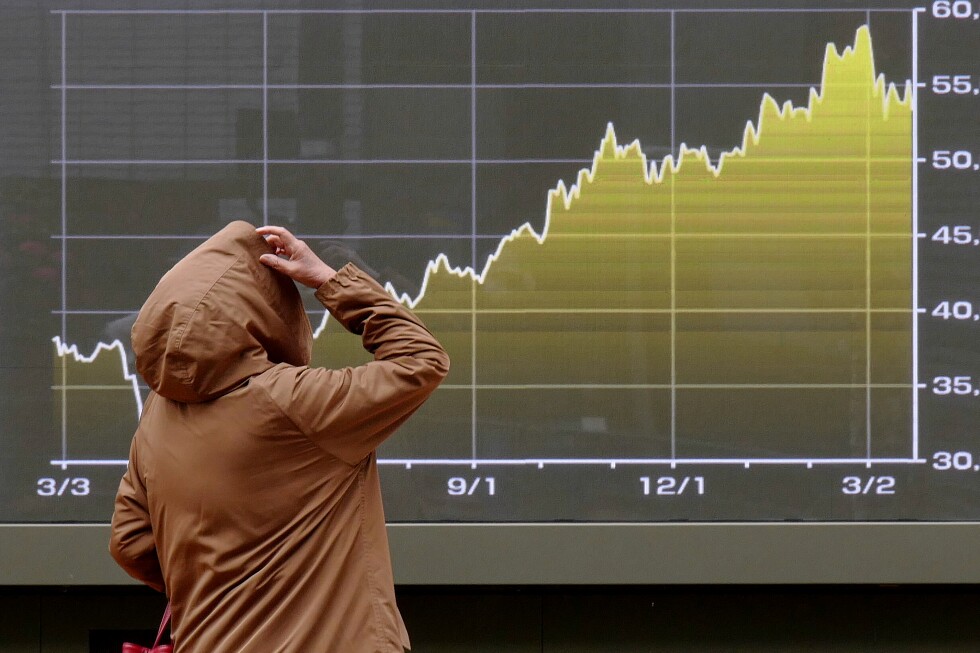
Financial markets across Asia opened the week under severe pressure as escalating geopolitical tensions triggered a broad selloff. The catalyst was President Donald Trump’s weekend ultimatum threatening to ‘obliterate’ Iranian power plants if Tehran fails to reopen the Strait of Hormuz within 48 hours. This bellicose rhetoric effectively crushed market optimism for a near-term resolution to the conflict, sending shockwaves through global exchanges.
Regional benchmarks reflected the bearish sentiment with pronounced declines. South Korea’s Kospi plummeted 5.1%, while Japan’s Nikkei 225 sank 3.3%. Hong Kong’s Hang Seng dropped 3.1%, with Taiwan’s Taiex falling 2.6% and China’s Shanghai Composite declining 2.1%. Australia’s S&P/ASX 200 showed relative resilience but still retreated 0.7%.
The confrontation entered a dangerous new phase as Iranian officials vowed retaliatory strikes against U.S. and Israeli energy and infrastructure assets in response to any American military action. According to Mizuho Bank analyst Ng Jing Wen, ‘The exchange of threats indicates an expanding conflict that sustains energy disruption concerns and market volatility with no visible de-escalation pathway.’
Beyond immediate security concerns, the crisis is reshaping monetary policy expectations. Soaring oil prices—with Brent crude recently touching $119.50 per barrel—have dramatically reduced prospects for Federal Reserve interest rate cuts this year. This represents a stark reversal from pre-war expectations of at least two reductions. Central banks in Europe, Japan, and the UK have similarly maintained steady rates amid the uncertainty.
The volatility extended to Wall Street, where the S&P 500 concluded its fourth consecutive weekly decline—its longest losing streak in twelve months. Friday’s session saw the Dow drop 443 points (1%), while the Nasdaq composite tumbled 2%. Smaller companies bore the brunt of selling pressure, with the Russell 2000 index falling a market-leading 2.3%.
Bond markets reflected the altered outlook, as the 10-year Treasury yield surged to 4.38% from its pre-conflict level of 3.97%. The two-year Treasury yield, which tracks Fed policy expectations, rose to 3.88%. Currency markets showed dollar strength against the yen and euro, underscoring the flight to safety amid heightened geopolitical risk.