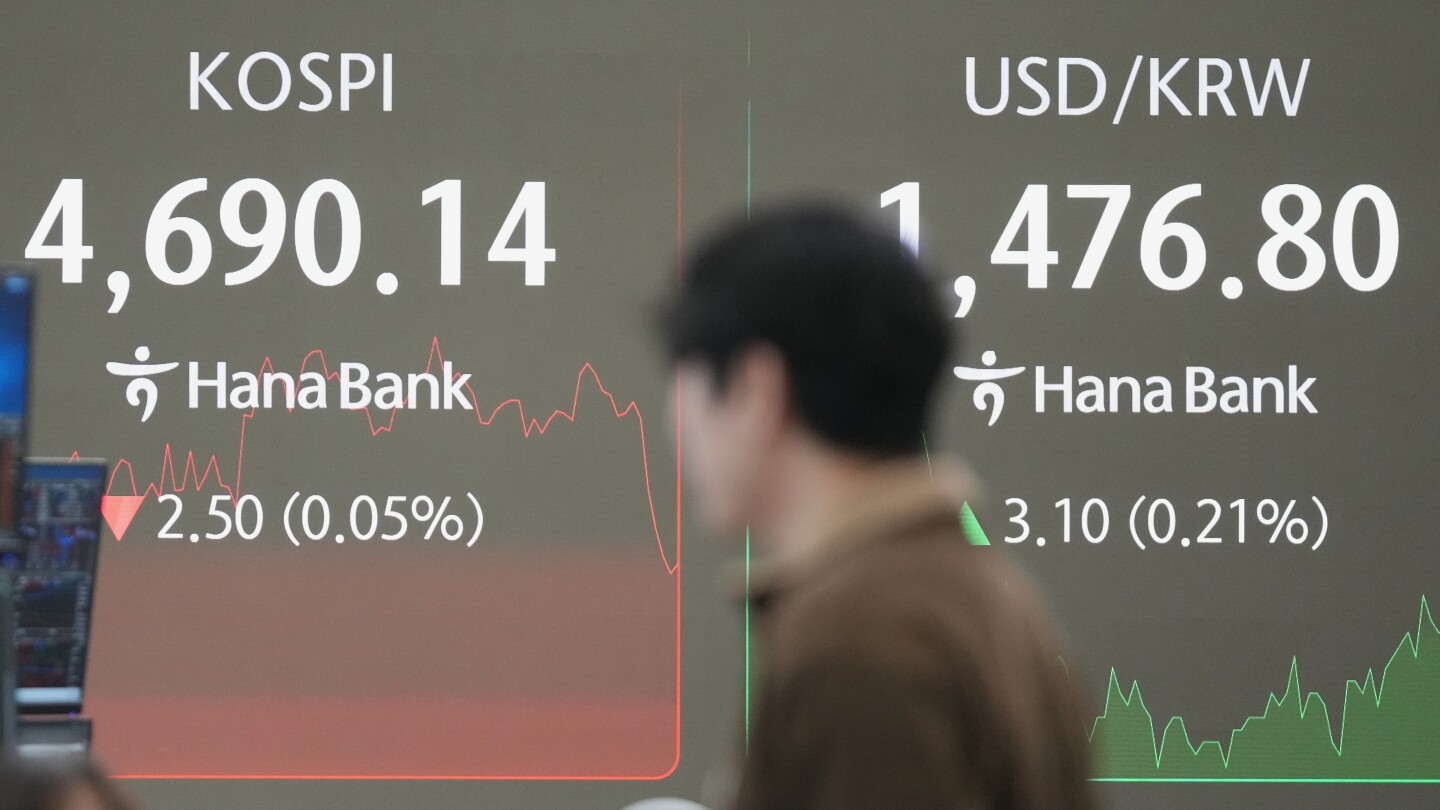
Asian financial markets exhibited divergent trends on Wednesday as regional political developments and a Wall Street pullback from record highs created a complex trading environment.
Japan’s Nikkei 225 index surged 1.6% to 54,413.92 amid speculation about potential general elections, while Australia’s S&P/ASX 200 slipped 0.1% to 8,798.80. South Korea’s Kospi declined 0.1% to 4,687.32 despite diplomatic developments that saw Japanese Prime Minister Sanae Takaichi and South Korean President Lee Jae Myung commit to enhanced economic and security cooperation during their Tuesday meeting.
Chinese markets demonstrated strength with Hong Kong’s Hang Seng gaining 0.8% to 27,055.14 and the Shanghai Composite jumping 1.2% to 4,187.14. This positive momentum occurred against a backdrop of heightened geopolitical tension, as former President Donald Trump announced new 25% tariffs on imports from countries conducting business with Iran, where activist reports indicated protest-related casualties had exceeded 2,500.
The mixed Asian performance followed a Wall Street retreat from record levels, with the S&P 500 declining 0.2% from its all-time high amid varied corporate earnings results. The Dow Jones Industrial Average experienced a substantial drop of 398 points (0.8%), while the Nasdaq composite slipped 0.1%.
Corporate earnings season presented challenges as JPMorgan Chase reported both profit and revenue below analyst expectations, causing a 4.2% stock decline. CEO Jamie Dimon maintained economic optimism, noting continued consumer spending and general business health. Delta Air Lines shares fell 2.4% despite exceeding profit expectations, due to revenue shortfalls and conservative 2026 profit forecasts.
Healthcare companies emerged as market bright spots, with Moderna soaring 17.1% after raising its 2025 revenue forecast and providing updates on several products including a potential seasonal flu vaccine awaiting regulatory approval.
Bond markets saw Treasury yields ease following inflation data that largely met economist expectations, strengthening predictions of at least two Federal Reserve interest rate cuts in 2026. The latest inflation report showed consumer prices rose 2.7% annually, slightly exceeding expectations and remaining above the Fed’s 2% target.
Energy markets showed minimal movement with benchmark U.S. crude dipping to $60.97 per barrel, while currency markets saw the U.S. dollar holding steady against the yen and euro.