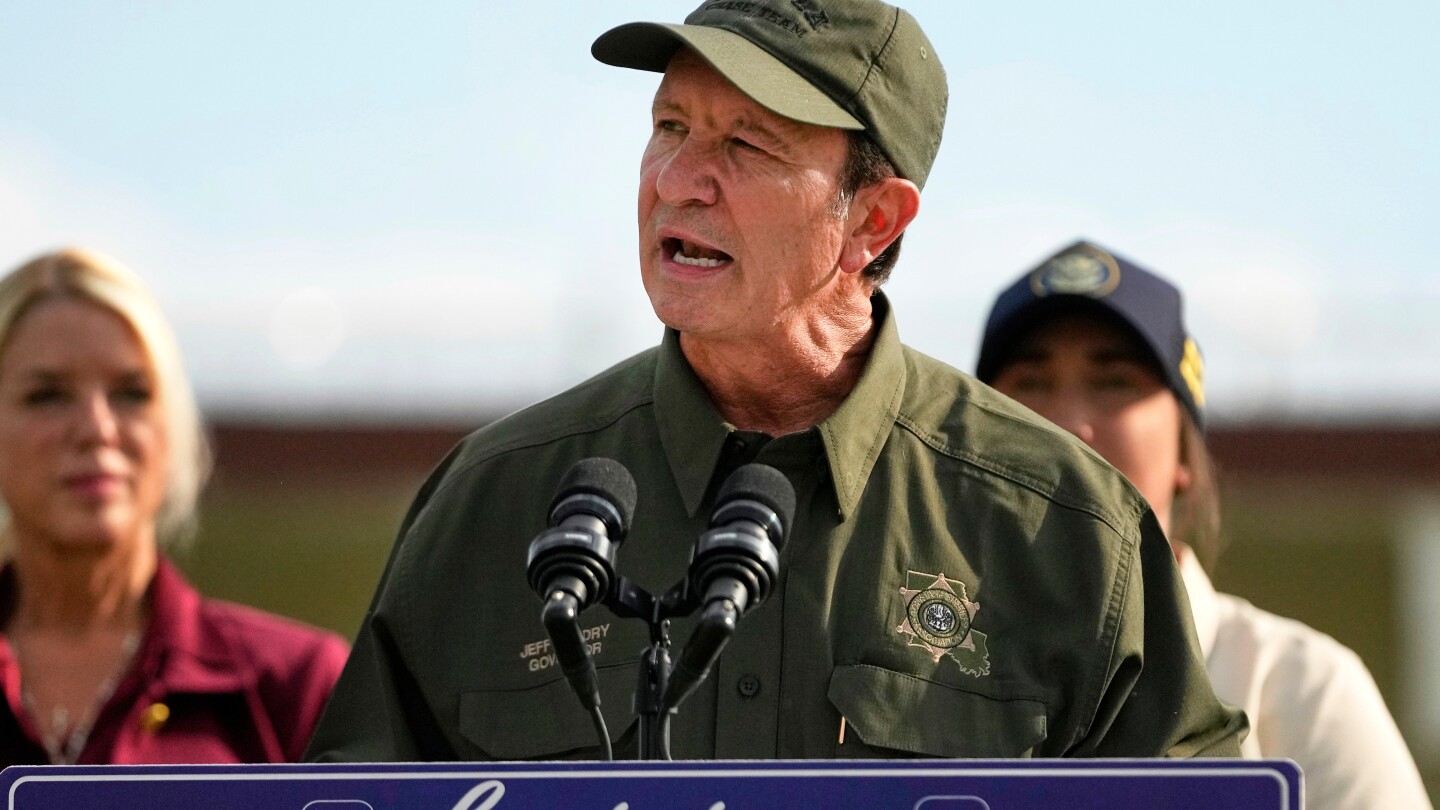
BATON ROUGE — As President Trump asserts his administration’s determination to pursue strategic interests in Greenland regardless of local sentiment, his newly appointed special envoy, Louisiana Governor Jeff Landry, is charting an unconventional diplomatic course. The Republican governor, selected for this sensitive role in December, has bypassed traditional diplomatic channels in favor of a distinctive approach that blends confrontational politics with what he terms “culinary diplomacy.
Governor Landry, who has yet to visit the Arctic territory, has drawn attention by suggesting cultural parallels between Greenlanders and Louisianans, noting shared interests in hunting, fishing, and enjoying life. His appointment comes amid renewed White House interest in acquiring the strategically vital island, a semi-autonomous territory of NATO ally Denmark, despite firm rejections from Greenland’s political leadership.
The Louisiana governor’s debut on the international stage has been anything but subtle. His social media assertion that the U.S. protected Greenland during World War II “when Denmark couldn’t” prompted immediate pushback from the Danish ambassador to the United States. This exchange highlights the diplomatic sensitivities surrounding Trump’s revived interest in the territory, which Danish officials warn could fundamentally undermine the NATO alliance.
Political observers note Landry’s appointment aligns with Trump’s political style. “His brand fits the political moment and fits neatly with this president’s goal,” remarked Mary-Patricia Wray, a Louisiana political consultant familiar with Landry’s approach. The assignment represents a significant test for the first-term governor, who has built his career as a brash conservative without substantial foreign policy experience beyond economic development missions.
The White House has defended the selection, with spokeswoman Anna Kelly stating Landry’s gubernatorial experience makes him “a strong asset” who understands Greenland’s essential role in national security and regional deterrence. However, former Danish consular officer Peter Bisgaard offered a starkly different assessment: “You don’t negotiate the future of a country on social media. That’s asinine.”
Landry has outlined his vision of providing Greenland’s 56,000 residents opportunities to “improve quality of life” in exchange for expanded U.S. military presence and access to rare-earth mineral deposits. His planned attendance at a Greenland dogsled event in March—prompted by an invitation from “a Greenlander”—has already generated controversy, with organizers of the national championship calling his potential appearance “wholly inappropriate.”
The governor’s combative political style, demonstrated during eight years as Louisiana’s attorney general defending abortion bans and LGBTQ rights rollbacks, now extends to international diplomacy. His office has declined interview requests and described his envoy work as “voluntary and not state business” in response to public records requests.
As Landry prepares to bring his thick Cajun accent and confrontational approach to Arctic diplomacy, the world watches whether his unusual methods will advance U.S. interests or further complicate relations with a key NATO ally at a particularly delicate geopolitical moment.