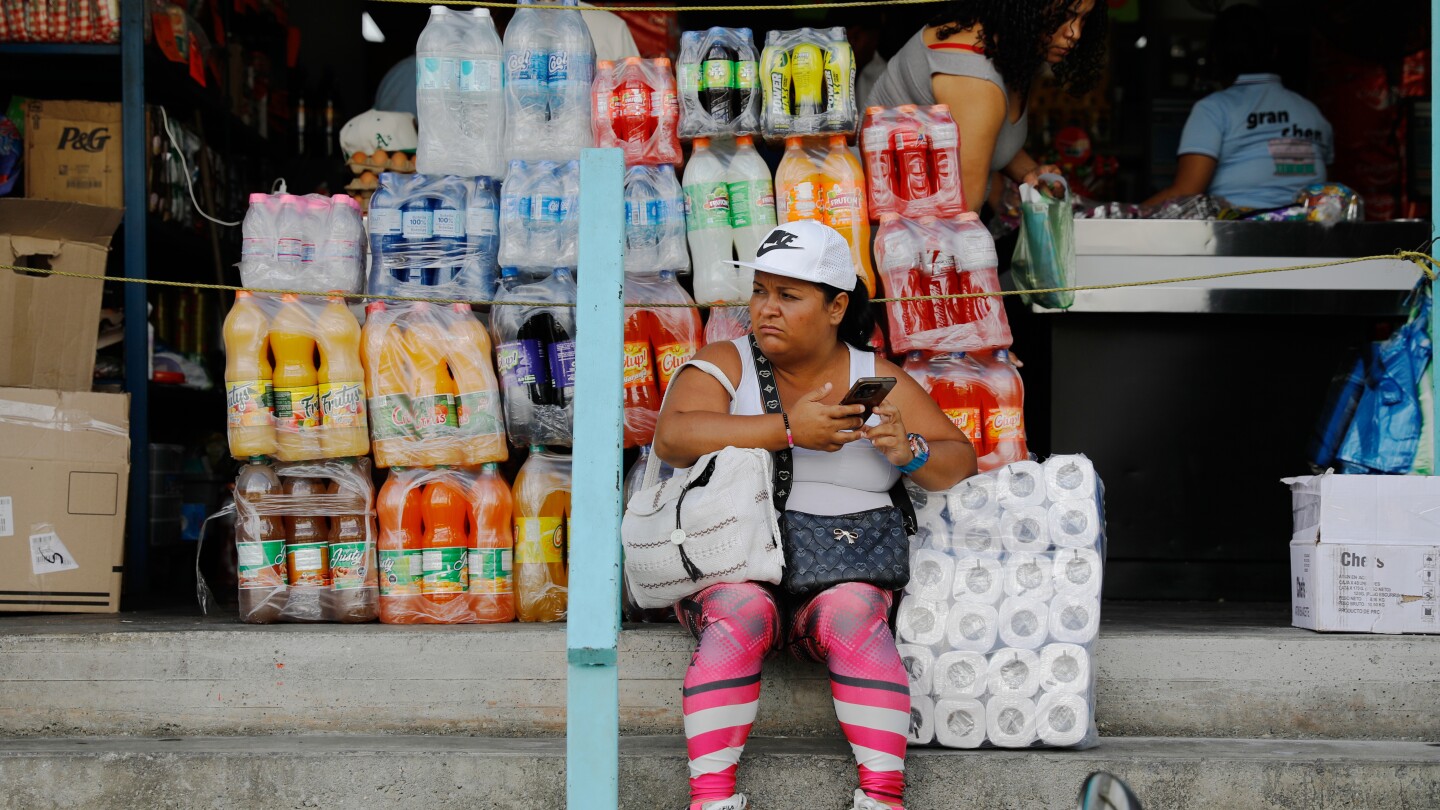
CARACAS, Venezuela — While Washington pledges a golden economic future for Venezuela following the dramatic capture of former President Nicolás Maduro, ordinary citizens confront a starkly different reality of hyperinflation and severe scarcity that defines daily existence.
At a sprawling street market in the capital, utility worker Ana Calderón illustrates the profound disconnect between political promises and ground-level suffering. Her immediate concern isn’t geopolitical shifts but the impossible mathematics of assembling a simple pot of soup. “Food is incredibly expensive,” she states, noting how celery now costs twice what it did weeks ago while a kilogram of meat sells for more than $10—a sum representing 25 times the country’s frozen monthly minimum wage of just $0.40.
This economic catastrophe has unfolded despite Venezuela possessing the world’s largest proven oil reserves. The current crisis finds its roots in the Chavez-Maduro era, where corruption, declining production, and disastrous economic policies created a perfect storm. Since 2012, poverty has engulfed approximately 80% of the population, the middle class has virtually disappeared, and more than 7.7 million people have fled their homeland.
President Trump’s administration vows that American intervention will channel billions into infrastructure, revitalize the crippled oil industry, and ultimately restore prosperity. Commitments include distributing oil sale proceeds to Venezuelans and repairing the collapsed electricity grid. However, the immediate White House focus appears centered on extracting more Venezuelan oil and opening the sector to U.S. investment—a process Trump acknowledges “will take years.”
Economists express profound skepticism about rapid improvement. Luisa Palacios, a Venezuelan-born scholar at Columbia University, observes that while people remain hopeful, “they don’t see it yet on the ground. What they’re seeing is repression. They’re seeing a lot of confusion.” Usha Haley, an economist specializing in emerging markets, confirms that rampant inflation and currency collapse cannot be solved by a single oil sale, predicting that “jobs, prices, and exchange rates will probably not shift quickly.”
For now, Venezuelans survive through a philosophy of “resolver”—figuring out each day through multiple jobs, delicate financial calculations, and heartbreaking choices between medicine and food. As vendor Neila Roa summarizes while selling cigarettes to survive: “What we don’t know is whether the change is for better or for worse. We’re in a state of uncertainty.”