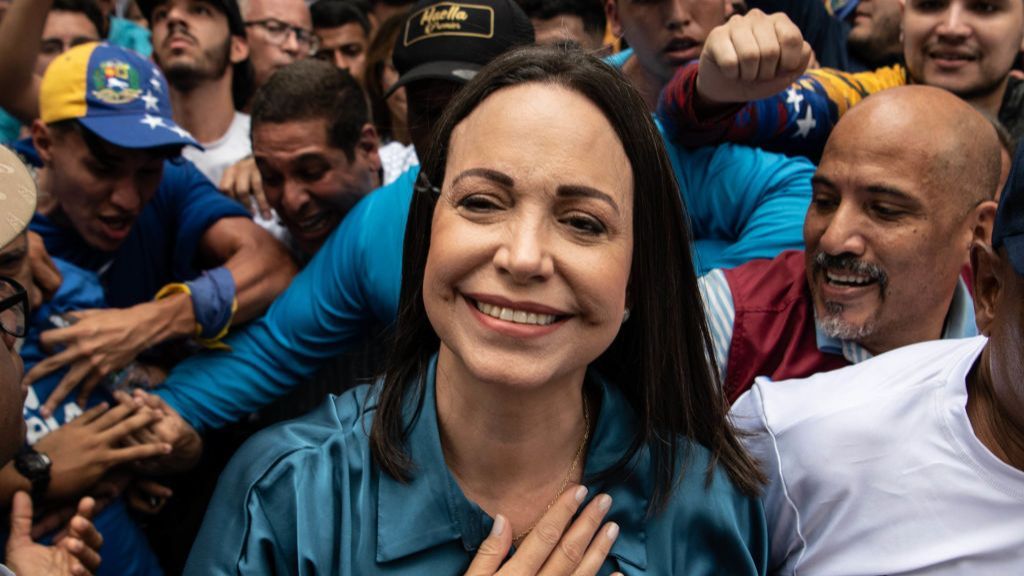
The recent Nobel Prize awarded to Maria Corina Machado, a prominent opposition figure in Venezuela, has been met with widespread acclaim by her supporters. This recognition is seen as a pivotal moment that could reignite international focus on the ongoing political and humanitarian crisis in the country. Machado, in her response, appealed directly to former U.S. President Donald Trump, urging his support to help Venezuela achieve ‘freedom and democracy.’ She emphasized the need for collaboration with the U.S., Latin American nations, and other democratic countries worldwide.
Venezuela’s current situation is dire. Millions live in poverty, with unreliable access to basic services like electricity and a healthcare system crippled by severe medicine shortages. The mass exodus of citizens, many fleeing to the U.S. and neighboring countries, underscores the gravity of the crisis. The 2023 elections were widely criticized as neither free nor fair, leading to violent crackdowns on protests and the detention of numerous political prisoners.
In recent months, the U.S. has intensified its pressure on Venezuela, conducting military strikes on boats in international waters off the Venezuelan coast, allegedly targeting drug traffickers. However, these actions have raised legal and ethical concerns, with some experts arguing they violate international law. The U.S. has also increased its military presence in the region, with thousands of troops stationed nearby and plans for potential operations.
Machado, who is in hiding, and Edmundo González, the U.S.-recognized president-elect living in exile, face significant threats from the Venezuelan government, which has accused them of treason. Despite calls for the military to abandon President Nicolás Maduro, key militia groups remain loyal to him. The opposition’s hopes now rest on the extent to which international allies, particularly the U.S., are willing to intervene.
The situation remains precarious, with Venezuela’s allies, including China, Russia, Iran, and Cuba, potentially complicating any U.S. intervention. If the U.S. decides to escalate its actions, the conflict could rapidly intensify, with far-reaching consequences for the region and beyond.