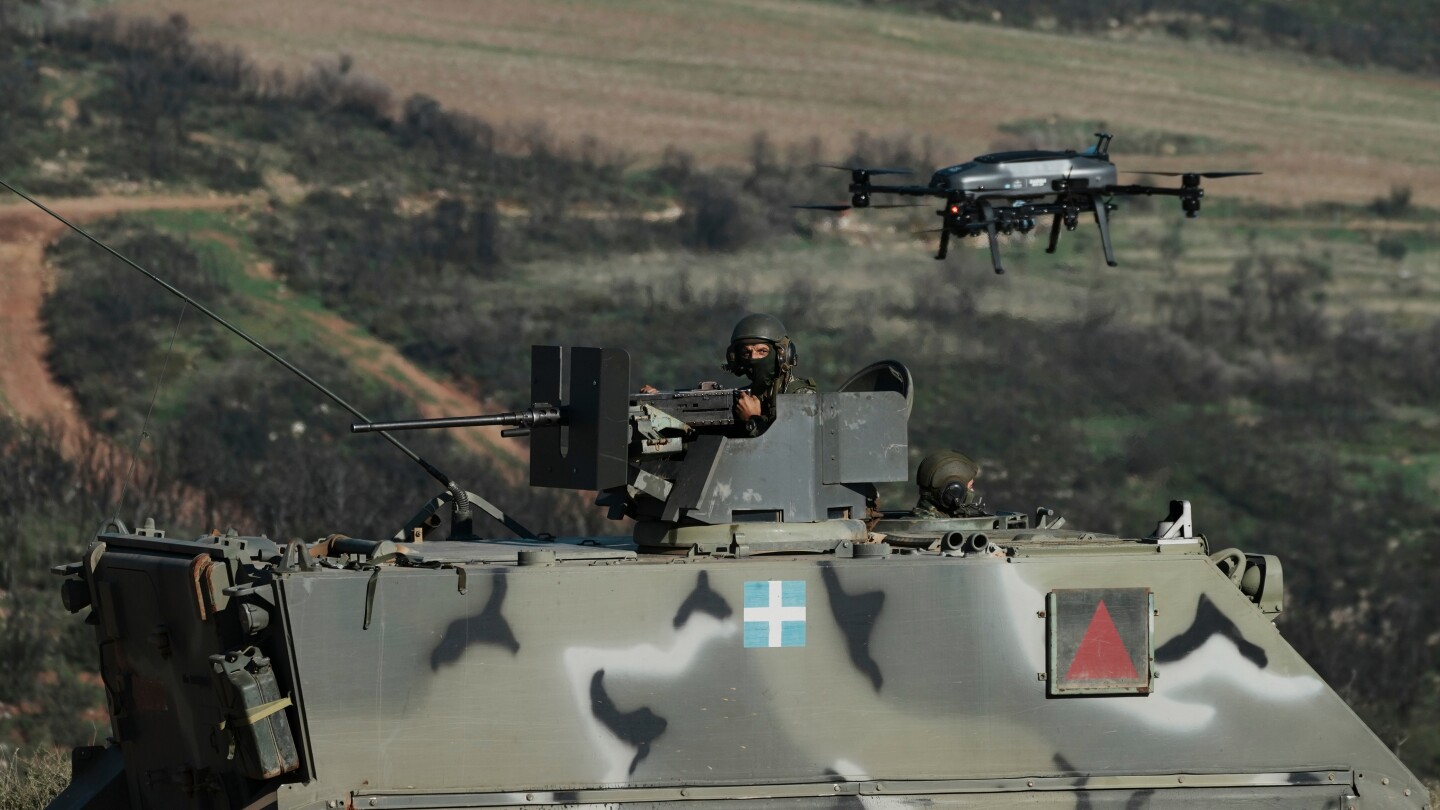
Under the pale November sun in Alexandroupolis, Greece, a hillside transformed into a futuristic battlefield. Helicopters soared above tree lines, infantry units maneuvered through smoke and explosions, and a diverse array of drones—quadcopters, fixed-wing models, loitering munitions, and experimental prototypes—orchestrated the mock combat. This marked Greece’s first full tactical exercise testing domestically developed drones and counter-drone systems, a significant step in NATO’s broader push for rapid battlefield innovation. Military observers from the U.S., France, Bulgaria, Armenia, and Turkey witnessed the event, as Greece, historically reliant on imports, joined the global race to develop and deploy its own advanced military technology.
The exercise showcased the versatility of drones in modern warfare. Small quadcopters deployed tire spikes and mines to hinder enemy vehicles, while others laid smoke screens or delivered medical supplies and ammunition to frontline positions. Some drones even carried loudspeakers broadcasting demoralizing messages in English. An experimental two-wheeled ‘tunnel crawler’ demonstrated its ability to leap into the air from confined spaces, carrying explosives, oxygen, or radiation detectors.
Greece’s efforts reflect a broader trend among mid-sized NATO economies, spurred by Russia’s invasion of Ukraine. Countries like Estonia and Denmark have also invested in indigenous drone technology, viewing autonomy and rapid production as critical to deterrence. For Greece, embroiled in a decades-long maritime dispute with Turkey, this initiative is part of a €25 billion overhaul of its armed forces following years of austerity. NATO’s urgency is further fueled by uncertainty over the U.S.’s long-term security commitments to Europe, prompting calls for Europe’s defense sector to adopt a startup mentality.
NATO Secretary-General Mark Rutte emphasized the need for advanced technology and rapid innovation during a recent visit to Romania. Greek companies, particularly small firms, are seizing the opportunity. Dimitris Stefanakis of Ucandrone, a Greek drone manufacturer, noted that Ukraine’s battlefield adaptations have reshaped the industry, favoring agile, innovative companies over larger, slower-moving ones. Greek developers also foresee military advancements accelerating civilian applications, such as disaster response.
Western officials stress the need for Europe to move away from lengthy procurement cycles toward rapid-development ecosystems. Analysts, including Swasti Rao of India’s Jindal School for International Affairs, highlight the decisive role of rapid innovation in modern warfare. Greek Defense Minister Nikos Dendias underscored the profound mindset shift required to adapt to this new era of warfare, emphasizing the transition from large mechanized units to small, technology-driven teams.