PARIS — In a significant address on Monday, French President Emmanuel Macron articulated France’s nuclear deterrence doctrine against a backdrop of mounting European anxieties regarding potential U.S. strategic disengagement and persistent Russian threats. As the European Union’s sole nuclear power, France maintains a strictly defensive posture designed to protect its fundamental interests, which Macron explicitly acknowledges now encompass a distinct “European dimension.
While operating within NATO’s framework, France preserves complete autonomy over its nuclear arsenal, with constitutional authority for deployment resting solely with the president. The nation’s nuclear capabilities present a formidable deterrent force, characterized by both strategic depth and technological sophistication.
France’s naval nuclear capacity centers on the aircraft carrier Charles de Gaulle, Europe’s only nuclear-capable surface warship. Currently operating in Northern European waters with recent port calls in Sweden, the carrier enables Rafale fighter jets to deploy nuclear weapons. However, due to extensive maintenance cycles, France does not maintain continuous sea-based air nuclear readiness. Macron has confirmed plans for a next-generation nuclear-powered carrier to replace the Charles de Gaulle by 2038.
The underwater component of France’s nuclear triad consists of four ballistic missile submarines: Le Triomphant, Le Téméraire, Le Vigilant, and Le Terrible. Based at the highly secure Ile Longue facility on the Atlantic coast, these 138-meter vessels each carry 16 M51 intercontinental ballistic missiles with multiple warhead capability. Since 1972, at least one submarine has remained on continuous patrol, ensuring permanent strike capacity.
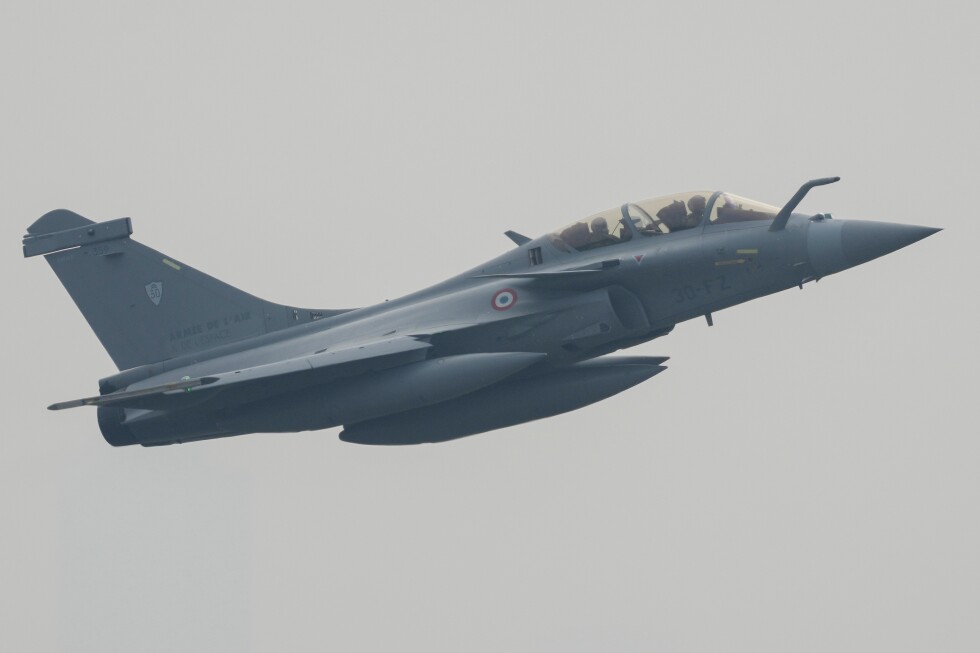
France’s air-launched capability features the ASMPA cruise missile with an estimated 500-kilometer range, deployed by Rafale jets from both land bases and the Charles de Gaulle. This system serves as a final warning mechanism before potential escalation to full-scale nuclear conflict.
The recently upgraded M51 submarine-launched missile boasts an estimated range of 8,000-10,000 kilometers with improved accuracy and countermeasure penetration capabilities. According to independent analyses by SIPRI and the Federation of American Scientists, France maintains approximately 290 nuclear warheads, positioning it as the world’s fourth-largest nuclear power behind Russia, the United States, and China. Over 80% of these warheads are submarine-deployed.
This demonstration of French nuclear capability occurs amid heightened global non-proliferation concerns, particularly regarding Iran’s uranium enrichment activities and the ambiguous nuclear status of several nations outside the Non-Proliferation Treaty framework.