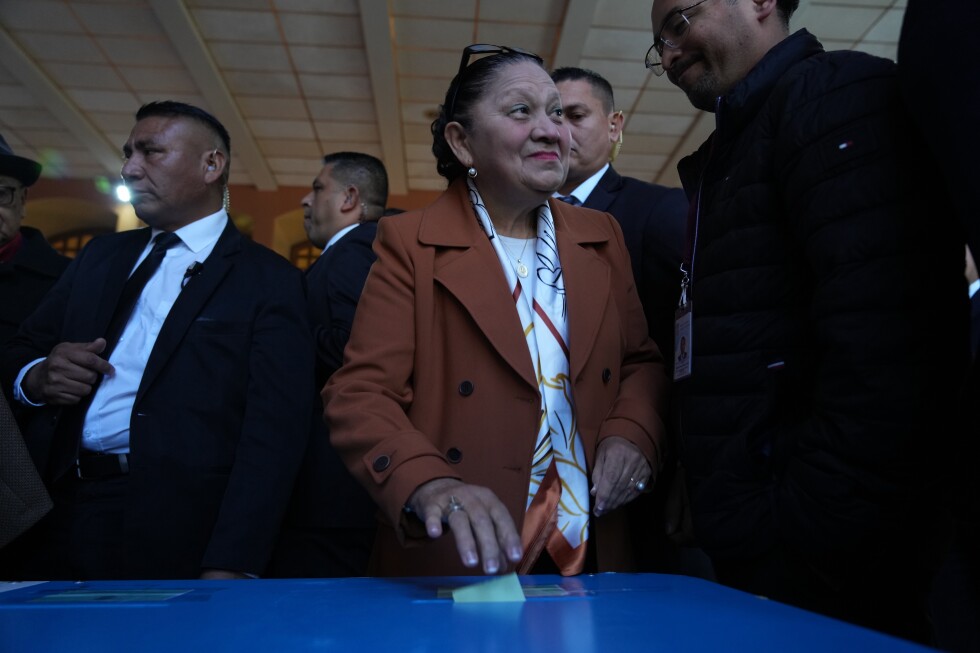
Guatemala’s fragile democracy faced renewed strain on Thursday as prosecutors from the internationally criticized Attorney General’s office raided voting locations during crucial judicial elections. The operation, occurring simultaneously with the election of magistrates to the country’s highest court, sparked immediate condemnation from President Bernardo Arévalo and international observers.
Prosecutor Leonor Morales, who faces U.S. sanctions for previously attempting to overturn Arévalo’s 2023 presidential victory, led the controversial raids. Morales refused to disclose details about the investigation, ordering media removal from the premises while her team temporarily blocked lawyers attempting to vote.
President Arévalo characterized the actions as “a new attempt to undermine institutions and disrupt the normal functioning of the rule of law” in a social media address. He urged citizens not to be intimidated, declaring that “Guatemala’s democracy is not negotiable, it will not be intimidated, and it will not be taken away.”
The Constitutional Court subsequently issued an injunction limiting the Attorney General’s office from intervening in the election process while permitting their investigation to continue. The Organization of American States observation mission condemned the raids as “an extremely high constitutional risk” that represents a “pattern of institutional instrumentalization” eroding public trust and judicial independence.
These elections determine the composition of Guatemala’s Constitutional Court, the nation’s highest judicial body whose decisions are final. The court has served as both a democratic safeguard and a subject of corruption concerns throughout Guatemala’s prolonged anti-corruption struggle. Current magistrates are seeking reelection despite criticism from human rights advocates who describe recent court composition as comprising “dark characters” who have hindered justice system advances.
The judicial appointments occur alongside the impending replacement of Attorney General Consuelo Porras, who faces international sanctions for undermining democracy. Porras, accused of protecting former presidents from corruption investigations, is ironically seeking election as a Constitutional Court magistrate. President Arévalo has previously emphasized that these selections represent an “important and critical” moment for Guatemalan democracy, with the nation’s democratic development hanging in the balance.
International observers from both the Organization of American States and European Union are closely monitoring the process, recognizing its profound implications for judicial independence and the rule of law in Central America’s most populous nation.