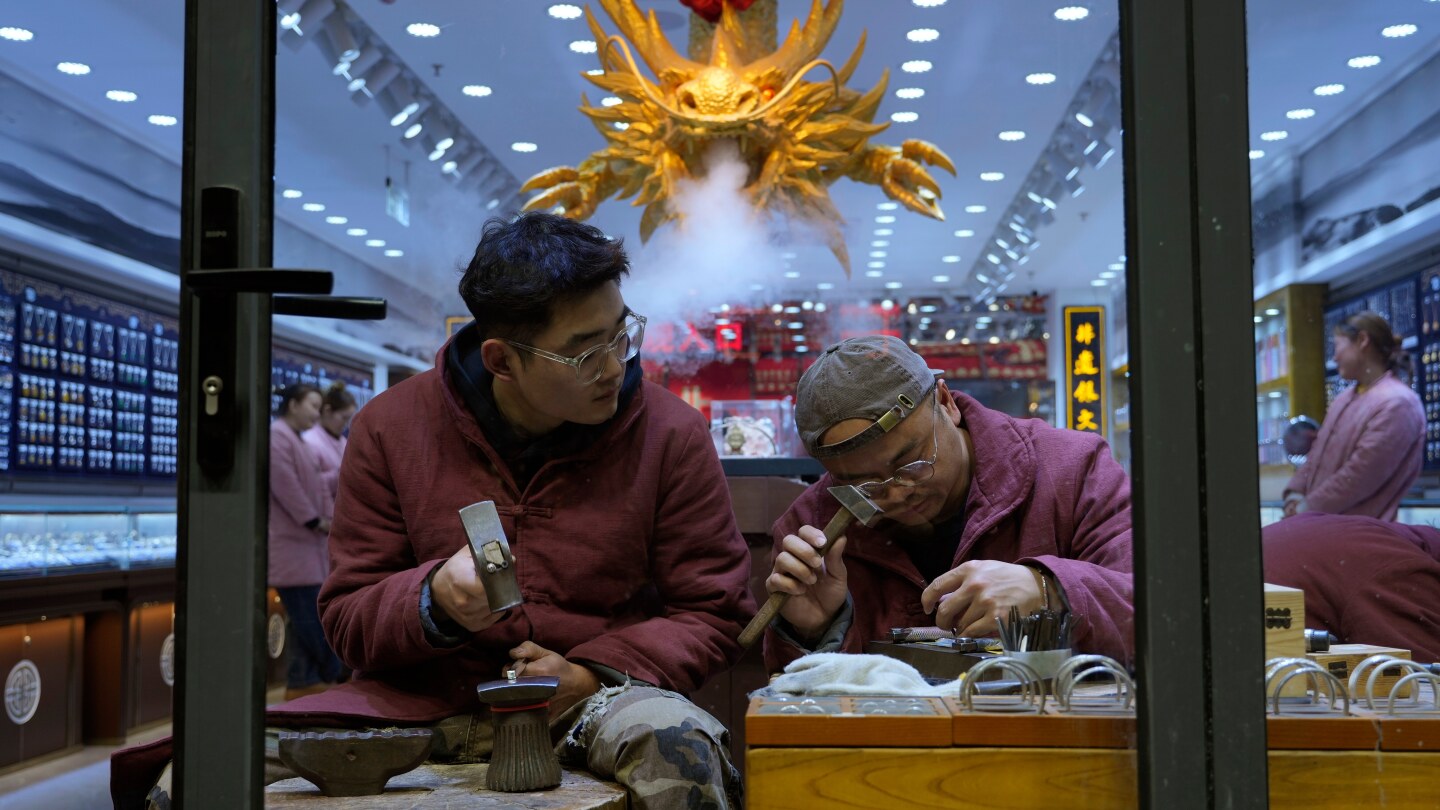
While China’s official economic indicators project resilience with record-breaking exports and technological advancements, a stark contrast emerges in the daily experiences of ordinary citizens grappling with financial pressures. The nation’s export sector achieved an unprecedented $3.4 trillion in shipments during the first eleven months of 2025, driven by growing demand from Southeast Asia and Europe that compensated for declining U.S. trade. Simultaneously, breakthroughs in artificial intelligence and electric vehicle technologies demonstrate China’s progressive shift toward high-tech industries.
Despite these macroeconomic strengths, small business owners and urban professionals report severe financial constraints. Beijing billiards hall proprietor Xiao Feng exemplifies this struggle, noting that after covering operational costs including rent and labor, he merely breaks even. “The affluent appear too occupied while common people lack disposable income,” Feng observed, revealing he has drawn no personal income for six consecutive months despite his wife’s stable nursing salary supporting their family.
Commercial real estate agent Zhang Xiaoze, who previously earned approximately 3 million yuan annually during the mid-2010s peak, now generates about 100,000 yuan yearly. “The fundamental issue is that people lack financial resources,” Zhang noted, referencing frequent reliance on personal savings to sustain his household.
This economic divergence has prompted analysts to question official growth statistics. Capital Economics analyst Zichun Huang suggests actual expansion “may be well below” reported figures, with independent estimates ranging from 2.5% to 3.5% compared to the official 5% target. Retail sales growth decelerated to 1.3% year-on-year in November, while fixed-asset investments declined 2.6% through the first eleven months.
The property sector’s persistent slump continues to undermine consumer confidence, with housing values depreciating over 20% since their 2021 zenith. New home sales plummeted 11.2% by value year-on-year, with property investments contracting nearly 16%. This downturn has virtually eliminated previous wealth gains from real estate, according to HSBC economists.
While the International Monetary Fund recently upgraded China’s growth forecast to 5%, matching official projections, numerous challenges persist. Excess industrial capacity across automotive, steel, and consumer goods sectors suppresses prices and profitability. China’s substantial trade surplus exceeding $1 trillion potentially invites protectionist responses from trading partners.
Economists including Carnegie Endowment’s Michael Pettis argue that fundamental structural reforms enabling broader wealth distribution remain politically challenging. As budget hotel owner Zhai from Shijiazhuang summarized: “I anticipate no immediate economic recovery. With limited education, transitioning industries proves nearly impossible when all sectors face difficulties.”