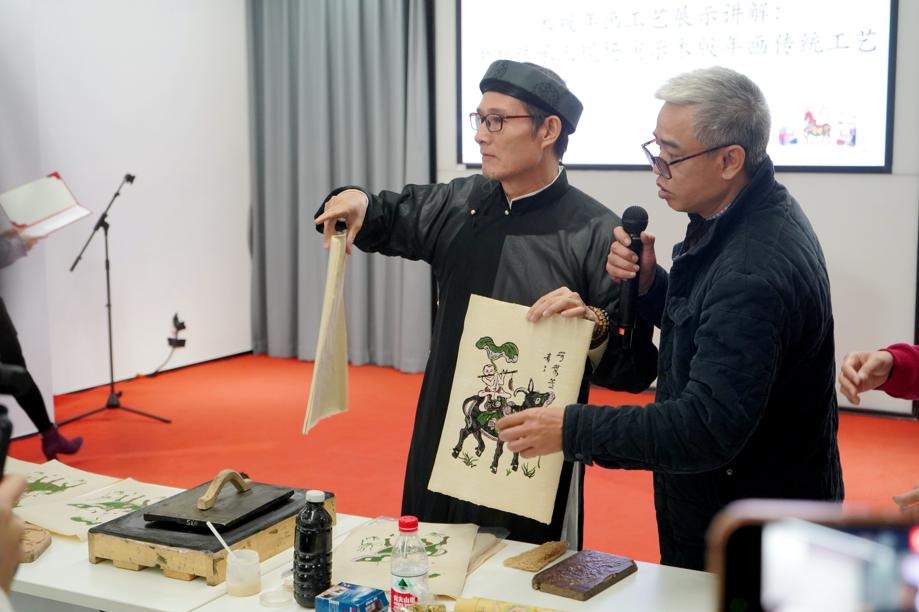
Shanghai’s East China Normal University is currently hosting a groundbreaking cultural exhibition featuring over 100 traditional New Year paintings from China and Vietnam. The showcase, running through January 7, highlights the shared artistic heritage between the two neighboring nations through the vibrant medium of nianhua (New Year woodprint pictures).
This comprehensive display primarily consists of woodblock prints recognized by UNESCO as part of China’s inaugural national intangible cultural heritage list in 2006. These traditional artworks employ centuries-old printing techniques to depict auspicious symbols and celebratory themes that embody collective aspirations for prosperity and happiness.
The exhibition demonstrates how this distinctive folk art form has flourished across various regions of China while simultaneously exerting substantial cultural influence throughout Southeast Asia. Vietnam, sharing a border with China, has emerged as a particularly significant hub for the preservation and practice of this traditional art, developing its own distinctive variations while maintaining the core techniques and symbolic language.
Cultural experts note that the parallel development of New Year paintings in both countries represents a fascinating case study in cross-cultural artistic exchange. The artworks serve as both decorative items during lunar new year celebrations and as cultural artifacts carrying deep symbolic meaning related to family values, agricultural cycles, and spiritual beliefs.
The university’s decision to host this bilateral exhibition reflects growing academic interest in the comparative study of traditional art forms across national boundaries. Visitors can observe firsthand the technical similarities and stylistic variations that have developed in different regional centers of woodblock printing throughout China and Vietnam.
This cultural initiative comes amid increased focus on preserving traditional folk arts in both countries, where modernization has threatened the continuity of many ancient crafts. The exhibition includes workshops and demonstrations by master artisans to educate the public about the intricate process of creating these colorful woodprints, from carving to printing to hand-coloring.