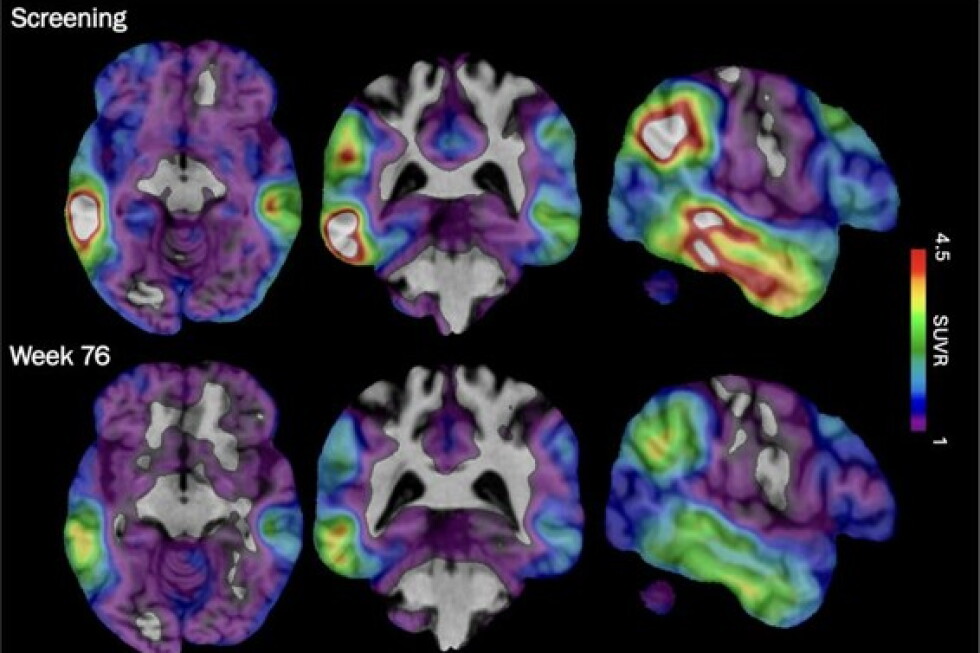
LONDON – Researchers unveiled groundbreaking new findings Tuesday at the Alzheimer’s Association International Conference, revealing that an experimental drug from Biogen offers a novel path to slow early-stage Alzheimer’s disease by targeting a destructive brain protein long considered difficult to treat. Unlike today’s approved therapies that focus on clearing a different toxic protein linked to the condition, this new candidate works by reducing the production of tau, a protein that forms deadly tangles in neurons and drives cognitive decline.
Alzheimer’s, the leading cause of dementia worldwide, impacts more than 7 million people in the United States alone and tens of millions globally. For years, the majority of approved treatments have centered on clearing amyloid, a sticky protein that forms plaques in the brain up to two decades before symptoms emerge. While the two currently approved drugs, lecanemab and donanemab, can modestly slow cognitive decline by removing amyloid buildup, scientists have long recognized that amyloid alone does not cause Alzheimer’s. The dominant scientific model holds that amyloid accumulation ultimately triggers abnormal tau to clump into tangles that kill brain cells, making tau a critical yet underexploited target for new therapies. Prior attempts to develop tau-targeting drugs have repeatedly failed, leaving a critical gap in treatment development.
Biogen’s new candidate, diranersen, works through a fundamentally different mechanism than existing amyloid-focused drugs. Classified as an antisense oligonucleotide, the drug does not attack existing tau buildup; instead, it instructs the gene that produces tau to generate less of the protein. “If you lower tau production, you are lowering the amount of the abnormal tau that needs to be cleared by the microglia, by the clearance mechanism in the brain. And so you are enabling the normal clearance mechanism to have more capacity to clear the tau,” explained Dr. Cath Mummery of University College London, who led the phase 2 study of the drug. Unlike approved amyloid drugs that are delivered via intravenous infusions or injections into the bloodstream, diranersen is administered via injection into the fluid surrounding the spinal cord, providing a more direct route to brain tissue.
The phase 2 trial enrolled roughly 400 patients with mild cognitive impairment or early-stage Alzheimer’s, who were randomly assigned to receive varying doses of diranersen or a placebo. In an unexpected finding announced earlier this year by Biogen and its development partner Ionis Pharmaceuticals, the lowest dose – given just twice per year – produced the strongest effect, meaning the study did not meet its pre-planned endpoint of demonstrating greater benefit from higher doses. Despite this miss, new data presented this week shows encouraging signs of cognitive benefit: five out of six cognitive tests showed that patients receiving diranersen still experienced cognitive decline, but at a markedly slower rate than patients given a placebo. For the lowest dose group, the decline rate slowed by 26% – a reduction comparable to the benefits seen in clinical trials of approved amyloid drugs.
Notably, side effects reported in the trial were mild, including injection site pain and temporary confusion that resolved within roughly a week of treatment. Crucially, researchers observed no cases of brain swelling or inflammation, a common and potentially dangerous side effect linked to amyloid-targeting drugs.
Independent researchers not involved with the Biogen study called the results a promising step forward for the field. “This is really quite promising if it were to hold up” in larger-scale confirmatory testing, said Jessica Langbaum of the Banner Alzheimer’s Institute in Phoenix. While Dr. Reisa Sperling of Mass General Brigham emphasized that the results are still early, she noted that the findings “will reinvigorate interest and investment in lots of tau mechanisms, and the field needs that.” Biogen has confirmed it plans to launch a large-scale phase 3 trial to confirm the drug’s clinical benefit.
Diranersen is just one of multiple innovative new approaches to Alzheimer’s treatment presented at the conference, reflecting a growing shift in the field toward targeting tau and exploring combination therapies. Last week, the University of California, San Francisco launched the first-of-its-kind Alzheimer’s Tau Platform, a National Institutes of Health-funded study that will test multiple experimental anti-tau therapies, both alone and in combination with approved amyloid treatments. The first candidate to be tested through the platform is AADvac1, a tau vaccine designed to train the body’s immune system to recognize and attack abnormal tau. The platform will expand to sites across the U.S. and will even include patients who have tau and amyloid buildup but have not yet developed cognitive symptoms, allowing researchers to test the potential of early intervention.
Other researchers are exploring repurposing existing drug candidates for Alzheimer’s prevention. Scientists reported that obicetrapib, an experimental cholesterol-lowering drug, may hold promise for reducing Alzheimer’s protein buildup in people with a genetic risk for the disease. The APOE4 gene, the strongest known genetic risk factor for late-onset Alzheimer’s, also impacts how the body processes cholesterol, leading researchers to hypothesize that cholesterol-lowering drugs could mitigate this elevated risk. NewAmsterdam Pharma, the developer of obicetrapib, plans to launch a clinical trial soon to test this hypothesis in carriers of one or two copies of the APOE4 gene.
Companies are also advancing new technologies to overcome one of the biggest barriers to Alzheimer’s drug development: penetrating the blood-brain barrier, a protective lining that blocks most large molecules from entering brain tissue. Denali Therapeutics is developing technology that “hitches a ride” on iron, a molecule that naturally crosses the blood-brain barrier, to deliver both anti-tau and anti-amyloid drugs to the brain in higher concentrations.
The new wave of tau-focused research comes as the field continues to search for more effective treatments for a disease that is projected to see a sharp rise in cases globally as populations age. While diranersen still requires years of additional testing before it could win regulatory approval, researchers say its early success has already re-energized work on a long-overlooked target that could be key to slowing or stopping Alzheimer’s progression.
This reporting was supported by the Howard Hughes Medical Institute’s Department of Science Education and the Robert Wood Johnson Foundation, with the Associated Press taking sole responsibility for all content.