In a highly secure manufacturing facility west of Paris, aerospace engineers are completing final preparations for a pivotal moment in European space exploration. The Ariane 64 rocket, Europe’s most powerful space launch vehicle to date, is scheduled for its inaugural flight from the European spaceport in French Guiana on Thursday.
The enhanced configuration, named for its four booster rockets, represents a significant advancement from previous Ariane 6 models. According to ArianeGroup Chief Technical Officer Hervé Gilibert, this four-booster design delivers approximately double the power of earlier versions, enabling the deployment of substantially heavier payloads into orbit.
This landmark mission will deploy 32 satellites for Amazon’s Leo broadband constellation, marking a strategic move in the competitive global satellite internet market currently dominated by SpaceX’s Starlink network. The complete mission duration will span approximately one hour and fifty minutes—nearly a full Earth orbit—before satellite deployment occurs in pairs.
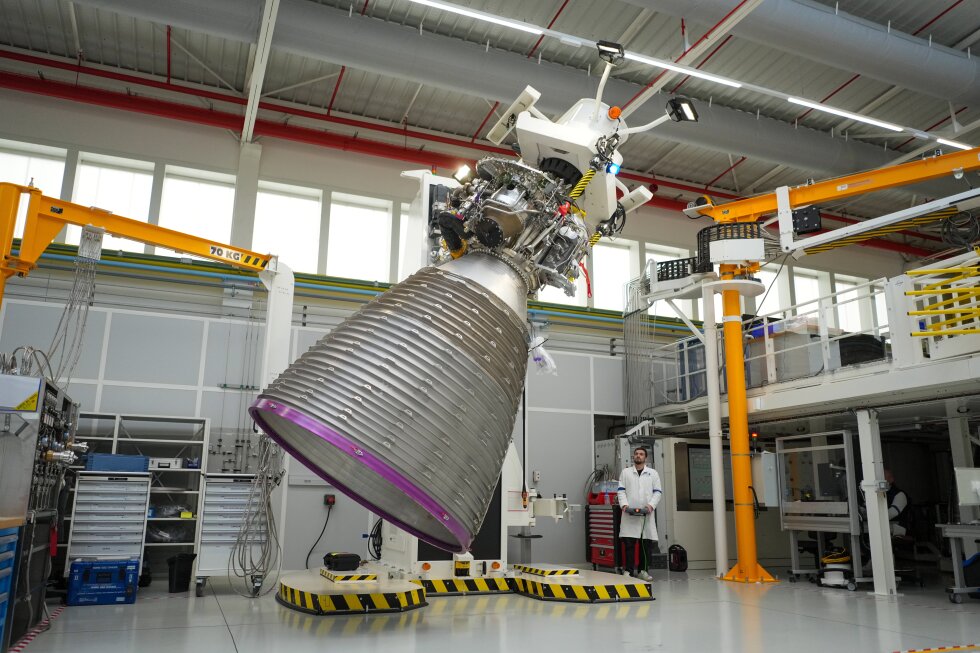
The Vulcain 2.1 engine, manufactured at ArianeGroup’s Vernon facility, serves as the primary propulsion system. Emmanuel Viallon, director of the Vernon site, explained the precise launch sequence: “For a few seconds, we verify that it is functioning properly. Once we are fully confident it will operate correctly for the eight minutes that follow, we ignite the solid boosters and the rocket lifts off.”
European collaboration forms the foundation of the Ariane program, with 13 member nations of the European Space Agency cooperating through more than 600 subcontractors across the continent. Final assembly occurs at two primary integration sites in Bremen, Germany (upper stage) and Les Mureaux, France (main stage), before components undertake trans-Atlantic shipment to French Guiana.
Standing approximately 62 meters tall—equivalent to a 20-story building—the Ariane 64 represents both technological achievement and strategic necessity. As noted by European Space Policy Institute director Hermann Ludwig Moeller, the program maintains Europe’s independent access to space while operating within a different industrial framework than competitors like SpaceX.
The program has already secured approximately 30 launches in its order book, with roughly two-thirds representing commercial missions. Looking forward, ArianeGroup is developing reusable component technology that could eventually enable full stage recovery, potentially transforming the economic model of European space access.
For project manager Arnaud Demay, each launch represents an emotional culmination of years of effort: “We do it so rarely, and it’s so majestic when it takes off: that little touch of magic inevitably overwhelms me with emotion every time.”