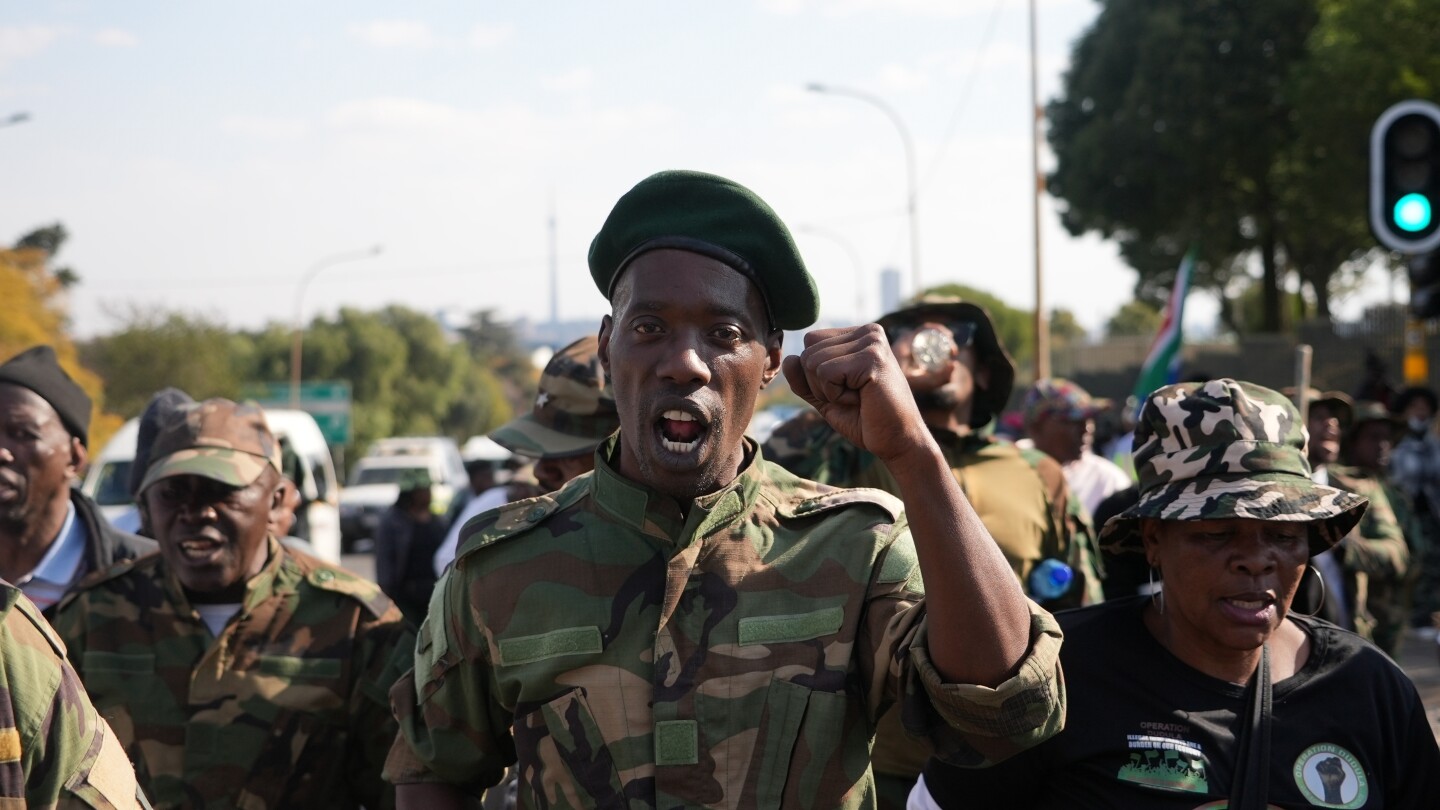
In the early hours of the morning, Tholakele Nkwanyana and members of Operation Dudula, a South African anti-immigrant group, gather at the Diepsloot public health clinic in Johannesburg. Their mission is not to seek medical care but to prevent foreigners from accessing it. Dressed in military-style attire, they block the clinic’s entrance, demanding identity documents and turning away mothers with children and the sick, directing them to private hospitals that charge fees. This scene has become increasingly common across Gauteng, South Africa’s most populous province, as healthcare becomes the latest flashpoint in the nation’s contentious immigration debate. Despite a Johannesburg High Court order to cease harassing migrants, Operation Dudula vows to appeal, claiming their actions prioritize South Africans amid a perceived overburdening of resources. South Africa, Africa’s most developed economy, attracts migrants from neighboring countries like Zimbabwe, Mozambique, and Lesotho, as well as from Nigeria and Ethiopia. In the year ending March 31, nearly 47,000 undocumented migrants were deported, an 18% increase from the previous year. Operation Dudula, which has grown in visibility, has also targeted foreign-owned businesses and schools, accusing migrants of exacerbating South Africa’s 31% unemployment rate. The group’s organized structure, including regional leaders and public engagements, hints at potential political ambitions. South Africa’s government condemns these actions, emphasizing that healthcare is a universal right. However, police resources are stretched thin in a country with high crime rates, limiting their ability to protect clinics. Recent arrests of Operation Dudula members in Soweto highlight the group’s aggressive tactics. The South African Human Rights Commission warns of a global rise in anti-immigrant sentiment, urging against scapegoating migrants for systemic healthcare failures. South Africa spends 8.5% of its GDP on healthcare, yet faces overcrowded hospitals, medication shortages, and crumbling infrastructure. Meanwhile, migrants like Blessing Tizirai and Nonhlanhla Moyo, who fled Zimbabwe’s collapsed public health system, face life-threatening barriers to care. As tensions escalate, Zimbabwe’s government refuses to fund its citizens’ treatment in South Africa, even as its political elite seek medical care abroad.
An anti-migrant group in South Africa is blocking foreigners from health clinics