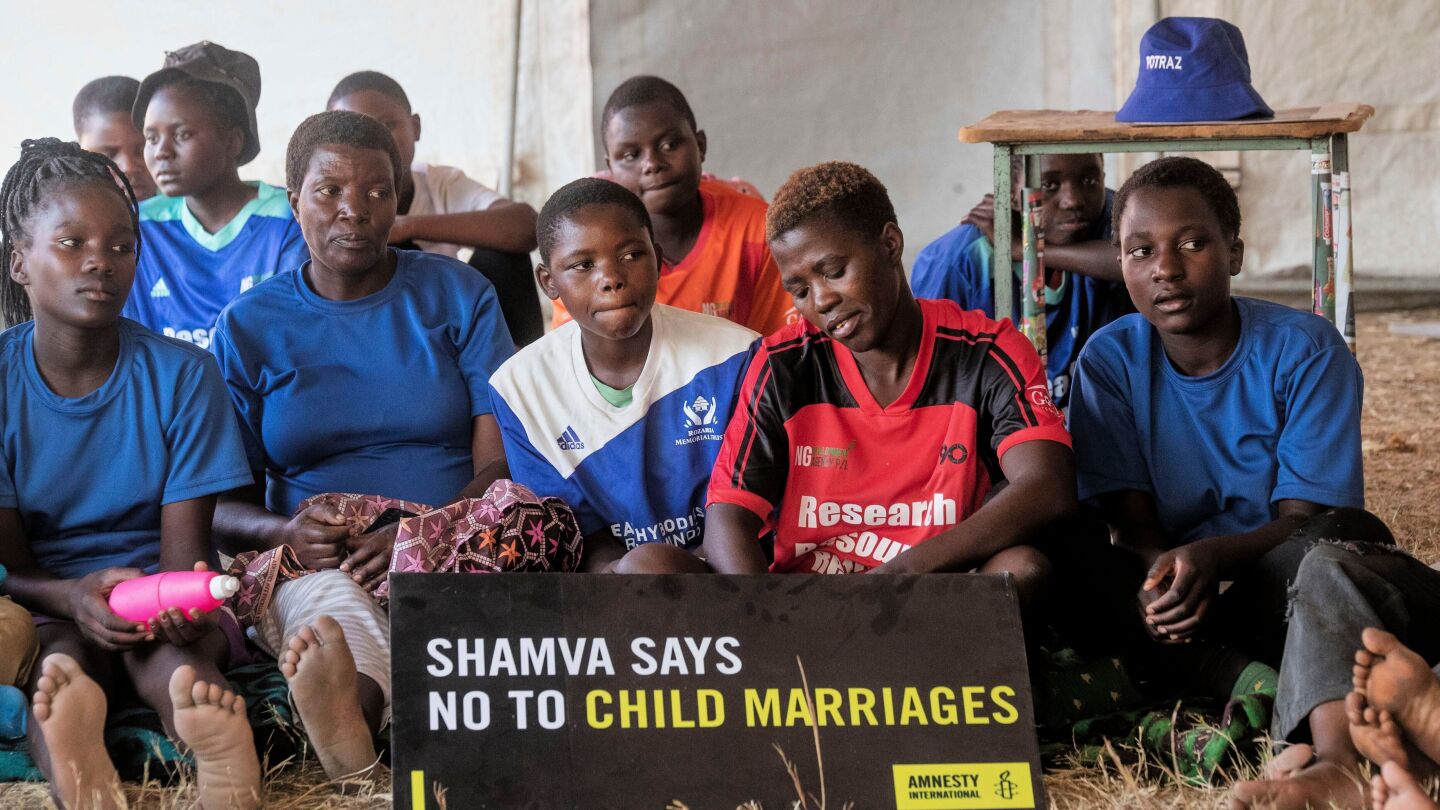
In the rural landscapes of northeastern Zimbabwe, a group of girls gathers inside a white tent with a wooden fireplace at its center. They remove their shoes, sit on mattresses, and prepare to engage in open discussions about sexuality, child marriage, teen pregnancy, gender bias, education, economic empowerment, and the law. This gathering is a modern revival of Nhanga, an ancient tradition once used to prepare adolescent girls for marriage. Today, it has been reimagined as a peer-led movement to resist child marriage, a pervasive issue in Zimbabwe and across Africa.
Nhanga, traditionally a female-only space in round thatched huts, was historically a place where girls were taught obedience, marital duties, and moral education, reinforcing patriarchal norms. However, the new Nhanga is a cultural innovation addressing contemporary challenges. ‘The new Nhanga is a safe space where girls can candidly discuss sensitive topics,’ said Nokutenda Magama, a programs officer with the Rozaria Memorial Trust, a nonprofit driving this revival.
The sessions, organized by age groups ranging from five-year-olds to women over 35, include practical skills like poultry raising, farming, and soap making. Elders and senior government officials are sometimes invited to provide mentorship. This initiative comes amid alarming statistics: one in three girls in Zimbabwe marries before 18, a situation mirrored across East and southern Africa. Despite laws outlawing child marriage, poverty, weak enforcement, and cultural practices perpetuate the problem.
For Samantha Chidodo, 26, the Nhanga revival offered a lifeline. Forced into an abusive marriage at 17, she escaped and, with support from the Rozaria Memorial Trust, returned to school and became a pioneer of the modern Nhanga. ‘Initially, we were only about 20 girls. Now, over 200 in my village participate,’ she said. The movement has spread to Zambia and Sierra Leone and gained recognition at African Union and United Nations forums.
To address the cultural roots of child marriage, girls have sought the support of chiefs and village heads. Xmas Savanhu, a local village headman, explained that offenders now face fines, such as paying a cow, which is held in trust for the girl’s education. Despite progress, poverty and entrenched attitudes remain challenges. ‘The gap lies with the adults,’ said Enet Tini, a teacher and mentor, emphasizing the need for girls-led initiatives to shift societal norms.
Nyaradzai Gumbonzvanda, deputy executive director at U.N. Women and founder of the Rozaria Memorial Trust, called child marriage ‘essentially rape and sexual exploitation,’ stressing that solutions must involve girls themselves, policymakers, and traditional leaders. ‘If we can pressure each other into behaving badly, then we can also influence each other to act positively,’ said Anita Razo, an 18-year-old mentor.
This grassroots movement demonstrates how ancient traditions can be reimagined to address modern challenges, empowering girls to shape their futures and challenge societal norms.