For millennia, launching an invasion of the Persian plateau – the historic heart of modern-day Iran – has proven to be one of the most catastrophic miscalculations a regional power can make. From the early era of Achaemenid expansion to the height of Roman imperial ambition, a consistent pattern has repeated itself: aggressors who enter Persian territory rarely walk away with the gains they predicted, and more often leave their own empires broken or humiliated. Today, as the United States navigates heightened tensions with Iran, ancient history offers a stark lesson about the unique risks of military conflict in this strategic corner of the world. The patterns of the past hold clear warnings for modern policymakers.
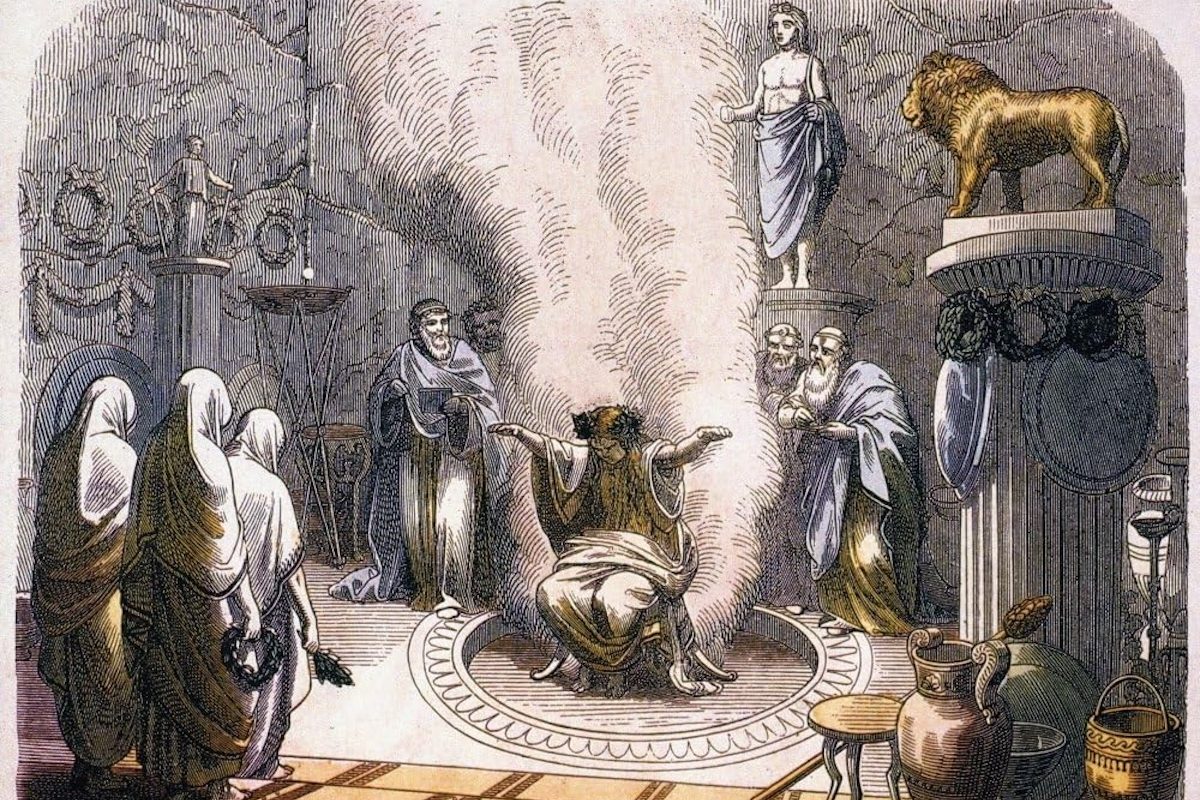
The first recorded example of this fateful pattern dates back to 546 BCE, when Croesus, the fabled wealthy king of Lydia (a kingdom in modern-day western Turkey), set out to stop the rising Achaemenid Persian Empire’s westward expansion. Croesus, uncertain of victory, turned to the renowned Oracle of Delphi in Greece for a prophecy. As ancient historian Herodotus recorded, the oracle delivered an ambiguous warning: if Croesus marched against Persia, he would destroy a great empire. Confident the prophecy referred to his enemy, Croesus invaded. The result was his own total defeat at the hands of Persian king Cyrus the Great, and the annihilation of Croesus’ own Lydian Empire. The oracle was correct – just not in the way Croesus had hoped.
By the 4th century BCE, the Achaemenid Persian Empire stretched across a massive swath of Eurasia, encompassing modern Iran, Iraq, Turkey, the Persian Gulf, and parts of dozens of neighboring countries. It would fall eventually to Alexander the Great of Macedon, who invaded in 334 BCE and won a string of stunning military victories that ended Achaemenid rule by 330 BCE. But victory proved fleeting. Alexander died suddenly in Babylon just seven years after his invasion, leaving a chaotic patchwork of temporary arrangements to govern the vast territory he had seized. His successors were never able to permanently hold the conquered Persian lands, and within decades, local Iranian rule reemerged. To this day, Alexander is remembered in Iranian history not as a conquering hero, but as a destructive invader held in contempt.
Seventy years after Alexander’s death, the Arsacid Parthian dynasty rose to power in Iran, controlling most of the former Achaemenid territory for centuries. As Roman power expanded eastward from the 1st century BCE onward, the Parthians became Rome’s most persistent and dangerous eastern rival. The first major Roman invasion of Parthia ended in unmitigated disaster. In 53 BCE, Roman general Crassus led a large army into Parthian territory in southern Turkey, only to be utterly annihilated by Parthian forces near the city of Carrhae. Some 20,000 Roman troops died, including Crassus and his son, and another 10,000 were captured. The defeat haunted Roman collective memory for centuries.
Even when Roman emperors managed to gain territory in Parthia, the gains proved hollow. In 116 and 117 CE, Emperor Trajan pushed Roman forces all the way to the Persian Gulf, but could not solidify control over any of the land he had seized. A century later, Emperor Septimius Severus seized new territory in Mesopotamia, but contemporary Roman writer Cassius Dio noted that the conquest brought only endless conflict and crippling expense to Rome. “Emperor Septimius Severus used to declare that he had added a vast territory to the empire and had made it a bulwark of Syria,” Dio wrote. “On the contrary, it is shown by the facts themselves that this conquest has been a source of constant wars and great expense to us.”
In the 3rd century CE, the Sasanian dynasty overthrew the Parthians and took control of Iran and Mesopotamia, and they would inflict even greater humiliations on invading Roman forces. In 244 CE, Emperor Gordian III led a massive invasion of Sasanian territory, aiming to capture the Persian capital of Seleucia-Ctesiphon. He died on the battlefield before he could reach the city, and his successor Philip I was forced to sign a deeply humiliating peace treaty to ransom the remnants of the defeated Roman army.
The ultimate humiliation came in 260 CE, when Emperor Valerian was captured alive by Sasanian king Shapur I after an invasion attempt. Legend holds that Valerian was forced to serve as a human footstool for Shapur whenever the king mounted his horse. To this day, rock reliefs carved in 3rd-century Iran still depict Valerian and Philip I kneeling in submission to Shapur, a permanent monument to defeated invasion. A century later, Emperor Julian led a 60,000-strong army into Persian territory, only to be killed in battle north of Seleucia-Ctesiphon. The peace treaty that followed forced Rome to cede key strongholds and territory in northern Mesopotamia, a loss the empire took more than a century to recover from.
Throughout ancient history, two key factors made invasion of Persia uniquely dangerous for aggressors. First, the region’s vast, varied, and often unforgiving geography created massive logistical challenges that stretched even the most well-organized armies to breaking point. Second, Persian dynasties consistently maintained strong national resolve and formidable military preparedness that turned campaigns into costly quagmires. While modern conflict between the United States, its allies, and Iran differs in countless ways from the ancient wars of the Achaemenid, Parthian, and Sasanian eras, those 3rd-century rock reliefs of defeated Roman emperors stand as an enduring reminder of how badly military gambits against Persian powers can go wrong.
This analysis is by Peter Edwell, associate professor of ancient history at Macquarie University, republished with permission under a Creative Commons license.