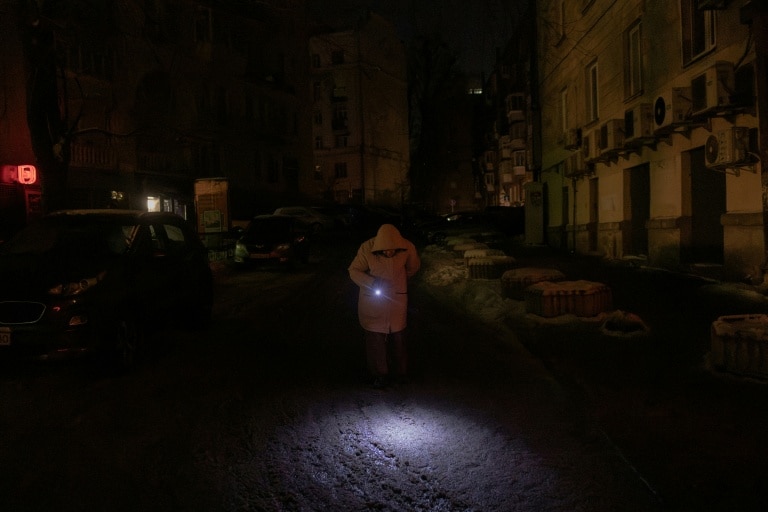
A massive overnight Russian aerial assault has crippled Ukraine’s capital, leaving nearly half of Kyiv’s residential buildings without heating and running water amidst subzero temperatures of -14°C. This latest bombardment represents a severe escalation in Russia’s systematic campaign against Ukrainian energy infrastructure.
Ukrainian authorities reported the attack involved an extensive barrage of 339 long-range combat drones and 34 missiles targeting energy facilities across multiple regions. Kyiv’s air defense systems engaged throughout the night, with explosions heard across the city as they responded to the incoming threats.
The aftermath has been devastating. Mayor Vitali Klitschko confirmed approximately 5,635 apartment blocks—roughly half the capital’s residential buildings—were left without heating, primarily affecting structures still recovering from the January 9 attack that marked the most significant strike on Kyiv’s energy grid since the invasion began. Much of the city also lost running water access.
Tragically, the assault claimed at least one life—a 50-year-old man killed near Kyiv. Additional damage was reported in multiple regions: Rivne faced critical infrastructure damage affecting 10,000 households, Odesa reported drone impacts on residential buildings and energy facilities, while Poltava experienced fires at industrial sites following attacks.
Ukrainian leadership responded with vehement condemnation. Foreign Minister Andriy Sybiga characterized Putin’s actions as ‘genocidal war against women, children and elderly’ and urgently appealed for enhanced air defense support from allies. President Volodymyr Zelensky noted the timely arrival of ammunition shipments just one day prior to the attack, which he said ‘helped significantly’ in defense efforts.
The International Criminal Court has previously issued arrest warrants for two top Russian military officials regarding strikes on Ukraine’s energy grid, classifying these attacks as war crimes due to their deliberate targeting of civilian welfare. Meanwhile, the Kremlin maintains it only targets military facilities and blames Ukraine for refusing its peace demands.
Kyiv has implemented emergency measures including school closures until February and reduced street lighting to conserve dwindling energy resources as the city battles both winter temperatures and continued aggression.