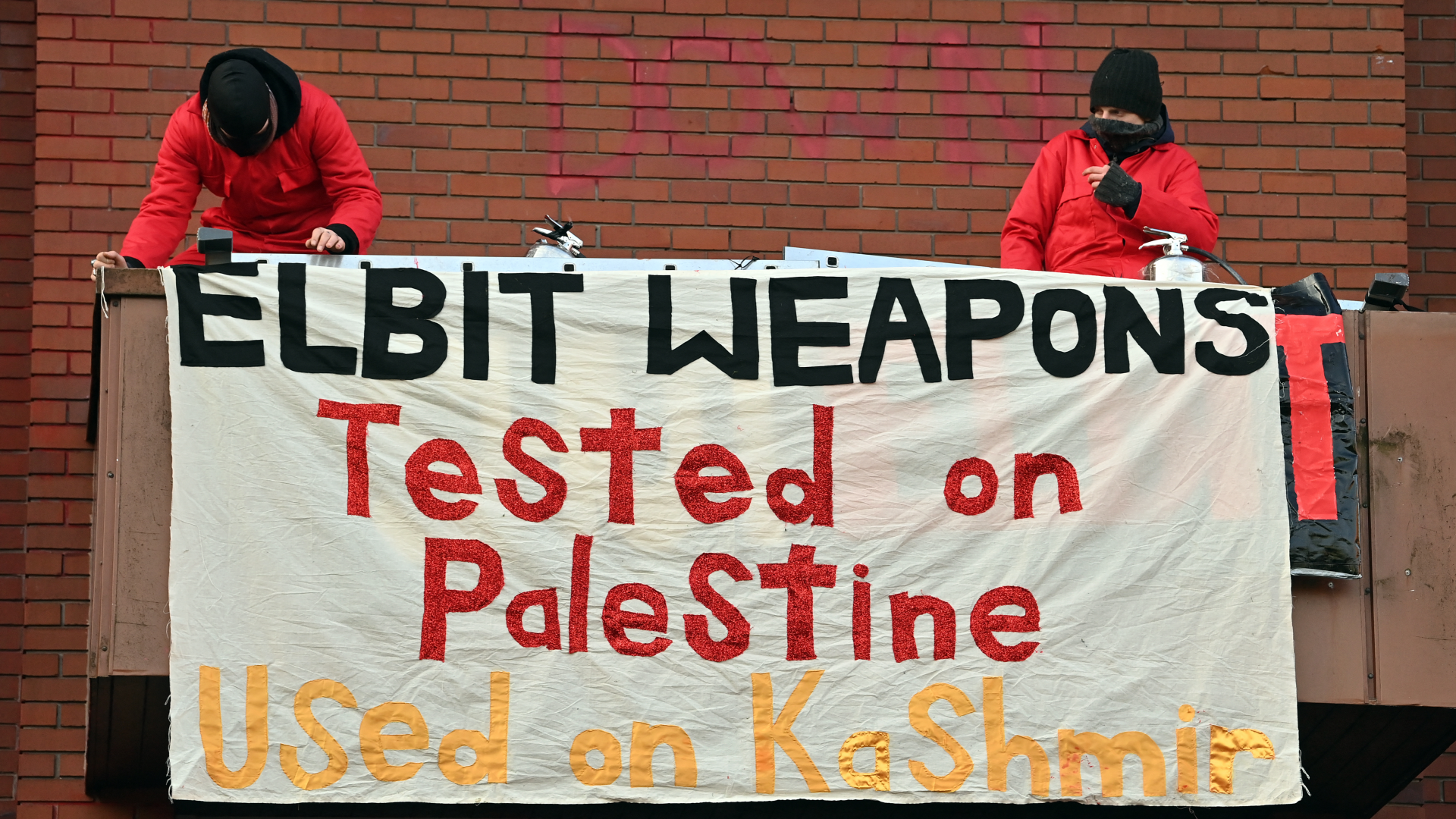
In a significant development for the Boycott, Divestment, and Sanctions (BDS) movement, global insurance giants Allianz and Aviva have terminated their insurance policies with Israeli defense contractor Elbit Systems. This decision follows sustained pressure from pro-Palestine activists, including direct actions and protests targeting the companies’ operations.
According to campaign groups, Allianz ceased its coverage of Elbit Systems on November 1st, while Aviva ended its employment liability insurance for UAV Engines Ltd, an Elbit subsidiary, on September 7th. The campaign was spearheaded by Palestine Action, an organization that was subsequently proscribed as a terrorist group by the UK government in July.
Huda Ammori, co-founder of Palestine Action, characterized the insurers’ withdrawal as a victory for direct action tactics, stating this outcome demonstrates why the government moved to ban their organization. The development highlights the growing financial pressure on companies with ties to Israel’s military industry.
Elbit Systems maintains a dominant position in supplying Israel’s military, providing approximately 80% of weapons and equipment for land forces and 85% of combat drones used by the air force. The company has faced persistent allegations of complicity in Israeli military actions against Palestinians.
The activist campaign involved coordinated demonstrations at multiple Allianz offices, including an occupation of their City of London branch in March where premises were spray-painted. Aviva’s Bristol center was similarly targeted in January over its insurance of drone engines linked to an April 2024 attack that killed seven aid workers, including three British veterans.
In response to the insurance withdrawals, Elbit has secured alternative coverage through Aspen Insurance for its UK operations, while Chubb now provides insurance for UAV Engines. This transition has not gone uncontested, as Aspen’s London offices were recently blockaded by activists from Prisoners for Palestine, who sprayed red paint on the entrance.
The situation gained international attention when Swedish climate activist Greta Thunberg was arrested outside Aspen’s offices for displaying a placard supporting Palestine Action prisoners. She was subsequently released on bail, with police citing violation of anti-terrorism legislation prohibiting support for proscribed organizations.
Neither Allianz nor Aviva provided official comments regarding their policy changes when contacted by media outlets. The developments underscore the ongoing tension between activist movements targeting military supply chains and government counter-terrorism measures.