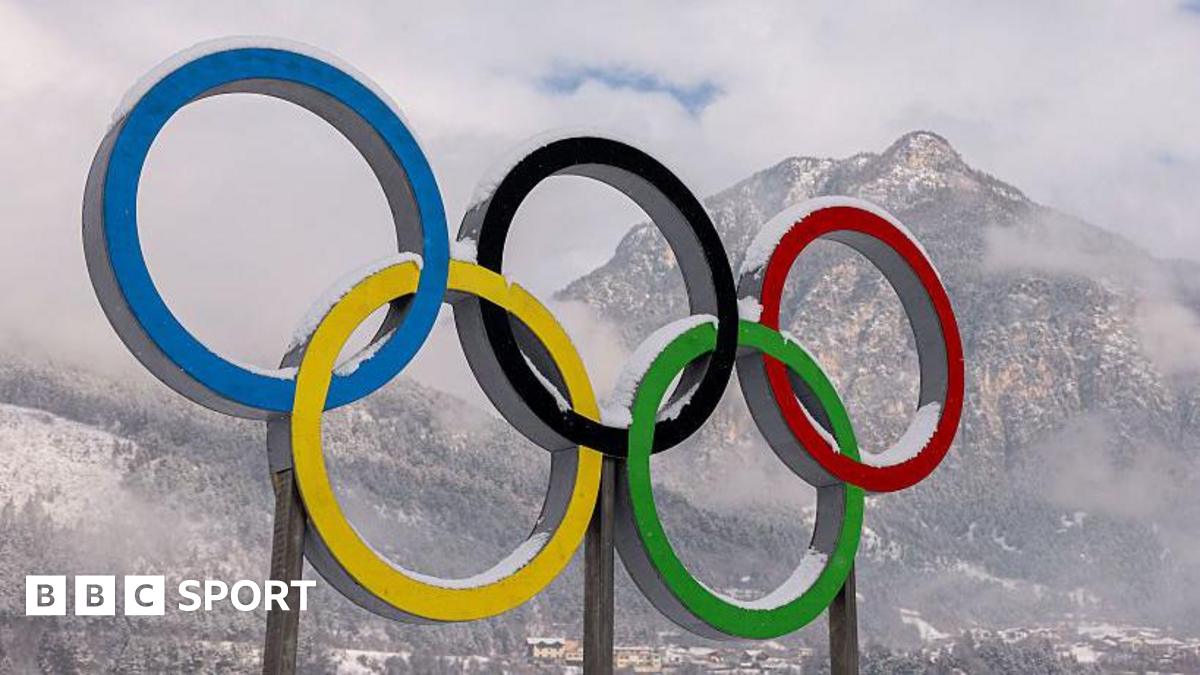
The grand spectacle of the Milan-Cortina 2026 Winter Olympics has officially launched across northern Italy’s picturesque landscapes, marking the commencement of a 16-day celebration of elite winter sports. With approximately 2,900 athletes representing over 90 nations, the Games unfold across multiple prestigious locations including Milan’s fashion district, the chic Cortina d’Ampezzo, and the Alpine resorts of Livigno and Bormio.
The opening ceremony at Milan’s legendary San Siro stadium featured spectacular performances by international music icons Mariah Carey and Italian tenor Andrea Bocelli. To accommodate the geographical dispersion of events, parallel ceremonies with their own Olympic cauldrons were simultaneously held in Cortina, Predazzo, and Livigno, ensuring all participants could share the inaugural experience. Team GB’s flag-bearing honors were bestowed upon figure skater Lilah Fear in Milan and bobsleigh pilot Brad Hall in Cortina.
Great Britain enters these Games with unprecedented optimism regarding medal prospects. UK Sport projects potential record-breaking success with forecasts of up to eight medals, surpassing previous benchmarks of five from Sochi 2014 and Pyeongchang 2018. Strong contenders include world champion skeleton athletes Matt Weston and Marcus Wyatt, who dominated this season’s World Cup circuit. Snowboarding prospects Mia Brookes and Charlotte Bankes, alongside freestyle skiers Kirsty Muir and Zoe Atkin, represent promising opportunities for Britain’s first Olympic gold or silver medals on snow. On ice, figure skating duo Lewis Gibson and Lilah Fear are positioned to potentially secure Britain’s first medal in the discipline since 1994.
The 2026 Games introduce ski mountaineering (‘skimo’) as the first new Winter Olympic sport since 2002, featuring three medal events in Bormio. The discipline combines uphill skiing with adhesive skins, backpack-carried ski transitions, and downhill racing. Additional new events include dual moguls, luge doubles, team alpine combined, women’s large hill ski jumping, and mixed relay skeleton.
Despite the celebratory atmosphere, organizational challenges persist. The Cortina Sliding Centre, reconstructed at a cost exceeding £72 million, narrowly achieved operational readiness after significant delays. Conversely, the Milano Santagiulia ice hockey stadium remains incomplete as competitions begin, though organizers guarantee all scheduled matches will proceed. The venue has faced criticism regarding its non-standard ice dimensions and quality concerns, previously prompting boycott warnings from the National Hockey League.
Further controversy emerged with the dismissal of Italian biathlete Rebecca Passler following a positive doping test. Additionally, the participation of 20 Russian and Belarusian athletes as Individual Neutral Athletes under strict IOC conditions has drawn scrutiny, with BBC Sport reporting that four approved Russian competitors have documented connections to pro-war activities in Ukraine.