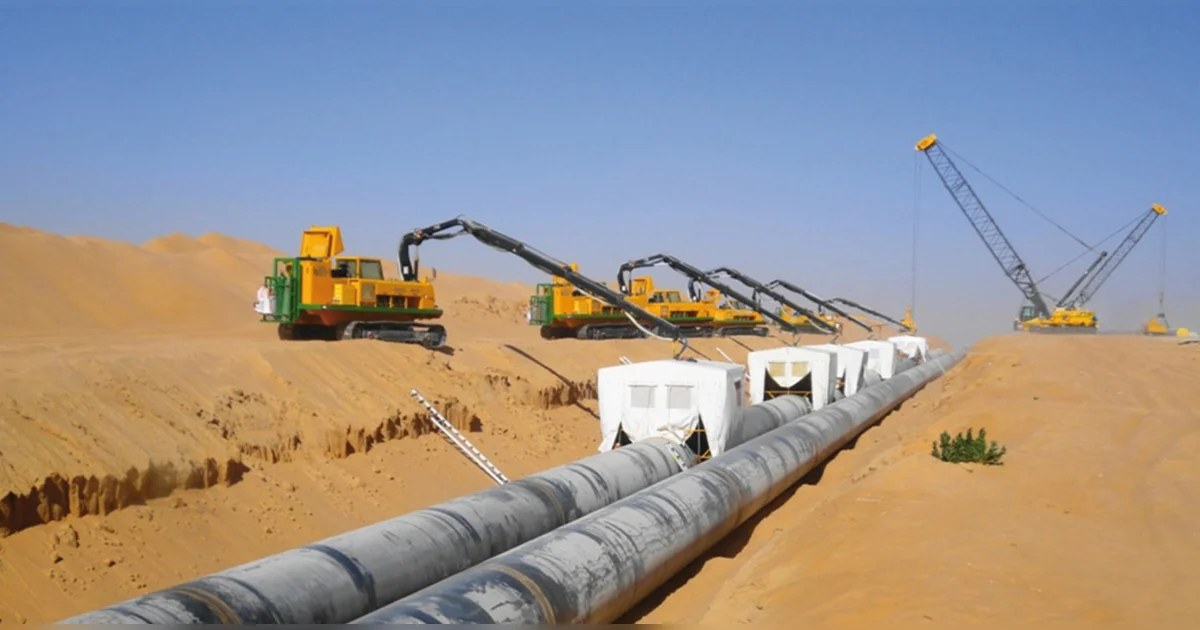
A consortium led by Aljomaih Energy and Water, in collaboration with Buhur Investment Company and Nesma Group, has successfully achieved financial closure for the Jubail–Buraydah Independent Water Transmission Pipeline Project. The project, valued at SAR 8.5 billion ($2.26 billion), marks a significant milestone in Saudi Arabia’s efforts to enhance its water infrastructure. The financial close follows the signing of the Water Transmission Agreement between the project company, Stream Water Transmission Company, and the Saudi Water Partnership Company (SWPC). The ownership structure of the project is divided among Aljomaih Energy and Water (45%), Buhur Investment Company (35%), and Nesma Group (20%). The project, which will link the Eastern Province with the Qassim Region, is the Kingdom’s first independent water transmission initiative and features reverse pumping capabilities. Financing was secured through a consortium of prominent local and regional lenders, including Al Rajhi Bank, National Infrastructure Fund, and Abu Dhabi Commercial Bank, among others. The financing structure is entirely based on Islamic principles, a unique feature for projects of this scale. The Jubail–Buraydah project will transmit 650,000 cubic meters of desalinated water daily, supported by a storage capacity of 1,634,500 cubic meters, and will span 587 kilometers. Developed under a Build, Own, Operate, and Transfer (BOOT) model, the project has a 35-year concession period, with construction expected to be completed by 2029. Once operational, the project will serve over two million beneficiaries, providing a reliable and sustainable water source with an availability rate of up to 98%. The initiative aligns with Saudi Arabia’s National Water Strategy 2030 and Vision 2030 objectives, emphasizing long-term water security and infrastructure resilience. Key stakeholders, including Ibrahim Aljomaih, Eng. Adnan Buhuligah, and Faisal Alturki, highlighted the project’s strategic importance and the consortium’s commitment to innovation, sustainability, and local content development.
Aljomaih Energy and Water-led consortium achieves financial close for Jubail–Buraydah Water Transmission Project