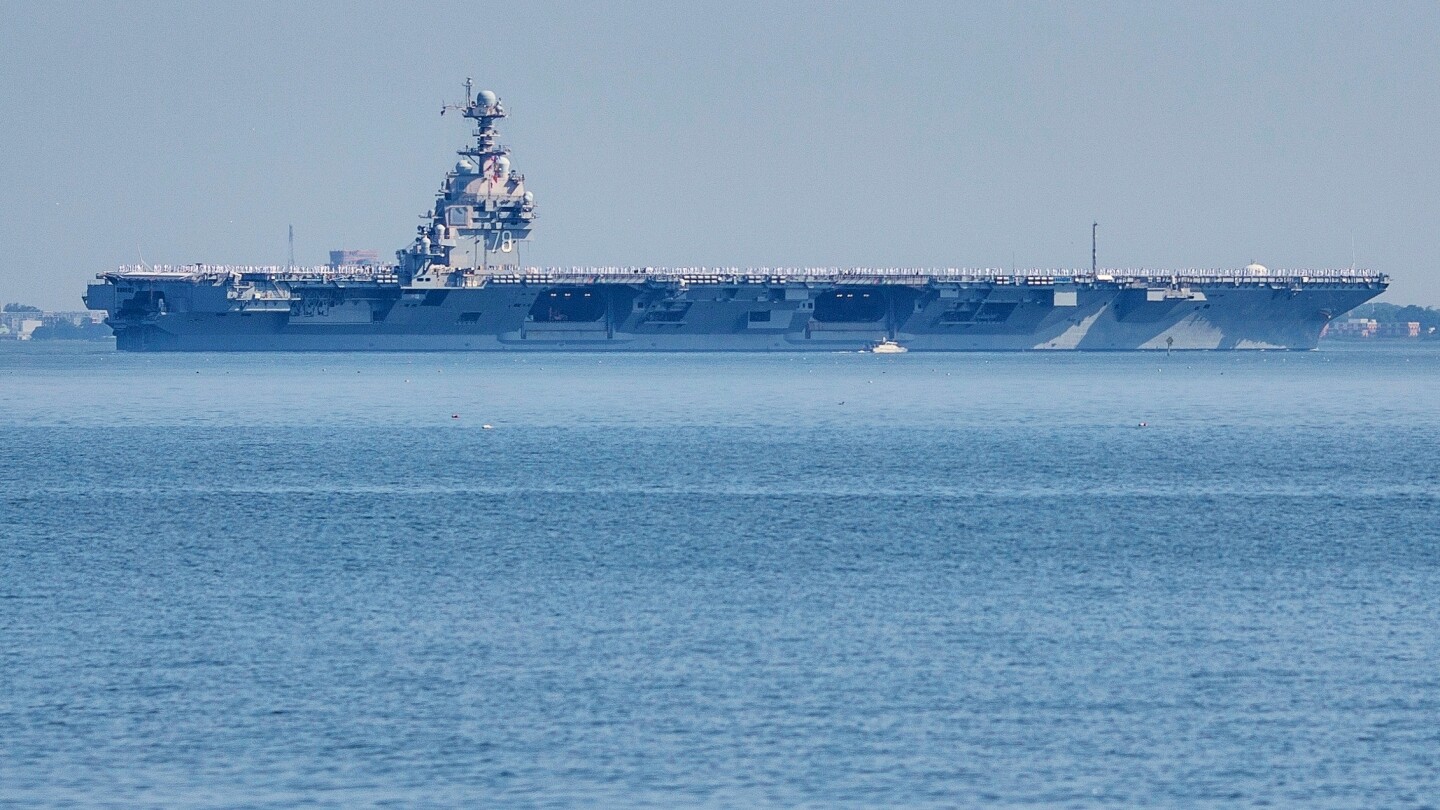
The USS Gerald R. Ford, the U.S. Navy’s most advanced aircraft carrier, arrived in the Caribbean Sea on Sunday, marking a significant escalation in the Trump administration’s counterdrug operations in South America. The deployment, part of “Operation Southern Spear,” brings the total number of U.S. troops in the region to approximately 12,000, supported by nearly a dozen Navy ships. The carrier strike group, which includes fighter jets and guided-missile destroyers, transited the Anegada Passage near the British Virgin Islands, according to a Navy statement. While the administration frames the buildup as a mission to combat drug trafficking, critics view it as a pressure tactic against Venezuelan President Nicolás Maduro. Since September, U.S. strikes have killed at least 80 people in 20 attacks on boats allegedly involved in drug transport. Rear Adm. Paul Lanzilotta, commander of the Ford’s strike group, emphasized the mission’s focus on protecting U.S. security against “narco-terrorism” in the Western Hemisphere. However, the administration has yet to provide evidence linking those killed to drug cartels or terrorist organizations. President Trump has hinted at expanding military action beyond maritime strikes, including potential land operations. The deployment has drawn criticism from regional leaders, the U.N. human rights chief, and U.S. lawmakers, who question the legal basis and transparency of the strikes. Meanwhile, Venezuela has mobilized troops and civilians in anticipation of possible U.S. aggression. Experts debate whether the Ford’s presence is a strategic deterrent or a provocative move, with some arguing it is ill-suited for counterdrug efforts but effective as a tool of intimidation. Elizabeth Dickinson of the International Crisis Group noted that the deployment has heightened anxieties across Latin America, with many watching closely to gauge the U.S. willingness to use military force.
Aircraft carrier arrives in the Caribbean in major buildup near Venezuela