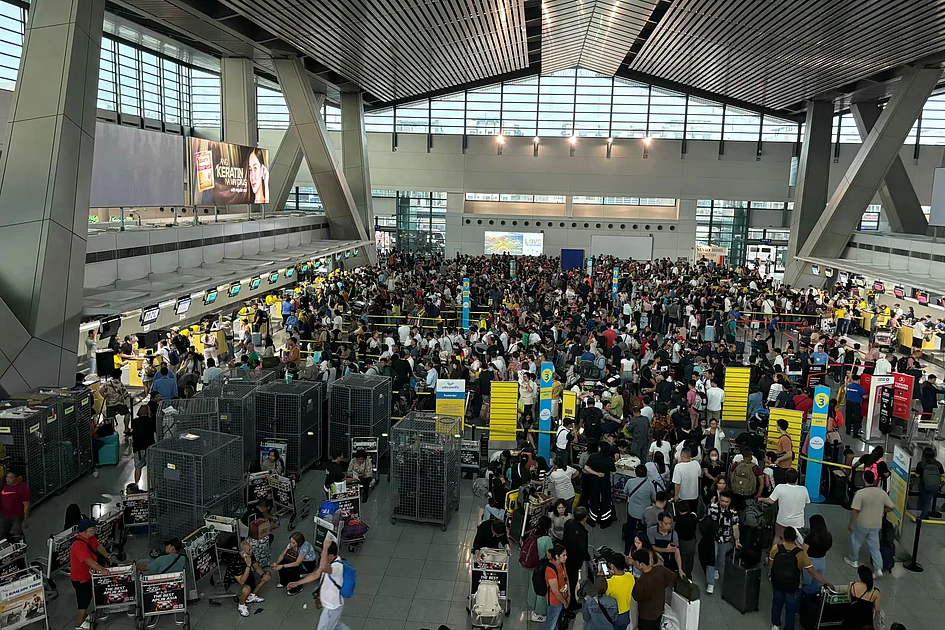
MANILA – Philippine aviation authorities have confirmed that mandatory software upgrades for Airbus A320 and A321 aircraft will be fully completed by noon on Sunday, November 30, following global safety recommendations that caused significant flight disruptions across the archipelago.
The Air Carriers Association of the Philippines (ACAP) announced that carriers have been working around the clock to implement the critical updates after receiving an urgent advisory from the European Aviation Safety Agency (EASA). The precautionary measure, while essential for passenger safety, resulted in widespread flight cancellations and delays throughout Saturday.
Transportation Secretary Giovanni Lopez explained that the Department of Transportation prioritized safety above operational convenience. “We deemed it imperative to implement these precautionary measures to ensure the absolute safety of passengers and crew,” Lopez stated. “We sincerely apologize for the travel inconveniences caused by the necessary flight cancellations.”
The emergency directive reached Philippine authorities at 1:00 AM local time on Saturday (9:00 PM Friday UAE time), affecting 75 aircraft operated by Philippine Airlines, Cebu Pacific, and AirAsia. Each aircraft required approximately two hours to complete the software installation process.
ACAP Executive Director Josen Perez de Tagle assured the public that airline operators have implemented comprehensive passenger notification systems to minimize disruption impacts. “Airlines are exerting maximum effort to notify all affected passengers and mitigate the consequences of this mandatory system upgrade,” de Tagle commented.
In response to the travel disruptions, carriers have offered affected passengers multiple compensation options including full refunds, flexible rebooking arrangements, and electronic travel vouchers. Stranded passengers at various airports received complimentary meals, beverages, and essential medications during the operational pause.
The software update initiative represents a localized response to a global aviation directive affecting approximately 6,000 Airbus A320 and A321 aircraft worldwide, highlighting the interconnected nature of modern aviation safety protocols.