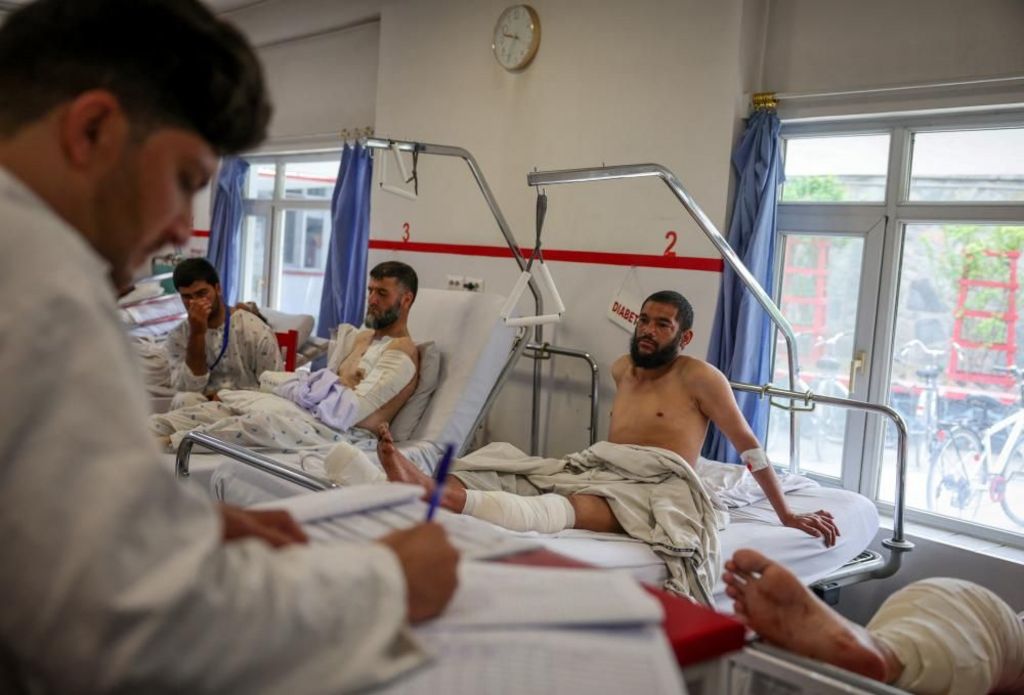
A catastrophic aerial bombardment has reduced a drug rehabilitation facility in Kabul to smoldering ruins, marking one of the deadliest incidents in the escalating conflict between Pakistan and Afghanistan. The Omid Addiction Treatment Hospital, formerly known as Camp Phoenix during the U.S.-NATO military operations, was struck during evening hours on Monday as patients were breaking their Ramadan fast and engaging in prayers.
Emergency response teams continue extraction operations through the debris, with Taliban officials estimating approximately 400 fatalities though official confirmation remains pending. Survivors describe apocalyptic scenes of trapped patients engulfed in flames as the single-story compound became an inferno. Mohammad Shafee, a twenty-year-old patient, recounted his narrow escape while serving dinner: “Only five of us survived after the explosion. When I returned, most colleagues and diners were hit.”
The geopolitical context reveals deepening tensions: Pakistan maintains the strike targeted “military installations and terrorist support infrastructure,” dismissing Afghan allegations of intentional hospital targeting as “entirely baseless.” This incident occurs amid months of cross-border hostilities, with Islamabad accusing Kabul of harboring militants—a claim Taliban officials vehemently deny.
Humanitarian consequences are severe: overwhelmed medics treated dozens of wounded amid the ruins while families desperately searched for missing relatives. One mother of nine anxiously awaited news about her husband, a seven-month resident of the facility. The Kabul Forensic Medicine Department has received at least 100 bodies, with many victims severely disfigured complicating identification.
UN officials report this attack brings at least six Afghan healthcare facilities impacted since late February, highlighting the conflict’s devastating effect on civilian infrastructure. The rehabilitation center itself represented a complex legacy—transitioning from U.S.-NATO military training compound to addiction treatment facility under the Afghan republic government, then continuing operations under Taliban administration as they rounded up drug addicts from streets across provinces.
The facility, designed for 2,000 occupants, recently held approximately 5,000 patients kept for six-month periods, reflecting Afghanistan’s severe opioid addiction crisis. A separate male addiction facility nearby reportedly remained unaffected by the strike.