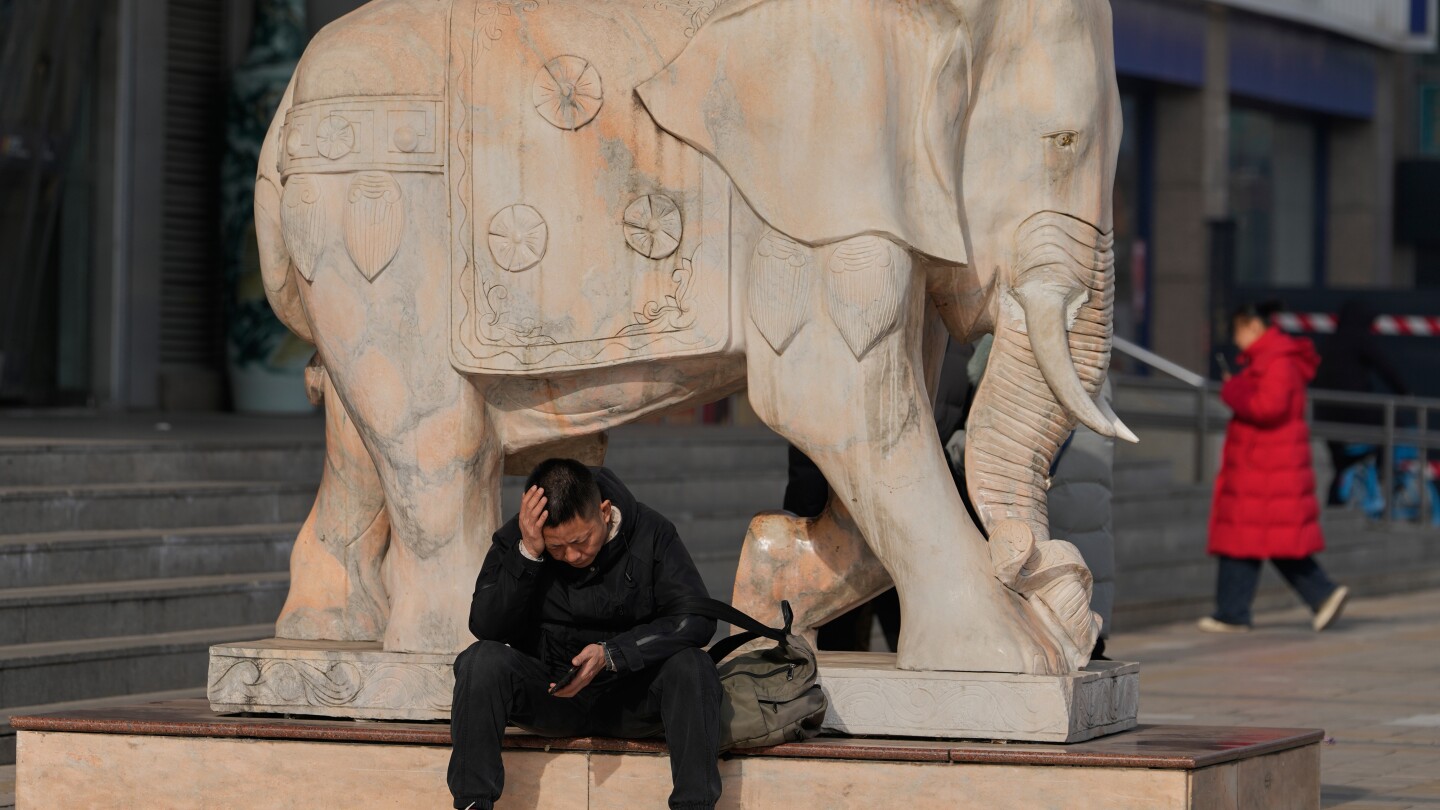
A provocative digital innovation has emerged from China’s tech landscape, capturing the attention of solitary urban dwellers worldwide. The application, bluntly titled ‘Are You Dead?’, represents a stark technological response to modern isolation, enabling users to transmit instantaneous proof of life to designated contacts through a single interface interaction.
Developed by three twenty-something entrepreneurs, the platform operates on a minimalist premise: users activate an oversized green circle on their smartphone displays, automatically notifying selected individuals of their wellbeing. This digital lifeline comes at a nominal cost of 8 yuan (approximately $1.10), offering peace of mind through technological simplicity.
The application’s meteoric rise saw it become the most downloaded paid application on China’s Apple App Store recently, with significant adoption rates emerging across diverse international markets including Singapore, Netherlands, Britain, India, and the United States. This global resonance underscores the universal nature of contemporary solitude concerns that transcend cultural boundaries.
Co-developer Ian Lü, 29, drew inspiration from his five-year experience living alone in Shenzhen. ‘Every country has young people who move to big cities to chase their dreams,’ Lü remarked, highlighting the particular appeal for introverted individuals who find daily check-in messages impractical yet desire connection.
Demographic shifts in China have created fertile ground for such innovations. Recent statistics from the National Bureau of Statistics reveal over 100 million single-person households nationwide, reflecting dramatic social transformation driven by urbanization and economic migration that has dispersed traditional multi-generational living arrangements.
User testimonials reveal complex relationships with the application. Kunming resident Chen Xingyu, 32, expressed both curiosity and data security concerns, particularly regarding female users’ vulnerability. Shanghai designer Yuan Sangsang, 38, articulated more existential motivations: ‘I just don’t want to die with no dignity, like the body gets rotten and smelly before it is found.’
Despite its morbid nomenclature—a deliberate challenge to cultural taboos surrounding mortality discourse—the application has sparked meaningful dialogue about contemporary existence. Chinese media commentary interprets its popularity as ‘a darkly humorous social metaphor’ that addresses young people’s need for recognition and understanding beyond mere functionality.
In a surprising development, the developers recently announced plans to rebrand the application following public feedback, initially selecting the ambiguous ‘Demumu’ before launching a public naming competition with a 666 yuan prize. This evolution demonstrates the creators’ responsiveness to cultural sensitivities while maintaining their mission to serve globally dispersed solitary individuals.