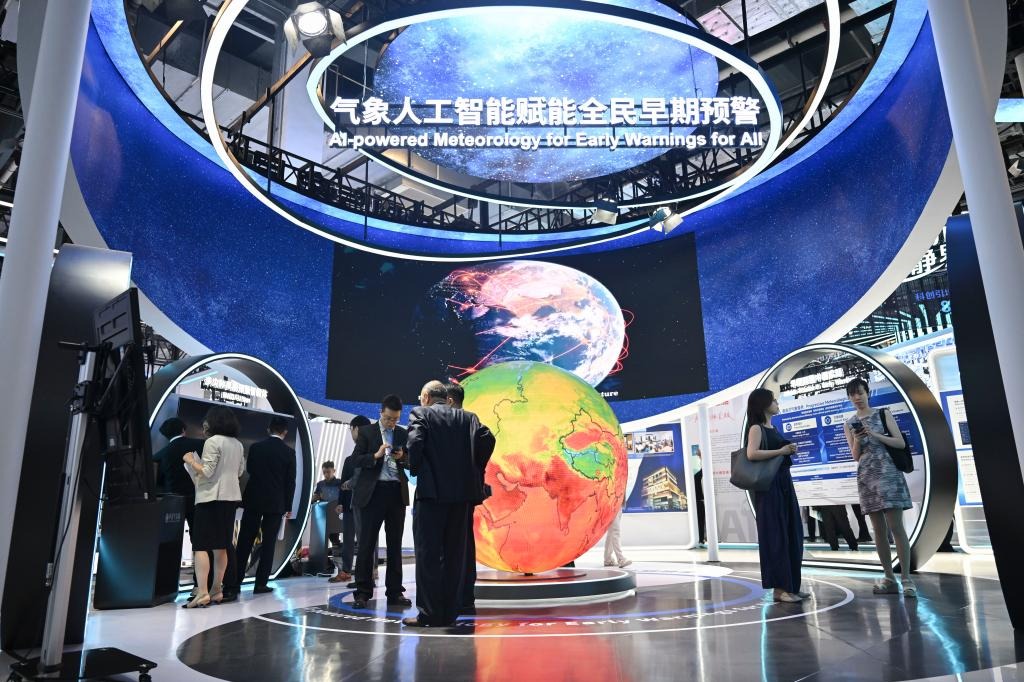
Against a backdrop of globally rising extreme weather frequency and intensity, nations across the Belt and Road Initiative (BRI) have voiced strong enthusiasm for a new China-initiated meteorological project that leverages artificial intelligence to upgrade weather forecasting capabilities and boost disaster preparedness. The initiative, officially launched in March 2026, is funded by China’s Ministry of Science and Technology and headed by the Center for Earth System Modeling and Prediction under the China Meteorological Administration (CMA).
The project builds on the foundation of MAZU, China’s existing open-source early warning meteorological platform that has already been rolled out in BRI partner states including Pakistan and Ethiopia, where it currently supports real-time atmospheric monitoring and rapid disaster alert dissemination. For participating nations, the initiative addresses long-standing gaps in climate resilience that have held back sustainable development.
Kouam Magloire, head of data processing at Cameroon’s national meteorological services, noted that the collaboration represents a transformative opportunity for his country to reinforce early warning infrastructure and improve response outcomes when extreme weather strikes. Mongolia, which regularly faces severe droughts, winter blizzards and other extreme events, also highlighted the urgent need for AI-powered nowcasting — short-term forecasts ranging from minutes to hours ahead that rely on high-resolution satellite and radar data. “Through this partnership, we aim to build a far more advanced long-term forecasting system that can better protect our communities,” said Altansuvd Bold, an engineer with Mongolia’s National Agency for Meteorology and Environmental Monitoring.
Ethiopia, another BRI partner already hosting the MAZU platform, emphasized China’s leading position in both meteorological innovation and artificial intelligence development. “Ethiopia looks forward to accessing cutting-edge technology through this project, training local technical experts, and closing critical gaps in our national nowcasting and early warning services,” explained Leta Bekele Gudina, a senior expert at the Ethiopian Meteorological Institute.
Data from the CMA underscores the urgent need for this intervention: between 1980 and 2022, BRI participating nations suffered an average of $214.7 billion in direct annual economic losses from meteorological disasters, accounting for 28.4% of total global losses from such events. Most of these countries face systemic constraints including sparse weather observation networks, limited computing infrastructure, and outdated forecasting technology, all of which hinder effective disaster preparedness and long-term sustainable growth.
To tackle these overlapping challenges, the project’s core goal is to develop a fully integrated AI-powered forecasting system that delivers accurate predictions across all time scales, from immediate nowcasting out to sub-seasonal outlooks. The new framework combines traditional physical atmospheric models with cutting-edge machine learning approaches, and will be customized to fit the unique geographic and climatic conditions of each partner nation. A flexible, modular intelligent forecasting device will also be designed to adapt to nations with varying levels of existing technical infrastructure, removing barriers to deployment.
Project leader Han Wei outlined the initiative’s implementation timeline: the platform will operate for a minimum of six months across more than six BRI partner nations, with early warning services expected to reach approximately 10 million vulnerable people once fully deployed. All AI forecasting models developed through the project will eventually be integrated into the existing MAZU platform to create a sustained, stable technological foundation for long-term international meteorological cooperation.
Leading Chinese climate scientists have praised the initiative for aligning cutting-edge technology with pressing global development needs. Chen Deliang, an academician of the Chinese Academy of Sciences, noted that the project directly answers unmet urgent demands from BRI nations while advancing the practical application of artificial intelligence in the atmospheric sciences. Zhang Xiaoye, an academician of the Chinese Academy of Engineering, added that future work should focus on strengthening regional downscaling techniques to better tailor forecasting outputs to the specific needs of individual partner countries.