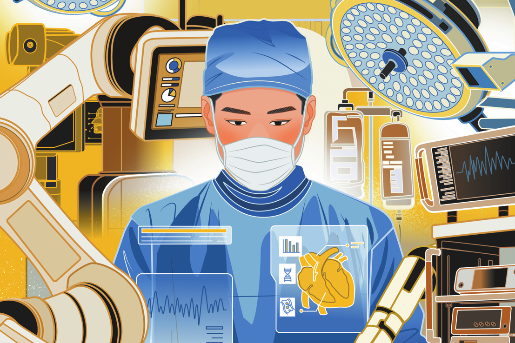
Artificial Intelligence (AI) is increasingly transforming the healthcare sector, driving efficiency and expanding resources in underserved areas. At Beijing Chest Hospital, radiologist Hou Dailun has observed remarkable improvements since the introduction of an AI system in 2020. The system assists in analyzing CT scans for lung nodules, processing hundreds of slices in seconds and providing precise data on size, shape, and density. This innovation has slashed the time required for analysis from over 20 minutes to mere seconds, enabling the department to interpret results for 600 patients daily. This advancement is part of China’s broader strategy to integrate AI into healthcare, as outlined in a recent guideline by the National Health Commission. The guideline aims to make AI-assisted diagnostic imaging widely available in secondary-level hospitals by 2030, emphasizing data quality, research, and development. AI is also being deployed at the grassroots level, such as at Beiqijia Community Health Service Center, where an online system tracks blood sugar levels for diabetic patients and offers dietary recommendations. Despite its benefits, AI remains an auxiliary tool, with human oversight essential to address its limitations and ensure patient safety. The future of AI in healthcare is promising, with potential to enhance diagnosis, treatment, and chronic disease management, while requiring robust regulation and collaboration across sectors.