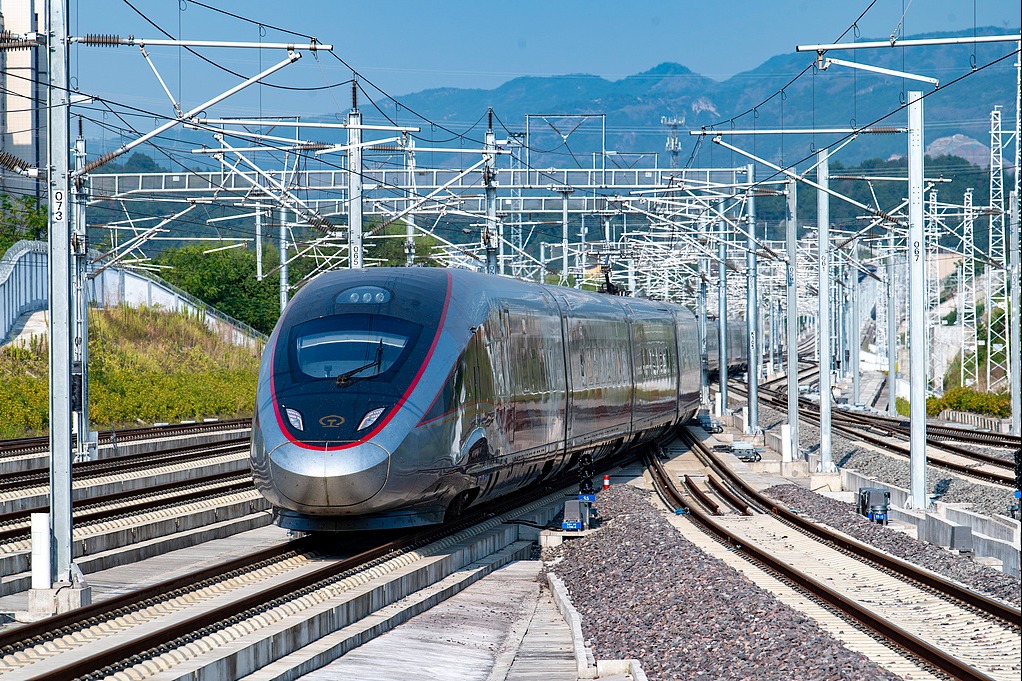
China is positioning artificial intelligence as the transformative force behind the next evolution of its massive high-speed railway network, according to senior advisor Zhao Hongwei. As the country shifts from rapid infrastructure expansion to quality-focused development, AI technologies are emerging as critical drivers for operational excellence in the world’s largest high-speed rail system.
Zhao, who serves as chief researcher at the China Academy of Railway Sciences and member of the 14th National Committee of the Chinese People’s Political Consultative Conference, revealed that railway authorities have implemented an “AI Plus Railways” action plan to accelerate technological integration. This strategic initiative includes the deployment of a railway-specific large AI model currently in pilot testing phase.
The practical applications already demonstrate significant advancements. Sophisticated imaging systems installed along tracks capture detailed photographs of passing trains, with AI algorithms analyzing these images to identify potential component failures before they escalate into serious issues. This predictive maintenance capability allows engineers to address abnormalities proactively, substantially reducing downtime and improving safety margins.
Beyond equipment monitoring, AI systems provide comprehensive situational awareness along railway corridors. Advanced detection algorithms can identify obstacles near tracks and even detect wildlife intrusions into operational areas, enabling controllers to mitigate risks before they impact train movements. These capabilities are particularly valuable given the network’s enormous scale, with approximately 4,000 high-speed trains operating nearly 10,000 daily services across more than 50,000 kilometers of dedicated high-speed lines.
Looking toward future innovations, China has successfully tested autonomous train operations at speeds reaching 350 kilometers per hour. The next generation of trains, including the CR450 prototype currently undergoing testing, will incorporate increasingly sophisticated intelligent functions. These systems will assist human operators in identifying technical problems, optimizing energy consumption, and supporting complex operational decisions.
Concurrent research initiatives are advancing key infrastructure technologies capable of supporting 400 km/h operations, while new 200 km/h power-concentrated trains have entered operational testing phases. With China’s overall railway network expanding to approximately 165,000 kilometers by the end of 2025 and handling 4.26 billion passenger trips annually, intelligent technologies are becoming indispensable for maintaining both efficiency and safety across this vast transportation ecosystem.