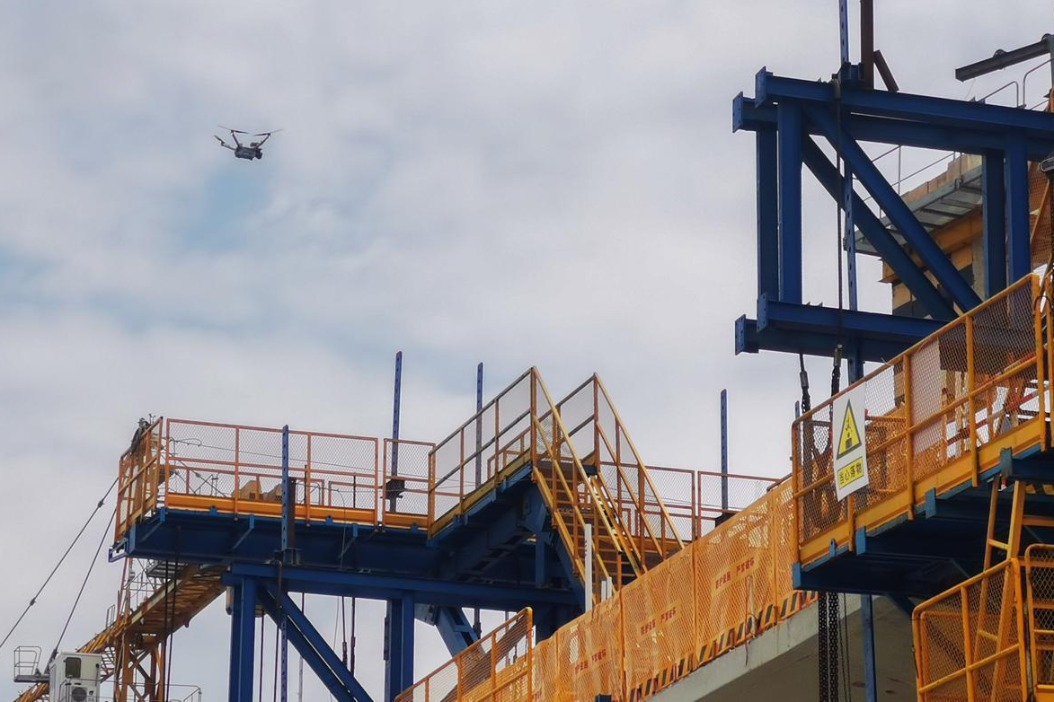
A groundbreaking artificial intelligence system is transforming construction oversight along the Chengdu-Deyang intercity railway in Sichuan province, representing a significant technological advancement in China’s rail infrastructure development. The innovative approach combines autonomous drone technology with sophisticated AI algorithms to enhance safety monitoring and operational efficiency.
The integrated system employs self-piloting drones that operate independently from automated charging stations, conducting regular patrols without requiring direct human intervention. These advanced devices are equipped with intelligent capabilities that extend beyond conventional aerial photography, featuring what engineers describe as an ‘AI brain’ for comprehensive hazard detection.
At the project’s Tianxun intelligent command center, a large display screen presents real-time visual data transmitted from the drone fleet, providing complete visibility across all elevated sections of the railway. The AI software automatically analyzes captured imagery to identify potential safety concerns including deep foundation pit risks, unauthorized smoke sources, missing protective barriers, and improper hoisting operations.
When the system detects hazards, it immediately broadcasts audible warnings to alert construction personnel on-site while simultaneously transmitting alert notifications to managers’ mobile devices. The technology also generates detailed 3D models of the construction environment using real-time dynamic positioning modules, enabling precise progress tracking for individual structural components.
According to project officials, the 18-kilometer elevated section in Chengdu previously required hundreds of workers conducting continuous inspections during peak construction periods. The new drone system has dramatically improved operational efficiency, with just two units capable of completing a comprehensive patrol in approximately 30 minutes—representing an efficiency improvement exceeding 80 percent.
Developed specifically for this railway project from its initial planning stages, the technology has now been deployed across critical areas including elevated segments and underground tunnel sections. Engineers anticipate that as application scenarios expand, the system’s AI capabilities will continue to evolve with increasing intelligence and accuracy.