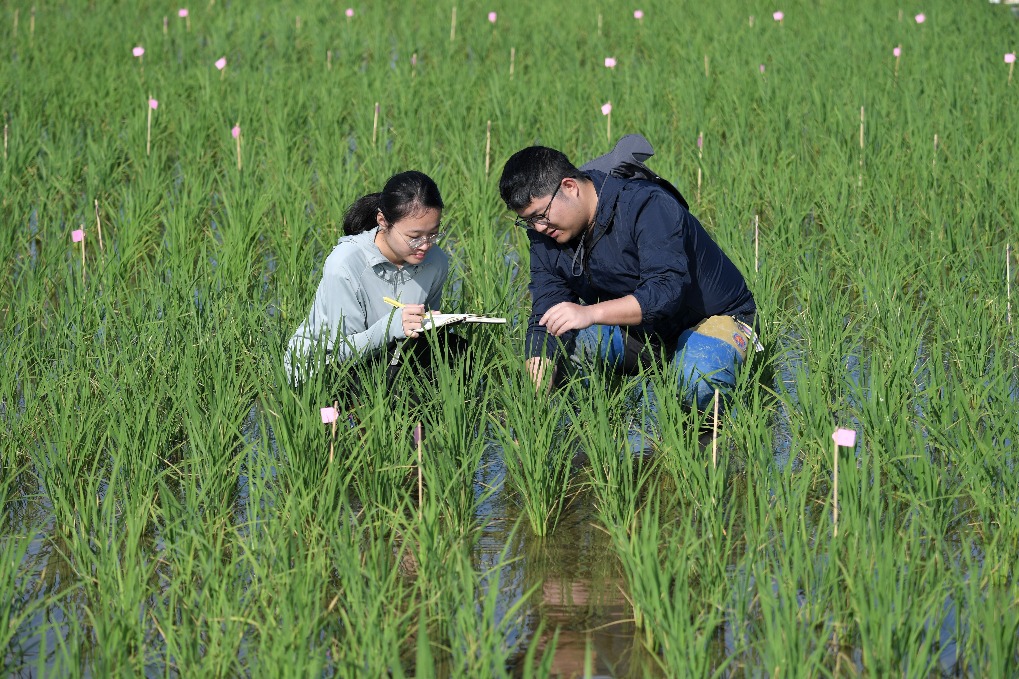
At the Yazhou Bay Science and Technology City in Sanya, Hainan province, agricultural innovation is undergoing a radical transformation. The Future Agriculture Nexus (Fan) project, a collaborative endeavor between Yazhou Bay National Laboratory and Huawei Technologies Co., is leveraging artificial intelligence to redefine traditional crop breeding methodologies.
This groundbreaking initiative represents a paradigm shift from conventional breeding practices that typically required approximately ten years of development. Through advanced computer algorithms and data analytics, the project aims to condense this timeline to just three to four years while simultaneously enhancing crop resilience and yield potential.
The strategic importance of this technological advancement aligns with China’s national food security objectives, where agricultural self-sufficiency has become increasingly crucial. During his 2022 inspection of the Yazhou Bay facility, President Xi Jinping emphasized the critical need for technological independence in the seed sector, comparing seeds to the ‘chips’ of global agriculture.
Yuan Xiaohui, a senior scientist at the laboratory, highlighted the project’s mission to develop strategic crop varieties that address practical agricultural demands. However, the implementation faces significant challenges, particularly regarding data integration. ‘While AI demonstrates tremendous potential for agricultural science,’ Yuan noted, ‘data accessibility remains the primary constraint limiting its practical application.’
Chen Fan, deputy director of the laboratory, explained the fundamental transition occurring within the field: ‘Traditional breeding has historically depended on experiential knowledge. The shift toward precision agriculture necessitates comprehensive analysis of correlations between extensive datasets concerning crop characteristics and genetic information.’
The project represents a significant step toward establishing a comprehensive system capable of aggregating global field and laboratory data while providing sophisticated analytical capabilities. This development comes at a critical juncture for global food security, particularly as climate variability presents increasing challenges to agricultural production worldwide.